

Free Buffalo River Valley Travel Guide & Mobile App
Explore Buffalo River Valley with free travel guides. Discover regional history, expert tips, proposed trips, and audio guides on web or mobile app.


Explore Tennessee’s Buffalo River Valley for canoeing, wooded hills, small towns, scenic drives and a quiet rural landscape shaped by the river.
Read more about Buffalo River Valley
Getting to and around Buffalo River Valley
How to get there
Transportation
Best attractions in Buffalo River Valley
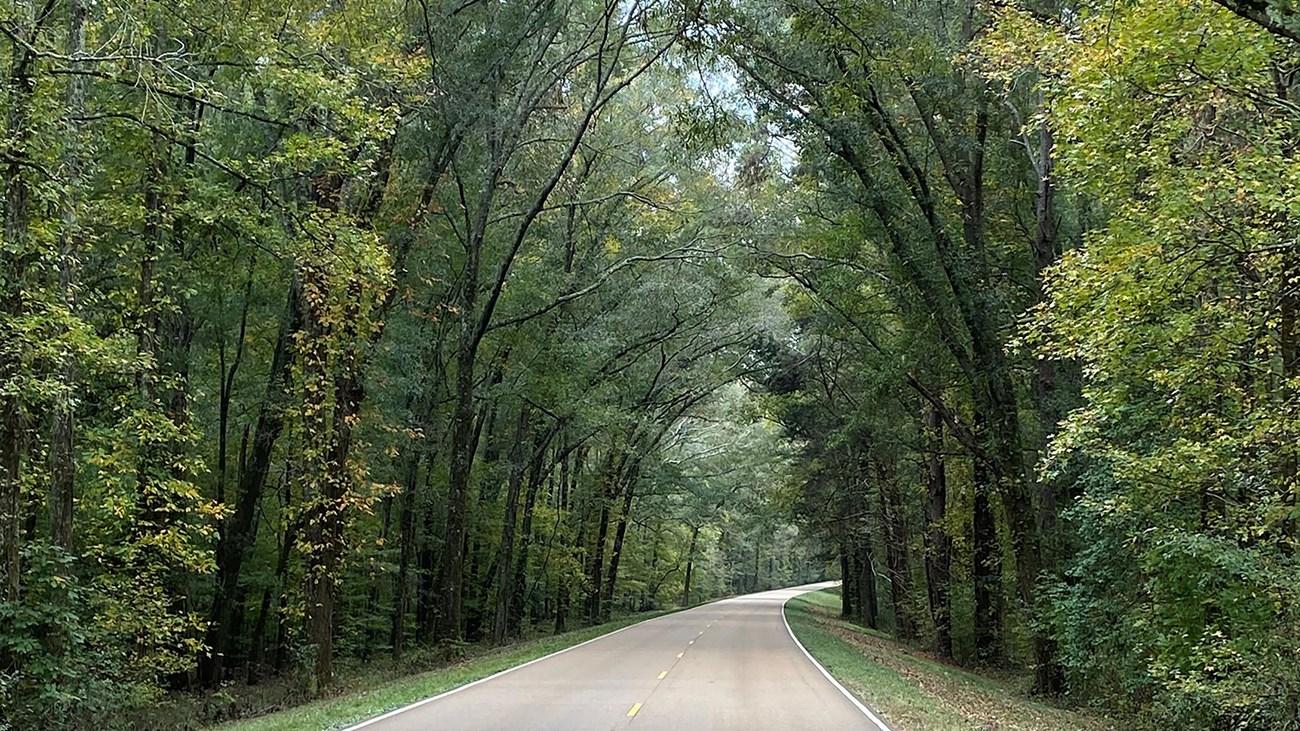
The Buffalo River itself is the valley’s principal attraction, offering canoeing, kayaking, fishing, wildlife observation and quiet stretches suitable for riverside picnicking where access is permitted. Conditions vary with rainfall, so paddling routes should be planned with a local outfitter and should include a confirmed take-out point. The river corridor is complemented by hardwood forests, limestone bluffs, tributary hollows and rural roads that are rewarding for scenic driving. Linden, Lobelville and Flatwoods provide small-town context, local services and glimpses of the communities that have supported the watershed for generations. The nearby Natchez Trace Parkway, although a regional gateway rather than a feature belonging wholly to the river valley, offers a useful route for combining the area with a wider journey through Middle Tennessee. Wildlife watching is best approached quietly, with opportunities to see birds, deer and river species rather than large formal animal attractions. The valley has no concentration of major museums or theme parks; its appeal lies in accessible nature, modest historic communities and the contrast between wooded watercourses and open farmland.
-
Hiking area
Jackson Falls
Experience the natural beauty and serenity of Jackson Falls, a must-visit destination along the Natchez Trace Parkway in Duck River, Tennessee.
-
Scenic spot
Fall Hollow Falls
Explore the breathtaking beauty of Fall Hollow Falls in Tennessee, where nature's serenity meets stunning hiking trails and picturesque scenery.
-
River
Buffalo River
Discover the natural beauty and adventure at Buffalo River, Tennessee's serene escape for outdoor enthusiasts and nature lovers.


Best landmarks in Buffalo River Valley
The Buffalo River is the valley’s defining natural landmark, with its free-flowing channel, wooded banks and exposed limestone scenery creating the landscape recognised by visitors and residents alike. The river’s bridges, launches and bends are practical features as well as visual reference points, linking otherwise dispersed communities. Linden’s courthouse square and county civic buildings represent the local-government history of Perry County, where the town developed as an administrative and commercial centre for surrounding farms. Lobelville’s position beside the river gives it a different identity, tied more directly to boating, fishing and access to the water. Flatwoods marks another small-town node within the broader Buffalo watershed, surrounded by the ridges and farm country characteristic of this part of Middle Tennessee. Beyond the settlements, the river bluffs, wooded hollows and broad rural views are the most significant physical markers of place. The nearby Natchez Trace Parkway can be used as a scenic approach and wider regional landmark, but it should be understood as an adjoining route rather than presented as a landmark located wholly within the Buffalo River Valley.
-
Historical landmark
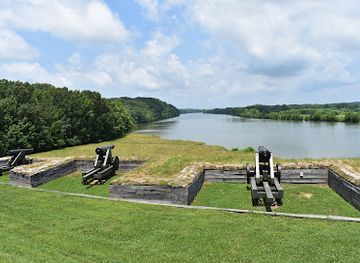
Fort Donelson National Battlefield-Tennessee
Discover the rich history of Fort Donelson National Battlefield, a key site in the American Civil War, offering scenic trails and engaging educational programs.
Explore Buffalo River Valley on the map
Plan your trip on one map. See where the top cities, national parks and sights are, and book hotels and experiences in a few clicks.
Best hotels in Buffalo River Valley
Best restaurants in Buffalo River Valley
Dining in the Buffalo River Valley is predominantly informal and locally oriented, centred on country cafés, family-run restaurants, barbecue, burgers, Southern sides and traditional baked goods. Linden and the smaller communities around Lobelville and Flatwoods provide the most practical choices, while rural roads may have long gaps between establishments. Seasonal produce, farm products and home-style cooking are more representative of the area than a specialised restaurant tradition, and menus reflect the wider culinary culture of Middle Tennessee rather than a narrowly defined Buffalo River cuisine. Breakfast, lunch plates, fried or grilled staples, biscuits, pies and locally familiar comfort food are common themes. Visitors planning a full day on the water should consider buying provisions in town, since riverside access points are not generally surrounded by cafés or shops. Farmers' stalls and small local sellers may appear seasonally, but availability changes. Tipping follows standard United States practice in table-service restaurants, and visitors should check whether smaller premises accept cards before ordering.
-
American
Applewood Farmhouse Restaurant
Experience delicious American comfort food at Applewood Farmhouse Restaurant in Sevierville, TN – where Southern hospitality meets farm-fresh flavors.
-
American
Feed Table and Tavern
Experience farm-to-table American cuisine paired with live music at Feed Table and Tavern in Chattanooga's Southside Historic District.
-
Southern
Log Cabin Restaurant
Experience authentic Southern cuisine at Log Cabin Restaurant in Hurricane Mills - where every bite tells a story.
-
Family-friendly
Loretta Lynn's Kitchen
Discover Loretta Lynn's Kitchen: A family-friendly restaurant serving delicious Southern cuisine with a touch of country music history.

Best bars in Buffalo River Valley
Evening life in the Buffalo River Valley is quiet and community-based rather than organised around nightclubs. Linden, Lobelville and Flatwoods have the region’s most likely options for casual evening meals, traditional bars or locally familiar gathering places, while many visitors spend the night at cabins, campsites or accommodation outside the town centres. Live music and social events may occur at local venues or during community occasions, but schedules are changeable and should not be assumed. The emphasis is on conversation, food and relaxed rural evenings rather than a late-night entertainment district. Visitors should arrange a designated driver or return transport before drinking, particularly because roads are dark, distances are considerable and mobile coverage may be unreliable. Breweries, cocktail bars and large clubs are not defining features of the valley; those seeking a broader nightlife selection will need to travel to a larger city outside the region.
-
River
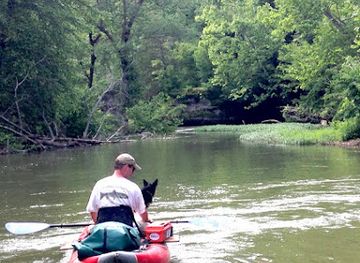
Buffalo River
Immerse yourself in the natural beauty of Buffalo River, Tennessee – a perfect destination for kayaking, fishing, and hiking adventures.
Best nightclubs in Buffalo River Valley
Evening life in the Buffalo River Valley is quiet and community-based rather than organised around nightclubs. Linden, Lobelville and Flatwoods have the region’s most likely options for casual evening meals, traditional bars or locally familiar gathering places, while many visitors spend the night at cabins, campsites or accommodation outside the town centres. Live music and social events may occur at local venues or during community occasions, but schedules are changeable and should not be assumed. The emphasis is on conversation, food and relaxed rural evenings rather than a late-night entertainment district. Visitors should arrange a designated driver or return transport before drinking, particularly because roads are dark, distances are considerable and mobile coverage may be unreliable. Breweries, cocktail bars and large clubs are not defining features of the valley; those seeking a broader nightlife selection will need to travel to a larger city outside the region.
-
River
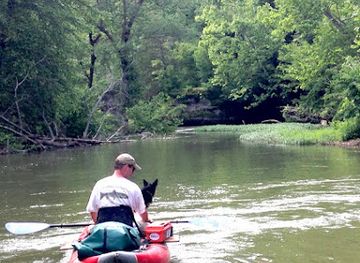
Buffalo River
Discover the natural beauty and serene adventures at Buffalo River in Tennessee, a perfect destination for outdoor enthusiasts and nature lovers.
Best shops in Buffalo River Valley
Shopping in the Buffalo River Valley is practical, small-scale and closely linked to local community life. Linden provides the broadest selection of everyday shops and services, while Lobelville and Flatwoods offer smaller town-centre businesses and supplies for visitors travelling through the watershed. Seasonal produce, baked goods, preserves and other farm-related products may be available from local sellers, although stock and opening arrangements vary. Independent antique, craft and gift shops can appear in small towns and along rural routes, but the area is not a major destination for designer retail or large shopping centres. Visitors interested in regional souvenirs should look for locally made crafts, Tennessee food products, books about local history and outdoor equipment rather than expecting a single concentrated market district. Buy fuel, snacks, drinking water and river supplies before heading to remote access points, as shopping opportunities become limited outside the main settlements. For a larger retail selection, visitors generally need to use a bigger town outside the immediate valley rather than treating the river communities as a conventional shopping destination.
-
River
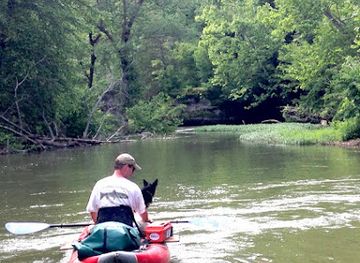
Buffalo River
Explore the breathtaking Buffalo River in Tennessee – a perfect blend of adventure and tranquility awaits amidst stunning landscapes.
Get your free copy of our complete guide to Buffalo River Valley, delivered straight to you.
Everything on this page, from attractions and restaurants to essentials and local phrases, in one PDF you can read offline, print or share.
Already have an account? Sign in
Your Buffalo River Valley guide is ready.
We'll send it to · Not you? Sign out

Getting your guide ready…
We are putting together a fresh copy of the Buffalo River Valley guide. This can take up to a minute.
This can take a few moments. If your browser asks, choose Allow so the download can start. You'll find the guide in your Downloads folder.
Nothing happened? Download it again
Sorry, the guide is taking longer than usual. Please try again in a minute, or get it by email instead.
Buffalo River Valley essentials
Currency and Payment
Safety
Emergency Situations
Do's and Don'ts
Local Tips
From Eve
Local phrases worth knowing
You don't need to get them perfect. A few words go a long way, and locals appreciate the effort.
Basics
| English | Local | Say it |
|---|---|---|
| Hello | Howdy | [Hau-dee] |
| Goodbye | See ya later | [See ya lay-ter] |
| Yes | Yep | [Yep] |
| No | Nope | [Nope] |
| Please/You're welcome | Thank ya | [Thank ya] |
| Thank you | Thanks | [Thanks] |
| Excuse me/Sorry | Excuse me | [Ex-cuze me] |
| How are you? | How ya doin'? | [How ya doin'?] |
| Fine. And you? | I'm doin' good. You? | [I'm doin' good. You?] |
| Do you speak English? | Do ya speak English? | [Do ya speak English?] |
| I don't understand | I ain't followin' | [I ain't followin'] |
Eating & Drinking
| English | Local | Say it |
|---|---|---|
| I'd like to see the menu, please | Can I see the menu, please? | [Can I see the menu, please?] |
| I don't eat meat | I don't eat meat | [I don't eat meat] |
| Cheers! | Cheers! | [Cheers!] |
| I would like to pay, please | Can I pay, please? | [Can I pay, please?] |
Emergencies
| English | Local | Say it |
|---|---|---|
| Help! | Help! | [Help!] |
| Go away! | Get away! | [Get away!] |
| Call the Police! | Call the cops! | [Call the cops!] |
| Call a doctor! | Call a doc! | [Call a doc!] |
| I'm lost | I'm lost | [I'm lost] |
| I'm ill | I'm feelin' sick | [I'm feelin' sick] |
Shopping
| English | Local | Say it |
|---|---|---|
| I'd like to buy... | I wanna buy... | [I wanna buy...] |
| I'm just looking | Just lookin' | [Just lookin'] |
| How much is it? | How much is this? | [How much is this?] |
| That's too expensive | That's too high | [That's too high] |
| Can you lower the price? | Can ya drop the price? | [Can ya drop the price?] |
Time & Numbers
| English | Local | Say it |
|---|---|---|
| What time is it? | What time is it? | [What time is it?] |
| It's one o'clock | It's one o'clock | [It's one o'clock] |
| Half past (10) | Half past ten | [Half past ten] |
| Morning | Mornin' | [Mornin'] |
| Afternoon | Afternoon | [Afternoon] |
| Evening | Evenin' | [Evenin'] |
| Yesterday | Yesterday | [Yesterday] |
| Today | Today | [Today] |
| Tomorrow | Tomorrow | [Tomorrow] |
| 1 | One | [One] |
| 2 | Two | [Two] |
| 3 | Three | [Three] |
| 4 | Four | [Four] |
| 5 | Five | [Five] |
| 6 | Six | [Six] |
| 7 | Seven | [Seven] |
| 8 | Eight | [Eight] |
| 9 | Nine | [Nine] |
| 10 | Ten | [Ten] |
Transport & Directions
| English | Local | Say it |
|---|---|---|
| Where's a/the...? | Where's the...? | [Where's the...?] |
| What's the address? | What's the address? | [What's the address?] |
| Can you show me (on the map)? | Can ya show me on the map? | [Can ya show me on the map?] |
| When's the next (bus)? | When's the next bus? | [When's the next bus?] |
| A ticket (to ....) | A ticket to... | [A ticket to...] |
History of Buffalo River Valley
Indigenous Landscapes Before European Settlement
The Buffalo River Valley formed part of the broader Middle Tennessee landscape used by Indigenous peoples for travel, hunting, fishing and seasonal resource gathering long before the arrival of European-American settlers. The river, tributary valleys and forested ridges provided water and wildlife corridors, while nearby limestone country supported fertile pockets of agricultural land. The valley’s later roads and farms overlay an older geography of movement and use; its surviving wooded stretches and river habitats still offer clues to the environmental setting that shaped earlier communities.
Nineteenth-Century Settlement and Farming
European-American settlement expanded through the valley during the nineteenth century as families established farms, mills, churches and small communities along the river and its tributaries. Land was cleared for crops and pasture, while the surrounding ridges remained more heavily wooded. The growth of Linden, Lobelville and Flatwoods reflected the need for local administrative, commercial and social centres rather than the development of a large industrial town. Many present-day roads, farms and community institutions descend from this period of dispersed settlement.
River Commerce, Mills and Timber
The Buffalo River supported a modest local economy based on agriculture, timber and small-scale river commerce. Water power and nearby forests encouraged mills and other practical enterprises, while the river offered a means of moving goods before modern roads became dominant. Seasonal water levels limited navigation, so the Buffalo never became a major commercial waterway, but its corridor remained important to local communities. The pattern of small farms, wooded land and modest industry helped preserve the valley’s rural character.
Civil War and Reconstruction in Middle Tennessee
The Buffalo River Valley lay within a wider Middle Tennessee region affected by the Civil War, military movement, divided loyalties and the disruption of farming and trade. Large battles did not transform every part of the valley, but communities experienced the instability common to rural districts during the conflict and Reconstruction. After the war, local economies gradually returned to agriculture, timber and county-based commerce. The period contributed to the enduring importance of churches, family networks and courthouse communities in the area.
Roads, Automobiles and Changing Rural Connections
During the twentieth century, improved roads and motor transport reduced the Buffalo River’s role as a working route while strengthening connections between small settlements and larger regional service centres. Timber production, farming and local trade continued, but businesses increasingly depended on road access rather than river transport. This change left the river comparatively free from intensive development. The valley’s present appeal as an outdoor destination is closely connected to that slower pattern of economic change.
Scenic-River Conservation and Outdoor Recreation
As Tennessee developed a stronger interest in protecting waterways and expanding outdoor recreation, the Buffalo River became recognised for its free-flowing character, wooded banks and suitability for paddling and fishing. Conservation measures and public access have helped retain sections of river landscape even as surrounding communities remain rural and privately owned. Recreation is now an important part of the valley’s identity, but it operates alongside farming, forestry and residential life rather than replacing them.
Buffalo River Valley in Photos
Browse through our photo collection highlighting the charm and character of the destination.
Neighbouring regions of Buffalo River Valley
The closest regions to Buffalo River Valley, if you have time for more than one.
-

-
-
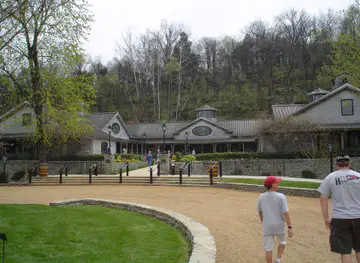
 Highland Rim
Explore Tennessee’s Highland Rim for limestone uplands, caves, waterfalls, state parks, whiskey heritage and small-town landscapes near Nashville.
-

-


Swipe for more regions
Explore more

Explore more of Tennessee
Discover Tennessee: A melting pot of music, history, and natural beauty, offering visitors an authentic taste of Southern hospitality and unforgettable experiences.
Explore Tennessee