

Ruby Falls Travel Guide - Free Web & App
Your ultimate guide to Ruby Falls. Discover top landmarks, proposed trips, and local tips. Free on the web or via the Evendo companion app.


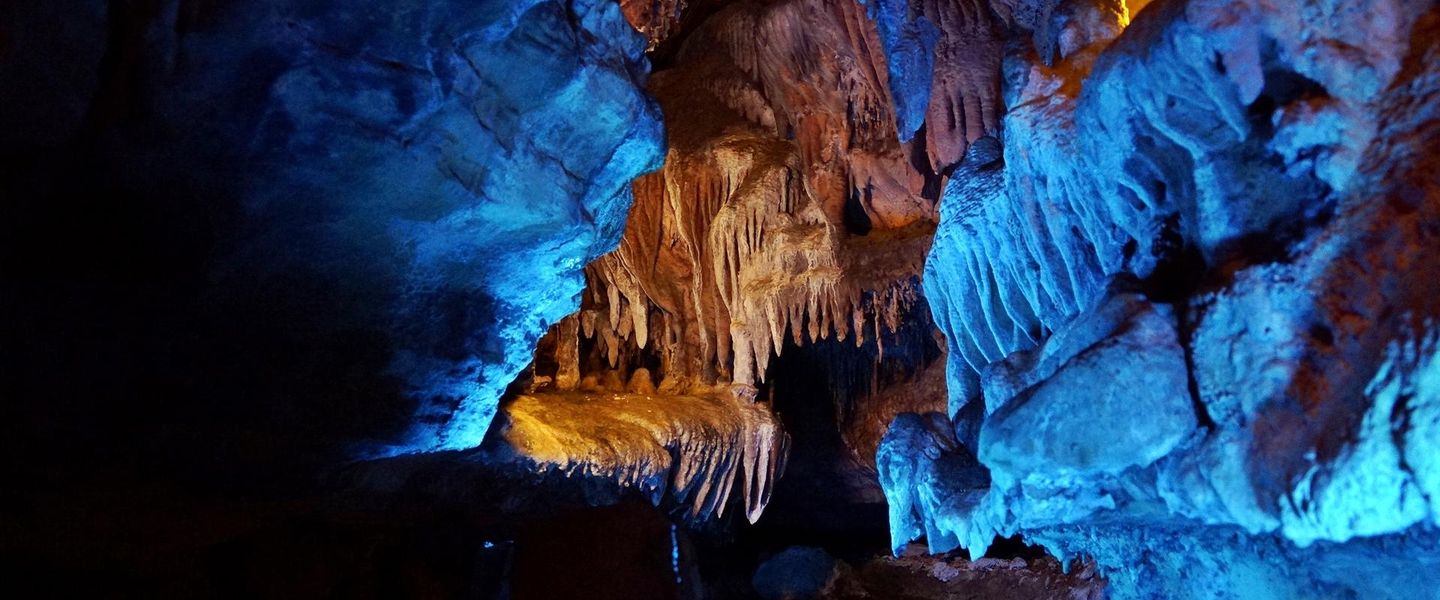


Ruby Falls in Tennessee, United States: explore an underground waterfall, cave tour, Lookout Mountain and Chattanooga views, history and adventure.
Geology and Setting
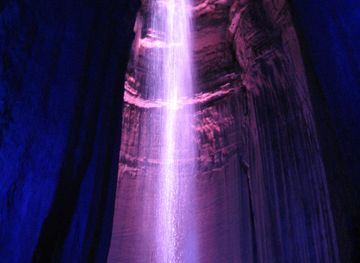
Ruby Falls is an underground waterfall and cave attraction within Lookout Mountain, immediately south of Chattanooga in southeastern Tennessee. Beneath the mountain's forested slopes, a lift descends to a limestone cavern discovered in the early twentieth century, where guided tours lead through passages, chambers and formations to Ruby Falls, a 145-foot waterfall deep below the surface. The cave belongs to the broader karst landscape of the Cumberland Plateau and Appalachian region, where water has gradually dissolved limestone to create caves, subterranean streams and sculpted rock formations.Read more about Ruby Falls
The Cave Experience
Lookout Mountain and Chattanooga
When is the best time to visit Ruby Falls?
Best: May, September–October · 22–28°C| Month | High (°C) | Rainfall (mm) |
|---|---|---|
| January | 8 | 120 |
| February | 10 | 115 |
| March | 16 | 130 |
| April | 21 | 125 |
| May (best) | 27 | 115 |
| June | 30 | 115 |
| July | 32 | 130 |
| August | 32 | 110 |
| September (best) | 28 | 105 |
| October (best) | 22 | 100 |
| November | 16 | 110 |
| December | 11 | 130 |
Getting to and around Ruby Falls
How to get there
Transportation
Best attractions in Ruby Falls
-
Tourist attraction
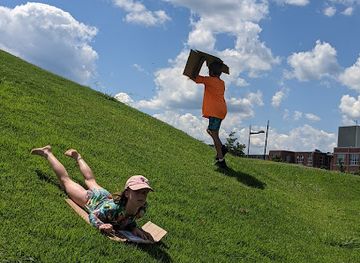
Cardboard Hill
Explore Cardboard Hill in Chattanooga, a serene tourist attraction offering breathtaking views and a peaceful escape into nature's beauty.
Explore Ruby Falls on the map
Plan your trip on one map. See where the top attractions, landmarks, restaurants and hotels are, and book hotels and experiences in a few clicks.
Best hotels in Ruby Falls
Best shops in Ruby Falls
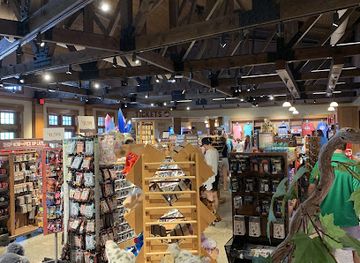
Shopping at Ruby Falls is centred on visitor-oriented purchases associated with the attraction, including souvenirs and geological or regional gift items, rather than a broad retail district. More substantial shopping is found in Chattanooga, where independent shops, galleries, outdoor retailers, bookshops, food businesses and larger commercial areas serve both residents and visitors. Lookout Mountain's other attractions may also offer their own gift shops, but they operate separately from Ruby Falls and should not be treated as one marketplace. Regional products may include locally made food, crafts, artwork and goods inspired by Tennessee's landscapes, though selection varies between businesses. Visitors seeking practical equipment for hiking or exploring the wider area will generally find a broader choice in Chattanooga than on the mountain, while Ruby Falls is most convenient for a memento connected directly with the cave and waterfall.
-
Tourist attraction
Ruby Falls
Discover the enchanting beauty of Ruby Falls, a stunning underground waterfall nestled in the heart of Chattanooga, Tennessee.
Get your free copy of our complete guide to Ruby Falls, delivered straight to you.
Everything on this page, from attractions and restaurants to essentials and local phrases, in one PDF you can read offline, print or share.
Already have an account? Sign in
Your Ruby Falls guide is ready.
We'll send it to · Not you? Sign out

Getting your guide ready…
We are putting together a fresh copy of the Ruby Falls guide. This can take up to a minute.
This can take a few moments. If your browser asks, choose Allow so the download can start. You'll find the guide in your Downloads folder.
Nothing happened? Download it again
Sorry, the guide is taking longer than usual. Please try again in a minute, or get it by email instead.
Ruby Falls essentials
Currency and Payment
Safety
Emergency Situations
Do's and Don'ts
Local Tips
From Eve
Local phrases worth knowing
You don't need to get them perfect. A few words go a long way, and locals appreciate the effort.
Basics
| English | Local | Say it |
|---|---|---|
| Hello | Howdy | [haw-dee] |
| Goodbye | See ya | [see yuh] |
| Yes | Yep | [yep] |
| No | Nah | [nah] |
| Please/You're welcome | Please/You're welcome | [Please/You're welcome] |
| Thank you | Thank ya | [thank yuh] |
| Excuse me/Sorry | Pardon me | [par-dun me] |
| How are you? | How y'all doin'? | [how y'all doin'] |
| Fine. And you? | Fine. How 'bout you? | [fine. how 'bout yuh] |
| Do you speak English? | Ya speak English? | [ya speak english?] |
| I don't understand | I reckon I don't get ya | [I reckon I don't get yuh] |
Eating & Drinking
| English | Local | Say it |
|---|---|---|
| I'd like to see the menu, please | I'd like to see what y'all got to eat, please | [I'd like to see what y'all got to eat, please] |
| I don't eat meat | I don't eat no meat | [I don't eat no meat] |
| Cheers! | Cheers! | [Cheers!] |
| I would like to pay, please | I reckon I'll pay now, please | [I reckon I'll pay now, please] |
Emergencies
| English | Local | Say it |
|---|---|---|
| Help! | Help! | [Help!] |
| Go away! | Git! | [Git!] |
| Call the Police! | Call the Sheriff! | [Call the Sheriff!] |
| Call a doctor! | Call a doc! | [Call a doc!] |
| I'm lost | I'm turned around | [I'm turned around] |
| I'm ill | I'm feelin' poorly | [I'm feelin' poorly] |
Shopping
| English | Local | Say it |
|---|---|---|
| I'd like to buy... | I'm lookin' to buy... | [I'm lookin' to buy...] |
| I'm just looking | Just browsin' | [Just browsin'] |
| How much is it? | How much does it cost? | [How much does it cost?] |
| That's too expensive | That's too pricey | [That's too pricey] |
| Can you lower the price? | Can ya do any better on the price? | [Can ya do any better on the price?] |
Time & Numbers
| English | Local | Say it |
|---|---|---|
| What time is it? | What time is it? | [What time is it?] |
| It's one o'clock | It's one o'clock | [It's one o'clock] |
| Half past (10) | Half past ten | [Half past ten] |
| Morning | Mornin' | [Mornin'] |
| Afternoon | Afternoon | [Afternoon] |
| Evening | Evenin' | [Evenin'] |
| Yesterday | Yest'day | [Yest'day] |
| Today | Today | [Today] |
| Tomorrow | Tomorra | [Tomorra] |
| 1 | One | [One] |
| 2 | Two | [Two] |
| 3 | Three | [Three] |
| 4 | Four | [Four] |
| 5 | Five | [Five] |
| 6 | Six | [Six] |
| 7 | Seven | [Seven] |
| 8 | Eight | [Eight] |
| 9 | Nine | [Nine] |
| 10 | Ten | [Ten] |
Transport & Directions
| English | Local | Say it |
|---|---|---|
| Where's a/the...? | Where's a/the...? | [Where's a/the...?] |
| What's the address? | What's the address? | [What's the address?] |
| Can you show me (on the map)? | Can you show me (on the map)? | [Can you show me (on the map)?] |
| When's the next (bus)? | When's the next (bus)? | [When's the next (bus)?] |
| A ticket (to ....) | A ticket (to ....) | [A ticket (to ....)] |
History of Ruby Falls
Limestone Landscape Beneath Lookout Mountain
Ruby Falls lies within limestone strata shaped over great spans of geological time. Rainwater entering the mountain has interacted with soluble rock, gradually enlarging cracks and creating subterranean passages, chambers and drainage routes. The cave's formations, including stalactites and stalagmites, developed as mineral-rich water deposited calcite over long periods. This geological history explains both the existence of the cave and the waterfall that appears within it, while also placing Ruby Falls within the wider karst landscapes of Tennessee and the southern Appalachian region.
Lookout Mountain Before Ruby Falls
Lookout Mountain has long been a prominent natural feature above the Tennessee River and Chattanooga. Indigenous peoples used the wider region before European-American settlement, and the mountain later became associated with agriculture, transport, military history and scenic tourism. During the American Civil War, Lookout Mountain was involved in the Chattanooga campaign, including the engagement remembered as the Battle of Lookout Mountain in November 1863. That history belongs to the wider mountain and Chattanooga area rather than to the underground waterfall itself, but it helped establish Lookout Mountain as a place of both strategic and cultural importance.
Leo Lambert and the Cave Discovery
Ruby Falls was discovered in 1928 by Leo Lambert, who led an effort to investigate the underground spaces beneath Lookout Mountain. Work began in connection with the search for the earlier Lookout Mountain Cave, whose natural entrance had become inaccessible after the construction of a railway tunnel. While extending an elevator shaft, the explorers reached a previously unknown cavern system. Lambert later named the waterfall Ruby Falls after his wife, Ruby, giving the newly accessible attraction the identity it retains today.
Opening as a Tourist Attraction
After the discovery, the cave was developed for visitors with an elevator and a managed underground route. Ruby Falls opened to the public in 1930, joining the growing group of scenic attractions that turned Lookout Mountain into a major tourism destination. Guided interpretation made the cave accessible to people without specialist caving experience, while electric lighting allowed visitors to see its formations and waterfall. The attraction's continuing appeal reflects the period's fascination with underground exploration as well as Chattanooga's emergence as a regional travel centre.
Conservation and Modern Interpretation
Modern visits take place within a carefully managed cave environment where water, rock formations and visitor movement remain closely connected. The attraction's interpretation links geological processes with the history of discovery and tourism, while established routes reduce unnecessary disturbance to the cave. Ruby Falls is now recognised as one of the best-known visitor attractions associated with Chattanooga and Lookout Mountain, although its identity remains rooted in the limestone landscape and the underground falls that first brought visitors beneath the mountain.
Ruby Falls in Photos
Browse through our photo collection highlighting the charm and character of the destination.
Neighbouring destination travel guides
The closest destinations to Ruby Falls, if you have time for more than one.
-

-

-

-
-


Swipe for more destinations
Explore more
Explore more of Chattanooga Valley
Explore Chattanooga Valley in northwest Georgia for Civil War heritage, wooded ridges, open countryside and easy access to Chattanooga.
Explore Chattanooga Valley
Explore more of Tennessee
Discover Tennessee: A melting pot of music, history, and natural beauty, offering visitors an authentic taste of Southern hospitality and unforgettable experiences.
Explore Tennessee