

Lookout Mountain Travel Guide - Free Web & App
Your ultimate guide to Lookout Mountain. Discover top landmarks, proposed trips, and local tips. Free on the web or via the Evendo companion app.


Lookout Mountain, Tennessee, combines Civil War history, Ruby Falls, wooded trails and Chattanooga views with caves, geology and outdoor adventure.
A Mountain Overlooking the Tennessee Valley
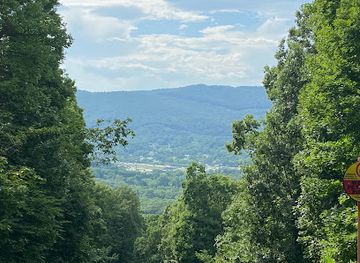
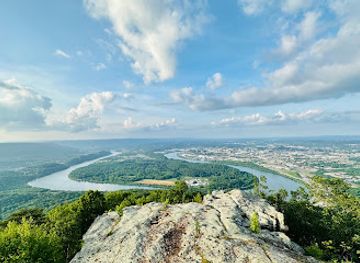
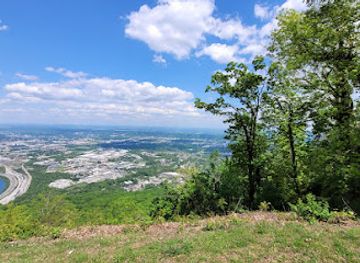
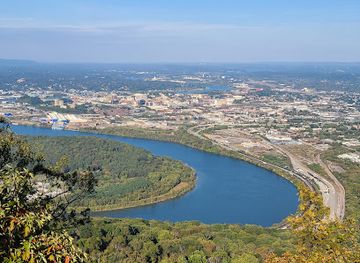
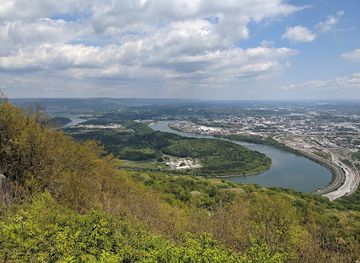
Lookout Mountain rises dramatically above Chattanooga in south-eastern Tennessee, forming a long, forested escarpment whose sandstone cliffs and broad viewpoints look across the Tennessee River and the city below. The mountain continues south into Georgia, but the Tennessee section is closely associated with Chattanooga's Civil War sites, underground caverns and wooded recreation areas. Its steep western face gives the landscape much of its character, with roads, footpaths and historic sites occupying the plateau and slopes rather than a single compact visitor centre.Read more about Lookout Mountain
Geology, Caves and Scenic Attractions
History on the Ridge
When is the best time to visit Lookout Mountain?
Best: May, September–October · 21–28°C| Month | High (°C) | Rainfall (mm) |
|---|---|---|
| January | 10 | 130 |
| February | 13 | 120 |
| March | 17 | 140 |
| April | 22 | 120 |
| May (best) | 27 | 120 |
| June | 30 | 110 |
| July | 32 | 130 |
| August | 31 | 110 |
| September (best) | 28 | 100 |
| October (best) | 21 | 90 |
| November | 16 | 110 |
| December | 11 | 130 |
Getting to and around Lookout Mountain
How to get there
Transportation
Best attractions in Lookout Mountain
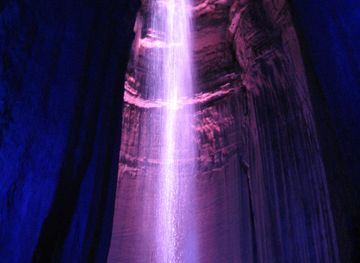
Lookout Mountain's principal attractions bring together Civil War history, underground geology and elevated views above Chattanooga. Point Park, within Chickamauga and Chattanooga National Military Park, contains monuments and interpretive features linked to the 1863 Battle of Lookout Mountain, while the nearby Battles for Chattanooga Museum presents the wider campaign through maps, displays and multimedia interpretation. Ruby Falls leads visitors by guided tour into caverns beneath the mountain to an underground waterfall. On the lower slope, the Lookout Mountain Incline Railway climbs from St Elmo towards the summit and offers a historic way to experience the escarpment. Roads and footpaths provide access to wooded scenery, overlooks and sections of the battlefield, although sites are dispersed and conditions vary. The mountain's continuation into Georgia includes Rock City, but that attraction lies outside Tennessee and should not be confused with the Chattanooga-side attractions.
-
Botanical garden
Rock City Gardens
Explore Rock City Gardens, a stunning botanical garden on Lookout Mountain, offering breathtaking views, unique rock formations, and enchanting landscapes.
-
Tourist attraction
Guild-Hardy Trailhead, Lookout Mountain Trails
Discover the beauty of Guild-Hardy Trailhead on Lookout Mountain, a top hiking destination with stunning views and diverse trails for all levels.
-
Historical place
Chickamauga & Chattanooga National Military Park
Discover the rich history and breathtaking landscapes at Chickamauga & Chattanooga National Military Park, a premier historical site in Tennessee.
-
Tourist attraction
John C. Wilson Memorial Park
Explore the natural beauty of John C. Wilson Memorial Park in Chattanooga, a perfect blend of tranquility, outdoor activities, and scenic views.

Best landmarks in Lookout Mountain
Lookout Mountain's defining landmark is the long sandstone escarpment rising above the Tennessee River and Chattanooga, a natural feature that explains both its strategic military importance and its scenic appeal. Point Park is the best-known historic landmark on the Tennessee section, preserving monuments and commemorative features associated with the Battle of Lookout Mountain and the wider Chattanooga Campaign. Ruby Falls is the mountain's most distinctive geological attraction, a cave and underground waterfall reached through passages beneath the ridge. The Lookout Mountain Incline Railway is an important transport landmark on the western slope, linking St Elmo with the summit area. The mountain continues into Georgia, where Rock City is located; it is a separate landmark outside Tennessee rather than part of the Chattanooga-side area.
-
Park
Point Park
Experience breathtaking views and rich Civil War history at Point Park on Lookout Mountain, a must-visit park for every traveler in Tennessee.
-
Historical landmark
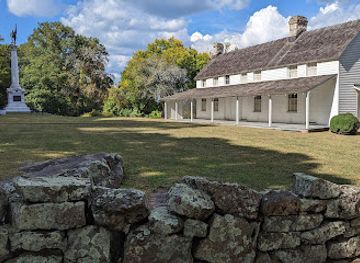
Cravens House
Explore Cravens House, a historical landmark on Lookout Mountain, blending rich history with stunning vistas perfect for hiking and photography.
-
Museum
Battles For Chattanooga Museum
Explore the Battles For Chattanooga Museum, where the history of the Civil War comes alive through dynamic exhibits and breathtaking views.
-
Historical place
Chickamauga & Chattanooga National Military Park
Explore the historic Chickamauga & Chattanooga National Military Park, a sanctuary of Civil War history and stunning natural beauty.
Explore Lookout Mountain on the map
Plan your trip on one map. See where the top attractions, landmarks, restaurants and hotels are, and book hotels and experiences in a few clicks.
Best hotels in Lookout Mountain
Best restaurants in Lookout Mountain
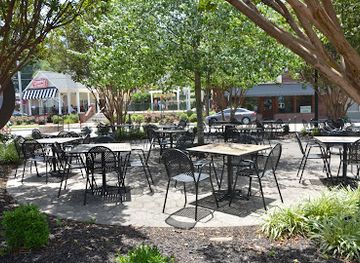
Dining is concentrated in Chattanooga and the communities at Lookout Mountain's base rather than on the more wooded summit sections. Visitors can find the broadest choice around downtown, St Elmo and the southern neighbourhoods, with restaurants, cafés, bakeries and casual food businesses serving regional American cooking alongside contemporary and international styles. Chattanooga's culinary identity reflects the wider South through dishes such as barbecue, biscuits, fried chicken and seasonal produce, while the Tennessee River valley contributes local agricultural and craft-food traditions. Traditional diners and independent eateries are useful before or after visiting the mountain, and some accommodation areas provide their own meals. At the attractions themselves, food provision may be limited or oriented towards visitors, so a packed meal and water can be practical for longer periods outdoors. The nearby Georgia side has additional dining, but it is outside the Tennessee destination.
-
Seafood
1885 Grill
Experience Southern hospitality and fresh seafood at 1885 Grill in Chattanooga – your go-to destination for brunch and dinner.
-
Barbecue
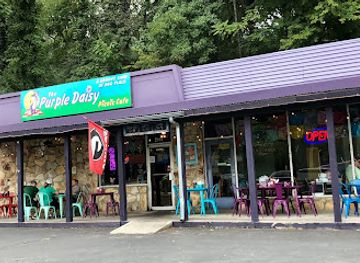
The Purple Daisy Picnic Cafe
Experience authentic barbecue delights at The Purple Daisy Picnic Cafe in St. Elmo - where flavor meets comfort in every bite.
-
Restaurant
Massey's Kitchen
Experience exquisite Southern cuisine with breathtaking views at Massey's Kitchen on Lookout Mountain.
-
Grill
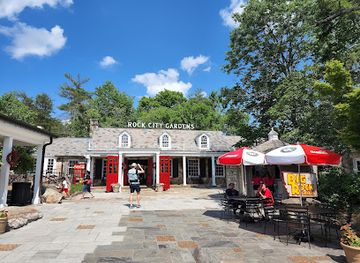
Rock City’s Big Rock Grill
Experience exquisite grilled dishes at Rock City's Big Rock Grill, where delicious flavors meet stunning mountain views.
Best bars in Lookout Mountain
Lookout Mountain itself is not a nightlife district, and evening options become sparse away from the residential communities and attraction areas. For a quiet evening, visitors may find hospitality at accommodation, restaurants or traditional-style pubs around the mountain's lower slopes, while Chattanooga provides the region's principal choice of bars, breweries, live music venues and late-opening restaurants. Downtown Chattanooga, several miles from the summit, has a more developed evening scene, with entertainment concentrated in the urban core rather than on the ridge. St Elmo offers a convenient base near the Incline Railway but remains primarily a neighbourhood setting. Opening arrangements and entertainment schedules vary, so visitors should check directly before travelling after dark, particularly if returning along winding mountain roads.
-
Brewery
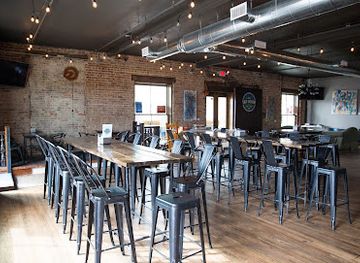
The Tap House & Empyreal Brewing Co.
Discover Chattanooga's premier brewpub, The Tap House & Empyreal Brewing Co., where craft beer meets mouthwatering food in a vibrant setting.
-
Restaurant
Massey's Kitchen
Discover the perfect blend of local flavors and stunning views at Massey's Kitchen in Lookout Mountain, Tennessee.
-
Bar
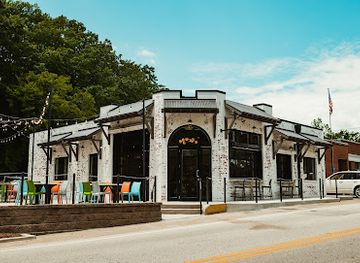
The Woodshop
Discover the eclectic charm of The Woodshop, Chattanooga's premier live music bar, where great drinks meet unforgettable performances.
-
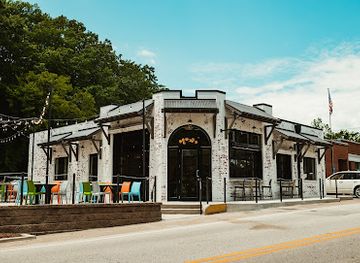
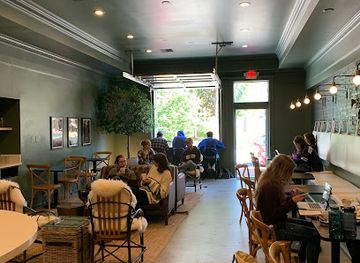
Coffee shop
Canopy Coffee and Wine Bar
Discover the perfect blend of artisanal coffee and fine wines at Canopy Coffee and Wine Bar, a scenic retreat on Lookout Mountain.

Best shops in Lookout Mountain
Shopping on Lookout Mountain is limited and local in character, with the main practical choices found in Chattanooga and the communities at the foot of the ridge. Attraction shops provide books, maps, souvenirs and merchandise connected with Ruby Falls, the Incline Railway and Civil War interpretation, while Chattanooga's urban districts offer independent retailers, galleries, outdoor equipment shops and food businesses. Regional purchases may include Tennessee-made foods, craft beverages, artwork and small-batch gifts, although exact stock varies between businesses. Visitors staying on the mountain should not expect an extensive retail centre or a large permanent market. For provisions, specialist outdoor equipment and a wider selection of local products, Chattanooga is the most dependable shopping base; the retail area around Rock City is in Georgia and lies outside this Tennessee destination.
-
Gift shop
Incline Gifts
Discover unique souvenirs and local crafts at Incline Gifts, your go-to gift shop on Lookout Mountain, Tennessee.
-
Gift shop
Rock City
Experience the breathtaking views and unique rock formations at Rock City on Lookout Mountain, a must-visit destination for nature lovers.
-
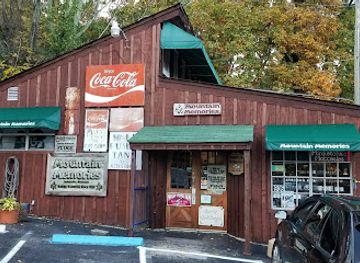
Souvenir store
Mountain Memories
Explore Mountain Memories, a unique souvenir store in Chattanooga featuring local crafts, antiques, and handcrafted gifts that capture the spirit of the region.
-
Coffee shop
Canopy Coffee and Wine Bar
Discover the perfect blend of coffee and wine at Canopy Coffee and Wine Bar, where breathtaking views and delightful sips await every visitor.



Get your free copy of our complete guide to Lookout Mountain, delivered straight to you.
Everything on this page, from attractions and restaurants to essentials and local phrases, in one PDF you can read offline, print or share.
Already have an account? Sign in
Your Lookout Mountain guide is ready.
We'll send it to · Not you? Sign out

Getting your guide ready…
We are putting together a fresh copy of the Lookout Mountain guide. This can take up to a minute.
This can take a few moments. If your browser asks, choose Allow so the download can start. You'll find the guide in your Downloads folder.
Nothing happened? Download it again
Sorry, the guide is taking longer than usual. Please try again in a minute, or get it by email instead.
Lookout Mountain essentials
Currency and Payment
Safety
Emergency Situations
Do's and Don'ts
Local Tips
From Eve
Local phrases worth knowing
You don't need to get them perfect. A few words go a long way, and locals appreciate the effort.
Basics
| English | Local | Say it |
|---|---|---|
| Hello | Howdy | [hah-dee] |
| Goodbye | See ya | [see yuh] |
| Yes | Yup | [yuhp] |
| No | Naw | [naw] |
| Please/You're welcome | Please/No problem | [pleez/no prob-lem] |
| Thank you | Thanks | [thanks] |
| Excuse me/Sorry | Excuse me/My bad | [ex-cuse me/my bad] |
| How are you? | How y'all doin'? | [how y'all doin'] |
| Fine. And you? | Fine. And you? | [fine. and yuh?] |
| Do you speak English? | Y'all speak English? | [y'all speak english?] |
| I don't understand | I don't git it | [I don't git it] |
Eating & Drinking
| English | Local | Say it |
|---|---|---|
| I'd like to see the menu, please | Can I see the menu, please | [can i see the menu, please] |
| I don't eat meat | I don't eat meat | [I don't eat meat] |
| Cheers! | Cheers! | [cheers!] |
| I would like to pay, please | Can I pay, please | [can i pay, please] |
Emergencies
| English | Local | Say it |
|---|---|---|
| Help! | Help! | [help!] |
| Go away! | Git outta here! | [git outta here!] |
| Call the Police! | Call the Sheriff! | [call the sheriff!] |
| Call a doctor! | Call a doc! | [call a doc!] |
| I'm lost | I'm lost | [I'm lost] |
| I'm ill | I'm sick | [I'm sick] |
Shopping
| English | Local | Say it |
|---|---|---|
| I'd like to buy... | I'd like to buy... | [I'd like to buy...] |
| I'm just looking | I'm just lookin' | [I'm just lookin'] |
| How much is it? | How much is it? | [How much is it?] |
| That's too expensive | That's too high | [that's too high] |
| Can you lower the price? | Can y'all lower the price? | [can y'all lower the price?] |
Time & Numbers
| English | Local | Say it |
|---|---|---|
| What time is it? | What time is it? | [What time is it?] |
| It's one o'clock | It's one o'clock | [It's one o'clock] |
| Half past (10) | Half past (10) | [Half past (10)] |
| Morning | Mornin' | [Mornin'] |
| Afternoon | Afternoon | [Afternoon] |
| Evening | Evenin' | [Evenin'] |
| Yesterday | Yesterday | [Yesterday] |
| Today | Today | [Today] |
| Tomorrow | Tomorrow | [Tomorrow] |
| 1 | One | [One] |
| 2 | Two | [Two] |
| 3 | Three | [Three] |
| 4 | Four | [Four] |
| 5 | Five | [Five] |
| 6 | Six | [Six] |
| 7 | Seven | [Seven] |
| 8 | Eight | [Eight] |
| 9 | Nine | [Nine] |
| 10 | Ten | [Ten] |
Transport & Directions
| English | Local | Say it |
|---|---|---|
| Where's a/the...? | Where's a/the...? | [Where's a/the...?] |
| What's the address? | What's the address? | [What's the address?] |
| Can you show me (on the map)? | Can you show me (on the map)? | [Can you show me (on the map)?] |
| When's the next (bus)? | When's the next (bus)? | [When's the next (bus)?] |
| A ticket (to ....) | A ticket (to ....) | [A ticket (to ....)] |
History of Lookout Mountain
A Sandstone Ridge Above the River
Lookout Mountain is part of the Appalachian Ridge-and-Valley province, a landscape shaped over immense geological timescales by folded and eroded sedimentary rock. Its resistant sandstone cap helped form the elevated ridge and cliffs that overlook the Tennessee River near Chattanooga. Caves, springs, ravines and exposed rock developed through the interaction of bedrock, groundwater and weathering. This geological setting is especially evident at Ruby Falls, where subterranean passages beneath the mountain became one of the area's defining visitor attractions.
Indigenous Homelands and Early Settlement
The mountain and the Tennessee Valley formed part of the wider homeland and travelling landscape of Indigenous peoples, including the Cherokee, before and during the period of expanding United States settlement. Chattanooga's location at a river crossing and transport junction encouraged later agricultural, commercial and residential growth around the mountain. The ridge remained a prominent natural reference point, while roads and settlements developed mainly in the valley and at the base rather than across the steepest slopes.
The Civil War Campaigns of 1863
Lookout Mountain became strategically important during the American Civil War because its heights commanded views over Chattanooga and the Tennessee River approaches. Confederate and Union forces fought on and around the mountain during the Chattanooga Campaign. On 24 November 1863, Union troops attacked the mountain in the engagement later known as the Battle of Lookout Mountain. The following day's fighting at Missionary Ridge helped break the Confederate position and opened the route towards the Deep South. Monuments, roads and preserved earthworks now form part of the Chickamauga and Chattanooga National Military Park.
Caves and Scenic Tourism
Modern tourism developed as Chattanooga became connected to expanding road and rail networks and visitors sought elevated scenery, dramatic geology and Civil War history. Ruby Falls was discovered in 1928 by Leo Lambert during exploration of a cave reached through a shaft drilled into Lookout Mountain. It opened to visitors soon afterwards and became a major commercial attraction. Scenic roads, viewpoints and the Lookout Mountain Incline Railway, which began operating in the late nineteenth century, further linked the mountain with Chattanooga's developing visitor economy.
Preservation and Contemporary Recreation
Historic preservation on Lookout Mountain is closely tied to the establishment of Chickamauga and Chattanooga National Military Park in the late nineteenth century, one of the earliest large-scale national military parks in the United States. Point Park and related sites protect monuments and battlefield landscapes, while the mountain's caves, forests and slopes support present-day recreation. Conservation, interpretation and tourism now operate alongside residential development and transport routes, making careful respect for protected historic features and natural terrain important to the visitor experience.
Lookout Mountain in Photos
Browse through our photo collection highlighting the charm and character of the destination.
Neighbouring destination travel guides
The closest destinations to Lookout Mountain, if you have time for more than one.
-

-

-

-
-


Swipe for more destinations
Explore more
Explore more of Chattanooga Valley
Explore Chattanooga Valley in northwest Georgia for Civil War heritage, wooded ridges, open countryside and easy access to Chattanooga.
Explore Chattanooga Valley
Explore more of Tennessee
Discover Tennessee: A melting pot of music, history, and natural beauty, offering visitors an authentic taste of Southern hospitality and unforgettable experiences.
Explore Tennessee