

Fall Creek Falls State Park Travel Guide - Free Web & App
Your ultimate guide to Fall Creek Falls State Park. Discover top landmarks, proposed trips, and local tips. Free on the web or via the Evendo companion app.


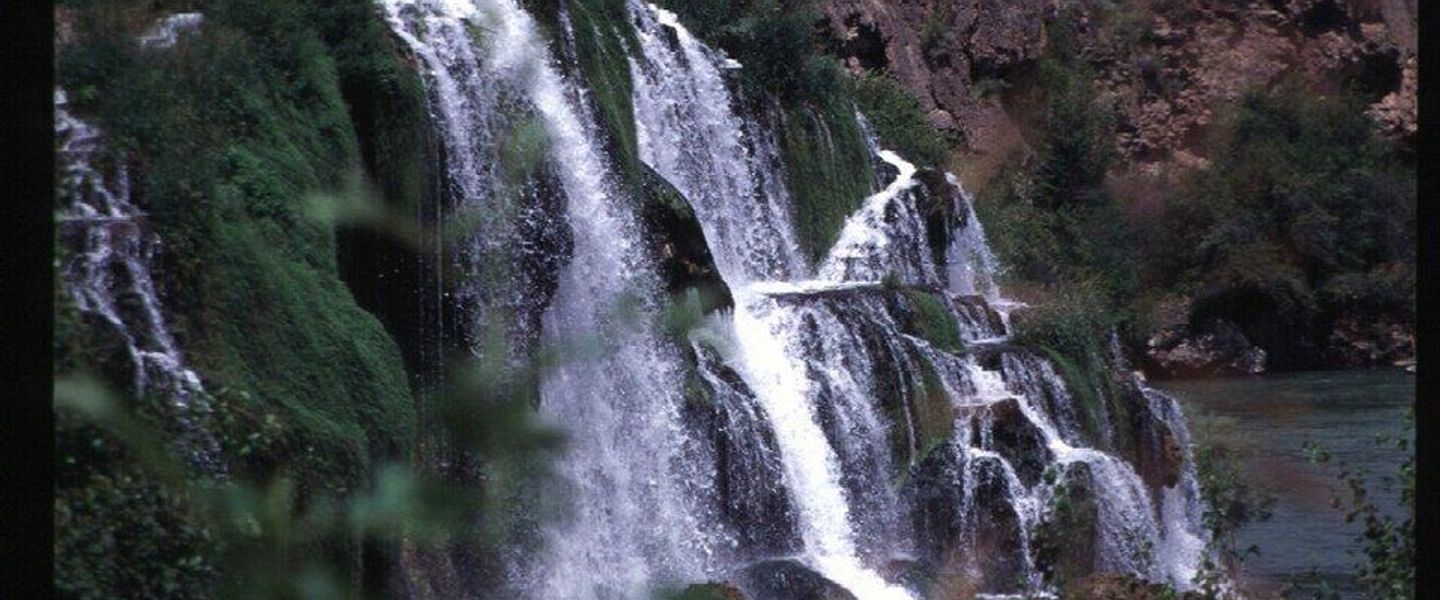


Fall Creek Falls State Park in Tennessee pairs towering waterfalls, gorge trails, forested plateaux, lake views and outdoor adventures near the Cumberland Plateau.
Waterfalls and Plateau Landscapes
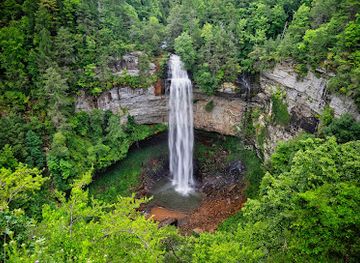
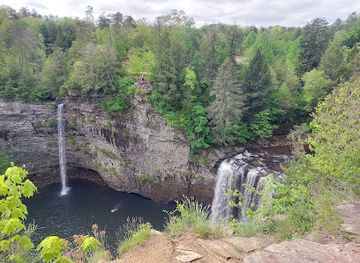
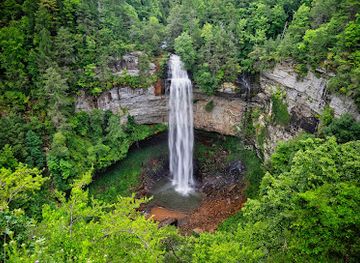
Fall Creek Falls State Park occupies a broad, forested section of Tennessee’s Cumberland Plateau, where streams cut deeply into sandstone and limestone before reaching Cane Creek Gorge and Fall Creek Gorge. The park’s signature waterfall drops 256 feet into a wooded ravine, while nearby Cane Creek Falls descends beside a suspension bridge and a network of overlooks. Cliffs, rock shelters, deciduous woodland, narrow streams and seasonal cascades give the landscape a texture that changes with rainfall and light. The park is one of Tennessee’s largest and most varied protected recreation areas, with attractions spread across a substantial rural landscape rather than concentrated in a single village.Read more about Fall Creek Falls State Park
Exploring the Park
Rural Tennessee Character
When is the best time to visit Fall Creek Falls State Park?
Best: May–June, September · 25–29°C| Month | High (°C) | Rainfall (mm) |
|---|---|---|
| January | 7 | 110 |
| February | 9 | 100 |
| March | 15 | 125 |
| April | 20 | 110 |
| May (best) | 25 | 125 |
| June (best) | 29 | 105 |
| July | 31 | 130 |
| August | 30 | 110 |
| September (best) | 26 | 100 |
| October | 20 | 95 |
| November | 15 | 110 |
| December | 8 | 115 |
Getting to and around Fall Creek Falls State Park
How to get there
Transportation
Best attractions in Fall Creek Falls State Park
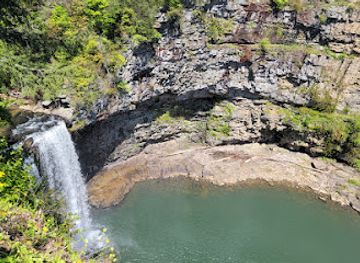
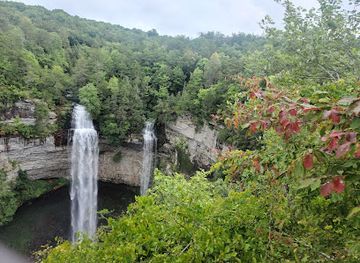
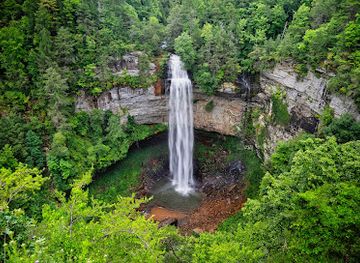
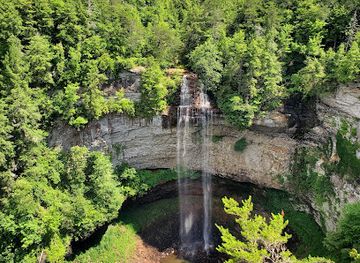
Fall Creek Falls is the park’s defining sight, dropping into a wooded gorge reached by established viewpoints and trails, while nearby Cane Creek Falls offers another major cascade beside the Cane Creek Gorge area. The suspension bridge over Cane Creek provides a memorable crossing and access to walks through the surrounding woodland. Fall Creek Falls Lake adds a different landscape of open water, coves and forested shoreline, with boating and swimming subject to current park arrangements. Trails range from relatively accessible routes near the principal overlooks to more demanding descents into the gorges, including paths towards stream crossings and lower viewpoints. The park’s wider recreation landscape includes picnic areas, a marina, campsites, cabins, a lodge and a golf course, while birdwatching and quiet wildlife observation are possible across its forests and waterways. Nearby Spencer and Pikeville provide rural gateways rather than attractions within the park itself.
-
 Lodge
LodgeThe Lodge at Fall Creek Falls
Experience the beauty of Tennessee at The Lodge at Fall Creek Falls, where nature meets comfort and adventure awaits at every turn.
-
Natural history museum
Fall Creek Falls Betty Dunn Nature Center
Explore the breathtaking landscapes and rich natural history at Fall Creek Falls Betty Dunn Nature Center, the perfect destination for nature lovers in Tennessee.
-
Horseback riding service
Fall Creek Falls Riding Stable
Discover the beauty of Tennessee's landscapes with scenic horseback riding at Fall Creek Falls Riding Stable, perfect for all skill levels.
-
Vista
Fall Creek Falls Overlook
Experience the stunning beauty of Fall Creek Falls Overlook, a breathtaking vista that showcases Tennessee's natural wonders and perfect for all nature lovers.
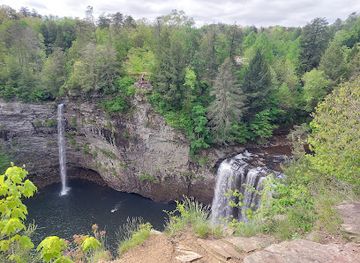
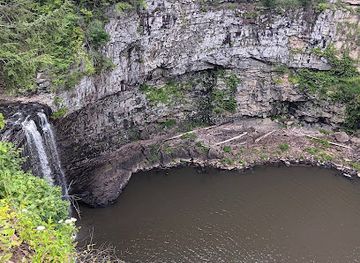
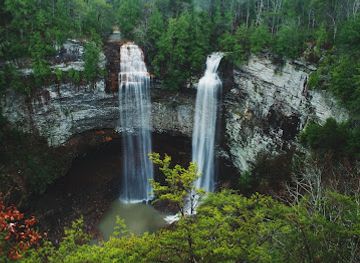
Best landmarks in Fall Creek Falls State Park
Fall Creek Falls is the park’s principal natural landmark, a 256-foot waterfall formed where Fall Creek reaches the deeply incised gorge below the Cumberland Plateau. Cane Creek Falls is another prominent cascade, associated with Cane Creek Gorge and the suspension bridge that crosses the stream nearby. The gorges themselves are significant landscape landmarks, exposing the contrast between wooded plateau, resistant rock ledges and narrow waterways. Fall Creek Falls Lake provides a larger, calmer water feature within the park’s recreation landscape, with forested shores and coves that differ markedly from the cliff-lined falls. The lodge, early park infrastructure and other visitor buildings reflect the development of Tennessee’s state-park system, while the wider woodland and ravines remain the dominant cultural and visual symbols of the area.
-
Waterfall
Fall Creek Falls
Explore Fall Creek Falls, one of the tallest waterfalls in the eastern U.S., surrounded by stunning landscapes and outdoor adventure opportunities.
-
Natural history museum
Fall Creek Falls Betty Dunn Nature Center
Discover the beauty and adventure of Fall Creek Falls, a natural history museum and hiking area perfect for nature lovers and explorers in Tennessee.
-
Visitor center
Fall Creek Falls Visitors Center
Discover the natural beauty and outdoor adventures at Fall Creek Falls Visitors Center in Tennessee, your perfect starting point for exploration.
-
Non-profit organization
Friends of Fall Creek Falls State Park
Discover the breathtaking beauty of Fall Creek Falls State Park, a nature lover's paradise in Tennessee with stunning waterfalls, hiking trails, and wildlife.
Explore Fall Creek Falls State Park on the map
Plan your trip on one map. See where the top attractions, landmarks, restaurants and hotels are, and book hotels and experiences in a few clicks.
Best hotels in Fall Creek Falls State Park
Best restaurants in Fall Creek Falls State Park
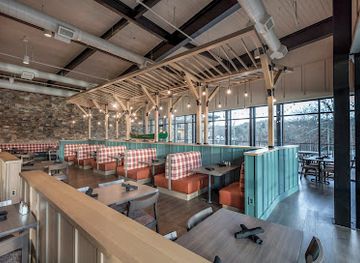
Dining within Fall Creek Falls State Park is centred on its principal visitor facilities rather than a village-style restaurant district. The lodge and park service areas may provide food options, but seasonal operation and current arrangements should be checked before relying on them. Visitors staying in cabins or campsites often plan self-catering meals, using supplies bought in nearby Spencer, Pikeville or other communities along the approach roads. The surrounding Cumberland Plateau has a practical rural food culture, with American breakfasts, burgers, barbecue, sandwiches and homestyle cooking more characteristic than a specialised destination cuisine. Farm shops and small grocery businesses may offer regional produce where available, while traditional cafés and local restaurants in the gateway communities are useful stops before or after time in the park. Those hiking remote trails should carry their own food and water rather than expecting refreshments near every attraction.
-
Restaurant
The Restaurant at Fall Creek Falls
Experience exceptional dining amid nature's beauty at The Restaurant at Fall Creek Falls in Tennessee.
Best bars in Fall Creek Falls State Park
Fall Creek Falls State Park is a quiet outdoor destination and does not have a nightclub district or a concentrated late-night entertainment scene. Evenings are more likely to involve a meal at accommodation facilities, conversation around an authorised campsite setting, or time spent observing the dark woodland and lake landscape, subject to park rules and weather. The nearest evening options are found in the small surrounding communities, particularly Spencer and Pikeville, where established local restaurants, bars or casual venues may provide a modest rural Tennessee atmosphere rather than a busy nightlife programme. Opening patterns and entertainment availability can vary, so visitors should not assume that late services are available after returning from a trail. Alcohol use must follow park regulations and responsible outdoor practice.
-
State park
Fall Creek Falls State Park
Explore the breathtaking waterfalls, scenic trails, and rich wildlife of Fall Creek Falls State Park in Tennessee, a true paradise for nature lovers.
-
Waterfall
Fall Creek Falls
Experience the breathtaking beauty of Fall Creek Falls, a majestic waterfall surrounded by picturesque landscapes and outdoor adventures in Tennessee.
-
Lodge
The Lodge at Fall Creek Falls
Discover the perfect blend of comfort and adventure at The Lodge at Fall Creek Falls, surrounded by stunning natural beauty in Tennessee.
-
Natural history museum
Fall Creek Falls Betty Dunn Nature Center
Discover the stunning landscapes and rich natural history at Fall Creek Falls Betty Dunn Nature Center, a must-visit for nature lovers in Tennessee.
Best shops in Fall Creek Falls State Park
Shopping inside Fall Creek Falls State Park is limited and focused on practical visitor needs, park-related goods and supplies available at principal facilities when operating. The most useful retail stops are generally in Spencer, Pikeville and communities encountered on the approach, where visitors can look for groceries, fuel, basic outdoor equipment and everyday provisions. The surrounding Cumberland Plateau is associated with rural food production, handmade goods and small independent businesses, but permanent craft markets or extensive specialist shopping should not be assumed. Local shops may provide a more authentic sense of the region than souvenir-oriented retail, with Appalachian-inspired crafts, artwork, preserves or locally produced food appearing according to the business and season. Visitors planning camping, hiking or self-catering should buy specialist equipment and substantial provisions before entering the park.
-
State park
Fall Creek Falls State Park
Explore the grandeur of Fall Creek Falls State Park, Tennessee's natural gem, featuring majestic waterfalls, lush forests, and endless outdoor adventures for all.
-
Waterfall
Fall Creek Falls
Experience the awe-inspiring beauty of Fall Creek Falls, a stunning waterfall and nature haven in Tennessee's picturesque landscape.
-
Lodge
The Lodge at Fall Creek Falls
Discover the perfect blend of adventure and relaxation at The Lodge at Fall Creek Falls, a nature retreat in Tennessee's stunning landscapes.
-
Natural history museum
Fall Creek Falls Betty Dunn Nature Center
Experience the beauty of nature and learn about Tennessee's rich biodiversity at Fall Creek Falls Betty Dunn Nature Center.


Get your free copy of our complete guide to Fall Creek Falls State Park, delivered straight to you.
Everything on this page, from attractions and restaurants to essentials and local phrases, in one PDF you can read offline, print or share.
Already have an account? Sign in
Your Fall Creek Falls State Park guide is ready.
We'll send it to · Not you? Sign out

Getting your guide ready…
We are putting together a fresh copy of the Fall Creek Falls State Park guide. This can take up to a minute.
This can take a few moments. If your browser asks, choose Allow so the download can start. You'll find the guide in your Downloads folder.
Nothing happened? Download it again
Sorry, the guide is taking longer than usual. Please try again in a minute, or get it by email instead.
Fall Creek Falls State Park essentials
Currency and Payment
Safety
Emergency Situations
Do's and Don'ts
Local Tips
From Eve
Local phrases worth knowing
You don't need to get them perfect. A few words go a long way, and locals appreciate the effort.
Basics
| English | Local | Say it |
|---|---|---|
| Hello | Howdy | [haw-dee] |
| Goodbye | See ya | [see yuh] |
| Yes | Yessir | [yes-sir] |
| No | Nah | [nah] |
| Please/You're welcome | Please/No problem | [pleez/no pro-blem] |
| Thank you | Thanks a lot | [thanks uh lot] |
| Excuse me/Sorry | Pardon me/My bad | [par-dun me/my bad] |
| How are you? | How y'all doin'? | [how y'all doin'] |
| Fine. And you? | Fine. How 'bout you? | [fine. how 'bout yuh] |
| Do you speak English? | Ya speak English? | [ya speak English?] |
| I don't understand | I ain't gettin' ya | [I ain't get-tin' yuh] |
Eating & Drinking
| English | Local | Say it |
|---|---|---|
| I'd like to see the menu, please | Can I check out the menu, please | [can I check out the menu, please] |
| I don't eat meat | I don't do meat | [I don't do meat] |
| Cheers! | Bottoms up! | [bottoms up!] |
| I would like to pay, please | I'm ready to settle up, please | [I'm ready to settle up, please] |
Emergencies
| English | Local | Say it |
|---|---|---|
| Help! | Git some help! | [git some help!] |
| Go away! | Shoo! | [shoo!] |
| Call the Police! | Ring the cops! | [ring the cops!] |
| Call a doctor! | Get a doc! | [get a doc!] |
| I'm lost | I'm turned around | [I'm turned around] |
| I'm ill | I'm feelin' poorly | [I'm feelin' poorly] |
Shopping
| English | Local | Say it |
|---|---|---|
| I'd like to buy... | I wanna snag... | [I wanna snag...] |
| I'm just looking | Jus' browsin' | [jus' browsin'] |
| How much is it? | What's the damage? | [what's the damage?] |
| That's too expensive | That's steep | [that's steep] |
| Can you lower the price? | Can ya cut me a deal? | [can ya cut me a deal?] |
Time & Numbers
| English | Local | Say it |
|---|---|---|
| What time is it? | What's the time? | [what's the time?] |
| It's one o'clock | It's one | [It's one] |
| Half past (10) | Half past ten | [half past ten] |
| Morning | Mornin' | [mornin'] |
| Afternoon | Afternoon | [afternoon] |
| Evening | Evenin' | [evenin'] |
| Yesterday | Yest'day | [yest'day] |
| Today | Today | [today] |
| Tomorrow | Tomorrah | [tomorrah] |
| 1 | One | [one] |
| 2 | Two | [two] |
| 3 | Three | [three] |
| 4 | Four | [four] |
| 5 | Five | [five] |
| 6 | Six | [six] |
| 7 | Seven | [seven] |
| 8 | Eight | [eight] |
| 9 | Nine | [nine] |
| 10 | Ten | [ten] |
Transport & Directions
| English | Local | Say it |
|---|---|---|
| Where's a/the...? | Where's the...? | [where's the...?] |
| What's the address? | What's the addy? | [what's the addy?] |
| Can you show me (on the map)? | Can ya show me (on the map)? | [can ya show me (on the map)?] |
| When's the next (bus)? | When's the next (bus)? | [when's the next (bus)?] |
| A ticket (to ....) | A ticket (to ....) | [A ticket (to ....)] |
History of Fall Creek Falls State Park
The Cumberland Plateau Landscape
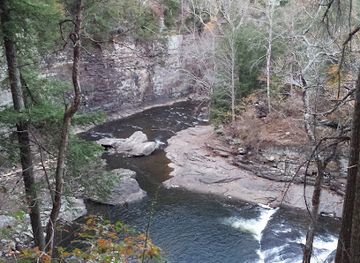
Fall Creek Falls lies within the Cumberland Plateau, an elevated region formed from layers of sedimentary rock deposited long before human settlement. Over geological time, streams eroded the plateau’s resistant sandstone and softer underlying strata, creating gorges, ledges, plunge pools and waterfalls. Fall Creek, Cane Creek and the surrounding tributaries continue to shape this terrain, while the plateau’s forests and rocky ravines provide the physical setting for the modern park. This geological history explains why relatively modest waterways can produce deep gorges and prominent falls across the area.
Early Human Presence
The Cumberland Plateau has long been used by Indigenous peoples, whose movement through the wider region followed streams, ridges and natural crossings. Later, Euro-American settlers established farms and small communities around the plateau, making use of its forests, streams and limited agricultural clearings. The area around today’s park remained predominantly rural, with settlement dispersed across a difficult landscape rather than forming a large town. Rock shelters, woodland and watercourses were part of a human environment shaped by travel, hunting, farming and resource use.
Farming, Forestry and Rural Settlement
Before the park became a major recreation destination, the surrounding plateau supported small-scale agriculture, timber use and other rural livelihoods. The terrain restricted intensive cultivation, while its forests supplied fuel and building material for local communities. Roads and improved access gradually connected isolated settlements with towns such as Spencer and Pikeville. These patterns of land use left a landscape in which farm clearings, woodland and steep gorge country existed close together, a character that remains visible beyond the park’s principal visitor areas.
A State Park Takes Shape
Fall Creek Falls State Park was established during the New Deal era in the late 1930s, when public investment in parks and recreation expanded across the United States. Civilian Conservation Corps workers contributed to early park development, including the construction of roads, trails and visitor facilities typical of the period. Public ownership helped protect the waterfalls, gorges, forests and lake country from more intensive private development while creating a recreational landscape accessible to residents and visitors from across Tennessee.
Conservation and Recreation
After its establishment, the park developed from a scenic preserve into a large recreation area with trails, campgrounds, cabins, a lodge, lake facilities and other visitor infrastructure. Conservation management has had to balance public access with the protection of cliffs, streams, forests and wildlife habitat. Water levels, storm damage, erosion and seasonal conditions continue to influence how the landscape is experienced. Today, Fall Creek Falls represents both the preservation of a characteristic Cumberland Plateau environment and the long history of Tennessee’s state-park movement.
Fall Creek Falls State Park in Photos
Browse through our photo collection highlighting the charm and character of the destination.
Neighbouring destination travel guides
The closest destinations to Fall Creek Falls State Park, if you have time for more than one.
-

-

-
-

-


Swipe for more destinations
Explore more

Explore more of Cumberland Plateau
Explore Tennessee’s Cumberland Plateau for sandstone gorges, waterfalls, forest trails, historic settlements and outdoor adventures across high country.
Explore Cumberland Plateau
Explore more of Tennessee
Discover Tennessee: A melting pot of music, history, and natural beauty, offering visitors an authentic taste of Southern hospitality and unforgettable experiences.
Explore Tennessee