

Free Upper Cumberland Travel Guide & Mobile App
Explore Upper Cumberland with free travel guides. Discover regional history, expert tips, proposed trips, and audio guides on web or mobile app.


Upper Cumberland, Tennessee combines plateau forests, waterfalls, state parks, historic communities and Appalachian foodways across a rewarding road-trip region.
Read more about Upper Cumberland
Getting to and around Upper Cumberland
How to get there
Transportation
Best attractions in Upper Cumberland
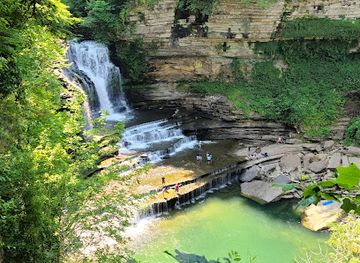
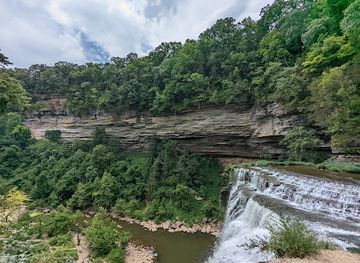
Upper Cumberland's attractions are shaped by its plateau geology and dispersed settlement. State parks provide the strongest concentration of outdoor experiences: Fall Creek Falls in Van Buren County combines waterfalls, gorges, forest trails and lake recreation; Cummins Falls near Cookeville is known for its dramatic cascade and controlled access; Burgess Falls near Baxter presents a series of falls descending towards Center Hill Lake; and Pickett State Rustic Park offers wooded trails, cliffs, caves and access to the scenic Big South Fork country nearby. Historic interpretation adds depth through Sgt. Alvin C. York State Historic Park in Fentress County, the Cordell Hull Birthplace and Museum near Byrdstown, and the Old Stone Fort archaeological park near Manchester. Cookeville has museums, galleries, university cultural venues and a walkable downtown, while Crossville provides a base for plateau recreation and heritage stops. Smaller towns contribute courthouse squares, local museums, antique shops, farm markets and seasonal community events. The experience is less about a single landmark than about moving between waterfalls, forests, working landscapes and places that explain how people have lived on the Cumberland Plateau.
-
Escape room center
The Escape Game Nashville (Opry Mills)
Experience immersive adventure at The Escape Game Nashville, where teamwork meets excitement in uniquely themed escape rooms for all ages.
-
State park
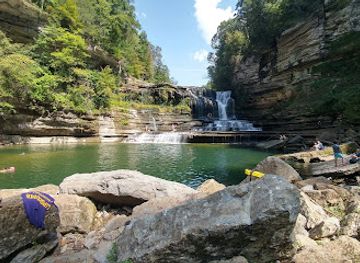
Cummins Falls State Park
Experience the stunning beauty of Cummins Falls State Park in Tennessee, where nature's wonders await with waterfalls, trails, and adventures.
-
State park
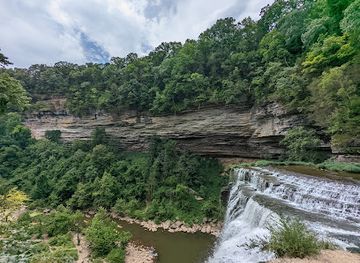
Burgess Falls State Park
Explore Burgess Falls State Park, a stunning natural retreat in Tennessee featuring breathtaking waterfalls, scenic trails, and rich wildlife.
-
State park
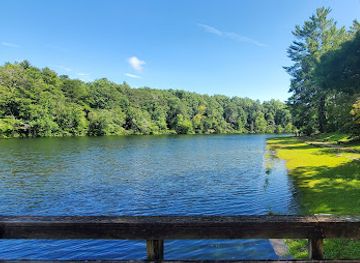
Cumberland Mountain State Park
Explore the breathtaking beauty of Cumberland Mountain State Park in Crossville, Tennessee, a nature lover's paradise with trails, lakes, and wildlife.

Best landmarks in Upper Cumberland
Fall Creek Falls is Upper Cumberland's most recognisable natural landmark, with a high waterfall, deep gorge and forested plateau setting that convey the scale of the region's erosion-carved landscape. Cummins Falls and Burgess Falls are smaller but visually distinctive water landmarks, each revealing how streams cut through the Cumberland Plateau towards larger river and reservoir systems. In the eastern region, Pickett State Rustic Park is known for sandstone cliffs, rock shelters and forest scenery, while the nearby Big South Fork landscape begins beyond the region's boundary and should not be confused with Upper Cumberland itself. The Old Stone Fort near Manchester is a major archaeological landmark: its enclosing walls are evidence of a prehistoric Indigenous ceremonial and community landscape, not a colonial military fort. The Cordell Hull Birthplace near Byrdstown and the buildings at Sgt. Alvin C. York State Historic Park are important cultural landmarks that connect local rural life with national political and military history. Cookeville's courthouse and historic commercial areas provide a more urban expression of the region's civic heritage.
-
Tourist attraction
Ruby Falls
Experience the breathtaking beauty of Ruby Falls, an underground waterfall nestled in Lookout Mountain, Chattanooga, offering adventure and natural wonder.
-
History museum
Andrew Jackson’s Hermitage
Delve into American history at Andrew Jackson's Hermitage, where the legacy of the 7th President comes to life through guided tours and engaging exhibits.
-
State park
Cummins Falls State Park
Explore the breathtaking Cummins Falls State Park in Tennessee, where stunning waterfalls and rich nature await outdoor enthusiasts and adventure seekers.
-
State park
Burgess Falls State Park
Experience the breathtaking beauty of waterfalls and hiking trails at Burgess Falls State Park in Tennessee, a must-visit destination for nature lovers.

Explore Upper Cumberland on the map
Plan your trip on one map. See where the top cities, national parks and sights are, and book hotels and experiences in a few clicks.
Best hotels in Upper Cumberland
Best restaurants in Upper Cumberland
Dining in Upper Cumberland reflects the broader cooking of rural and small-town Tennessee while retaining strong local links to farms, orchards and country traditions. Family restaurants, cafés and independent diners commonly serve biscuits, country ham, fried chicken, barbecue, burgers, catfish and vegetable plates, with recipes and menus varying from one community to the next. Around Cookeville, the university population supports a wider choice of international food, coffee shops and contemporary casual dining, while Crossville and the larger county seats offer a mixture of chains and locally operated restaurants. Farm shops and seasonal markets are useful places to find apples and other orchard produce, baked goods, preserves, honey and locally raised foods; the McMinnville area is particularly associated with nursery production and agricultural enterprise. Rural inns and barbecue restaurants suit road trips, but opening days can be limited in smaller communities. Meals are often unhurried, and visitors should not assume that a remote park contains a full-service restaurant, so carry provisions for longer outdoor days.
-
American
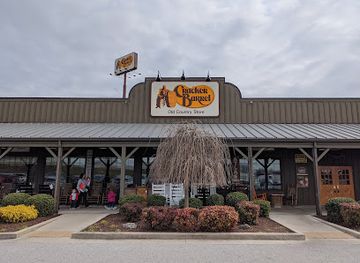
Cracker Barrel Old Country Store
Discover delightful Southern cuisine at Cracker Barrel Old Country Store in Crossville - where comfort food meets charm.
-
Southern
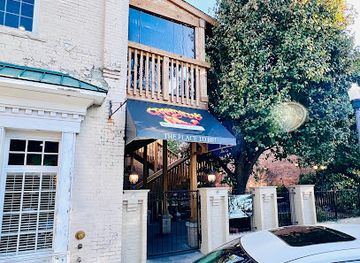
Crawdaddy's
Experience the best of Southern and Creole cuisine at Crawdaddy's in Cookeville - where flavor meets hospitality.
-
Mexican
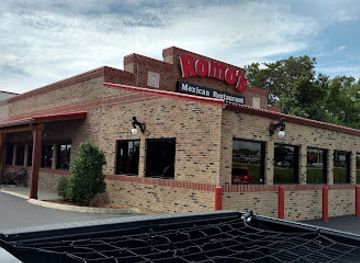
Romo's Mexican Resturant
Experience authentic Mexican flavors at Romo's Mexican Restaurant in Crossville - where every bite tells a story!
-
Steak
The Beef and Barrel Restaurant & Lounge
Experience mouthwatering steaks and fresh seafood at The Beef and Barrel Restaurant & Lounge in Crossville - a must-visit culinary destination!
Get your free copy of our complete guide to Upper Cumberland, delivered straight to you.
Everything on this page, from attractions and restaurants to essentials and local phrases, in one PDF you can read offline, print or share.
Already have an account? Sign in
Your Upper Cumberland guide is ready.
We'll send it to · Not you? Sign out

Getting your guide ready…
We are putting together a fresh copy of the Upper Cumberland guide. This can take up to a minute.
This can take a few moments. If your browser asks, choose Allow so the download can start. You'll find the guide in your Downloads folder.
Nothing happened? Download it again
Sorry, the guide is taking longer than usual. Please try again in a minute, or get it by email instead.
Upper Cumberland essentials
Currency and Payment
Safety
Emergency Situations
Do's and Don'ts
Local Tips
From Eve
Local phrases worth knowing
You don't need to get them perfect. A few words go a long way, and locals appreciate the effort.
Basics
| English | Local | Say it |
|---|---|---|
| Hello | Howdy | [How-dee] |
| Goodbye | Take care | [Tayk kair] |
| Yes | Yep | [Yep] |
| No | Nope | [Nope] |
| Please/You're welcome | Please/No problem | [Pleez/No prob-lem] |
| Thank you | Thank ya | [Thank ya] |
| Excuse me/Sorry | Pardon me/Sorry | [Par-don mee/Sor-ree] |
| How are you? | How ya doin'? | [How ya doin'?] |
| Fine. And you? | I’m good. And you? | [I’m good. And you?] |
| Do you speak English? | Y'all speakin' English? | [Y'all speakin' English?] |
| I don't understand | I ain't followin' | [I ain't followin'] |
Eating & Drinking
| English | Local | Say it |
|---|---|---|
| I'd like to see the menu, please | Can I see the menu, please? | [Can I see the menu, pleez?] |
| I don't eat meat | I don’t eat no meat | [I don’t eat no meat] |
| Cheers! | Cheers! | [Cheers!] |
| I would like to pay, please | I’d like to settle up, please | [I’d like to settle up, pleez] |
Emergencies
| English | Local | Say it |
|---|---|---|
| Help! | Help! | [Help!] |
| Go away! | Get away! | [Get away!] |
| Call the Police! | Call the law! | [Call the law!] |
| Call a doctor! | Get a doctor! | [Get a doctor!] |
| I'm lost | I’m lost | [I’m lost] |
| I'm ill | I’m sick | [I’m sick] |
Shopping
| English | Local | Say it |
|---|---|---|
| I'd like to buy... | I wanna buy... | [I wanna buy...] |
| I'm just looking | Just lookin' | [Just lookin'] |
| How much is it? | What’s it cost? | [What’s it cost?] |
| That's too expensive | That’s too high | [That’s too high] |
| Can you lower the price? | Can ya bring the price down? | [Can ya bring the price down?] |
Time & Numbers
| English | Local | Say it |
|---|---|---|
| What time is it? | What time’s it? | [What time’s it?] |
| It's one o'clock | It’s one o’clock | [It’s one o’clock] |
| Half past (10) | Half past ten | [Half past ten] |
| Morning | Mornin' | [Mornin'] |
| Afternoon | Afternoon | [Afternoon] |
| Evening | Evenin' | [Evenin'] |
| Yesterday | Yestiddy | [Yestiddy] |
| Today | Today | [Today] |
| Tomorrow | Tomorra | [Tomorra] |
| 1 | One | [One] |
| 2 | Two | [Two] |
| 3 | Three | [Three] |
| 4 | Four | [Four] |
| 5 | Five | [Five] |
| 6 | Six | [Six] |
| 7 | Seven | [Seven] |
| 8 | Eight | [Eight] |
| 9 | Nine | [Nine] |
| 10 | Ten | [Ten] |
Transport & Directions
| English | Local | Say it |
|---|---|---|
| Where's a/the...? | Where's a...? | [Where's a...?] |
| What's the address? | What’s the address? | [What’s the address?] |
| Can you show me (on the map)? | Can ya show me on the map? | [Can ya show me on the map?] |
| When's the next (bus)? | When’s the next bus? | [When’s the next bus?] |
| A ticket (to ....) | A ticket to ... | [A ticket to ...] |
History of Upper Cumberland
Indigenous Landscapes and Old Stone Fort
The Upper Cumberland was inhabited and used by Indigenous peoples for thousands of years before European-American settlement. The Old Stone Fort, now preserved in a state archaeological park near Manchester, is a large prehistoric enclosure built by Native communities, probably during the Mississippian period. Its stone walls, river setting and associated earthworks demonstrate organised labour and long-distance cultural connections in the interior Southeast. The site should not be understood as a European fort; its name reflects later interpretation of the walls. Archaeological evidence across the region records a much older human landscape than the pioneer settlements that followed.
European-American Settlement and the Plateau Frontier
From the late eighteenth century, settlers moved into the Cumberland uplands from older communities in Middle Tennessee and neighbouring Appalachian districts. Settlement followed streams, springs and rough roads across a landscape that was harder to farm and transport through than the lowlands. Small communities developed around mills, churches, stores and courthouse sites, while subsistence farming remained important. The resulting pattern of dispersed farms and compact market towns still shapes the region. Older log buildings, family cemeteries and traditional agricultural landscapes provide reminders of the difficult transition from frontier settlement to established counties.
Roads, Railways and Market Towns
Improved roads and rail connections in the nineteenth and early twentieth centuries helped link the plateau to Nashville, Knoxville and markets beyond Tennessee. Towns such as Cookeville, Crossville, McMinnville and Livingston grew as county seats, trading centres and service communities. Railways made it easier to move timber, farm produce, livestock and quarried materials, while new commercial buildings and courthouses gave many communities their civic form. Progress remained uneven: deep valleys and plateau escarpments continued to limit movement, helping preserve the region's rural character even as nationally connected industries expanded.
Timber, Coal, Agriculture and Industry
The Upper Cumberland economy has never depended on one single resource. Timber harvesting, small-scale coal mining, farming, livestock, nurseries, stone quarrying and later manufacturing each became significant in different counties. Coal was especially important in parts of the eastern Cumberland Plateau, where mines and company communities altered the landscape and employment patterns. Agriculture remains visible in cattle country, nurseries and diversified farms, while industrial parks and larger employers have added a modern economic layer. The region's forests, streams and working farms are therefore both environmental assets and records of changing economic priorities.
The New Deal and State Park Conservation
Federal relief programmes during the 1930s helped transform public landscapes in Tennessee. Civilian Conservation Corps crews built roads, trails, cabins, overlooks and other facilities in several plateau parks, including areas now associated with Pickett State Rustic Park and the wider state-park system. This work made remote scenery more accessible while establishing a conservation tradition that continues today. Fall Creek Falls and other protected areas later became important destinations for hiking, camping, swimming and nature study. Their infrastructure is part of the region's twentieth-century history as well as its outdoor appeal.
Sgt. Alvin C. York and Rural Tennessee Memory
Alvin Cullum York, born in Fentress County in 1887, became one of the most decorated American soldiers of the First World War after actions in the Meuse-Argonne Offensive. His later life as a farmer, educator and public figure connected national military history with the everyday world of the Upper Cumberland. Sgt. Alvin C. York State Historic Park in Pall Mall preserves buildings and landscapes associated with his life and explains the social conditions of rural Tennessee in his era. The site also encourages a broader understanding of how local communities contributed to national events.
Cordell Hull and Twentieth-Century Public Life
Cordell Hull, born near Byrdstown in Pickett County, served as United States Secretary of State for much of Franklin D. Roosevelt's presidency and played a major role in the creation of the United Nations. The Cordell Hull Birthplace and Museum interprets his early life and public career within the setting of the rural Upper Cumberland. His story illustrates how people from a remote agricultural district could enter national and international politics, while the preserved birthplace also records the modest domestic conditions of nineteenth-century rural Tennessee.
Universities, Recreation and Regional Change
After the Second World War, improved highways, public education, manufacturing and tourism altered the Upper Cumberland without erasing its rural geography. Tennessee Technological University helped make Cookeville a centre for education, engineering and regional services, while state parks and reservoirs encouraged recreation and second-home development. Crossville and other plateau communities experienced growth connected with retirement, golf and road access. Today, the region combines small-scale agriculture and longstanding local institutions with university life, outdoor tourism, healthcare, manufacturing and heritage interpretation.
Upper Cumberland in Photos
Browse through our photo collection highlighting the charm and character of the destination.
Neighbouring regions of Upper Cumberland
The closest regions to Upper Cumberland, if you have time for more than one.
-

-

-

-

-


Swipe for more regions
Explore more

Explore more of Tennessee
Discover Tennessee: A melting pot of music, history, and natural beauty, offering visitors an authentic taste of Southern hospitality and unforgettable experiences.
Explore Tennessee