

Free Foni Bondali Travel Guide & Mobile App
Explore Foni Bondali with free travel guides. Discover regional history, expert tips, proposed trips, and audio guides on web or mobile app.


Foni Bondali offers a quiet rural view of The Gambia, with agricultural landscapes, village life and southern overland journeys.
Read more about Foni Bondali
When is the best time to visit Foni Bondali?
Best: November–January · 29–31°C| Month | High (°C) | Rainfall (mm) |
|---|---|---|
| January (best) | 30 | 0 |
| February | 31 | 0 |
| March | 33 | 0 |
| April | 34 | 0 |
| May | 35 | 1 |
| June | 33 | 9 |
| July | 31 | 42 |
| August | 31 | 67 |
| September | 31 | 87 |
| October | 33 | 21 |
| November (best) | 31 | 2 |
| December (best) | 29 | 0 |
Getting to and around Foni Bondali
How to get there
Transportation
Best landmarks in Foni Bondali
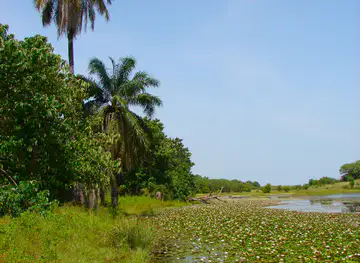
Foni Bondali is not defined by a single monumental landmark; its most characteristic landmarks are the roads, settlement centres, mosques, compounds, fields and wooded horizons that express the district’s rural identity. Bondali itself is the administrative and service centre, giving it practical importance even though it is not a large urban destination. Village mosques and community buildings may be visually prominent, but they remain active places of worship and should be approached with permission and appropriate dress. The wider agricultural landscape is equally significant: laterite roads, cultivated groundnut and cereal fields, shade trees and seasonal watercourses show how people have adapted settlement and farming to southern Gambia’s climate. Foni’s location within the broader historic Senegambian borderland is another geographical point of reference, although the Senegalese frontier lies outside the district and should not be treated as a local monument. Rather than seeking a checklist of celebrated structures, visitors should view Bondali’s landmarks as expressions of living community, agriculture and regional connectivity.
-
 Park
FONI BONDALI
Explore the natural beauty of Foni Bondali Park in Nyantempo, a tranquil escape in The Gambia with lush landscapes and vibrant wildlife.
Explore Foni Bondali on the map
Plan your trip on one map. See where the top cities, national parks and sights are, and book hotels and experiences in a few clicks.
Best hotels in Foni Bondali
Best restaurants in Foni Bondali
Dining in Foni Bondali is generally local, informal and closely connected with household and agricultural life. Meals may include rice served with fish, meat or vegetable sauces, as well as dishes based on millet, maize, groundnuts and seasonal produce; recipes and ingredients vary between households and communities. Chicken, goat, dried or fresh fish and leafy sauces are common features of Gambian cooking, while fruit and locally prepared drinks may be available when in season. Small shops and roadside vendors provide basic refreshments, but the selection is more limited than in the coastal resort area or larger towns. Travellers should not expect a developed restaurant circuit, and it is wise to carry water and a few supplementary snacks during longer journeys. A meal arranged through a host or community contact can offer useful cultural context, but visitors should clarify ingredients, hygiene arrangements and payment respectfully. Alcohol may be less prominent in village settings, particularly around Muslim communities, so observe local preferences rather than assuming that drinks will be available.
-
Restaurant
Poco Loco Beachbar Gambia
Discover the vibrant flavors and stunning ocean views at Poco Loco Beachbar in Serrekunda, Gambia - your ultimate tropical escape.
-
Restaurant
John Raymond'S Beach Bar And Restaurant
Discover delicious local cuisine with breathtaking beach views at John Raymond's Beach Bar and Restaurant in Serrekunda.
-
Restaurant
Mo2 Jamaican Bar & Restaurant Gambia (Mosiah's)
Discover the vibrant tastes of Jamaica at Mo2 Jamaican Bar & Restaurant in Gambia - a culinary journey not to be missed!
-
Restaurant
Vineyard Restaurant
Discover the rich flavors of Gambian cuisine at Vineyard Restaurant in Serrekunda - a perfect blend of local charm and culinary excellence.


Best bars in Foni Bondali
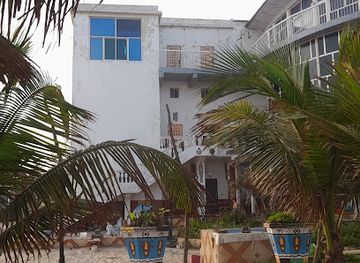
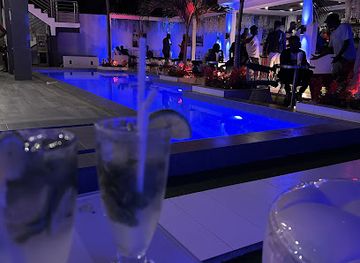
Foni Bondali does not have a significant nightclub scene or a concentrated entertainment district. Evening social life is more likely to centre on family compounds, small local meeting places, food stalls, occasional music and modest bars in larger settlements, while rural villages become quiet relatively early. Travellers should not expect the late-night choice found in the coastal tourism belt. If visiting a local venue, dress respectfully, keep noise moderate and follow the lead of residents, especially during religious periods or community occasions. Evening movement between settlements is inconvenient because transport is limited and roads can be poorly lit, so arrange a return journey before going out. The most rewarding night-time experiences are often calm ones: an organised conversation with hosts, local music shared by invitation or observation of the village after sunset, always with consent and sensitivity rather than treating community life as entertainment.
-
Restaurant
Poco Loco Beachbar Gambia
Discover the lively Poco Loco Beachbar in Serrekunda, Gambia, where delicious cuisine meets stunning ocean views and vibrant entertainment.
-
Bar
Solomon’s Beach Bar & Restaurant
Discover the essence of Gambian beach culture at Solomon’s Beach Bar & Restaurant with delicious food, vibrant atmosphere, and stunning seaside views.
-
Restaurant
Darboe's Bar and Restaurant
Discover delectable Gambian and international cuisine at Darboe's Bar and Restaurant in Serrekunda, a must-visit culinary hotspot.
-
Steak
Rendezvous Grill Steak house and Cafe
Experience the vibrant flavors of Gambia at Rendezvous Grill Steakhouse and Cafe, where expertly grilled steaks meet warm hospitality.


Best nightclubs in Foni Bondali
Foni Bondali does not have a significant nightclub scene or a concentrated entertainment district. Evening social life is more likely to centre on family compounds, small local meeting places, food stalls, occasional music and modest bars in larger settlements, while rural villages become quiet relatively early. Travellers should not expect the late-night choice found in the coastal tourism belt. If visiting a local venue, dress respectfully, keep noise moderate and follow the lead of residents, especially during religious periods or community occasions. Evening movement between settlements is inconvenient because transport is limited and roads can be poorly lit, so arrange a return journey before going out. The most rewarding night-time experiences are often calm ones: an organised conversation with hosts, local music shared by invitation or observation of the village after sunset, always with consent and sensitivity rather than treating community life as entertainment.
-
Night club
Envy Night Club
Experience the vibrant nightlife at Envy Night Club in Serrekunda, where music, dance, and unforgettable moments await every night.
-
Night club
Aquarius Nightclub
Dive into the dynamic nightlife of Gambia at Aquarius Nightclub, where music, dance, and vibrant energy await every visitor.
-
Night club
Ningki Nangka Bar & Night Club
Discover the vibrant nightlife of Serrekunda at Ningki Nangka Bar & Night Club, where music, dance, and local culture blend seamlessly.
-
Night club
ONYX
Discover the heartbeat of Serrekunda's nightlife at ONYX, the premier night club for a vibrant and unforgettable experience in The Gambia.


Best shops in Foni Bondali
Shopping in Foni Bondali is limited and practical, with small village shops and local trading points supplying everyday food, drinks, household items and basic travel necessities. The district is not a destination for large-scale retail or designer goods, and travellers should buy specialist equipment, medicines and substantial provisions before leaving the larger coastal towns. Depending on the season and location, markets and roadside sellers may offer fresh produce, groundnuts, grains, fruit, prepared foods and locally made household items. Purchases are best made respectfully and with modest expectations about selection and packaging. Visitors wishing to support local livelihoods can buy appropriate produce or crafts directly through trusted contacts, while avoiding pressure to purchase objects of uncertain cultural or material origin. Carry reusable bags where possible, negotiate prices politely when bargaining is customary, and remember that market activity may vary with agricultural work, weather and local schedules.
-
Souvenir store
TOP-SHOP
Explore the vibrant beauty of Gambian culture at TOP-SHOP, your premier destination for unique handicrafts and artwork.
-
Grocery store
Halabaid Trading Enterprises paradise supermarket
Experience the heart of Gambian culture at Halabaid Trading Enterprises, your go-to grocery supermarket in Farafenni, offering local and international products.
-
Fabric store
Emporium Banjul
Explore the vibrant textiles of Gambia at Emporium Banjul, where traditional craftsmanship meets contemporary style in a colorful shopping experience.
-
General store
Soma Saremawdou Market
Discover local crafts, delicious snacks, and the vibrant culture at Soma Saremawdou Market, a must-visit general store in the heart of Soma.


Get your free copy of our complete guide to Foni Bondali, delivered straight to you.
Everything on this page, from attractions and restaurants to essentials and local phrases, in one PDF you can read offline, print or share.
Already have an account? Sign in
Your Foni Bondali guide is ready.
We'll send it to · Not you? Sign out

Getting your guide ready…
We are putting together a fresh copy of the Foni Bondali guide. This can take up to a minute.
This can take a few moments. If your browser asks, choose Allow so the download can start. You'll find the guide in your Downloads folder.
Nothing happened? Download it again
Sorry, the guide is taking longer than usual. Please try again in a minute, or get it by email instead.
Foni Bondali essentials
Currency and Payment
Safety
Emergency Situations
Do's and Don'ts
Local Tips
From Eve
Local phrases worth knowing
You don't need to get them perfect. A few words go a long way, and locals appreciate the effort.
Basics
| English | Local | Say it |
|---|---|---|
| Hello | Naka | [nah-kah] |
| Goodbye | Naka saama | [nah-kah sah-mah] |
| Yes | Aah | [ah] |
| No | Naa | [nah] |
| Please/You're welcome | Jama | [jah-mah] |
| Thank you | Jerejef | [jeh-reh-jehf] |
| Excuse me/Sorry | Mbaay | [mba-yee] |
| How are you? | Naka jango? | [nah-kah jahn-goh] |
| Fine. And you? | Jango. A naa? | [jahn-goh. ah nah?] |
| Do you speak English? | Nka faala English? | [n-kah fah-lah in-glish] |
| I don't understand | Mbaay mi faala | [mba-yee mee fah-lah] |
Eating & Drinking
| English | Local | Say it |
|---|---|---|
| I'd like to see the menu, please | Nka yidi menu, jama | [n-kah yee-dee meh-noo, jah-mah] |
| I don't eat meat | Mbaay mi fenda nyin | [mba-yee mee fen-dah nyin] |
| Cheers! | Nyang! | [nyang] |
| I would like to pay, please | Nka yidi pay, jama | [n-kah yee-dee pay, jah-mah] |
Emergencies
| English | Local | Say it |
|---|---|---|
| Help! | Jang! | [jang] |
| Go away! | Nka jango! | [n-kah jahn-goh] |
| Call the Police! | Nka faala Police! | [n-kah fah-lah po-lees] |
| Call a doctor! | Nka faala doctor! | [n-kah fah-lah dok-tor] |
| I'm lost | Mbaay mi jango | [mba-yee mee jahn-goh] |
| I'm ill | Mbaay mi fenda | [mba-yee mee fen-dah] |
Shopping
| English | Local | Say it |
|---|---|---|
| I'd like to buy... | Nka yidi buy... | [n-kah yee-dee buy...] |
| I'm just looking | Nka yidi just look | [n-kah yee-dee just look] |
| How much is it? | Nka jango koto? | [n-kah jahn-goh koh-toh?] |
| That's too expensive | Koto a jengo | [koh-toh ah jen-goh] |
| Can you lower the price? | Nko faala koto low? | [n-koh fah-lah koh-toh loh] |
Time & Numbers
| English | Local | Say it |
|---|---|---|
| What time is it? | Nka jango koto? | [n-kah jahn-goh koh-toh?] |
| It's one o'clock | Koto koto | [koh-toh koh-toh] |
| Half past (10) | Nka jango half past (10) | [n-kah jahn-goh half past (10)] |
| Morning | Baw | [baw] |
| Afternoon | Nja | [nja] |
| Evening | Jango | [jahn-goh] |
| Yesterday | Koto sengo | [koh-toh sen-goh] |
| Today | Koto jango | [koh-toh jahn-goh] |
| Tomorrow | Koto fenda | [koh-toh fen-dah] |
| 1 | Koto 1 | [koh-toh 1] |
| 2 | Koto 2 | [koh-toh 2] |
| 3 | Koto 3 | [koh-toh 3] |
| 4 | Koto 4 | [koh-toh 4] |
| 5 | Koto 5 | [koh-toh 5] |
| 6 | Koto 6 | [koh-toh 6] |
| 7 | Koto 7 | [koh-toh 7] |
| 8 | Koto 8 | [koh-toh 8] |
| 9 | Koto 9 | [koh-toh 9] |
| 10 | Koto 10 | [koh-toh 10] |
Transport & Directions
| English | Local | Say it |
|---|---|---|
| Where's a/the...? | Nka jango a/the...? | [n-kah jahn-goh ah/the...?] |
| What's the address? | Nka jango address? | [n-kah jahn-goh ad-dress?] |
| Can you show me (on the map)? | Nko faala show mi (on the map)? | [n-koh fah-lah show mee (on the map)?] |
| When's the next (bus)? | Nka jango next (bus)? | [n-kah jahn-goh next (bus)?] |
| A ticket (to ....) | Nka yidi ticket (to ....) | [n-kah yee-dee ti-ket (to ....)] |
History of Foni Bondali
Early Settlement and Southern Senegambian Cultures
The wider Foni landscape forms part of the ancient cultural zone of southern Senegambia, where communities developed around farming, woodland resources and seasonal water. Archaeological evidence across the region indicates long histories of settlement, ironworking and agricultural adaptation, although the district is not primarily presented to visitors through a large concentration of excavated monuments. The cultural landscape is more visible in settlement patterns, oral traditions, farming practices and the continuing importance of kinship and village institutions.
Mandinka States and the Kaabu World
Before European colonial rule, southern Gambia was connected to Mandinka-speaking political networks associated with the wider Kaabu or Gabou region. Authority was expressed through states, ruling families, alliances and local communities rather than through modern district boundaries. Foni’s position between the Gambia River and Casamance helped connect it to broader movements of people, trade and political influence. The legacy of this period remains present in language, family histories, place traditions and the region’s links with neighbouring parts of Senegal and Guinea-Bissau.
Jola and Mandinka Community Heritage
Foni has long been home to Jola and Mandinka communities, alongside other groups whose histories have become interwoven through migration, marriage, trade and religious life. Jola cultural traditions are particularly important across southern Senegambia, where rice cultivation, woodland knowledge and community organisation have shaped local identity, while Mandinka history has strongly influenced language and political traditions. These identities are neither confined to one modern border nor uniform from village to village, making local interpretation important when visitors explore the district.
Colonial Rule and the Protectorate
During the nineteenth and early twentieth centuries, British control expanded over the territory that became The Gambia, while neighbouring areas were incorporated into French West Africa. Southern districts such as Foni were therefore shaped by a colonial boundary that cut across older regional networks. Colonial administration introduced new official structures, taxation and transport priorities, but local communities continued to organise much of their daily life through villages, family authority, farming and religion. The present border with Senegal is partly a legacy of these competing colonial systems.
Groundnuts, Farming and Rural Change
Groundnut cultivation became central to The Gambia’s colonial and post-colonial economy, linking rural producers with trading networks and export markets. In Foni Bondali, agriculture remains a defining feature of the landscape, although households commonly combine several crops, livestock, small-scale commerce and seasonal work rather than relying on a single activity. The rhythm of the rains, the availability of labour and changing access to roads and markets continue to influence village life. Fields and woodland around Bondali therefore reflect both long-established practices and modern economic pressures.
Independence and the Modern Gambian State
The Gambia became independent from Britain in 1965, later becoming a republic in 1970. Independence brought national institutions and development programmes to districts that had previously been administered within the colonial protectorate system. Foni Bondali is now one of the country’s local-government districts, within the West Coast Region. Roads, schools, mobile communications and public services have altered connections with the coast and larger towns, yet the district remains predominantly rural and retains strong links with neighbouring communities across the southern Senegambian borderlands.
Neighbouring regions of Foni Bondali
The closest regions to Foni Bondali, if you have time for more than one.
-

-

-
-

-


Swipe for more regions
Explore more

Explore more of The Gambia
Discover The Gambia: a treasure trove of cultural richness, stunning beaches, and diverse wildlife. An unforgettable journey awaits you in Africa's Smiling Coast.
Explore The Gambia