

Free Kiang Central Travel Guide & Mobile App
Explore Kiang Central with free travel guides. Discover regional history, expert tips, proposed trips, and audio guides on web or mobile app.


Kiang Central reveals rural Gambia through riverine landscapes, farming communities, seasonal wetlands and carefully guided village experiences.
Read more about Kiang Central
When is the best time to visit Kiang Central?
Best: November–January · 32–33°C| Month | High (°C) | Rainfall (mm) |
|---|---|---|
| January (best) | 32 | 0 |
| February | 34 | 0 |
| March | 36 | 0 |
| April | 38 | 1 |
| May | 39 | 1 |
| June | 38 | 3 |
| July | 36 | 6 |
| August | 35 | 8 |
| September | 35 | 5 |
| October | 34 | 3 |
| November (best) | 33 | 1 |
| December (best) | 32 | 0 |
Getting to and around Kiang Central
How to get there
Transportation
Destinations in Kiang Central
Resorts, valleys and scenic spots worth a trip of their own.

Swipe for more destinations
Best attractions in Kiang Central
Kiang Central’s attractions are primarily landscape- and community-based rather than built for mass tourism. Rural roads pass through fields, dry woodland, village compounds and low-lying areas associated with seasonal wetlands, giving visitors a close view of the agricultural setting that supports much of southern Gambia. With local permission and guidance, travellers may learn about rice cultivation, groundnuts, household gardens, food processing and the changing relationship between villages and nearby creeks. Birdwatching is possible around wetland margins and cultivated areas, although sightings depend on season, water levels and local knowledge. Village walks can reveal mosques, wells, schools, meeting places and everyday craft or trading activity, but these are living community spaces rather than staged attractions. The district also suits visitors who value quiet road journeys, photographic landscapes and conversations arranged through trusted local contacts. Facilities are limited, so excursions should be planned with transport, water, shade and a realistic return journey in mind. More developed river cruises and visitor facilities in nearby districts can complement a stay, but they lie outside Kiang Central and should be treated as separate parts of a Lower River itinerary.
-

Brikama Forest Park
Explore the lush landscapes and vibrant wildlife of Brikama Forest Park, a serene escape in Gambia perfect for nature lovers and outdoor enthusiasts.
-
Faba Forest Park
Explore the lush beauty of Faba Forest Park in Dumbutu, a serene state park perfect for hiking, picnicking, and experiencing nature's tranquility.
-
Mutaro Kunda Forest Park
Experience the natural beauty and tranquility of Mutaro Kunda Forest Park, a state park perfect for hiking, birdwatching, and picnicking in Wellingara, Gambia.
Best landmarks in Kiang Central
Kiang Central’s most meaningful landmarks are geographical and communal rather than monumental. The riverine setting of the Lower River Region, with its creeks, lowlands and cultivated margins, provides the district’s defining physical identity and explains the importance of seasonal farming and water access. Village mosques, wells, meeting spaces and mature trees often act as local points of orientation, although they should be treated as active community places rather than photographed or entered without permission. Traditional compounds and the pattern of fields around settlements offer a visual record of rural adaptation, while stretches of woodland and wetland mark the transition between cultivated land and the wider river basin. No single castle, cathedral or preserved historic town defines Kiang Central; its significance is found in the relationship between settlement, agriculture and waterways. Visitors interested in named historic monuments or more formal river heritage should plan excursions to appropriate sites elsewhere in The Gambia and confirm their location carefully, rather than attributing them to this district.
-
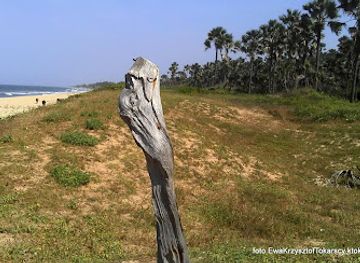
National park
Bijilo National Park
Discover the natural beauty and vibrant wildlife of Bijilo National Park, a tranquil haven for nature lovers in Gambia.
-
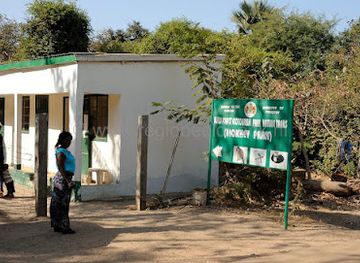
Animal park
Bijilo Monkey Park
Discover the enchanting Bijilo Monkey Park: a vibrant sanctuary for monkeys and a serene escape into nature in Serrekunda, Gambia.
-
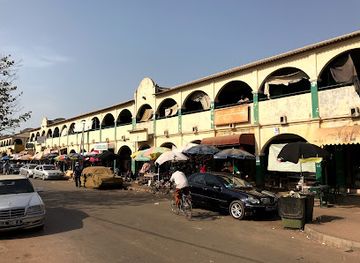
Market
Albert Market
Immerse yourself in the vibrant atmosphere of Albert Market in Banjul, where local culture meets unique shopping experiences.
-
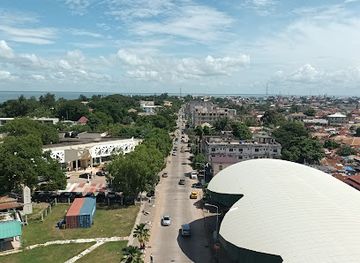
Historical landmark
Arch 22
Explore Arch 22 in Banjul, a historical landmark that symbolizes Gambian heritage and offers breathtaking views of the capital's vibrant culture.
Explore Kiang Central on the map
Plan your trip on one map. See where the top cities, national parks and sights are, and book hotels and experiences in a few clicks.
Best hotels in Kiang Central
Best restaurants in Kiang Central
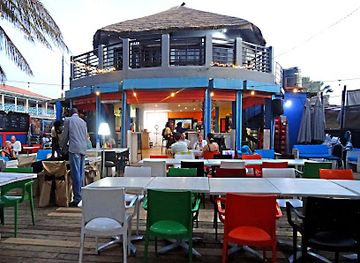
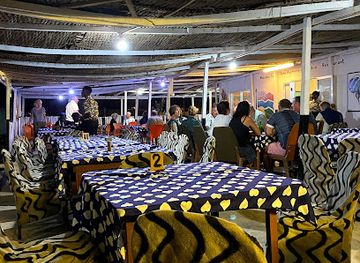
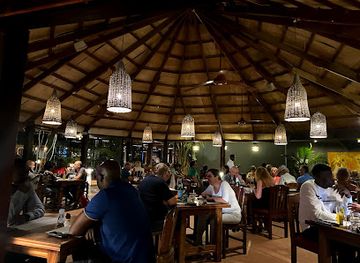
Dining in Kiang Central is centred on home cooking, village cafés and simple roadside meals rather than a developed restaurant scene. Rice is a staple and may be served with peanut-based sauces, vegetables, beans, fish or meat, while millet, maize and groundnuts remain important in rural foodways. Seasonal produce from household gardens and local farms can appear in sauces and accompanying dishes, and shared meals are an important part of hospitality. Visitors should arrange food through their accommodation, guide or host when travelling away from larger settlements, since choices and serving times can be limited. Bottled or treated drinking water is advisable, particularly in hot weather. The most meaningful culinary experiences come through respectful, pre-arranged community visits where the source of ingredients and methods of preparation can be explained. Dining customs are broadly Gambian rather than exclusive to Kiang Central, so travellers should follow their host’s lead on hand-washing, seating and the use of the right hand when eating communal food.
-
Restaurant
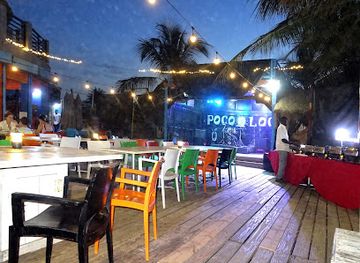
Poco Loco Beachbar Gambia
Discover Poco Loco Beachbar Gambia: A lively beachfront restaurant offering local cuisine and vibrant nightlife against stunning ocean views.
-
Restaurant
John Raymond'S Beach Bar And Restaurant
Discover culinary delights at John Raymond's Beach Bar and Restaurant in Serrekunda - where fresh seafood meets breathtaking ocean views.
-
Restaurant
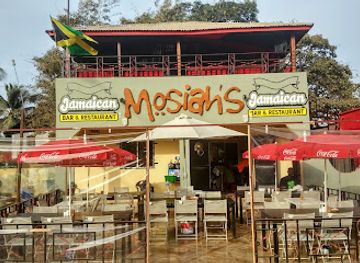
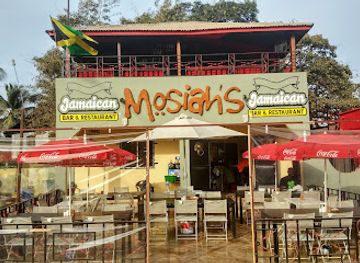
Mo2 Jamaican Bar & Restaurant Gambia (Mosiah's)
Savor authentic Jamaican cuisine at Mo2 Jamaican Bar & Restaurant in Serrekunda – where vibrant flavors meet Caribbean hospitality.
-
Italian
Gusto Italian Resto &bar
Experience authentic Italian cuisine at Gusto Italian Resto & Bar in Senegambia – where flavor meets warmth and hospitality.
Best bars in Kiang Central
Kiang Central does not have a significant nightclub or late-night entertainment scene. Evening life is more likely to centre on family compounds, village gatherings, local conversation, religious or community activities and modest cafés or food stalls where available. Alcohol is not central to public life in many settlements, and visitors should not assume that licensed bars exist near their accommodation. In larger nearby towns, evenings may offer informal bars, restaurants or music, but these are outside the district or on its more accessible transport routes. After dark, the practical priority is arranging a safe return, carrying a torch and following local advice about walking between villages. Travellers seeking live music or a broader choice of bars will find more options in The Gambia’s urban west, but Kiang Central’s appeal lies in its quiet rural atmosphere rather than a commercial nightlife programme.
-
Restaurant
Poco Loco Beachbar Gambia
Experience the vibrant atmosphere and exquisite flavors at Poco Loco Beachbar, the perfect beachfront escape in Gambia.
-
Restaurant
Mo2 Jamaican Bar & Restaurant Gambia (Mosiah's)
Savor the vibrant flavors of Jamaica at Mo2 Jamaican Bar & Restaurant in Gambia, where lively atmosphere meets delicious Caribbean cuisine.
-
Bar
Reo's Bar and Restaurant
Experience the vibrant nightlife and authentic Gambian cuisine at Reo's Bar and Restaurant on Senegambia Road, Serrekunda.
-
Restaurant
Darboe's Bar and Restaurant
Experience authentic Gambian flavors and vibrant local culture at Darboe's Bar and Restaurant along the Trans-Gambia Highway.
Best nightclubs in Kiang Central
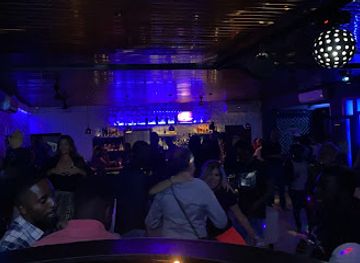
Kiang Central does not have a significant nightclub or late-night entertainment scene. Evening life is more likely to centre on family compounds, village gatherings, local conversation, religious or community activities and modest cafés or food stalls where available. Alcohol is not central to public life in many settlements, and visitors should not assume that licensed bars exist near their accommodation. In larger nearby towns, evenings may offer informal bars, restaurants or music, but these are outside the district or on its more accessible transport routes. After dark, the practical priority is arranging a safe return, carrying a torch and following local advice about walking between villages. Travellers seeking live music or a broader choice of bars will find more options in The Gambia’s urban west, but Kiang Central’s appeal lies in its quiet rural atmosphere rather than a commercial nightlife programme.
-
Night club
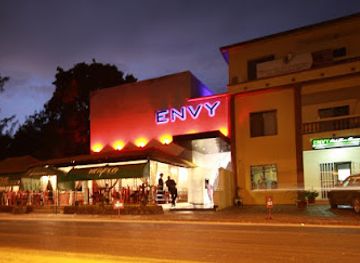
Envy Night Club
Discover the vibrant nightlife at Envy Night Club in Serrekunda - where music, dance, and unforgettable moments come alive.
-
Night club
Aquarius Nightclub
Dive into the vibrant nightlife of Serrekunda at Aquarius Nightclub, where unforgettable memories and electric beats await you.
-
Night club
Ningki Nangka Bar & Night Club
Explore the vibrant nightlife at Ningki Nangka Bar & Night Club in Serrekunda, where music, drinks, and local culture come alive.
-
Night club
ONYX
Experience the electrifying nightlife of ONYX in Serrekunda, where unforgettable memories are made and the dance floor awaits.

Best shops in Kiang Central
Shopping in Kiang Central is practical and locally oriented, with small village shops, roadside stalls and periodic market activity providing everyday food, household goods and basic necessities. Travellers may find locally grown groundnuts, rice, fruit, vegetables or prepared foods when in season, although availability varies and produce is primarily intended for community use rather than tourism. Craft purchases are best arranged through a trusted local contact or community initiative, particularly when buying woven items, clothing or small handmade objects. Carry cash in dalasi and do not expect a large selection of souvenirs, branded goods or formal retail outlets. Larger markets and a broader choice of textiles, crafts, food products and gifts are found in bigger towns outside the district. Buying directly and respectfully can support local households, but visitors should ask before photographing production, agree prices clearly and avoid treating homes or agricultural workspaces as shops.
-
Shopping mall
Tropic Shopping Centre
Discover diverse shopping, dining, and entertainment at Tropic Shopping Centre in Serrekunda, Gambia – a vibrant hub for all your needs.
-
Souvenir store
TOP-SHOP
Explore TOP-SHOP, a vibrant souvenir store in Gambia, showcasing unique handicrafts and art that celebrate local culture and craftsmanship.
-
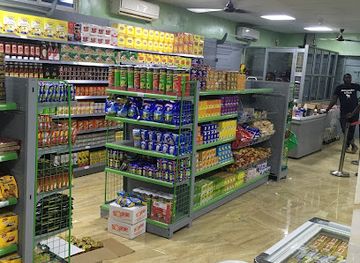
Grocery store
Halabaid Trading Enterprises paradise supermarket
Experience the vibrant flavors of The Gambia at Halabaid Trading Enterprises, your go-to supermarket in Farafenni.
-
Grocery store
Costa road
Explore Costa Road in Bureng for an authentic Gambian grocery experience filled with local flavors, crafts, and hospitality.


Get your free copy of our complete guide to Kiang Central, delivered straight to you.
Everything on this page, from attractions and restaurants to essentials and local phrases, in one PDF you can read offline, print or share.
Already have an account? Sign in
Your Kiang Central guide is ready.
We'll send it to · Not you? Sign out

Getting your guide ready…
We are putting together a fresh copy of the Kiang Central guide. This can take up to a minute.
This can take a few moments. If your browser asks, choose Allow so the download can start. You'll find the guide in your Downloads folder.
Nothing happened? Download it again
Sorry, the guide is taking longer than usual. Please try again in a minute, or get it by email instead.
Kiang Central essentials
Currency and Payment
Safety
Emergency Situations
Do's and Don'ts
Local Tips
From Eve
Local phrases worth knowing
You don't need to get them perfect. A few words go a long way, and locals appreciate the effort.
Basics
| English | Local | Say it |
|---|---|---|
| Hello | Naka | [Nah-kah] |
| Goodbye | Faalek | [Fah-lek] |
| Yes | Aye | [Eye] |
| No | Naa | [Nah] |
| Please/You're welcome | Nyaama | [Nyah-mah] |
| Thank you | Jerejef | [Jereh-jef] |
| Excuse me/Sorry | Mafa | [Mah-fah] |
| How are you? | Naa su? | [Nah soo] |
| Fine. And you? | Naa kaira. Naa su? | [Nah kai-rah. Nah soo] |
| Do you speak English? | Aye nyan English? | [Eye nyan English] |
| I don't understand | Naa ma faam | [Nah mah fahm] |
Eating & Drinking
| English | Local | Say it |
|---|---|---|
| I'd like to see the menu, please | Nyaa mi kadi menu, nyaama | [Nyaa mee kah-dee men-oo, nyah-mah] |
| I don't eat meat | Naa ma yume nyomi | [Nah mah yoo-meh nyoh-mee] |
| Cheers! | Seyda! | [Say-dah] |
| I would like to pay, please | Nyaa mi kadi pay, nyaama | [Nyaa mee kah-dee pay, nyah-mah] |
Emergencies
| English | Local | Say it |
|---|---|---|
| Help! | Faal! | [Fahl] |
| Go away! | Bantang! | [Ban-tang] |
| Call the Police! | Faal Police! | [Fahl Po-lees] |
| Call a doctor! | Faal doctor! | [Fahl doc-tor] |
| I'm lost | Naa ma kaira | [Nah mah kai-rah] |
| I'm ill | Naa ma jaaf | [Nah mah jahf] |
Shopping
| English | Local | Say it |
|---|---|---|
| I'd like to buy... | Nyaa mi kadi buy... | [Nyaa mee kah-dee buy] |
| I'm just looking | Naa ma juma | [Nah mah joo-mah] |
| How much is it? | Naa nanga? | [Nah nahn-gah] |
| That's too expensive | Da nanga janja | [Dah nahn-gah jahn-jah] |
| Can you lower the price? | Aye nyan janka price? | [Eye nyan jan-kah price] |
Time & Numbers
| English | Local | Say it |
|---|---|---|
| What time is it? | Naa nanga time? | [Nah nahn-gah time] |
| It's one o'clock | Naa nanga one o'clock | [Nah nahn-gah one o'clock] |
| Half past (10) | Naa nanga half past (10) | [Nah nahn-gah half past (10)] |
| Morning | Naa | [Nah] |
| Afternoon | Jango | [Jahn-go] |
| Evening | Njo | [Njo] |
| Yesterday | Bale | [Bah-lay] |
| Today | Kere | [Kay-ray] |
| Tomorrow | Mbaale | [Mbah-lay] |
| 1 | Kaira | [Kai-rah] |
| 2 | Duo | [Doo-oh] |
| 3 | Tati | [Tah-tee] |
| 4 | Ney | [Nay] |
| 5 | Jah | [Jah] |
| 6 | Jeng | [Jeng] |
| 7 | Jengka | [Jeng-kah] |
| 8 | Jem | [Jem] |
| 9 | Jemka | [Jem-kah] |
| 10 | Jemte | [Jem-teh] |
Transport & Directions
| English | Local | Say it |
|---|---|---|
| Where's a/the...? | Naa nanga a/the...? | [Nah nahn-gah ah/the] |
| What's the address? | Naa nanga address? | [Nah nahn-gah ad-dress] |
| Can you show me (on the map)? | Aye nyan janka (on the map)? | [Eye nyan jan-kah (on the map)] |
| When's the next (bus)? | Naa nanga next (bus)? | [Nah nahn-gah next (bus)] |
| A ticket (to ....) | A ticket (to ....) | [A ticket (to ....)] |
History of Kiang Central
Early Settlement and Riverine Exchange
The Kiang area developed within the wider settlement zone of the River Gambia basin, where waterways, seasonal wetlands and trails supported farming, fishing and movement between communities. Long before modern administrative boundaries, local populations participated in regional exchanges linking the river corridor with inland Senegal and the Atlantic coast. Archaeological evidence and oral traditions across The Gambia point to successive settlement and trading networks, although individual village histories are often preserved more strongly through family, religious and community memory than through monumental remains.
Mandinka Political and Cultural Influence
Mandinka-speaking communities became important across much of southern and inland Gambia through farming, trade, religious scholarship and local political organisation. The Kiang area formed part of this broader Manding cultural world, while also developing through contact with Wolof, Fula, Jola and other communities. Islam gradually became deeply established alongside older social customs and local traditions. Contemporary village life, family names, language patterns, agricultural practices and religious buildings all reflect these layered histories rather than a single, uniform cultural identity.
European Trade on the Gambia River
From the late fifteenth century onwards, Portuguese, British and other European traders used the River Gambia as a route into the interior. Their commercial interests included hides, wax, ivory and later groundnuts, while the river also became associated with the transatlantic slave trade. The effects were felt far beyond trading posts, altering political relationships and exposing communities along the river system to coercion and disruption. Kiang Central’s present rural landscape is therefore part of a region shaped by both local networks and the wider history of Atlantic commerce.
British Colonial Rule and the Protectorate
British authority expanded gradually in the interior during the nineteenth and early twentieth centuries, creating a distinction between the directly governed colony around the river mouth and the wider Protectorate. Local chiefs and communities retained important roles, but colonial administration introduced new systems of taxation, courts, policing and territorial management. The boundaries and official labels used today do not simply reproduce older local political geography. Roads, schools and administrative centres developed unevenly, leaving many rural settlements dependent on local institutions and seasonal transport.
Groundnuts, Farming and Rural Change
Groundnut cultivation became a major force in The Gambia’s colonial and post-colonial economy, linking rural producers to river transport, merchants and export markets. In the Kiang area, groundnuts became part of a mixed agricultural system that also included rice, millet, maize, livestock keeping and household gardens. Farming remains closely tied to rainfall and seasonal labour. Changes in market prices, agricultural equipment, population patterns and climate conditions continue to influence how families balance food production with cash crops and other livelihoods.
Independence and Contemporary Community Development
The Gambia became independent from Britain in 1965, and the country’s rural districts subsequently experienced gradual changes in education, healthcare, roads, telecommunications and local administration. Kiang Central has remained primarily agricultural, with community organisations, women’s groups, religious institutions and local authorities contributing to development. Contemporary projects commonly focus on food security, water access, education, health and environmental resilience. The district’s history today is visible less through grand monuments than through the continuing adaptation of villages to economic and ecological change.
Kiang Central in Photos
Browse through our photo collection highlighting the charm and character of the destination.
Neighbouring regions of Kiang Central
The closest regions to Kiang Central, if you have time for more than one.
-

-

-

-

-


Swipe for more regions
Explore more

Explore more of The Gambia
Discover The Gambia: a treasure trove of cultural richness, stunning beaches, and diverse wildlife. An unforgettable journey awaits you in Africa's Smiling Coast.
Explore The Gambia