

Free Niumi Travel Guide & Mobile App
Explore Niumi with free travel guides. Discover regional history, expert tips, proposed trips, and audio guides on web or mobile app.


Explore Niumi in The Gambia for river crossings, Fort Bullen, historic slave-trade sites, mangroves and village life on the North Bank.
Read more about Niumi
When is the best time to visit Niumi?
Best: November–January · 30–32°C| Month | High (°C) | Rainfall (mm) |
|---|---|---|
| January (best) | 30 | 0 |
| February | 32 | 0 |
| March | 34 | 0 |
| April | 36 | 1 |
| May | 38 | 1 |
| June | 35 | 8 |
| July | 32 | 22 |
| August | 31 | 24 |
| September | 32 | 16 |
| October | 34 | 8 |
| November (best) | 32 | 1 |
| December (best) | 30 | 0 |
Getting to and around Niumi
How to get there
Transportation
Best attractions in Niumi
Niumi’s attractions are concentrated around the Gambia River, its historic settlements and the landscapes of the North Bank. Barra provides the region’s principal arrival experience, with the ferry crossing offering a direct view of the estuary and the movement of vehicles, traders and passengers between the two banks. Nearby Fort Bullen is the most substantial surviving British military site in Niumi and helps explain the strategic importance of the river mouth. Around Albreda and Juffureh, museums, community-led interpretation and historic locations explore local history, European trading activity and the Atlantic slave trade. Boat excursions to Kunta Kinteh Island extend this story onto the river, although the island’s ruins are exposed and access depends on practical conditions. Beyond heritage, visitors encounter mangrove channels, tidal mudflats, rice-growing areas, savannah and birdlife. The region is best suited to guided cultural journeys, river trips, photography, quiet observation and conversations with local communities rather than a programme of large commercial attractions. Travel between sites is part of the experience, revealing the relationship between present-day villages, old trade routes and the waterway that shaped Niumi.
-
Fort Bullen
Explore the rich history and breathtaking views at Fort Bullen, a historical landmark in Barra, Gambia known for its colonial past.
-
Camping cabin
Camp Paradise Island
Experience the tranquility and adventure of Camp Paradise Island in Niji, Gambia, where camping, boat tours, and fishing come together in nature's embrace.
-
Hiking area
Kanuma River View and Swimming
Discover the beauty of Kanuma River View and Swimming in Essau, a perfect escape for nature lovers and adventure seekers.
-
 Tourist attraction
Barra Coconut Farm
Experience the lush beauty and educational charm of Barra Coconut Farm, a tropical paradise in Gambia dedicated to sustainable coconut farming.


Best landmarks in Niumi
Fort Bullen at Barra is Niumi’s most recognisable architectural landmark. Its position overlooking the mouth of the Gambia River reflects the strategic importance of controlling river traffic and the British campaign against the illegal slave trade after abolition. Farther upriver, Albreda and Juffureh form a linked historic landscape associated with French commercial activity, local political authority, the Atlantic slave trade and later public remembrance. Kunta Kinteh Island, lying in the Gambia River, is the most internationally recognised site in this group and forms part of the UNESCO-listed Kunta Kinteh Island and Related Sites. Its weathered remains convey the exposed conditions of a former fortified trading post, while the surrounding water emphasises the geography of confinement and transport. The Barra ferry landing is a contemporary landmark of a different kind: a busy civic and commercial threshold through which people, vehicles and goods move between Niumi and Banjul. Together these places show how military architecture, river geography, village settlement and national memory overlap in the region.
-
Tourist attraction
Kachikally Crocodile Pool
Explore the Kachikally Crocodile Pool in Bakau, a unique blend of wildlife interaction, cultural heritage, and serene natural beauty.
-
National park
Bijilo National Park
Explore the vibrant wildlife and lush landscapes of Bijilo National Park, a natural haven near Serrekunda, Gambia.
-
International airport
Banjul International Airport
Experience the warmth of The Gambia from the moment you land at Banjul International Airport, your gateway to West Africa's hidden gem.
-
Market
Albert Market
Discover the heart of Banjul at Albert Market, where vibrant local culture meets a feast of flavors and handcrafted treasures.


Explore Niumi on the map
Plan your trip on one map. See where the top cities, national parks and sights are, and book hotels and experiences in a few clicks.
Best hotels in Niumi
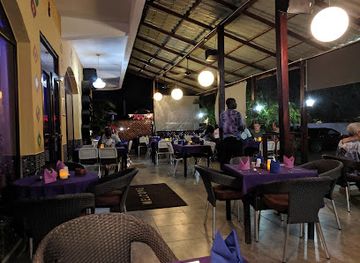
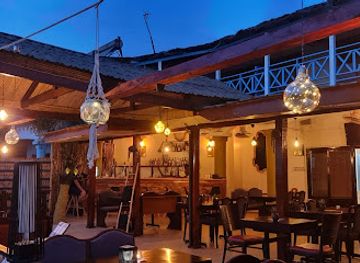
Best restaurants in Niumi
Dining in Niumi is predominantly local, informal and closely linked to Gambian household cooking. Rice is a staple, commonly served with fish, chicken, meat or vegetables in sauces flavoured with groundnuts, onion, chilli and other seasonings. Along the river and near Barra, visitors may find grilled or fried fish, while cafés and small eateries serve breakfast dishes, bread, rice meals and sweet tea. Fresh produce varies with season and locality, and market stalls provide fruit, snacks and ingredients rather than a formal food-tourism scene. Around Albreda, Juffureh and other historic sites, refreshments may be arranged through local guides, community projects or modest guest facilities, but options can be limited and should not be assumed to operate at fixed hours. Bottled water is prudent when travelling between settlements. Visitors seeking a broader choice of restaurants will find substantially more variety in the Greater Banjul Area, outside Niumi, while the region itself offers a direct introduction to everyday Gambian flavours and river-associated foodways.
-
Restaurant
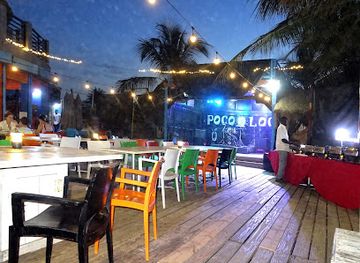
Poco Loco Beachbar Gambia
Experience relaxation and vibrant flavors at Poco Loco Beachbar in Serrekunda, Gambia – your ultimate tropical getaway.
-
Restaurant
John Raymond'S Beach Bar And Restaurant
Experience the best of Gambian cuisine at John Raymond's Beach Bar and Restaurant with stunning ocean views and a vibrant atmosphere.
-
Restaurant
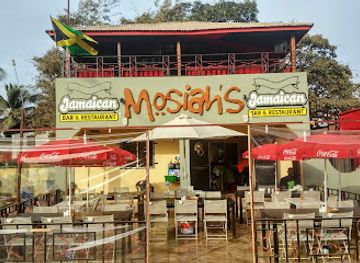
Mo2 Jamaican Bar & Restaurant Gambia (Mosiah's)
Discover the vibrant flavors of Jamaica at Mo2 Jamaican Bar & Restaurant in Gambia – where every meal is a celebration of island culture.
-
Restaurant
El Sol
Experience the vibrant flavors of Mexico and perfectly grilled steaks at El Sol in Kololi's Senegambia area.


Best bars in Niumi
Niumi has little conventional nightclub culture, and evening life is generally quieter than in the coastal resort districts and urban centres across the river. Barra and larger settlements have local bars, tea places and informal meeting spots, while guesthouses or lodges may offer simple drinks and meals for visitors. Evenings in rural communities are more likely to centre on family life, conversation, music or communal gatherings than on a concentrated entertainment district. Alcohol is available in some establishments, but customs and religious observance vary, so visitors should behave discreetly and respect local surroundings. For live music, late-night bars and a wider choice of venues, travellers normally need to return to the Greater Banjul Area, which is outside Niumi. Organised cultural performances should be accepted as community events rather than treated as staged nightlife, and photography should always be agreed beforehand.
-
Restaurant
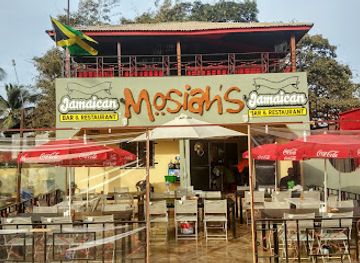
Mo2 Jamaican Bar & Restaurant Gambia (Mosiah's)
Discover the taste of Jamaica at Mo2 Jamaican Bar & Restaurant, where vibrant flavors and a lively atmosphere come together in The Gambia.
-
Bar
Solomon’s Beach Bar & Restaurant
Discover the vibrant charm of Solomon’s Beach Bar & Restaurant, where delicious food meets stunning ocean views in Serrekunda, Gambia.
-
Bar
Reo's Bar and Restaurant
Discover the vibrant nightlife and delicious flavors at Reo's Bar and Restaurant - a true gem in Serrekunda, Gambia.
-
Restaurant
Justice Bar & Restaurant
Savor the flavors of Gambia at Justice Bar & Restaurant in Serrekunda, where every meal is a celebration of taste and culture.

Best nightclubs in Niumi
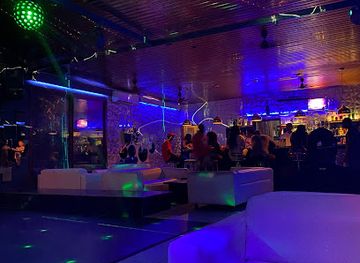
Niumi has little conventional nightclub culture, and evening life is generally quieter than in the coastal resort districts and urban centres across the river. Barra and larger settlements have local bars, tea places and informal meeting spots, while guesthouses or lodges may offer simple drinks and meals for visitors. Evenings in rural communities are more likely to centre on family life, conversation, music or communal gatherings than on a concentrated entertainment district. Alcohol is available in some establishments, but customs and religious observance vary, so visitors should behave discreetly and respect local surroundings. For live music, late-night bars and a wider choice of venues, travellers normally need to return to the Greater Banjul Area, which is outside Niumi. Organised cultural performances should be accepted as community events rather than treated as staged nightlife, and photography should always be agreed beforehand.
-
Night club
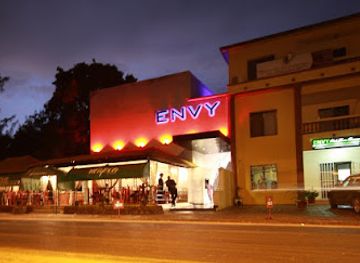
Envy Night Club
Dive into the exhilarating nightlife at Envy Night Club, Serrekunda's premier destination for dancing, drinks, and unforgettable memories.
-
Night club
Aquarius Nightclub
Dive into the vibrant nightlife at Aquarius Nightclub, where music and dance create unforgettable memories in Serrekunda, Gambia.
-
Night club
Ningki Nangka Bar & Night Club
Discover the pulse of Serrekunda's nightlife at Ningki Nangka Bar & Night Club, where vibrant music and lively atmosphere await.
-
Night club
ONYX
Experience the vibrant nightlife of Serrekunda at ONYX, where music, dance, and culture fuse into an unforgettable evening.

Best shops in Niumi
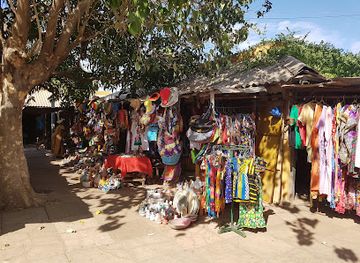
Shopping in Niumi is practical and locally oriented rather than centred on large retail areas. Barra has the region’s most active market and trading environment, where visitors may encounter foodstuffs, household goods, clothing, craft items and products brought through the ferry connection. Smaller village shops supply everyday necessities, while market stalls offer fruit, vegetables, snacks and locally used ingredients. Around historic sites, community-based tourism projects and craft sellers may present woven items, carved objects, textiles or souvenirs connected with Gambian culture, but stock and opening arrangements vary. Visitors should buy respectfully, check the quality and provenance of handmade goods, and bargain politely where bargaining is customary. Regional food products such as groundnuts, spices and dried ingredients can be interesting purchases, subject to airline, customs and food-import rules. For a broader selection of shops, galleries, fabrics and internationally familiar brands, the Greater Banjul Area is the principal retail destination outside Niumi.
-
Tourist attraction
Senegambia Craft Market
Discover authentic Gambian craftsmanship at the Senegambia Craft Market, where culture and creativity come alive in a vibrant shopping experience.
-
National park
Bijilo National Park
Explore the lush landscapes and diverse wildlife of Bijilo National Park, a serene escape in Gambia for nature lovers and adventure seekers.
-
Market
Serekunda Market
Experience the vibrant culture and local flavors of The Gambia at Serekunda Market, a must-visit destination for every curious traveler.
-
Market
Albert Market
Experience the rich culture and vibrancy of Gambian life at Albert Market, Banjul's bustling marketplace of local goods and artisan crafts.


Get your free copy of our complete guide to Niumi, delivered straight to you.
Everything on this page, from attractions and restaurants to essentials and local phrases, in one PDF you can read offline, print or share.
Already have an account? Sign in
Your Niumi guide is ready.
We'll send it to · Not you? Sign out

Getting your guide ready…
We are putting together a fresh copy of the Niumi guide. This can take up to a minute.
This can take a few moments. If your browser asks, choose Allow so the download can start. You'll find the guide in your Downloads folder.
Nothing happened? Download it again
Sorry, the guide is taking longer than usual. Please try again in a minute, or get it by email instead.
Niumi essentials
Currency and Payment
Safety
Emergency Situations
Do's and Don'ts
Local Tips
From Eve
Local phrases worth knowing
You don't need to get them perfect. A few words go a long way, and locals appreciate the effort.
Basics
| English | Local | Say it |
|---|---|---|
| Hello | Naka | [Nah-kah] |
| Goodbye | Jaama | [Jah-mah] |
| Yes | Aye | [Eye] |
| No | Naa | [Nah] |
| Please/You're welcome | Faal | [Fahl] |
| Thank you | Jerejef | [Jeh-reh-jef] |
| Excuse me/Sorry | Mbaax | [Mbahkh] |
| How are you? | Naka tigi? | [Nah-kah tee-gee?] |
| Fine. And you? | Nyaatiko. Iya? | [Nya-tee-koh. Ee-yah?] |
| Do you speak English? | Mba you speak English? | [Mbah yoo speek In-glish?] |
| I don't understand | Mbaa a ndaar | [Mbah a n-dahr] |
Eating & Drinking
| English | Local | Say it |
|---|---|---|
| I'd like to see the menu, please | Mba a yaar menu, faal | [Mbah a yah-r meh-noo, fahl] |
| I don't eat meat | Mbaa a nyaa nyama | [Mbah a nyah-yah nee-yah-mah] |
| Cheers! | Nyaam | [Nyaam] |
| I would like to pay, please | Mba a yaar pay, faal | [Mbah a yah-r pay, fahl] |
Emergencies
| English | Local | Say it |
|---|---|---|
| Help! | Jama! | [Jah-mah!] |
| Go away! | Faal a janta! | [Fahl ah jah-n-tah!] |
| Call the Police! | Jama Police! | [Jah-mah Poh-lees!] |
| Call a doctor! | Jama doctor! | [Jah-mah dok-tah!] |
| I'm lost | Mbaa a seene | [Mbah a seen-eh] |
| I'm ill | Mbaa a jamaa | [Mbah a jah-mah] |
Shopping
| English | Local | Say it |
|---|---|---|
| I'd like to buy... | Mba a yaar buy... | [Mbah a yah-r buy...] |
| I'm just looking | Mbaa a laa | [Mbah a lah] |
| How much is it? | Naka laa? | [Nah-kah lah?] |
| That's too expensive | Na faalaa | [Nah fah-lah] |
| Can you lower the price? | Mba a jooma na price? | [Mbah a joh-mah nah price?] |
Time & Numbers
| English | Local | Say it |
|---|---|---|
| What time is it? | Naka time? | [Nah-kah tahym?] |
| It's one o'clock | Naka one o'clock | [Nah-kah wahn oh-klok] |
| Half past (10) | Half past (10) | [Half past (10)] |
| Morning | Nda | [N-dah] |
| Afternoon | Fula | [Foo-lah] |
| Evening | Saa | [Sah] |
| Yesterday | Baal | [Bah-l] |
| Today | Nda baal | [N-dah bah-l] |
| Tomorrow | Nda fula | [N-dah foo-lah] |
| 1 | Kuno | [Koo-noh] |
| 2 | Duo | [Doo-oh] |
| 3 | Tati | [Tah-tee] |
| 4 | Nayi | [Nai-yee] |
| 5 | Jowi | [Jow-ee] |
| 6 | Jok | [Jok] |
| 7 | Jooni | [Jow-nee] |
| 8 | Jati | [Jah-tee] |
| 9 | Jin | [Jin] |
| 10 | Jeri | [Jeh-ree] |
Transport & Directions
| English | Local | Say it |
|---|---|---|
| Where's a/the...? | Naka a/the...? | [Nah-kah ah/the...?] |
| What's the address? | Naka address? | [Nah-kah ad-dress?] |
| Can you show me (on the map)? | Mba a jooma (on the map)? | [Mbah a joh-mah (on the map)?] |
| When's the next (bus)? | Naka next (bus)? | [Nah-kah next (bus)?] |
| A ticket (to ....) | A ticket (to ....) | [A ticket (to ....)] |
History of Niumi
Early Settlement and the Kingdom of Niumi
Niumi developed around the northern bank of the Gambia River, whose estuary connected inland communities with Atlantic trade routes. The kingdom traditionally associated with the region was divided into Lower Niumi, around present-day Barra and Essau, and Upper Niumi, farther upriver around settlements including Albreda and Juffureh. Political authority was shaped by Mandinka and other local communities, agriculture, fishing and control of river access. Although European traders later imposed their own forts and commercial priorities, Niumi was not an empty stage for foreign activity: established local rulers and trading networks determined access to land, labour and commerce.
European Trading Posts from the Fifteenth Century
Portuguese sailors were among the earliest Europeans to establish regular contact with the Gambia River during the fifteenth century. French and British traders subsequently competed for influence along the river, establishing or using fortified posts and commercial settlements. Albreda became associated with French activity on the north bank, while British interests grew around James Island and the river mouth. These outposts were dependent on agreements, rivalries and negotiations with local authorities. Their remains and associated settlements form part of a wider landscape of Atlantic commerce rather than isolated monuments detached from Gambian history.
The Atlantic Slave Trade
From the sixteenth to the nineteenth centuries, the Gambia River was incorporated into the Atlantic slave trade. Europeans purchased or exchanged captives through a complex regional system involving African states, merchants, warfare and political coercion. Fortified and trading sites around Niumi served as points of detention, exchange and transport, although the trade’s effects reached far beyond the surviving ruins. Albreda, Juffureh and Kunta Kinteh Island are now associated with this history, but interpretation increasingly emphasises the experiences of African communities, resistance, displacement and the long-term consequences of forced migration.
The Decline of the Trade and Fort Bullen
Britain abolished its participation in the transatlantic slave trade in 1807 and later sought to suppress illegal trafficking along the West African coast and rivers. Fort Bullen, built at Barra Point in the early nineteenth century, formed part of this effort and also protected British interests at the mouth of the Gambia River. The fort was positioned in a region where access to the river had long been commercially and politically important. Its surviving earthworks and structures illustrate the shift from slave-trading competition towards naval enforcement and colonial control.
Colonial Rule and the Gambia River
During the nineteenth and early twentieth centuries, British authority expanded along the river while French colonial Senegal surrounded The Gambia on land. The river became the organising route for administration, trade and transport, and settlements on the north bank remained connected to river traffic and agricultural production. Colonial rule altered systems of taxation, land administration and commerce without erasing local authority or community structures. The international boundary that left The Gambia as a narrow river territory also helped give Niumi its distinctive position between the estuary and neighbouring Senegal.
Independence and Rural Transformation
The Gambia became independent from Britain in 1965, and Niumi continued as a predominantly rural part of the country. Farming, fishing, livestock keeping, petty trade and transport around the Barra crossing remain important to local livelihoods. Improved roads and modern ferry operations have strengthened links with the capital area, while migration and tourism have brought new economic connections. At the same time, mangroves, estuarine fisheries and rain-dependent agriculture remain vulnerable to environmental pressure, making the region’s future closely tied to the sustainable management of land and river resources.
Heritage, Memory and the Roots Legacy
Niumi gained wider international attention through the global interest in Alex Haley’s Roots, which connected a fictionalised family narrative with the historical landscape around Juffureh and Kunta Kinteh Island. The association encouraged tourism and helped place Gambian slavery heritage in international conversations. It should, however, be understood alongside broader scholarship and local memory: the region’s history includes many communities, political actors and experiences that cannot be reduced to one genealogy. Museums, guides and heritage sites now contribute to continuing debates about remembrance, interpretation and responsible tourism.
Niumi in Photos
Browse through our photo collection highlighting the charm and character of the destination.
Neighbouring regions of Niumi
The closest regions to Niumi, if you have time for more than one.
-

-

-

-

-


Swipe for more regions
Explore more

Explore more of The Gambia
Discover The Gambia: a treasure trove of cultural richness, stunning beaches, and diverse wildlife. An unforgettable journey awaits you in Africa's Smiling Coast.
Explore The Gambia