

Free Grace Bay Travel Guide & Mobile App
Plan your Grace Bay trip with Evendo. Get free guides to top attractions, restaurants, hotels, and bars. Web access or download the mobile app.


Grace Bay, Turks and Caicos Islands, pairs powder-soft beaches with clear reefs, island history, water sports, seafood and relaxed Caribbean evenings.
Beach and Island Setting
Grace Bay occupies the north-eastern coast of Providenciales, one of the principal islands in the Turks and Caicos Islands. Its long sweep of pale sand faces calm, remarkably clear water protected by the barrier reef, creating the setting for which the island is best known. The shoreline forms part of Princess Alexandra National Park, where shallow marine habitats, seagrass beds and coral reefs support turtles, rays and tropical fish. Inland, the resort area is compact enough for relaxed exploration, although distances between accommodation, restaurants and beaches can make a taxi or hire car useful.Read more about Grace Bay
Resort Life and Local Character
Water, Wildlife and Heritage
When is the best time to visit Grace Bay?
Best: April–June · 30–31°C| Month | High (°C) | Rainfall (mm) |
|---|---|---|
| January | 28 | 43 |
| February | 29 | 39 |
| March | 29 | 30 |
| April (best) | 30 | 16 |
| May (best) | 30 | 11 |
| June (best) | 31 | 8 |
| July | 31 | 7 |
| August | 31 | 8 |
| September | 30 | 10 |
| October | 30 | 20 |
| November | 30 | 32 |
| December | 29 | 40 |
Getting to and around Grace Bay
How to get there
Transportation
Best attractions in Grace Bay
Grace Bay Beach is the area’s defining attraction, with a broad strand of pale sand and clear, generally calm water extending along the north coast. Within Princess Alexandra National Park, visitors can swim, paddleboard, sail or join boat excursions into the surrounding marine environment. Bight Reef and Smith’s Reef provide accessible opportunities to see tropical fish and other shallow-water life from shore, although reef conditions and currents vary. The Bight is also associated with the Thursday Fish Fry, where food stalls, local music and community performances create a more social introduction to island culture. Beyond Grace Bay, Providenciales offers the changing colours of Chalk Sound National Park, the quiet shoreline of Taylor Bay and historic plantation remains at Cheshire Hall, which lies away from the resort district. Together these places show the island’s contrast between protected coast, dry limestone landscape, marine recreation and the history of settlement.
-
 Resort hotel
Beaches Turks & Caicos
Discover the ultimate tropical getaway at Beaches Turks & Caicos, where luxury meets adventure in a stunning Caribbean paradise.
9 min drive · 2.9 km from city centre
-
Beach
Grace Bay Beach
Experience the unparalleled beauty of Grace Bay Beach in the Turks & Caicos Islands, a perfect blend of relaxation, adventure, and local culture.
6 min walk · 0.5 km from city centre
-
Tours
Caicos Dream Tours
Discover the beauty of Turks & Caicos Islands with exciting and immersive experiences at Caicos Dream Tours, your ultimate adventure awaits.
7 min drive · 2.2 km from city centre
-
Boat tour agency
Island Vibes Tours
Discover the best of Turks & Caicos with Island Vibes Tours, where adventure meets relaxation in the beautiful Grace Bay.
8 min walk · 0.6 km from city centre


Best landmarks in Grace Bay
Grace Bay’s most significant landmarks are largely natural and civic rather than monumental. Grace Bay Beach forms the area’s defining coastal landscape, while Princess Alexandra National Park protects much of the marine setting that gives the shoreline its environmental and cultural importance. Bight Reef and Smith’s Reef are recognisable natural features associated with the island’s accessible coral and seagrass habitats, where conservation is as important as recreation. The Bight itself has become a social landmark through its community gathering space and Thursday Fish Fry. For historical context, Cheshire Hall Plantation, on Providenciales away from Grace Bay, preserves the remains of a late-eighteenth-century cotton plantation and illustrates the island’s colonial agricultural past. These places reflect Providenciales’ identity through coast, protected marine life, community traditions and scattered plantation archaeology rather than through a dense historic centre.
-
Beach
Grace Bay Beach
Discover the captivating beauty of Grace Bay Beach, a tropical paradise with pristine sands and crystal-clear waters in the Turks and Caicos Islands.
6 min walk · 0.5 km from city centre
-
Boat tour agency
Island Vibes Tours
Experience the breathtaking underwater beauty of Grace Bay with Island Vibes Tours, offering unforgettable snorkeling adventures and expert local guidance.
8 min walk · 0.6 km from city centre
-
Restaurant
Hemingway's on the Beach
Experience the best of Caribbean dining at Hemingway's on the Beach in Grace Bay, with stunning ocean views and delectable local cuisine.
5 min drive · 1.8 km from city centre
-
Boat tour agency
Lady Grace Catamaran
Experience the enchanting waters of the Turks and Caicos Islands with the serene and luxurious Lady Grace Catamaran cruise, perfect for adventure and relaxation.
9 min walk · 0.7 km from city centre


Explore Grace Bay on the map
Plan your Grace Bay trip on one map. See where the top attractions, landmarks, restaurants, bars and hotels are, find what's near where you're staying, and book hotels and experiences in a few clicks.
Best hotels in Grace Bay
Best restaurants in Grace Bay
Dining in Grace Bay reflects the Turks and Caicos Islands’ position between the Caribbean and the Atlantic, with conch, fresh fish, lobster when in season and shellfish appearing alongside international menus. Conch can be served raw as a salad, frittered, cracked or incorporated into traditional soups and stews, while peas and rice, johnnycakes and plantain provide familiar local accompaniments. The resort area contains polished restaurants, relaxed terraces, cafés, bakeries and casual beach venues, with seafood often taking centre stage but not defining every meal. The Thursday Fish Fry at The Bight offers grilled seafood, conch dishes and other island cooking in a communal outdoor setting, accompanied by music and craft stalls. Menus also reflect the islands’ international population, with Caribbean, North American, Mediterranean and Asian influences represented across Grace Bay’s dining scene.
-
Restaurant
Da Conch Shack
Experience authentic Caribbean cuisine at Da Conch Shack - where fresh seafood meets stunning beach views in Turks & Caicos.
28 min drive · 9.2 km from city centre
-
Restaurant
Coco Bistro
Experience exquisite Caribbean cuisine under the stars at Coco Bistro in Grace Bay – where every meal is a celebration of flavor.
6 min walk · 0.5 km from city centre
-
Restaurant
Mr. Grouper's Restaurant
Discover fresh seafood and authentic Caribbean flavors at Mr. Grouper's Restaurant in Turks & Caicos Islands.
6 min drive · 2.0 km from city centre
-
Restaurant
Mango Reef Restaurant & Bar
Experience exquisite Caribbean cuisine and stunning ocean views at Mango Reef Restaurant & Bar in Turks and Caicos Islands.
18 min drive · 6.0 km from city centre


Best bars in Grace Bay
Evenings in Grace Bay are generally sociable and relaxed rather than centred on a large club scene. Resort lounges, beachfront bars, cocktail venues and restaurants provide settings for sunset drinks and late dinners, while live music and Caribbean-influenced performances appear at selected venues and community events. The Thursday Fish Fry at The Bight is one of the area’s best-known evening gatherings, combining food, music and local conversation rather than functioning as a conventional nightclub district. Some bars stay lively later around the main resort area, but nightlife is dispersed and quieter than in major Caribbean capitals. Taxis are useful after dark, especially when moving between resorts and The Bight, and visitors should respect local residents, avoid excessive noise and never drive after drinking.
-
American
Danny Buoy's
Experience a slice of America in Turks & Caicos at Danny Buoy's, where comfort food meets Caribbean vibes in a lively setting.
13 min walk · 1.0 km from city centre
-
Caribbean
Infiniti Restaurant & Raw Bar
Experience the finest Caribbean cuisine with breathtaking ocean views at Infiniti Restaurant & Raw Bar in Grace Bay.
2 min walk · 0.2 km from city centre
-
Restaurant
Aziza Restaurant & Lounge Turks-Caicos Providenciales
Experience the allure of Middle Eastern cuisine at Aziza Restaurant & Lounge, a fine dining destination in the heart of Turks and Caicos.
5 min walk · 0.4 km from city centre
-
Bar
Rickie's Flamingo Cafe
Discover the lively ambiance and delightful flavors at Rickie's Flamingo Cafe in Grace Bay, the perfect spot for relaxation and entertainment in Turks and Caicos.
10 min walk · 0.8 km from city centre


Best nightclubs in Grace Bay
Evenings in Grace Bay are generally sociable and relaxed rather than centred on a large club scene. Resort lounges, beachfront bars, cocktail venues and restaurants provide settings for sunset drinks and late dinners, while live music and Caribbean-influenced performances appear at selected venues and community events. The Thursday Fish Fry at The Bight is one of the area’s best-known evening gatherings, combining food, music and local conversation rather than functioning as a conventional nightclub district. Some bars stay lively later around the main resort area, but nightlife is dispersed and quieter than in major Caribbean capitals. Taxis are useful after dark, especially when moving between resorts and The Bight, and visitors should respect local residents, avoid excessive noise and never drive after drinking.
-
American
Danny Buoy's
Experience the vibrant atmosphere and delicious American cuisine at Danny Buoy's in the heart of Grace Bay, Turks & Caicos.
13 min walk · 1.0 km from city centre
-
Resort hotel
The Shore Club Turks & Caicos
Discover the stunning beauty and luxury of The Shore Club in Turks & Caicos, a perfect blend of relaxation and adventure.
7 min drive · 2.2 km from city centre
-
Restaurant
Aziza Restaurant & Lounge Turks-Caicos Providenciales
Experience the essence of Middle Eastern cuisine at Aziza Restaurant & Lounge, a vibrant dining and nightlife destination in Grace Bay, Turks and Caicos.
5 min walk · 0.4 km from city centre
-
Lounge
Shisha Lounge TCI
Experience the vibrant nightlife at Shisha Lounge TCI in Grace Bay, where relaxation meets entertainment in a stylish setting.
12 min walk · 1.0 km from city centre

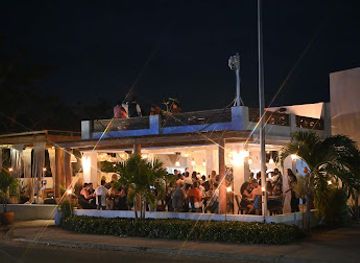

Best shops in Grace Bay
Shopping in Grace Bay is concentrated around the resort area, where small boutiques, art galleries, jewellery shops, craft retailers, convenience stores and larger commercial centres serve visitors and residents. The most distinctive purchases include locally made art, coastal photography, handmade jewellery, island-themed textiles and products featuring the Turks and Caicos flag or marine life. Shops also carry food gifts and Caribbean-inspired goods, although visitors should check whether items are genuinely locally produced rather than simply imported souvenirs. The Thursday Fish Fry at The Bight often includes craft stalls and provides a more informal setting for meeting makers and browsing small-scale products. Providenciales is not primarily a traditional market destination, so shopping feels more like a blend of resort retail, independent galleries and practical island commerce than an old bazaar or historic trading quarter.
-
Supermarket
Graceway Gourmet
Graceway Gourmet: Your Gateway to Authentic Local Flavors and Gourmet Delights in Grace Bay, Turks & Caicos.
11 min walk · 0.9 km from city centre
-
Gift shop
House of Unicorn
Explore the House of Unicorn in Grace Bay, Turks & Caicos, for unique gifts and local crafts that capture the island's charm.
14 min walk · 1.2 km from city centre
-
Jewellery Store
Jai's
Experience luxury shopping at Jai's Jewelry Store in Grace Bay, where exquisite designs meet exceptional service in a duty-free paradise.
12 min walk · 1.0 km from city centre
-
Shopping Centre
The Regent Village
Experience the lively atmosphere of The Regent Village, a premier shopping center in Grace Bay, offering boutiques, dining, and vibrant nightlife.
13 min walk · 1.1 km from city centre


Get your free copy of our complete guide to Grace Bay, delivered straight to you.
Everything on this page, from attractions and restaurants to essentials and local phrases, in one PDF you can read offline, print or share.
Already have an account? Sign in
Your Grace Bay guide is ready.
We'll send it to · Not you? Sign out

Getting your guide ready…
We are putting together a fresh copy of the Grace Bay guide. This can take up to a minute.
This can take a few moments. If your browser asks, choose Allow so the download can start. You'll find the guide in your Downloads folder.
Nothing happened? Download it again
Sorry, the guide is taking longer than usual. Please try again in a minute, or get it by email instead.
Grace Bay essentials
Currency and Payment
Safety
Emergency Situations
Do's and Don'ts
Local Tips
From Eve
Local phrases worth knowing
You don't need to get them perfect. A few words go a long way, and locals appreciate the effort.
Basics
| English | Local | Say it |
|---|---|---|
| Hello | Hello | [Heh-loh] |
| Goodbye | Goodbye | [Gud-bye] |
| Yes | Yes | [Yes] |
| No | No | [No] |
| Please/You're welcome | Please/You're welcome | [Pleez/Yur wel-kum] |
| Thank you | Thank you | [Thank yu] |
| Excuse me/Sorry | Excuse me/Sorry | [Ex-kyooz mee/Sor-ee] |
| How are you? | How are you? | [Hao ar yu?] |
| Fine. And you? | Fine. And you? | [Fain. And yu?] |
| Do you speak English? | Do you speak English? | [Doo yu speek Ing-lish?] |
| I don't understand | I don't understand | [I dohnt und-er-stand] |
Eating & Drinking
| English | Local | Say it |
|---|---|---|
| I'd like to see the menu, please | I'd like to see the menu, please | [Ayd laik to see deh menyoo, pleez] |
| I don't eat meat | I don't eat meat | [I dohnt eet meet] |
| Cheers! | Cheers! | [Cheerz!] |
| I would like to pay, please | I would like to pay, please | [I wood laik to pay, pleez] |
Emergencies
| English | Local | Say it |
|---|---|---|
| Help! | Help! | [Help!] |
| Go away! | Go away! | [Go awey!] |
| Call the Police! | Call the Police! | [Kol deh Po-lees!] |
| Call a doctor! | Call a doctor! | [Kol a doc-ter!] |
| I'm lost | I'm lost | [Aym lost] |
| I'm ill | I'm ill | [Aym il] |
Shopping
| English | Local | Say it |
|---|---|---|
| I'd like to buy... | I'd like to buy... | [Ayd laik to buy...] |
| I'm just looking | I'm just looking | [Aym jost luk-ing] |
| How much is it? | How much is it? | [Hao much is it?] |
| That's too expensive | That's too expensive | [Dats too ex-pen-siv] |
| Can you lower the price? | Can you lower the price? | [Can yu loh-er deh price?] |
Time & Numbers
| English | Local | Say it |
|---|---|---|
| What time is it? | What time is it? | [Wot tym is it?] |
| It's one o'clock | It's one o'clock | [Its wun o-klok] |
| Half past (10) | Half past (10) | [Haf past (10)] |
| Morning | Morning | [Morn-ing] |
| Afternoon | Afternoon | [Af-ter-noon] |
| Evening | Evening | [Ee-ven-ing] |
| Yesterday | Yesterday | [Yes-ter-day] |
| Today | Today | [To-day] |
| Tomorrow | Tomorrow | [To-mor-row] |
| 1 | 1 | [1] |
| 2 | 2 | [2] |
| 3 | 3 | [3] |
| 4 | 4 | [4] |
| 5 | 5 | [5] |
| 6 | 6 | [6] |
| 7 | 7 | [7] |
| 8 | 8 | [8] |
| 9 | 9 | [9] |
| 10 | 10 | [10] |
Transport & Directions
| English | Local | Say it |
|---|---|---|
| Where's a/the...? | Where's a/the...? | [Wehrz a/the...?] |
| What's the address? | What's the address? | [Wots deh ad-dress?] |
| Can you show me (on the map)? | Can you show me (on the map)? | [Can yu sho mee (on deh map)?] |
| When's the next (bus)? | When's the next (bus)? | [Wen's deh nekst (bus)?] |
| A ticket (to ....) | A ticket (to ....) | [A tik-et (to ....)] |
History of Grace Bay
Lucayan Islands Before Colonisation
The Turks and Caicos Islands were inhabited by Lucayan communities before European arrival. These Indigenous people lived through fishing, shellfish gathering, cultivation and exchange between islands, using the surrounding banks and shallow waters as a rich source of food. Archaeological evidence across the archipelago records settlements, tools and ceremonial objects, although little visible evidence survives in the built environment around modern Grace Bay. European voyages in the late fifteenth and early sixteenth centuries brought disease, enslavement and forced removal, causing the Lucayan population to collapse within decades. This early history remains essential to understanding Providenciales as a long-inhabited island rather than an empty landscape later shaped solely by tourism.
European Control and Depopulation
Following the voyages associated with Christopher Columbus and the Spanish conquest of the wider Caribbean, the Lucayan people were subjected to enslavement and transported to other islands. By the sixteenth century, the Turks and Caicos had been largely depopulated, and European powers treated the islands principally as a maritime and territorial resource. Their shallow banks, isolated cays and difficult agricultural conditions limited permanent settlement for long periods. The absence of a large colonial town or monumental European centre distinguishes Providenciales from many Caribbean destinations, while the island’s later economy developed through small-scale agriculture, salt and maritime activity rather than through a major colonial port.
Salt, Farming and Bermudian Settlement
From the seventeenth and eighteenth centuries, settlers connected with Bermuda developed salt production in the Turks and Caicos, using naturally evaporating ponds and the trade winds to produce an export commodity. Providenciales also supported livestock, subsistence farming and cotton cultivation, and plantation-era remains survive elsewhere on the island. The environment around Grace Bay was never transformed into a dense colonial city; instead, settlement remained scattered across an arid landscape shaped by scrub, limestone and coastal wetlands. These industries linked the islands to wider Atlantic trade networks, while maritime knowledge, African and European influences and movement between neighbouring islands contributed to the cultural foundations of modern Turks and Caicos society.
Providenciales and the Rise of Tourism
For much of the twentieth century, Providenciales remained less developed than Grand Turk and Salt Cay, whose salt and administrative histories were more prominent. Roads, air links and investment gradually altered that balance during the later twentieth century, when Providenciales became the territory’s principal tourism and population centre. Grace Bay’s broad beach, sheltered waters and proximity to Providenciales International Airport encouraged the growth of resorts, villas, restaurants and marine-tourism businesses. The transformation brought employment and infrastructure but also changed land use and the scale of development, making careful management of beaches, reefs and wetlands increasingly important.
Protected Coast and Contemporary Grace Bay
Modern Grace Bay is closely associated with Princess Alexandra National Park, a protected marine and coastal area established to conserve important beaches, reefs, seagrass habitats and wildlife. Conservation has become part of the destination’s identity as tourism depends on the clear water and healthy marine environment. Today the area combines an international resort economy with locally rooted food, music, fishing and boat traditions, most visibly at community gatherings such as the Thursday Fish Fry. Its history is therefore expressed less through a concentration of historic buildings than through the relationship between protected nature, island livelihoods and rapid contemporary development.
Grace Bay in Photos
Browse through our photo collection highlighting the charm and character of the destination.
Cities near Grace Bay
The closest cities to Grace Bay, if you have time for more than one stop.
-

-

-

-

-


Swipe for more cities
Explore more

Explore more of Turks and Caicos Islands
Discover the pristine beaches, luxurious resorts, and vibrant culture of Turks and Caicos Islands, a tropical paradise in the Atlantic Ocean.
Explore Turks and Caicos Islands