

Free Pine Cay Travel Guide & Mobile App
Plan your Pine Cay trip with Evendo. Get free guides to top attractions, restaurants, hotels, and bars. Web access or download the mobile app.


Pine Cay in the Turks and Caicos Islands offers quiet beaches, reef-fringed waters, nature-focused escapes and island tranquillity near Providenciales.
Island Setting
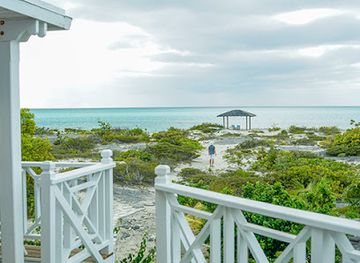
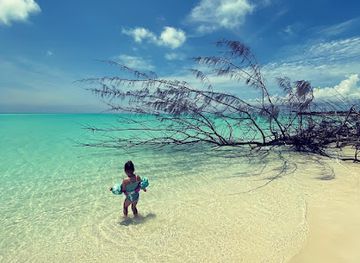
Pine Cay is a small private island in the Turks and Caicos Islands, lying among the shallow turquoise waters of the Caicos Banks east of Providenciales. Its appeal is defined by space and stillness: a long sweep of pale sand, low scrub and pine woodland, offshore reefs, and broad horizons with little urban development. Rather than functioning as a conventional town, Pine Cay is an intimate island community centred on beaches, nature and carefully managed access.Read more about Pine Cay
Nature and the Shoreline
A Private-Island Atmosphere
When is the best time to visit Pine Cay?
Best: May–July · 31°C| Month | High (°C) | Rainfall (mm) |
|---|---|---|
| January | 29 | 70 |
| February | 29 | 60 |
| March | 29 | 50 |
| April | 30 | 40 |
| May (best) | 31 | 30 |
| June (best) | 31 | 20 |
| July (best) | 31 | 20 |
| August | 31 | 30 |
| September | 31 | 40 |
| October | 30 | 50 |
| November | 30 | 60 |
| December | 29 | 70 |
Getting to and around Pine Cay
How to get there
Transportation
Best landmarks in Pine Cay
Pine Cay has few built landmarks in the conventional architectural sense, and its identity is instead represented by its shoreline, marine setting and carefully limited development. The island’s long beach and reef-protected waters are defining physical features, while the established Meridian Club is its best-known built focal point and an example of the low-density resort model associated with Pine Cay. There is no historic church, colonial square, fort or civic centre comparable with those found on Grand Turk. The wider Turks and Caicos context is visible in the island’s use of sandy tracks, boat access and Caribbean coastal materials, but regional landmarks should not be presented as being on Pine Cay. Its most meaningful landmark quality is the relationship between private accommodation, pine and scrub vegetation, open beach and the protected waters of the Caicos Banks.
-
Hotel
The Meridian Club
Experience the ultimate luxury at The Meridian Club, a tranquil hotel oasis on Pine Cay, Turks & Caicos, surrounded by pristine beaches and turquoise waters.
7 min walk · 0.5 km from city centre
-
 Resort hotel
Pine Cay, Turks and Caicos
Discover the serene beauty and luxury of Pine Cay, a private island paradise in the Turks and Caicos, perfect for relaxation and adventure.
6 min walk · 0.5 km from city centre
-
Island
Fort George Cay
Experience the untouched beauty of Fort George Cay, a tranquil island getaway in the heart of the Turks and Caicos, perfect for relaxation and adventure.
8 min drive · 2.7 km from city centre
Explore Pine Cay on the map
Plan your Pine Cay trip on one map. See where the top attractions, landmarks, restaurants, bars and hotels are, find what's near where you're staying, and book hotels and experiences in a few clicks.
Best hotels in Pine Cay
Best bars in Pine Cay
Pine Cay does not have a conventional nightlife district, nightclub scene or strip of late-opening bars. Evening social life is centred on the accommodation community, where visitors may find a bar, relaxed drinks and dining in an informal setting rather than energetic entertainment. The island’s low-density character makes sunset by the shore, stargazing and conversation more representative evening activities than loud music or dancing. Any hosted gatherings, live entertainment or bar service depend on the current arrangements of the accommodation provider and should not be assumed. Providenciales offers a broader selection of bars and evening venues, but reaching it requires a boat transfer and careful timing, so Pine Cay is better suited to quiet nights shaped by the sea, darkness and the natural surroundings.
-
Hotel
The Meridian Club
Experience luxury and tranquility at The Meridian Club, a stunning beachfront hotel on Pine Cay, Turks and Caicos Islands.
7 min walk · 0.5 km from city centre

Best nightclubs in Pine Cay
Pine Cay does not have a conventional nightlife district, nightclub scene or strip of late-opening bars. Evening social life is centred on the accommodation community, where visitors may find a bar, relaxed drinks and dining in an informal setting rather than energetic entertainment. The island’s low-density character makes sunset by the shore, stargazing and conversation more representative evening activities than loud music or dancing. Any hosted gatherings, live entertainment or bar service depend on the current arrangements of the accommodation provider and should not be assumed. Providenciales offers a broader selection of bars and evening venues, but reaching it requires a boat transfer and careful timing, so Pine Cay is better suited to quiet nights shaped by the sea, darkness and the natural surroundings.
-
Hotel
The Meridian Club
Experience luxury and tranquility at The Meridian Club, a paradise resort on Pine Cay, Turks & Caicos Islands, perfect for relaxation and adventure.
7 min walk · 0.5 km from city centre
Get your free copy of our complete guide to Pine Cay, delivered straight to you.
Everything on this page, from attractions and restaurants to essentials and local phrases, in one PDF you can read offline, print or share.
Already have an account? Sign in
Your Pine Cay guide is ready.
We'll send it to · Not you? Sign out

Getting your guide ready…
We are putting together a fresh copy of the Pine Cay guide. This can take up to a minute.
This can take a few moments. If your browser asks, choose Allow so the download can start. You'll find the guide in your Downloads folder.
Nothing happened? Download it again
Sorry, the guide is taking longer than usual. Please try again in a minute, or get it by email instead.
Pine Cay essentials
Currency and Payment
Safety
Emergency Situations
Do's and Don'ts
Local Tips
From Eve
Local phrases worth knowing
You don't need to get them perfect. A few words go a long way, and locals appreciate the effort.
Basics
| English | Local | Say it |
|---|---|---|
| Hello | Hello | [hel-oh] |
| Goodbye | Bye | [bai] |
| Yes | Yes | [yehs] |
| No | No | [no] |
| Please/You're welcome | Please/You're welcome | [pliiz/yur wel-kuhm] |
| Thank you | Thank you | [thank yoo] |
| Excuse me/Sorry | Excuse me/Sorry | [ig-skyoos mee/sah-ree] |
| How are you? | How are you? | [haw ar yoo] |
| Fine. And you? | Fine. And you? | [fain. and yoo] |
| Do you speak English? | Do you speak English? | [doo yoo speek ing-glish] |
| I don't understand | I don't understand | [ai dohnt und-er-stahnd] |
Eating & Drinking
| English | Local | Say it |
|---|---|---|
| I'd like to see the menu, please | I'd like to see the menu, please | [ai'd laik tu si duh meh-nyoo, pliiz] |
| I don't eat meat | I don't eat meat | [ai dohnt eet meet] |
| Cheers! | Cheers! | [cheerz] |
| I would like to pay, please | I would like to pay, please | [ai wood laik tu pey, pliiz] |
Emergencies
| English | Local | Say it |
|---|---|---|
| Help! | Help! | [help] |
| Go away! | Go away! | [goh uh-wey] |
| Call the Police! | Call the Police! | [kol duh puh-lees] |
| Call a doctor! | Call a doctor! | [kol uh dok-ter] |
| I'm lost | I'm lost | [aim lost] |
| I'm ill | I'm ill | [aim il] |
Shopping
| English | Local | Say it |
|---|---|---|
| I'd like to buy... | I'd like to buy... | [ai'd laik tu bai] |
| I'm just looking | I'm just looking | [aim jehst luk-ing] |
| How much is it? | How much is it? | [haw much iz it] |
| That's too expensive | That's too expensive | [dats too ik-spensiv] |
| Can you lower the price? | Can you lower the price? | [kan yoo loh-wer duh prais] |
Time & Numbers
| English | Local | Say it |
|---|---|---|
| What time is it? | What time is it? | [wut taim iz it] |
| It's one o'clock | It's one o'clock | [its wun uh-klok] |
| Half past (10) | Half past (10) | [haf past (ten)] |
| Morning | Morning | [mor-ning] |
| Afternoon | Afternoon | [af-ter-noon] |
| Evening | Evening | [ee-ven-ing] |
| Yesterday | Yesterday | [yest-er-day] |
| Today | Today | [tuh-day] |
| Tomorrow | Tomorrow | [toh-mor-row] |
| 1 | 1 | [wun] |
| 2 | 2 | [too] |
| 3 | 3 | [tree] |
| 4 | 4 | [for] |
| 5 | 5 | [fahyv] |
| 6 | 6 | [siks] |
| 7 | 7 | [sev-en] |
| 8 | 8 | [eyt] |
| 9 | 9 | [nyn] |
| 10 | 10 | [ten] |
Transport & Directions
| English | Local | Say it |
|---|---|---|
| Where's a/the...? | Where's a/the...? | [wehrs uh/the] |
| What's the address? | What's the address? | [wuts duh uh-dres] |
| Can you show me (on the map)? | Can you show me (on the map)? | [kan yoo shoh mee (on duh map)] |
| When's the next (bus)? | When's the next (bus)? | [wenz duh nekst (bus)] |
| A ticket (to ....) | A ticket (to ....) | [uh tik-it (to)] |
History of Pine Cay
Lucayan Roots in the Caicos
Pine Cay forms part of an archipelago inhabited before European colonisation by Lucayan-speaking Taíno communities. The shallow banks, beaches and sheltered waters of the Turks and Caicos supported fishing, shellfish gathering and movement between islands, although Pine Cay’s small scale means that surviving evidence is less conspicuous than the wider archaeological record found elsewhere in the territory. European contact brought profound disruption through enslavement, disease and forced removal, and the Lucayan population had largely disappeared from the islands by the early sixteenth century. This early human history remains an important context for understanding Pine Cay not as an untouched landscape, but as part of a long-inhabited Caribbean environment.
Colonial Islands and Maritime Routes
During the colonial period, the Turks and Caicos Islands were linked to the competing interests of Britain, the Bahamas and other Caribbean territories. Grand Turk became especially important for salt production, while smaller cays were used intermittently by fishers, sailors and people moving through the archipelago. Pine Cay did not develop into a colonial port or major settlement, and its history is therefore best understood through the maritime economy and shifting administration of the wider islands rather than through a dense local town record. The surrounding reefs and banks remained both valuable resources and navigational hazards for vessels crossing the region.
Salt, Fishing and a Scattered Population
For much of the modern pre-tourism era, economic life in the Turks and Caicos centred on salt, fishing, small-scale farming and seafaring. Population and commercial activity concentrated on islands such as Grand Turk, Salt Cay and Providenciales, leaving smaller cays lightly settled. Pine Cay’s beaches, vegetation and surrounding waters were shaped by these wider patterns of use rather than by substantial permanent urban development. The absence of a historic colonial town or industrial waterfront is part of the island’s present character, while the region’s fishing traditions, boat culture and knowledge of tides continue to influence how people travel between the cays.
Late-Twentieth-Century Island Development
Pine Cay entered a new phase in the late twentieth century as private-island tourism developed in the Turks and Caicos. Low-density residential construction and resort accommodation were established without creating a conventional town, road network or commercial centre. The island’s appeal lay in its beaches, seclusion and access to the surrounding marine environment, and development remained closely associated with private ownership and managed hospitality. The Meridian Club became the best-known accommodation presence on Pine Cay, helping define the island as a small-scale retreat rather than a mass-market resort destination.
Conservation and Contemporary Identity
Modern Pine Cay exists within a territory increasingly recognised for its marine parks, beaches and fragile island ecosystems. Management of development, freshwater, waste, boating and reef use is consequently central to the island’s future. Its contemporary identity combines private residential and hospitality interests with the wider conservation responsibilities of the Turks and Caicos Islands, including protection of coral reefs, seagrass beds, beaches and wildlife. Visitors encounter a landscape where the absence of dense construction is itself historically significant: Pine Cay’s story has moved from an inhabitable natural cay to a carefully limited island retreat rather than to a conventional urban settlement.
Pine Cay in Photos
Browse through our photo collection highlighting the charm and character of the destination.
Cities near Pine Cay
The closest cities to Pine Cay, if you have time for more than one stop.
-

-

-

-

-


Swipe for more cities
Explore more

Explore more of Turks and Caicos Islands
Discover the pristine beaches, luxurious resorts, and vibrant culture of Turks and Caicos Islands, a tropical paradise in the Atlantic Ocean.
Explore Turks and Caicos Islands