

Free Ras Al Khaimah Travel Guide & Mobile App
Plan your Ras Al Khaimah trip with Evendo. Get free guides to top attractions, restaurants, hotels, and bars. Web access or download the mobile app.


Ras Al Khaimah blends ancient Julfar history, Gulf beaches, desert landscapes and Hajar Mountain adventures with Emirati culture and heritage.
A Northern Arabian Setting
Ras Al Khaimah occupies the northernmost corner of the United Arab Emirates, where the Hajar Mountains approach a long Gulf coastline and tidal creeks cut through the urban landscape. The emirate’s capital is less defined by towering modern architecture than by its relationship with desert, mangroves, beaches and rugged mountain terrain. Its name means ‘top of the tent’, an apt description for a place positioned at the upper end of the UAE and historically linked to maritime routes across the Arabian Gulf.Read more about Ras Al Khaimah
Layers of History
Contemporary Coastal Life
When is the best time to visit Ras Al Khaimah?
Best: February–March, December · 24–27°C| Month | High (°C) | Rainfall (mm) |
|---|---|---|
| January | 23 | 38 |
| February (best) | 24 | 39 |
| March (best) | 27 | 25 |
| April | 31 | 11 |
| May | 37 | 1 |
| June | 40 | 0 |
| July | 42 | 0 |
| August | 43 | 0 |
| September | 39 | 0 |
| October | 34 | 1 |
| November | 30 | 11 |
| December (best) | 24 | 35 |
Getting to and around Ras Al Khaimah
How to get there
Transportation
Best attractions in Ras Al Khaimah
Ras Al Khaimah’s attractions range from heritage sites to broad coastal and mountain landscapes. The National Museum, housed in a former fort, introduces the emirate’s archaeological, maritime and social history, while the nearby old town and creek reveal the shape of the historic settlement. At Jazirat Al Hamra, a largely abandoned fishing and pearling village preserves coral-stone homes, mosques and lanes that illustrate life before the oil era. North of the city, Dhayah Fort rises above date plantations and gives a sense of the area’s defensive past. The beaches and resort districts around Al Hamra provide swimming, sailing and family leisure, while the road to Jebel Jais leads into the Hajar Mountains for viewpoints, walks and adventure activities. Mangrove-fringed waterways and desert tracks add a quieter dimension, showing how closely the emirate’s built environment remains linked to coast, plain and mountain.
-
 Tourist attraction
Jebel Jais
Experience the breathtaking beauty and thrilling adventures at Jebel Jais, the highest peak in the UAE, located in Ras Al Khaimah.
46 min drive · 26 km from city centre
-
Water park
Dreamland Aqua Park
Experience the thrill of water rides and family fun at Dreamland Aqua Park in Umm Al Quwain, a top destination for adventure seekers and families alike.
56 min drive · 36 km from city centre
-
Park
Saqr Park
Discover the natural beauty and tranquility of Saqr Park, a must-visit green oasis in Ras al Khaimah for family outings and relaxation.
30 min drive · 10 km from city centre
-
Museum
National Museum of Ras Al Khaimah
Explore the National Museum of Ras Al Khaimah, where history comes alive through fascinating exhibits and rich cultural narratives.
6 min walk · 0.4 km from city centre


Best landmarks in Ras Al Khaimah
The National Museum of Ras Al Khaimah occupies a historic fort whose thick walls and fortified form reflect the strategic importance of the old settlement. Dhayah Fort, perched on a hill amid the northern plain, is the emirate’s most evocative defensive landmark and is associated with the 1819 conflict that reshaped British relations with the Gulf coast. Jazirat Al Hamra’s coral-stone houses, mosque and narrow lanes form a rare surviving village landscape from the pearling era. In the historic centre, older fortifications and traditional compounds recall a town organised around protection, trade and family life. The creek and coastal inlets are landmarks of geography as much as architecture, linking the city to its maritime past. Farther inland, the Hajar Mountains provide a natural architectural counterpoint: their steep rock faces and winding approaches dominate the emirate’s northern skyline.
-
Tourist attraction
Jebel Jais
Experience the breathtaking heights and thrilling adventures at Jebel Jais, the UAE's highest peak, where nature and excitement meet.
46 min drive · 26 km from city centre
-
Shopping mall
Manar Mall
Explore Manar Mall in Ras al Khaimah for the ultimate shopping, dining, and entertainment experience, perfect for tourists and locals alike.
7 min drive · 2.4 km from city centre
-
Park
Saqr Park
Explore Saqr Park in Ras Al Khaimah: A lush park offering family-friendly activities, serene landscapes, and perfect spots for relaxation and picnics.
30 min drive · 10 km from city centre
-
Tourist attraction
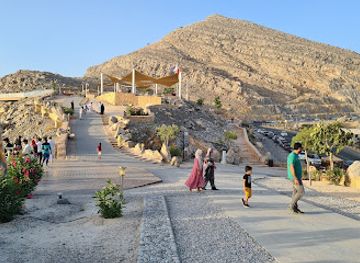
Viewing Deck Park Jebel Jais
Discover unparalleled views and natural beauty at the Jebel Jais Viewing Deck, the highest peak in the UAE, perfect for every nature lover.
45 min drive · 25 km from city centre

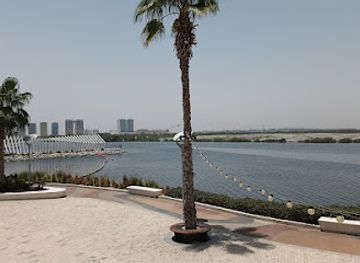

Explore Ras Al Khaimah on the map
Plan your Ras Al Khaimah trip on one map. See where the top attractions, landmarks, restaurants, bars and hotels are, find what's near where you're staying, and book hotels and experiences in a few clicks.
Best hotels in Ras Al Khaimah
Best restaurants in Ras Al Khaimah
Ras Al Khaimah’s dining scene reflects Emirati, Gulf Arab, Levantine, South Asian and international influences, with seafood remaining especially appropriate in a coastal emirate shaped by fishing and pearling. Visitors can find Emirati dishes such as machboos, harees, thareed and luqaimat alongside grilled fish, mezze, biryani, flatbreads and Arabic sweets. The central city has modest local restaurants and cafés, while hotel and resort districts around Al Hamra offer broader international menus. Tea houses, juice counters and casual eateries provide much of the everyday rhythm, and larger shopping centres bring together regional and global food brands. Traditional flavours may also appear at cultural events and heritage venues, although menus vary by establishment. Dining customs are generally informal but family-oriented, with indoor seating common during the hottest part of the year and outdoor terraces more appealing in the cooler months.
-
Seafood
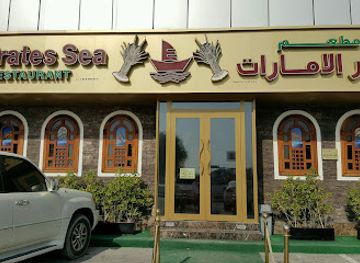
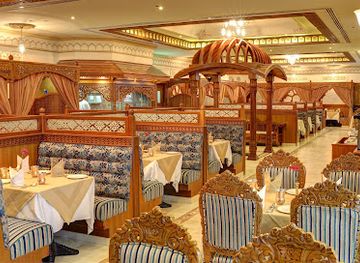
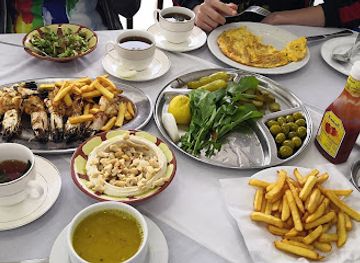
مطعم بحر الامارات Emirates Sea Restaurant Ras Al Khaimah
Discover the finest seafood at Emirates Sea Restaurant in Ras Al Khaimah—where fresh flavors meet breathtaking views.
18 min drive · 6.1 km from city centre
-
Restaurant
India Palace Restaurant
Experience authentic Indian cuisine at India Palace Restaurant in RAK Mall - a culinary delight awaits every visitor!
8 min drive · 2.7 km from city centre
-
Italian
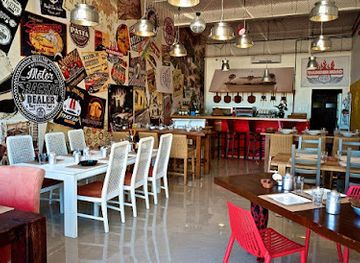
Thunder Road Italian Restaurant-Al Riffah
Experience authentic Italian flavors at Thunder Road in Ras al Khaimah - where every dish tells a story.
33 min drive · 13 km from city centre
-
Lebanese
Lebanese House Restaurant
Experience authentic Lebanese flavors in a warm and inviting atmosphere at Lebanese House Restaurant in Ras al Khaimah.
9 min drive · 3.0 km from city centre
Best bars in Ras Al Khaimah
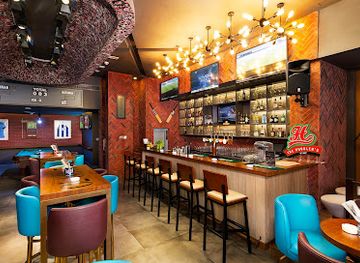
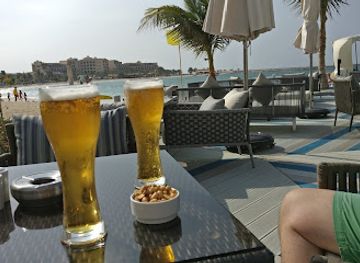
Ras Al Khaimah’s evening scene is concentrated in hotel bars, resort lounges, restaurants and selected licensed venues rather than a dense standalone nightlife district. Around Al Hamra and the coastal resorts, visitors can find relaxed terraces, live entertainment, sports viewing and occasional themed evenings, while the city proper is more oriented towards cafés, family restaurants and late meals. Alcohol is available only in licensed establishments, and rules governing entry and service can vary between venues. Evenings are also well suited to quieter activities: waterfront walks, open-air dining, cultural programmes and desert gatherings offer alternatives to clubs. During cooler months, resort areas may host outdoor music or entertainment, but schedules are seasonal and should be checked locally. Modest public behaviour remains important outside licensed venues and private hotel settings.
-
Bar
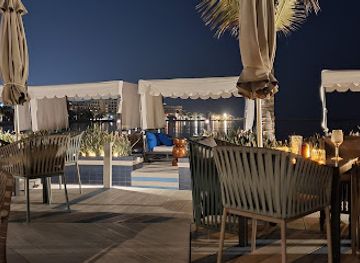
SOL Beach Lounge & Bar
Experience the vibrant atmosphere of SOL Beach Lounge & Bar in Ras al Khaimah, where stunning views and refreshing cocktails await you.
10 min drive · 3.5 km from city centre
-
Bar
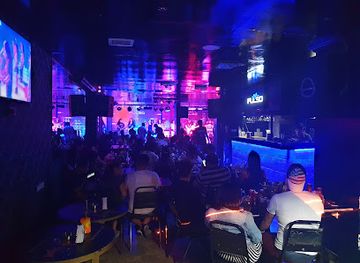
Pulso night club
Immerse yourself in the electrifying nightlife at Pulso Night Club, Ras al Khaimah’s premier destination for dancing and entertainment.
11 min drive · 3.8 km from city centre
-
Bar
The Huddle Sports Bar & Grill - Ras Al Khaimah
Experience the thrill of sports and savor delicious grill dishes at The Huddle Sports Bar & Grill in Ras Al Khaimah, your go-to destination for fun.
8 min drive · 2.6 km from city centre
-
Bar
Cider Bay
Discover the serene charm of Cider Bay, a picturesque bar in Ras al Khaimah, perfect for relaxing with a drink and enjoying stunning waterfront views.
9 min drive · 3.1 km from city centre
Best nightclubs in Ras Al Khaimah
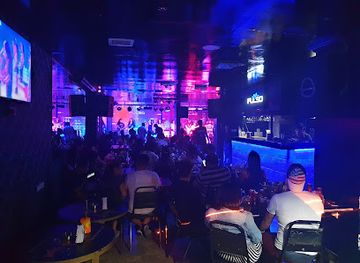
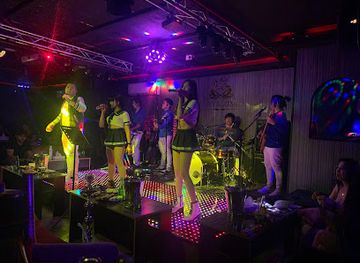
Ras Al Khaimah’s evening scene is concentrated in hotel bars, resort lounges, restaurants and selected licensed venues rather than a dense standalone nightlife district. Around Al Hamra and the coastal resorts, visitors can find relaxed terraces, live entertainment, sports viewing and occasional themed evenings, while the city proper is more oriented towards cafés, family restaurants and late meals. Alcohol is available only in licensed establishments, and rules governing entry and service can vary between venues. Evenings are also well suited to quieter activities: waterfront walks, open-air dining, cultural programmes and desert gatherings offer alternatives to clubs. During cooler months, resort areas may host outdoor music or entertainment, but schedules are seasonal and should be checked locally. Modest public behaviour remains important outside licensed venues and private hotel settings.
-
Night club
Pulso night club
Discover the energetic nightlife of Ras al Khaimah at Pulso Night Club, where music, dancing, and vibrant atmosphere await.
11 min drive · 3.8 km from city centre
-
Night club
The VIBE Nightclub
Discover the electrifying nightlife at The VIBE Nightclub in Ras al Khaimah, where music, dance, and unforgettable moments come together.
6 min drive · 2.1 km from city centre
-
Night club
Avalon Night Club and Bar
Experience the vibrant nightlife of Ras al Khaimah at Avalon Night Club and Bar, where music and fun meet in an electrifying atmosphere.
17 min drive · 5.6 km from city centre
-
Disco club
Avenue Night Club , Casablanca Hotel
Discover the electrifying nightlife at Avenue Night Club, a premier disco club in Ras al Khaimah, perfect for dancing and socializing.
8 min drive · 2.7 km from city centre

Best shops in Ras Al Khaimah
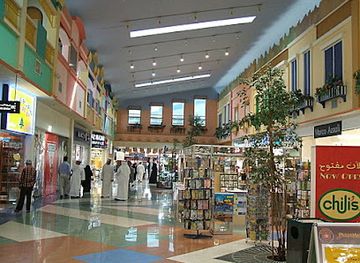
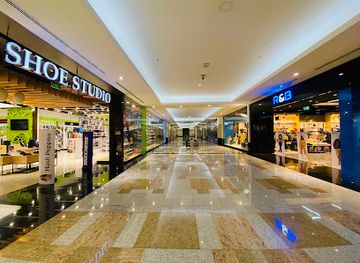
Shopping in Ras Al Khaimah combines practical local commerce with modern malls and resort retail. Al Naeem Mall and Al Hamra Mall bring together international brands, cafés, supermarkets and entertainment, while smaller neighbourhood shops and commercial streets offer clothing, mobile goods, perfumes, spices and everyday provisions. Traditional markets around the central city are useful for browsing dates, nuts, fragrances, textiles and household goods, though the retail atmosphere is generally less concentrated than in Dubai’s major souks. Visitors interested in souvenirs can look for Emirati-style coffee pots, woven items, incense, dates and regional sweets, while heritage venues may provide locally themed crafts. Bargaining is more likely in informal market settings than in shopping centres, and product quality and provenance should be considered carefully when buying antiques or handmade items.
-
Shopping mall
Manar Mall
Explore Manar Mall in Ras al Khaimah, a premier shopping destination with diverse retail, dining, and entertainment options for every traveler.
7 min drive · 2.4 km from city centre
-
Shopping mall
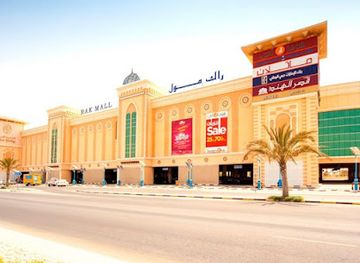
Rak Mall
Explore Rak Mall in Ras al Khaimah for a diverse shopping experience, delicious dining, and family-friendly entertainment.
8 min drive · 2.6 km from city centre
-
Shopping mall
Al Naeem Mall
Discover shopping, dining, and entertainment at Al Naeem Mall, Ras al Khaimah's premier destination for a perfect day out.
8 min drive · 2.5 km from city centre
-
Shopping mall
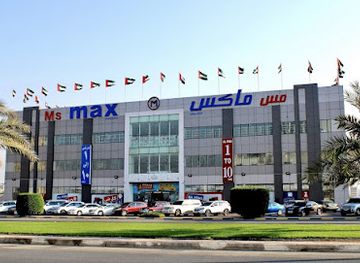
Ms Max - RAK
Experience the best of shopping and dining at Ms Max - RAK, the ultimate shopping mall in Ras al Khaimah, UAE.
8 min drive · 2.8 km from city centre
Get your free copy of our complete guide to Ras Al Khaimah, delivered straight to you.
Everything on this page, from attractions and restaurants to essentials and local phrases, in one PDF you can read offline, print or share.
Already have an account? Sign in
Your Ras Al Khaimah guide is ready.
We'll send it to · Not you? Sign out

Getting your guide ready…
We are putting together a fresh copy of the Ras Al Khaimah guide. This can take up to a minute.
This can take a few moments. If your browser asks, choose Allow so the download can start. You'll find the guide in your Downloads folder.
Nothing happened? Download it again
Sorry, the guide is taking longer than usual. Please try again in a minute, or get it by email instead.
Ras Al Khaimah essentials
Currency and Payment
Safety
Emergency Situations
Do's and Don'ts
Local Tips
From Eve
Local phrases worth knowing
You don't need to get them perfect. A few words go a long way, and locals appreciate the effort.
Basics
| English | Local | Say it |
|---|---|---|
| Hello | Marhaban | [mar-ha-ban] |
| Goodbye | Ma'a as-salama | [ma-a as-sa-la-ma] |
| Yes | Na'am | [na-am] |
| No | La | [la] |
| Please/You're welcome | Min fadlik | [min fa-dlik] |
| Thank you | Shukran | [shuk-ran] |
| Excuse me/Sorry | Aasif | [aa-sif] |
| How are you? | Kif halak? | [keef ha-lak] |
| Fine. And you? | Tamam. Wa ant? | [ta-mam. wa ant] |
| Do you speak English? | Hal tatakalam al'ingliziya? | [hal ta-ta-ka-lam al-in-gli-zi-ya] |
| I don't understand | Ana la afham | [a-na la af-ham] |
Eating & Drinking
| English | Local | Say it |
|---|---|---|
| I'd like to see the menu, please | A'udh ro'ya alqaima, min fadlik | [a-oodh ro-ya al-ka-e-ma, min fa-dlik] |
| I don't eat meat | Ana la akul lahm | [a-na la a-kul la-ham] |
| Cheers! | Saha | [sa-ha] |
| I would like to pay, please | A'udh an adfa, min fadlik | [a-oodh an ad-fa, min fa-dlik] |
Emergencies
| English | Local | Say it |
|---|---|---|
| Help! | Saa'iduni! | [sa-a-i-du-ni] |
| Go away! | Imshi! | [im-shi] |
| Call the Police! | Iltija ala alshurta! | [il-ti-ja ala al-shur-ta] |
| Call a doctor! | Iltija ala tabib! | [il-ti-ja ala ta-bib] |
| I'm lost | Taaqtu | [ta-aq-tu] |
| I'm ill | Ana mareed | [a-na ma-reed] |
Shopping
| English | Local | Say it |
|---|---|---|
| I'd like to buy... | A'udh an astari... | [a-oodh an as-ta-ri] |
| I'm just looking | Ana faqat atatayar | [a-na fa-qat a-ta-ta-yar] |
| How much is it? | Kam thamanuh? | [kam tha-ma-nuh] |
| That's too expensive | Hatha ghali jiddan | [ha-tha gha-li jid-dan] |
| Can you lower the price? | Hal tastatiu tahwil alsae? | [hal tas-ta-ti-u tah-wil al-sae] |
Time & Numbers
| English | Local | Say it |
|---|---|---|
| What time is it? | Kam alwaqt? | [kam al-waqt] |
| It's one o'clock | Huwa wahidat alsa'at | [hu-wa wa-hi-dat al-sa-at] |
| Half past (10) | Nusf ba'd (10) | [nusf bad (10)] |
| Morning | Sabaah | [sa-baah] |
| Afternoon | Duhur | [du-hur] |
| Evening | Masaa | [ma-saa] |
| Yesterday | Ams | [ams] |
| Today | Al-yawm | [al-yawm] |
| Tomorrow | Ghadan | [gha-dan] |
| 1 | Waahid | [wa-a-hid] |
| 2 | Ithnayn | [ith-na-yn] |
| 3 | Thalatha | [tha-la-tha] |
| 4 | Arba'a | [ar-ba-a] |
| 5 | Khamsa | [kham-sa] |
| 6 | Sitta | [sit-ta] |
| 7 | Saba'a | [sa-ba-a] |
| 8 | Thamania | [tha-ma-ni-a] |
| 9 | Tis'a | [tis-a] |
| 10 | Ashara | [a-sha-ra] |
Transport & Directions
| English | Local | Say it |
|---|---|---|
| Where's a/the...? | Ayn yuwajid... | [ayn yu-wa-jid] |
| What's the address? | Ma huwa al'adresse? | [ma hu-wa al-ad-res-se] |
| Can you show me (on the map)? | Hal tastatiu an turiyanee (ala alkhareeta)? | [hal tas-ta-ti-u an tu-ri-ya-nee (ala al-kha-ree-ta)] |
| When's the next (bus)? | Mata huwa albas alqadim? | [ma-ta hu-wa al-bas al-qa-dim] |
| A ticket (to ....) | Takat safar (ila ....) | [ta-kat safar (i-la ....)] |
History of Ras Al Khaimah
Julfar and Early Coastal Settlement
Ras Al Khaimah’s history is closely connected with Julfar, a major settlement and port in the northern emirate. Archaeological evidence indicates long-established habitation and maritime trade, although the precise location of early Julfar shifted over time as coastal conditions and channels changed. The port’s position at the entrance to the Gulf of Oman supported connections with southern Arabia, India and East Africa. Pearling, fishing, date cultivation and seaborne commerce shaped the local economy, while pottery and other archaeological finds reveal the reach of regional exchange. The modern city developed near this historic coastal zone, preserving a strong association with the trading world that preceded the United Arab Emirates.
The Qawasim Maritime Era
From the eighteenth century, Ras Al Khaimah became the principal stronghold of the Qawasim, a powerful maritime confederation whose influence extended along parts of the southern Gulf coast. The town’s seafaring economy was based on trade, pearling and fishing, but its naval activity also brought it into repeated conflict with British interests in the Gulf. In 1819, a British expedition attacked and captured Ras Al Khaimah, an event followed by the General Maritime Treaty of 1820 and later agreements that reshaped relations between the coastal sheikhdoms and Britain. These developments altered the emirate’s maritime politics without erasing its longstanding commercial connections.
Pearling, Agriculture and Local Communities
During the nineteenth and early twentieth centuries, life in Ras Al Khaimah depended on a combination of maritime and oasis economies. Pearling fleets operated in Gulf waters, while fishing, boat building and coastal trade supported communities around the creeks and shoreline. Inland settlements cultivated date palms and crops where irrigation made agriculture possible, and mountain villages maintained their own patterns of farming and pastoral life. Social organisation centred on extended families, clan relationships and seasonal movement between coast, oasis and mountains. The decline of the Gulf pearl industry in the twentieth century, accelerated by cultured pearls and economic disruption, forced communities across the region to reconsider their economic foundations.
Fortifications and the Inland Landscape
Ras Al Khaimah’s forts and watchtowers reflect the need to protect settlements, plantations and routes through the northern emirate. Dhayah Fort, built on a hill overlooking the surrounding plain, is among the best-known surviving examples and was the scene of the final major military confrontation between local forces and the British expedition in 1819. Its position demonstrates how the Hajar foothills could serve both as a defensive refuge and as a vantage point over the coastal plain. Other fortifications and traditional buildings, including the structure now used by the National Museum, connect the modern city with an era when authority and security were expressed through fortified compounds.
Union and Economic Transformation
Ras Al Khaimah joined the United Arab Emirates in 1972, becoming the seventh emirate to enter the federation. The decades that followed brought investment in roads, utilities, education, healthcare and industry, linking the capital more closely with the other emirates and with international markets. Manufacturing, construction materials, logistics, tourism and real estate joined older activities such as fishing and agriculture. The city expanded beyond its historic core into residential, commercial and coastal districts, while improved access opened the mountain and desert landscapes to visitors. This transformation created the urban framework visible today, with heritage sites standing alongside newer neighbourhoods and resort development.
Heritage in the Contemporary Emirate
Modern Ras Al Khaimah has increasingly presented archaeology, landscape and local history as central parts of its identity. The National Museum preserves objects and stories associated with the emirate, while archaeological sites such as Jazirat Al Hamra document an abandoned coastal settlement of coral-stone and gypsum buildings. Conservation, cultural programming and tourism development have brought renewed attention to traditional architecture, maritime history and mountain communities. At the same time, new hotels, leisure facilities and outdoor activities have broadened the visitor economy. The result is an emirate where rapid development coexists with visible evidence of pearling villages, fortified settlements and older trading networks.
Ras Al Khaimah in Photos
Browse through our photo collection highlighting the charm and character of the destination.
Cities near Ras Al Khaimah
The closest cities to Ras Al Khaimah, if you have time for more than one stop.
-

-

-

-

-


Swipe for more cities
Explore more

Explore more of United Arab Emirates
Discover the United Arab Emirates: A land where futuristic cities meet timeless deserts, offering luxury, adventure, and rich cultural experiences.
Explore United Arab Emirates