

Free Abu Dhabi Travel Guide & Mobile App
Plan your Abu Dhabi trip with Evendo. Get free guides to top attractions, restaurants, hotels, and bars. Web access or download the mobile app.


Abu Dhabi blends grand mosques, island museums, desert landscapes and Gulf coast culture with refined architecture, rich heritage and memorable sightseeing.
A Capital Shaped by Water and Sand
Abu Dhabi occupies a low-lying island on the Arabian Gulf, facing a broad sweep of turquoise water and connected to a larger urban territory by bridges. The capital of the United Arab Emirates combines government districts, landscaped boulevards and modern towers with traces of the coastal settlement that preceded the oil era. Along the Corniche, promenades, beaches and public gardens create one of the city's defining urban landscapes, while the skyline remains more spacious and measured than that of neighbouring Dubai.Read more about Abu Dhabi
Heritage and Grandeur
Islands, Culture and the Desert
When is the best time to visit Abu Dhabi?
Best: December–February · 25–27°C| Month | High (°C) | Rainfall (mm) |
|---|---|---|
| January (best) | 25 | 13 |
| February (best) | 26 | 12 |
| March | 31 | 12 |
| April | 37 | 8 |
| May | 43 | 2 |
| June | 47 | 0 |
| July | 48 | 0 |
| August | 47 | 0 |
| September | 42 | 0 |
| October | 37 | 0 |
| November | 32 | 2 |
| December (best) | 27 | 8 |
Getting to and around Abu Dhabi
How to get there
Transportation
Best attractions in Abu Dhabi
Abu Dhabi's principal attractions range from the vast Sheikh Zayed Grand Mosque, whose marble courtyards and reflective pools create a carefully composed approach, to the waterfront Corniche with its beach, cycle paths and landscaped promenades. At Qasr Al Hosn, exhibitions and restored architecture explain the city's emergence around a fortified settlement, while Heritage Village offers a more interpretive introduction to traditional crafts and desert life. Saadiyat Island brings together Louvre Abu Dhabi, with its vast latticed dome and international collections, and the wider cultural district taking shape around it. On Yas Island, Ferrari World Abu Dhabi, Yas Waterworld and Warner Bros. World Abu Dhabi provide large-scale entertainment, while the Yas Marina Circuit hosts major motorsport events. For a quieter perspective, Jubail Mangrove Park's boardwalks and kayaking routes reveal tidal habitats remarkably close to the capital's urban districts.
-
Theme park
Ferrari World Yas Island, Abu Dhabi
Experience the thrill of speed and innovation at Ferrari World Yas Island, the ultimate theme park for adventure seekers in Abu Dhabi.
43 min drive · 23 km from city centre
-
Art museum
Louvre Abu Dhabi
Explore the breathtaking Louvre Abu Dhabi, where art meets culture in a stunning architectural marvel on Saadiyat Island.
27 min drive · 9.1 km from city centre
-
Amusement park
Warner Bros. World Abu Dhabi Yas island
Experience the thrill of Yas Island, Abu Dhabi's ultimate entertainment destination with world-class attractions for the whole family to enjoy.
43 min drive · 23 km from city centre
-
Amusement park
Warner Bros. World Abu Dhabi
Experience the magic of Warner Bros. World Abu Dhabi, where iconic characters come to life in an unforgettable amusement park adventure for all ages.
43 min drive · 23 km from city centre


Best landmarks in Abu Dhabi
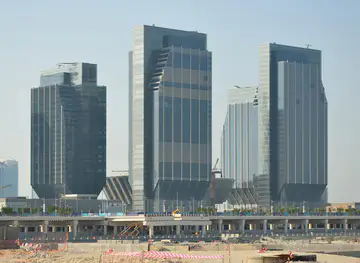
The Sheikh Zayed Grand Mosque is Abu Dhabi's most recognisable landmark, combining white marble surfaces, monumental domes, minarets, floral ornament and expansive prayer spaces in a major contemporary place of worship. Qasr Al Hosn represents an earlier Abu Dhabi: its fortified core developed from an eighteenth-century watchtower into the residence and governing centre of the Al Nahyan family. On Saadiyat Island, the Louvre Abu Dhabi is itself an architectural landmark, with Jean Nouvel's broad geometric dome filtering sunlight in a pattern inspired by overlapping palm fronds. Along the Corniche, the Founder's Memorial commemorates Sheikh Zayed through a public landscape and a distinctive three-dimensional portrait installation. The Etihad Towers complex and nearby Emirates Palace express the capital's later civic and ceremonial architecture, while Heritage Village preserves a deliberately reconstructed image of pre-oil coastal and desert life.
-
Mosque
Sheikh Zayed Grand Mosque
Explore the breathtaking Sheikh Zayed Grand Mosque, a pinnacle of Islamic architecture and a symbol of cultural harmony in Abu Dhabi.
31 min drive · 11 km from city centre
-
Theme park
Ferrari World Yas Island, Abu Dhabi
Unleash your inner speed demon at Ferrari World Abu Dhabi, the ultimate theme park for thrill-seekers and car lovers alike.
43 min drive · 23 km from city centre
-
Hotel
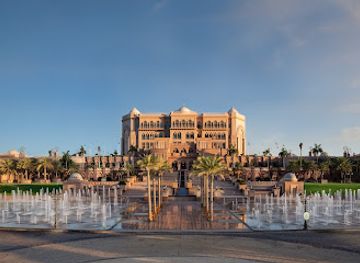
Emirates Palace Mandarin Oriental
Discover luxury and elegance at Emirates Palace Mandarin Oriental, Abu Dhabi's iconic five-star hotel, offering stunning architecture and world-class amenities.
18 min drive · 6.1 km from city centre
-
Park
Umm Al Emarat Park
Explore the lush landscapes and vibrant attractions at Umm Al Emarat Park, a serene oasis in Abu Dhabi perfect for relaxation and family fun.
5 min walk · 0.4 km from city centre



Explore Abu Dhabi on the map
Plan your Abu Dhabi trip on one map. See where the top attractions, landmarks, restaurants, bars and hotels are, find what's near where you're staying, and book hotels and experiences in a few clicks.
Neighbourhoods in Abu Dhabi
-
-

-

-

-


Swipe for more neighbourhoods
Best hotels in Abu Dhabi
Best restaurants in Abu Dhabi
Abu Dhabi's dining scene reflects Emirati traditions, the wider Gulf and the many communities that have made the capital their home. Local dishes such as machboos, a spiced rice dish commonly prepared with meat or seafood, harees, thareed and luqaimat can be encountered in Emirati restaurants and cultural settings, while dates, cardamom, saffron and dried limes recur across the region's cooking. Lebanese, Indian, Persian, South Asian and East Asian food is widely represented, alongside hotel restaurants and contemporary dining rooms on the Corniche, Al Maryah Island and Saadiyat Island. Cafés range from Arabic coffee and date-based offerings to modern speciality coffee, and markets such as Mina Zayed provide a sense of the city's trading life, particularly around its fish market and produce businesses. Licensed hotel venues also support the capital's international dining scene.
-
Restaurant
Al Fanar Restaurant & Cafe - Yas Mall
Experience authentic Middle Eastern flavors at Al Fanar Restaurant & Cafe in Yas Mall, where tradition meets modern dining.
44 min drive · 24 km from city centre
-
Middle Eastern
Beirut Sur Mer Restaurant
Experience authentic Lebanese cuisine at Beirut Sur Mer - where delicious flavors meet stunning views in Abu Dhabi's cultural heart.
30 min drive · 10 km from city centre
-
Breakfast
Denny's Diner Middle East | Abu Dhabi Mall
Experience classic American dining at Denny's Diner in Abu Dhabi Mall, where delicious breakfasts meet family-friendly atmosphere.
14 min drive · 4.7 km from city centre
-
Traditional restaurant
Al Mrzab Traditional Restaurant
Experience authentic Emirati cuisine at Al Mrzab Traditional Restaurant - where rich flavors meet cultural heritage in Abu Dhabi.
11 min walk · 0.9 km from city centre


Best bars in Abu Dhabi
Abu Dhabi's evening life is centred more on hotel lounges, licensed restaurants, live music and cultural programming than on a concentrated bar district. The Corniche, Al Maryah Island, Saadiyat Island and Yas Island contain much of the city's after-dark activity, with rooftop terraces, cocktail lounges, sports bars and venues overlooking marinas or the Gulf. Alcohol is restricted to licensed establishments, generally associated with hotels and selected hospitality venues, and public drinking is not permitted. Yas Island offers the most entertainment-oriented atmosphere, including events linked to Yas Marina Circuit, while major hotels frequently host international bands, DJs and themed evenings. For a quieter night, Louvre Abu Dhabi's cultural events, theatre programmes and waterfront dining provide alternatives to clubbing. Dress codes and entry policies vary, so checking venue guidance is sensible.
-
Sports bar
Stars N Bars
Experience the excitement of sports, live music, and delicious American cuisine at Stars N Bars in Yas Marina, Abu Dhabi.
44 min drive · 24 km from city centre
-
Restaurant
West Bay Lounge Abu Dhabi Corniche
Experience luxury dining at West Bay Lounge, where exquisite cuisine meets stunning views of the Abu Dhabi Corniche.
16 min drive · 5.4 km from city centre
-
Pub
Porters English Pub
Discover the charm of British hospitality at Porters English Pub, offering delicious cuisine and a wide selection of drinks in Abu Dhabi.
6 min drive · 2.0 km from city centre
-
Bar
Cabana Beach Bar & Grill
Experience luxury dining at Cabana Beach Bar & Grill in Abu Dhabi, where exquisite cuisine meets stunning beachfront views.
15 min drive · 5.2 km from city centre


Best nightclubs in Abu Dhabi
Abu Dhabi's evening life is centred more on hotel lounges, licensed restaurants, live music and cultural programming than on a concentrated bar district. The Corniche, Al Maryah Island, Saadiyat Island and Yas Island contain much of the city's after-dark activity, with rooftop terraces, cocktail lounges, sports bars and venues overlooking marinas or the Gulf. Alcohol is restricted to licensed establishments, generally associated with hotels and selected hospitality venues, and public drinking is not permitted. Yas Island offers the most entertainment-oriented atmosphere, including events linked to Yas Marina Circuit, while major hotels frequently host international bands, DJs and themed evenings. For a quieter night, Louvre Abu Dhabi's cultural events, theatre programmes and waterfront dining provide alternatives to clubbing. Dress codes and entry policies vary, so checking venue guidance is sensible.
-
Lounge
Blu Sky Lounge & Grill
Discover the perfect blend of relaxation and excitement at Blu Sky Lounge & Grill in Abu Dhabi, where culinary delights meet vibrant nightlife.
16 min drive · 5.2 km from city centre
-
Sports bar
Abinisia Club
Discover the pulsating nightlife of Abu Dhabi at Abinisia Club, a top sports bar offering great drinks, live sports, and a vibrant atmosphere for socializing.
13 min drive · 4.4 km from city centre
-
Disco club
The Exchange nightclub and lounge
Experience the vibrant nightlife at The Exchange nightclub and lounge in Abu Dhabi, where pulsating beats and an electrifying atmosphere await.
15 min drive · 5.0 km from city centre
-
Disco club
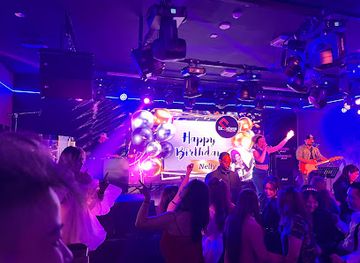
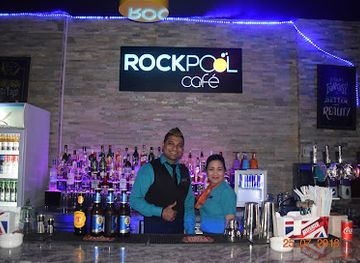
Rock Pool Club
Discover the vibrant nightlife at Rock Pool Club, Abu Dhabi's premier disco and African restaurant, perfect for an unforgettable evening out.
14 min drive · 4.8 km from city centre


Best shops in Abu Dhabi
Shopping in Abu Dhabi ranges from huge air-conditioned malls to the working commercial atmosphere of Mina Zayed. The Central Market area combines modern redevelopment with shops and businesses serving the city centre, while Mina Zayed is associated with fish, produce and other wholesale trade rather than a conventional souvenir market. Souks and heritage-style retail spaces offer dates, spices, perfumes, incense, textiles, carpets, jewellery and handicrafts, although quality and provenance vary between sellers. Shopping centres such as Abu Dhabi Mall, Marina Mall and Yas Mall contain international fashion, dining and entertainment, while smaller independent stores in older districts reveal more of the city's everyday commerce. For locally resonant gifts, look for Emirati-inspired crafts, Arabic coffee equipment, dates, saffron and fragrances, and ask about materials and origin before buying traditional-looking items.
-
Shopping mall
Yas Mall
Explore Yas Mall, Abu Dhabi's premier shopping destination with diverse retail, dining, and entertainment options for an unforgettable experience.
44 min drive · 24 km from city centre
-
Shopping mall
Al Wahda Mall
Explore Al Wahda Mall, Abu Dhabi's premier shopping destination offering a blend of shopping, dining, and entertainment for an unforgettable experience.
6 min drive · 1.9 km from city centre
-
Shopping mall
Marina Mall Abu Dhabi
Experience luxury shopping, diverse dining, and endless entertainment at Marina Mall Abu Dhabi, a must-visit destination for tourists.
18 min drive · 6.1 km from city centre
-
Shopping mall
Marina Mall
Experience luxury shopping, diverse dining, and vibrant entertainment at Marina Mall, Abu Dhabi's premier shopping destination by the waterfront.
18 min drive · 6.2 km from city centre

Get your free copy of our complete guide to Abu Dhabi, delivered straight to you.
Everything on this page, from attractions and restaurants to essentials and local phrases, in one PDF you can read offline, print or share.
Already have an account? Sign in
Your Abu Dhabi guide is ready.
We'll send it to · Not you? Sign out

Getting your guide ready…
We are putting together a fresh copy of the Abu Dhabi guide. This can take up to a minute.
This can take a few moments. If your browser asks, choose Allow so the download can start. You'll find the guide in your Downloads folder.
Nothing happened? Download it again
Sorry, the guide is taking longer than usual. Please try again in a minute, or get it by email instead.
Abu Dhabi essentials
Currency and Payment
Safety
Emergency Situations
Do's and Don'ts
Local Tips
From Eve
Local phrases worth knowing
You don't need to get them perfect. A few words go a long way, and locals appreciate the effort.
Basics
| English | Local | Say it |
|---|---|---|
| Hello | مرحبا | [marhaba] |
| Goodbye | وداعا | [wadaa'an] |
| Yes | نعم | [na'am] |
| No | لا | [la] |
| Please/You're welcome | من فضلك | [min fadlik] |
| Thank you | شكرا | [shukran] |
| Excuse me/Sorry | عذرا | [aathir] |
| How are you? | كيف حالك؟ | [kayfa halak?] |
| Fine. And you? | بخير. وأنت؟ | [bikhayr. wa'ant?] |
| Do you speak English? | هل تتحدث الإنجليزية؟ | [hal tatahadath al'inglizia?] |
| I don't understand | أنا لا أفهم | [ana la afham] |
Eating & Drinking
| English | Local | Say it |
|---|---|---|
| I'd like to see the menu, please | أريد أن أرى القائمة من فضلك | [uridu an ara alqaimah min fadlik] |
| I don't eat meat | أنا لا آكل اللحم | [ana la aakul allahm] |
| Cheers! | في صحتك! | [fi sahtak!] |
| I would like to pay, please | أريد أن أدفع من فضلك | [uridu an adfa' min fadlik] |
Emergencies
| English | Local | Say it |
|---|---|---|
| Help! | النجدة! | [alnajdah!] |
| Go away! | انصرف! | [ansarif!] |
| Call the Police! | اتصل بالشرطة! | [aitisal bilshurutah!] |
| Call a doctor! | اتصل بالطبيب! | [aitisal bitabib!] |
| I'm lost | لقد ضللت الطريق | [laqad dalalt altariq] |
| I'm ill | أنا مريض | [ana mareed] |
Shopping
| English | Local | Say it |
|---|---|---|
| I'd like to buy... | أريد شراء... | [uridu shira...] |
| I'm just looking | أنا فقط أتفرج | [ana faqat atafarraj] |
| How much is it? | كم سعره؟ | [kam si'ruh?] |
| That's too expensive | هذا غالي جدا | [hatha ghali jiddan] |
| Can you lower the price? | هل يمكنك خفض السعر؟ | [hal yumkinuka khafru alsu'ur?] |
Time & Numbers
| English | Local | Say it |
|---|---|---|
| What time is it? | كم الساعة؟ | [kam alsaa'ah?] |
| It's one o'clock | الساعة الواحدة | [alsaa'ah alwahidah] |
| Half past (10) | النصف بعد (10) | [alnusf ba'd (10)] |
| Morning | الصباح | [alsabah] |
| Afternoon | الظهر | [althuhr] |
| Evening | المساء | [almasa'] |
| Yesterday | أمس | [ams] |
| Today | اليوم | [alyawm] |
| Tomorrow | غدا | [ghadan] |
| 1 | واحد | [wahid] |
| 2 | اثنان | [ithnan] |
| 3 | ثلاثة | [thalatha] |
| 4 | أربعة | [arba'ah] |
| 5 | خمسة | [khamsah] |
| 6 | ستة | [sittah] |
| 7 | سبعة | [sab'ah] |
| 8 | ثمانية | [thamania] |
| 9 | تسعة | [tis'ah] |
| 10 | عشرة | [asharah] |
Transport & Directions
| English | Local | Say it |
|---|---|---|
| Where's a/the...? | أين ال...؟ | [ayn al...?] |
| What's the address? | ما هو العنوان؟ | [ma huwa al'anaan?] |
| Can you show me (on the map)? | هل يمكنك أن تريني (على الخريطة)؟ | [hal yumkinuka an tureeni (ala alkharyata)?] |
| When's the next (bus)? | متى الحافلة القادمة؟ | [mata alhafilat alqadimah?] |
| A ticket (to ....) | تذكرة (إلى ....) | [tadkirah (ila ....)] |
History of Abu Dhabi
Coastal Communities Before Oil
The Abu Dhabi region was inhabited by communities whose livelihoods depended on fishing, pearling, date cultivation, herding and maritime trade. The Bani Yas tribal confederation, associated with the Al Nahyan ruling family, established a settlement on Abu Dhabi island in the eighteenth century. A freshwater source helped make the island a practical base in an otherwise arid environment. Life was organised around seasonal movement and the Gulf, with boats, pearl beds and coastal trading routes connecting the settlement to wider networks. The built environment was modest, consisting largely of palm-frond dwellings and defensive structures, but the relationship between water, fresh water and commerce laid foundations for the capital that followed.
Qasr Al Hosn and Early Settlement
Qasr Al Hosn began as a watchtower in the 1790s and developed into a fortified residence and seat of government for the Al Nahyan family. Its position near the island's freshwater source gave it strategic and practical importance as Abu Dhabi expanded. The fort was rebuilt and enlarged over time, reflecting the settlement's growing political role and changing resources. For much of its early history, Abu Dhabi remained a small Gulf town shaped by pearling, fishing and regional commerce rather than monumental urban construction. The surviving fort and its surrounding cultural precinct now provide an architectural link to the period before petroleum transformed the island's economy and physical appearance.
Pearling, Trade and Social Change
Before the discovery of commercial oil, pearling was central to Abu Dhabi's economy and social life. Divers, boat crews, merchants and artisans participated in a seasonal industry that connected Gulf communities with markets in the wider Indian Ocean world. The work was demanding and economically uncertain, and the decline of natural pearl markets during the twentieth century intensified local hardship. At the same time, coastal trade and migration brought linguistic, religious and cultural exchanges that remain part of Emirati society. The old maritime economy survives in museums, heritage programmes and oral traditions, even though the modern capital's prosperity rests on very different foundations.
Oil and the Modern Capital
Commercial oil exports began from Abu Dhabi in 1962, creating revenues that transformed public services, architecture and infrastructure. Under Sheikh Zayed bin Sultan Al Nahyan, ruler of Abu Dhabi from 1966, investment supported roads, housing, education, healthcare and the planned expansion of the capital. Formerly low-rise neighbourhoods gave way to government buildings, apartment blocks, hotels and landscaped avenues, while bridges connected the island to the mainland and nearby islands. The change was exceptionally rapid, but development also preserved selected heritage sites and incorporated public spaces intended to keep the waterfront accessible. Abu Dhabi's contemporary urban form is therefore closely tied to the opportunities and responsibilities created by oil wealth.
Federation and National Capital
Abu Dhabi became the federal capital when the United Arab Emirates was formed on 2 December 1971. Sheikh Zayed, who became the federation's first president, played a central role in uniting the emirates and guiding national development. Federal ministries, diplomatic missions and major public institutions strengthened the city's political importance, while the emirate's revenues helped finance national infrastructure. The capital's architecture increasingly expressed both state ambition and an Emirati cultural identity, combining broad ceremonial spaces with references to Islamic and Gulf design. The Corniche, public gardens and civic buildings became significant elements of the developing capital's everyday life.
A Cultural and Global City
Since the late twentieth century, Abu Dhabi has diversified its economy and expanded its cultural, educational and visitor infrastructure. Saadiyat Island became the focus of an international museum district, with Louvre Abu Dhabi opening in 2017 and other cultural institutions planned or developed around it. Yas Island introduced major leisure, sporting and entertainment venues, while the city invested in conservation, public art and heritage interpretation. The emphasis on culture reflects an effort to connect global institutions with Emirati history rather than presenting the capital solely as an oil-based administrative centre. Today, Abu Dhabi's identity is shaped by federal politics, international communities, maritime memory and ambitious cultural planning.
Abu Dhabi in Photos
Browse through our photo collection highlighting the charm and character of the destination.
Cities near Abu Dhabi
The closest cities to Abu Dhabi, if you have time for more than one stop.
-

-

-

-

-


Swipe for more cities
Explore more

Explore more of United Arab Emirates
Discover the United Arab Emirates: A land where futuristic cities meet timeless deserts, offering luxury, adventure, and rich cultural experiences.
Explore United Arab Emirates