

Greyfriars Church, Aberdeen Travel Guide
Free Guide: Five centuries of faith and architecture in the heart of historic Aberdeen


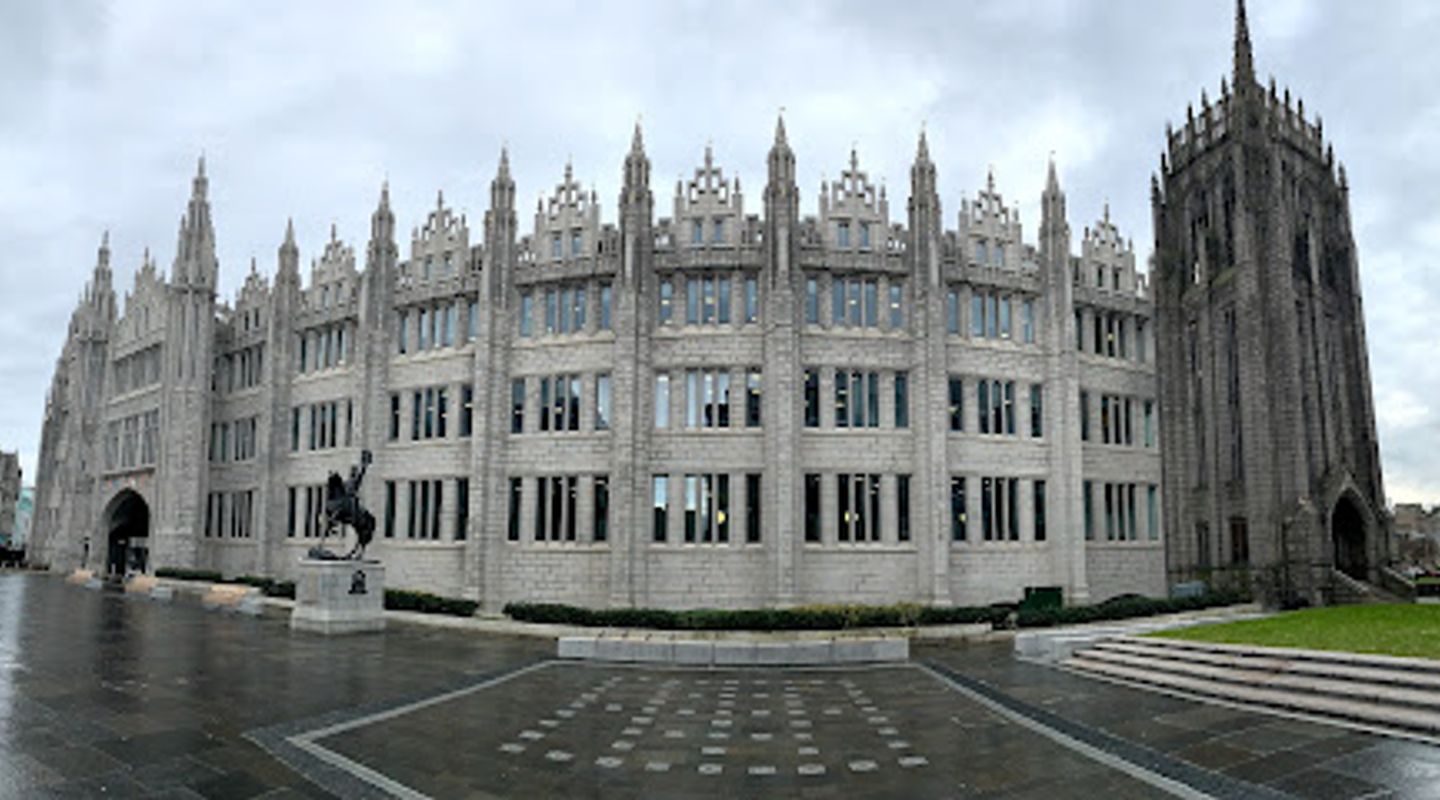
A brief summary of Greyfriars Church
Five centuries of faith and architecture in the heart of historic Aberdeen
Greyfriars Church stands as a testament to Aberdeen's religious and architectural heritage, occupying a site with roots stretching back to 1469. The current Victorian-era building, constructed in 1903, replaced its medieval predecessor and showcases the craftsmanship of its period. Located on Queen Street in the heart of Aberdeen's historic quarter, this landmark church reflects centuries of Scottish ecclesiastical history and remains an important cultural monument in the city's landscape.
On-site amenities
 Information boards
 Seating areas
- Address
- Queen St, Aberdeen AB10 1AN
- Website
Getting there
Public Bus
Walking from Union Street
Taxi or Ride-Share
Cycling
Discover more about Greyfriars Church
From Franciscan Monastery to Modern Church
Greyfriars Church occupies one of Aberdeen's most historically significant sites, with a continuous religious presence spanning over five and a half centuries. The original Franciscan monastery was established in 1469, consisting of a cloister and church dedicated to the Virgin Mary. Around 1525, Bishop Gavin Dunbar of Aberdeen commissioned a new church to replace the original structure, completed between 1518 and 1532. This medieval church, built by Franciscan friars—some of whom were skilled masons—represented a remarkable achievement in late Gothic architecture. The church survived the Scottish Reformation of 1560 when the friars resigned their property to the town council, ensuring the buildings' preservation through a period when many religious structures were demolished or repurposed.
The Medieval Church and Its Significance
The original Greyfriars Collegiate Church, completed in 1532, became an important center of religious and civic life in Aberdeen. Its simple yet elegant design featured late Gothic styling with characteristic architectural elements of the period. Beyond its role as a place of worship, the church served as a venue for significant historical events. In 1640, it hosted a meeting of the General Assembly when the Presbyterian Party gathered to advance their religious reforms across Scotland. The building's survival through the turbulent Reformation era and its continued use by the community demonstrated its importance to Aberdeen's identity. However, by the late nineteenth century, the medieval structure had become outdated, and the expanding city required new ecclesiastical facilities.
Urban Development and Reconstruction
In 1903, the original Greyfriars Church was demolished to make way for extensions to the adjacent Marischal College, one of Aberdeen's most prestigious institutions. Rather than allowing the religious site to disappear entirely, a new church was constructed in September 1903 to serve the congregation and maintain the spiritual continuity of the location. The new building, designed in the Victorian architectural style prevalent at the turn of the twentieth century, incorporated contemporary building techniques and materials while honoring the site's long religious tradition. This reconstruction represented a significant moment in Aberdeen's urban development, balancing the city's modernization with respect for its ecclesiastical heritage.
Architectural Character and Design
The current Greyfriars Church building reflects the architectural confidence and craftsmanship of the Edwardian era. Its striking facade and intricate detailing showcase the period's approach to ecclesiastical design, combining functional worship spaces with aesthetic ambition. The church's position on Queen Street places it within Aberdeen's historic quarter, where it stands among other significant buildings that define the city's character. The building's design respects the solemnity appropriate to its religious purpose while incorporating the decorative elements typical of early twentieth-century Scottish architecture. Its presence contributes substantially to the visual and cultural landscape of central Aberdeen.
A Living Monument to Faith and Community
Greyfriars Church represents more than a single building; it embodies the continuity of religious practice and community identity across centuries of Scottish history. From its origins as a Franciscan monastery through the upheavals of the Reformation, the Victorian reconstruction, and into the modern era, the site has maintained its role as a place of worship and spiritual significance. The church's location in Aberdeen's historic core connects it to the broader narrative of the city's development, from medieval religious center to modern urban community. Today, Greyfriars Church stands as a tangible link to Aberdeen's past, inviting visitors to reflect on the layers of history embedded within its walls and the enduring importance of faith in shaping communities.
Evendo Review Centre
 Google
Guest reviews
Best time to go
Quietest: Jan, Feb & Nov · before 6am or at 9pm
Busy times are Evendo estimates for a typical year, to help you plan. Actual crowds vary with events, school holidays and the weather.
Explore Greyfriars Church on the map
A handpicked selection of must-see spots near Greyfriars Church, mapped for you.
Get your free copy of our complete guide to Greyfriars Church, delivered straight to you.
Everything on this page, from opening hours and how to get there to Eve’s tips and the best time to go, in one PDF you can read offline, print or share.
Already have an account? Sign in
Your Greyfriars Church guide is ready.
We'll send it to · Not you? Sign out

Getting your guide ready…
We are putting together a fresh copy of the Greyfriars Church guide. This can take up to a minute.
This can take a few moments. If your browser asks, choose Allow so the download can start. You'll find the guide in your Downloads folder.
Nothing happened? Download it again
Sorry, the guide is taking longer than usual. Please try again in a minute, or get it by email instead.
Other nearby places you may find interesting
The closest places of the same kind, if this one is not quite what you had in mind.
-
William Wallace Statue A towering bronze tribute to Scotland’s freedom fighter, standing proud in the heart of Aberdeen with stirring words of liberty carved in stone.
-
The Kirk of St. Nicholas Colonnade Aberdeen's mother church: over 900 years of maritime faith, architectural brilliance, and dark history.
-
Piper Alpha Memorial Garden A solemn bronze memorial honoring 167 lives lost in the world's deadliest offshore oil disaster.
-
Edward VII Statue Aberdeen’s grand Edward VII Statue stands in full ceremonial robes, a striking granite and bronze tribute to the British monarch at the heart of the city.
-
McGrigor Memorial Obelisk A polished pink granite obelisk in Duthie Park honoring Sir James McGrigor, father of modern military medicine and a key figure in Aberdeen’s history.
Swipe for more places
More to explore near Greyfriars Church

 Best experiences near Greyfriars Church
 Best hotels near Greyfriars Church
 Best landmarks near Greyfriars Church
 Best attractions near Greyfriars Church
 Best shops near Greyfriars Church
 Best restaurants near Greyfriars Church
 Best bars near Greyfriars Church
Do you manage this location?
Take control to get all the benefits, like improved information, better appearance, and stronger visibility across AI-powered discovery.
Explore more

Explore more of Aberdeen
Discover Aberdeen's sparkling granite architecture, rich maritime heritage, and scenic coastal beauty along Scotland's northeast coast.
Explore Aberdeen
Explore more of United Kingdom
Discover the United Kingdom: A blend of rich history, stunning landscapes, and vibrant cities, offering a unique travel experience for every visitor.
Explore United Kingdom
