Gallows Hill, Aberdeen Travel Guide
Free Guide: Gallows Hill in Aberdeen stands as a haunting reminder of centuries-old public executions and grim justice.


A brief summary of Gallows Hill
Gallows Hill in Aberdeen stands as a haunting reminder of centuries-old public executions and grim justice.
Gallows Hill in Aberdeen, located on Erroll Street, is a historic site where public executions took place from the 14th century until 1776. Once a place of grim justice, it witnessed the last hanging of Alexander Morison in a brutal execution that drew a large crowd despite harsh weather. Today, the hill sits near modern housing and a football stadium, but its dark past remains palpable in the atmosphere and local lore.
On-site amenities
 Seating areas
 Information boards
- Address
- Erroll St, Aberdeen AB24
- Website
Getting there
Bus
Taxi
Walking
Discover more about Gallows Hill
Historical Role as Aberdeen’s Execution Site
Gallows Hill served as Aberdeen’s primary place for public executions from the 14th century until the late 18th century. Condemned criminals were brought here to face their fate, often drawing large crowds eager to witness the grim spectacle. The hill’s elevated position allowed onlookers to view the proceedings from a distance, with the North Sea visible beyond the open grasslands that once surrounded the site. Executions were public events intended both as punishment and deterrent, with the bodies sometimes displayed post-mortem as warnings to others.
The Last Execution and Its Harrowing Details
The final hanging at Gallows Hill occurred in 1776, involving Alexander Morison, who was convicted of murdering his wife with an axe. Despite a cold and stormy day, a large crowd gathered to watch. Unlike later methods designed to ensure a swift death, Morison’s execution was agonizingly slow. Bound hand and foot with a rope around his neck, he was placed on a cart which was then whipped forward by the executioner’s pony, causing Morison to slowly choke to death. His body was subsequently hung in chains on the gibbet until it decomposed, serving as a stark warning.
Archaeological Discoveries and Changing Landscape
In the 19th century, part of Gallows Hill was excavated to build a gunpowder magazine for the nearby King Street Militia barracks. During this work, piles of human bones were uncovered—remains of those executed and buried beneath the hill, excluded from consecrated ground due to their crimes. Over time, the open grasslands gave way to urban development, including housing and the nearby Aberdeen Football Club stadium at Pittodrie, altering the once isolated and foreboding environment.
Atmosphere and Legacy Today
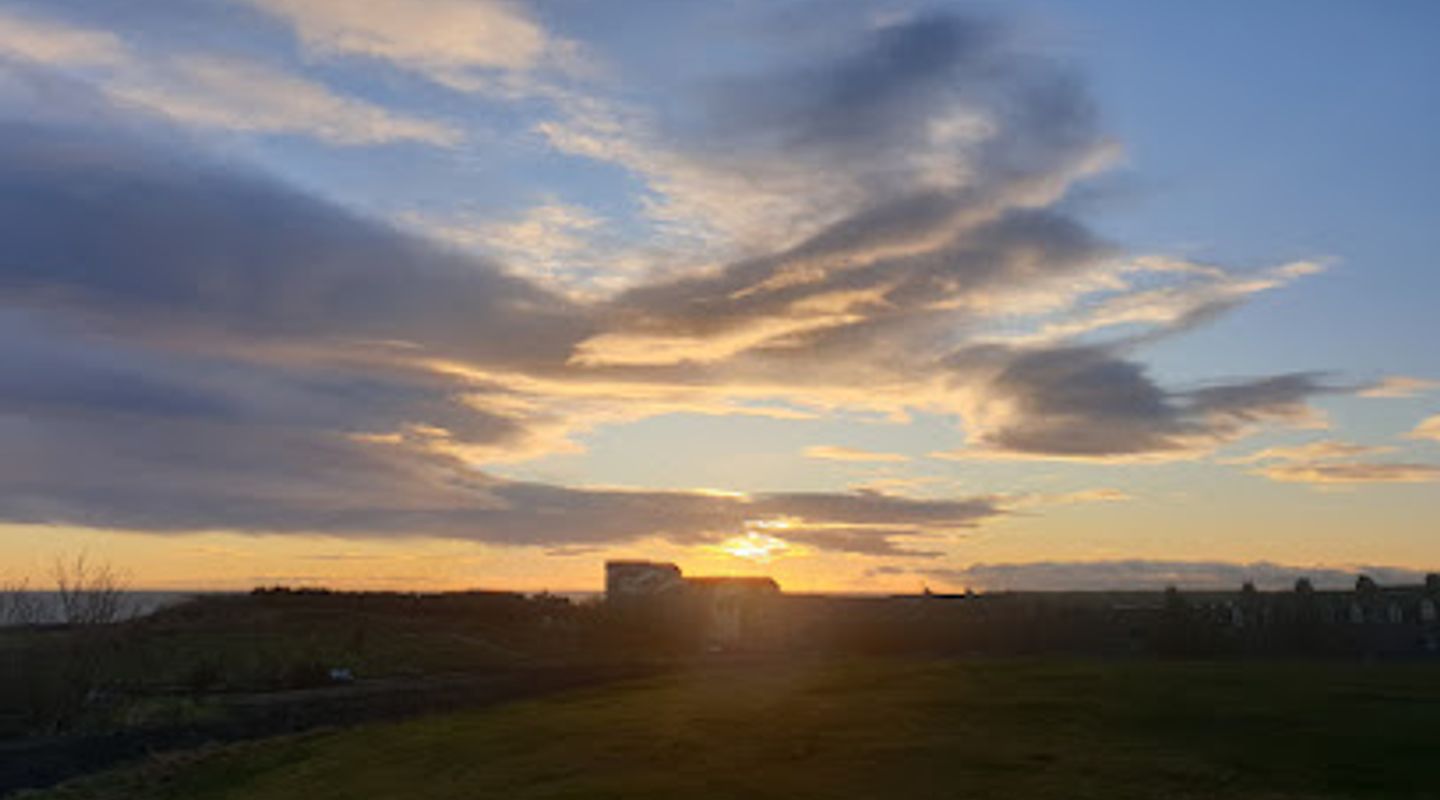
Standing on Gallows Hill today, visitors can still sense the weight of its history. The site’s transformation into a modern urban area contrasts sharply with its past as a place of death and justice. Local stories and the echo of the baying crowds linger in the imagination, especially at sunset when the fading light casts long shadows. The hill remains a poignant reminder of Aberdeen’s medieval and early modern justice system, its brutal punishments, and the social order of the time.
Connection to Broader Scottish Execution Traditions
Gallows Hill fits into a wider Scottish tradition of execution sites often located on prominent hills or ‘dule trees’—trees or structures used for hangings and gibbeting. These places were deliberately visible to serve as warnings. Aberdeen’s Gallows Hill is one of many such sites across Scotland, reflecting the harshness of historic criminal justice and the cultural importance of public punishment as a deterrent.
Preservation and Interpretation
While no formal visitor center or extensive signage marks Gallows Hill, its historical significance is preserved through local history projects and blogs. The site invites reflection on the darker chapters of Aberdeen’s past and the evolution of justice. Visitors are encouraged to imagine the scenes of centuries past and consider the human stories behind the stones and earth of this somber landmark.
Evendo Review Centre
 Google
Guest reviews
Best time to go
Quietest: Jan, Feb & Dec · before 6am
Busy times are Evendo estimates for a typical year, to help you plan. Actual crowds vary with events, school holidays and the weather.
Explore Gallows Hill on the map
A handpicked selection of must-see spots near Gallows Hill, mapped for you.
Get your free copy of our complete guide to Gallows Hill, delivered straight to you.
Everything on this page, from opening hours and how to get there to Eve’s tips and the best time to go, in one PDF you can read offline, print or share.
Already have an account? Sign in
Your Gallows Hill guide is ready.
We'll send it to · Not you? Sign out

Getting your guide ready…
We are putting together a fresh copy of the Gallows Hill guide. This can take up to a minute.
This can take a few moments. If your browser asks, choose Allow so the download can start. You'll find the guide in your Downloads folder.
Nothing happened? Download it again
Sorry, the guide is taking longer than usual. Please try again in a minute, or get it by email instead.
Other nearby places you may find interesting
The closest places of the same kind, if this one is not quite what you had in mind.
-
-
-
-
-


Swipe for more places
More to explore near Gallows Hill

 Best experiences near Gallows Hill
 Best hotels near Gallows Hill
 Best landmarks near Gallows Hill
 Best attractions near Gallows Hill
 Best shops near Gallows Hill
 Best restaurants near Gallows Hill
 Best bars near Gallows Hill
Do you manage this location?
Take control to get all the benefits, like improved information, better appearance, and stronger visibility across AI-powered discovery.
Explore more

Explore more of Aberdeen
Discover Aberdeen's sparkling granite architecture, rich maritime heritage, and scenic coastal beauty along Scotland's northeast coast.
Explore Aberdeen
Explore more of United Kingdom
Discover the United Kingdom: A blend of rich history, stunning landscapes, and vibrant cities, offering a unique travel experience for every visitor.
Explore United Kingdom