

Free Anglesey Travel Guide & Mobile App
Explore Anglesey with free travel guides. Discover regional history, expert tips, proposed trips, and audio guides on web or mobile app.


Explore Anglesey's Welsh heritage, ancient monuments, wildlife-rich coast, sandy beaches and maritime gateway towns across north-west Wales.
Read more about Anglesey
When is the best time to visit Anglesey?
Best: June–August · 18–20°C| Month | High (°C) | Rainfall (mm) |
|---|---|---|
| January | 9 | 90 |
| February | 9 | 80 |
| March | 11 | 70 |
| April | 13 | 60 |
| May | 15 | 60 |
| June (best) | 18 | 70 |
| July (best) | 20 | 80 |
| August (best) | 20 | 80 |
| September | 18 | 70 |
| October | 15 | 80 |
| November | 12 | 90 |
| December | 9 | 100 |
Getting to and around Anglesey
How to get there
Transportation
Best attractions in Anglesey
Anglesey's attractions range from prehistoric monuments to wildlife-rich coast and working maritime towns. Bryn Celli Ddu and Barclodiad y Gawres offer encounters with Neolithic burial architecture, while Beaumaris Castle presents the island's most substantial medieval monument. Plas Newydd, on the Menai Strait, combines a historic house, landscaped grounds and broad views towards the mainland. The coast provides a different kind of attraction: Newborough Warren and Llanddwyn are suited to walking through dunes and woodland, Rhosneigr attracts watersports enthusiasts, and South Stack on Holy Island is valued for cliff scenery and seabirds. Parys Mountain near Amlwch reveals the vivid, heavily excavated terrain left by copper mining. The Wales Coast Path links many of these environments, though sections vary in difficulty and remoteness. Smaller museums, churches, harbours and village communities add local context, while the Menai Strait supports boat trips and views of one of north Wales's most distinctive waterways. Anglesey works best as a collection of contrasting day excursions rather than a single concentrated sightseeing circuit.
-
Tourist attraction
Llandudno Pier
Wales’s longest Victorian pier, offering stunning sea views, classic arcades, lively bars, and family fun on the North Wales coast.
-
Castle
Caernarfon Castle
Explore Caernarfon Castle, a majestic medieval fortress with polygonal towers, rich royal history, and stunning views over North Wales’ coast.
-
Park and Garden
National Trust - Calke Abbey
A deliberately preserved country estate where elegant decay reveals the authentic story of a collecting family's decline.
-
Historical place museum
National Trust - Plas Newydd House and Gardens
Historic house and gardens on Anglesey’s Menai Strait, blending art, nature, and family-friendly exploration with stunning Snowdonia views.


Explore Anglesey on the map
Plan your trip on one map. See where the top cities, national parks and sights are, and book hotels and experiences in a few clicks.
Best hotels in Anglesey
Best restaurants in Anglesey
Dining on Anglesey reflects its insular geography and pastoral economy. Coastal towns and villages provide seafood, while farms support menus built around Welsh lamb, beef, dairy produce and seasonal vegetables. Local cafés, bakeries and traditional pubs are useful places to try Welsh cakes and other familiar Welsh baking, alongside contemporary dishes made with regional ingredients. Menai Strait communities offer a mixture of casual cafés, hotel dining and more modern restaurants, while rural inns tend to provide hearty food in village settings. Holyhead and other larger settlements have the broadest range of cuisines, though the county's eating places are generally dispersed rather than concentrated in one restaurant quarter. Farmers' markets, farm shops and specialist food producers are good sources of cheese, preserves, baked goods and meat to take away. Menus change with season and supply, and advance booking is sensible for well-regarded restaurants, especially during summer weekends and school holidays.
-
Seafood
Dylan's Menai Bridge
Seaside dining with fresh local seafood and stunning Menai Strait views in a family-friendly, lively atmosphere.
-
Welsh
The Boathouse
A charming Welsh seafood restaurant nestled by the scenic Red Wharf Bay, offering fresh coastal flavors in a warm, welcoming setting.
-
Restaurant
The Tavern on The Bay
Seaside gastropub and live music venue offering stunning views, quality food, and warm hospitality in Red Wharf Bay, Anglesey.
-
Restaurant
The White Eagle
Coastal dining with warm hospitality, fresh local flavors, and a dog-friendly welcome in the heart of Rhoscolyn, Anglesey.


Best bars in Anglesey
Evenings on Anglesey are centred more on pubs, restaurants and community venues than on a large nightclub scene. Traditional pubs in towns and villages provide local meeting places, while establishments around Menai Bridge, Beaumaris, Holyhead and Llangefni offer the greatest choice for a later evening. Hotel bars and harbour-side venues can be appealing for a quieter drink, and occasional live music or cultural events add variety without creating a defined nightlife district. Holyhead's port character brings a more urban evening atmosphere than many rural parts of the island, whereas western and northern villages tend to become quiet after dinner. Drink-driving is particularly inappropriate on narrow rural roads, so arrange a taxi or choose accommodation within walking distance. In summer, coastal towns can feel busier in the evening, but opening arrangements and entertainment vary by season.
-
Bar
Black Boy Inn Four & Six Restaurant & Bar
Historic Welsh inn and lively pub with hearty local cuisine, cozy ambiance, and a prime spot in Caernarfon’s medieval heart.
-
Pub
Ship Inn
A charming coastal pub in Red Wharf Bay offering hearty Welsh dishes, warm service, and stunning bay views in a quirky, rustic setting.
-
Pub
Anglesey Arms
Historic harbourfront pub and inn in Caernarfon offering cozy rooms, hearty Welsh fare, and stunning views of Menai Strait and Caernarfon Castle.
-
Pub
The Kinmel Arms
A lively nautical-themed pub in Moelfre offering hearty meals, local ales, and a vibrant coastal atmosphere.
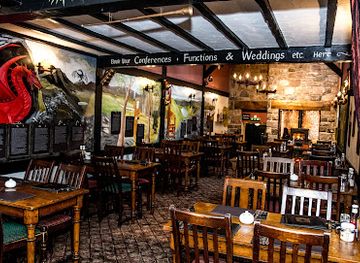


Best nightclubs in Anglesey
Evenings on Anglesey are centred more on pubs, restaurants and community venues than on a large nightclub scene. Traditional pubs in towns and villages provide local meeting places, while establishments around Menai Bridge, Beaumaris, Holyhead and Llangefni offer the greatest choice for a later evening. Hotel bars and harbour-side venues can be appealing for a quieter drink, and occasional live music or cultural events add variety without creating a defined nightlife district. Holyhead's port character brings a more urban evening atmosphere than many rural parts of the island, whereas western and northern villages tend to become quiet after dinner. Drink-driving is particularly inappropriate on narrow rural roads, so arrange a taxi or choose accommodation within walking distance. In summer, coastal towns can feel busier in the evening, but opening arrangements and entertainment vary by season.
-
Pub
The Victoria
Traditional Welsh pub and restaurant with scenic Menai Strait views, recently refurbished for a welcoming and modern experience.
-
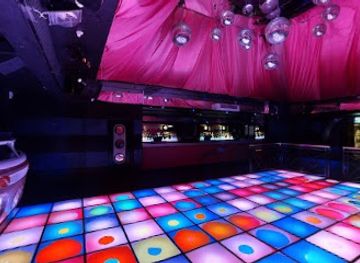
Nightclub
Trilogy Nightclub
Experience Bangor’s vibrant nightlife at Trilogy Nightclub, where diverse music, themed rooms, and lively crowds create unforgettable weekend parties.
-
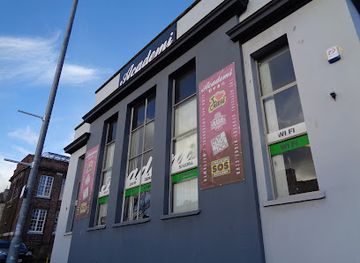
Nightclub
Academi
A lively student nightclub at Bangor University, buzzing with themed parties, great music, and a welcoming atmosphere.
-
Club
Wellman's Sports & Social Club
Llangefni’s vibrant social hub with lively entertainment, spacious dance floor, and a welcoming community atmosphere.


Best shops in Anglesey
Shopping on Anglesey is concentrated in market towns and coastal settlements rather than large retail centres. Llangefni provides useful everyday services and independent businesses at the island's centre, while Beaumaris combines small shops, galleries, cafés and gift outlets in a historic town setting. Menai Bridge is known for independent food, craft and lifestyle businesses, and Holyhead has the broadest practical range for visitors arriving by ferry or rail. Farm shops, local producers and seasonal markets are good places to find Welsh cheeses, preserves, cakes, honey and other edible gifts. Galleries and craft shops may stock ceramics, textiles, jewellery, prints and work inspired by the island's coastline, though ranges and opening patterns can be seasonal. Rather than relying on a single large shopping destination, visitors will find the most distinctive purchases by combining a market town visit with a farm shop, harbour area or small coastal business.
-
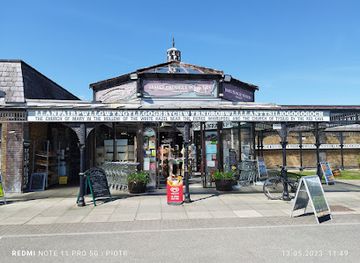
Department store
James Pringle Weavers
Discover authentic Welsh craftsmanship and local flavors at James Pringle Weavers, Anglesey’s premier shopping and dining destination.
-
Gift shop
Janet Bell Gallery & Lifestyle Store
Discover Scandinavian-inspired art and lifestyle treasures in the heart of historic Beaumaris at Janet Bell Gallery & Lifestyle Store.
-
Gift shop
Anglesey Hamper Company
Discover bespoke Welsh luxury hampers crafted with locally sourced artisan produce from the heart of Anglesey.
-
Clothing Shop
E&T Clothing and Gifts
Discover stylish clothing and unique gifts infused with local charm at E&T Clothing and Gifts in Valley, Holyhead.


Get your free copy of our complete guide to Anglesey, delivered straight to you.
Everything on this page, from attractions and restaurants to essentials and local phrases, in one PDF you can read offline, print or share.
Already have an account? Sign in
Your Anglesey guide is ready.
We'll send it to · Not you? Sign out

Getting your guide ready…
We are putting together a fresh copy of the Anglesey guide. This can take up to a minute.
This can take a few moments. If your browser asks, choose Allow so the download can start. You'll find the guide in your Downloads folder.
Nothing happened? Download it again
Sorry, the guide is taking longer than usual. Please try again in a minute, or get it by email instead.
Anglesey essentials
Currency and Payment
Safety
Emergency Situations
Do's and Don'ts
Local Tips
From Eve
Local phrases worth knowing
You don't need to get them perfect. A few words go a long way, and locals appreciate the effort.
Basics
| English | Local | Say it |
|---|---|---|
| Hello | Shwmae | [shoo-my] |
| Goodbye | Hwyl fawr | [hoyl vowr] |
| Yes | Ie | [yay] |
| No | Na | [nah] |
| Please/You're welcome | Os gwelwch yn dda | [os gwel-ookh un tha] |
| Thank you | Diolch | [dee-olch] |
| Excuse me/Sorry | Mae'n ddrwg gennyf | [my un droog gen-iv] |
| How are you? | Sut wyt ti? | [sit weet tee] |
| Fine. And you? | Iawn. A ti? | [yown. Ah tee] |
| Do you speak English? | Ydych chi'n siarad Saesneg? | [uh-dich chee'n sha-rad sighs-neg] |
| I don't understand | Dydw i ddim yn deall | [dih-doo ee them un deh-al] |
Eating & Drinking
| English | Local | Say it |
|---|---|---|
| I'd like to see the menu, please | Hoffwn i weld y fwydlen, os gwelwch yn dda | [hoh-woon ee weld uh voo-id-len, os gwel-ookh un tha] |
| I don't eat meat | Dydw i ddim yn bwyta cig | [dih-doo ee them un boo-ita keeg] |
| Cheers! | Iechyd da! | [yeh-kid dah] |
| I would like to pay, please | Hoffwn i dalu, os gwelwch yn dda | [hoh-woon ee tal-ee, os gwel-ookh un tha] |
Emergencies
| English | Local | Say it |
|---|---|---|
| Help! | Cymorth! | [kum-orth] |
| Go away! | Dewch yma! | [day-ook um-ah] |
| Call the Police! | Galwch y Heddlu! | [gal-ookh uh hed-lie] |
| Call a doctor! | Galwch feddyg! | [gal-ookh ved-ig] |
| I'm lost | Dw i wedi colli | [doo ee weh-dee kol-ee] |
| I'm ill | Dw i'n sâl | [doo een sah-l] |
Shopping
| English | Local | Say it |
|---|---|---|
| I'd like to buy... | Hoffwn i brynu... | [hoh-woon ee brin-ee] |
| I'm just looking | Dw i'n edrych dim ond | [doo een ed-rikh dim ond] |
| How much is it? | Faint ydy o? | [vayn uh-dee oh] |
| That's too expensive | Mae hynny'n rhy drud | [my hun-nin rhee dreed] |
| Can you lower the price? | Allwch chi leihau'r pris? | [ahl-khuch chee lay-hire pris] |
Time & Numbers
| English | Local | Say it |
|---|---|---|
| What time is it? | Faint ydy hi? | [vayn uh-dee hee] |
| It's one o'clock | Mae hi'n un o'r gloch | [my heen een or gloch] |
| Half past (10) | Hanner wedi (10) | [han-er weh-dee] |
| Morning | Bore | [bor-eh] |
| Afternoon | Prynhawn | [prin-hown] |
| Evening | Prydnight | [prid-night] |
| Yesterday | Ddoe | [thoy] |
| Today | Heddiw | [hed-ee] |
| Tomorrow | Fory | [vor-ee] |
| 1 | Un | [een] |
| 2 | Dau | [die] |
| 3 | Tri | [tree] |
| 4 | Pedwar | [ped-war] |
| 5 | Pump | [pum] |
| 6 | Chwech | [khwech] |
| 7 | Saith | [sighth] |
| 8 | Wyth | [weeth] |
| 9 | Naw | [now] |
| 10 | Deg | [deg] |
Transport & Directions
| English | Local | Say it |
|---|---|---|
| Where's a/the...? | Ble mae'r...? | [bleh my-are...?] |
| What's the address? | Beth yw'r cyfeiriad? | [beth yuhr kuh-vey-ryad?] |
| Can you show me (on the map)? | Allwch chi fy nghynyddu (ar y map)? | [ahl-khuch chee vuh khin-uh-thee (ar uh map)?] |
| When's the next (bus)? | Pryd mae'r (bws) nesaf? | [prid my-are (boos) ness-av?] |
| A ticket (to ....) | Tocyn (i ....) | [tok-in (ee ....)] |
History of Anglesey
Neolithic and Bronze Age monuments
Anglesey preserves important evidence of prehistoric communities in its chambered tombs, standing stones and burial monuments. Bryn Celli Ddu near Llanddaniel Fab is the best-known example: a passage leads into a burial chamber beneath a mound, and the alignment of the entrance reflects careful engagement with the surrounding landscape and seasonal light. Other monuments, including Barclodiad y Gawres on the western coast, show that the island was part of wider ceremonial and maritime networks long before written history. These sites provide a direct connection with communities that farmed, travelled and marked sacred places more than four millennia ago.
The Druids and Roman conquest
In the first centuries AD, Anglesey was known to the Romans as Mona and was associated in Roman accounts with Druids. The Roman campaigns led by Suetonius Paulinus in AD 60 or 61 and later by Agricola brought the island into the Roman sphere, although the details of resistance and settlement remain debated. Roman occupation is represented by archaeological evidence at sites including Caer Gybi in Holyhead and Segontium on the mainland across the Menai Strait. The conquest connected Anglesey more closely to imperial administration while transforming older political and religious structures.
Early medieval Welsh kingdoms
After Roman rule receded, Anglesey became a core territory of the early Welsh kingdom of Gwynedd. Its fertile farmland and strategic position gave it political importance, and rulers based on the island could influence the Menai Strait and north Wales. Medieval ecclesiastical foundations, including St Cybi's church in Holyhead and the church at Llaneilian, reflect the spread and consolidation of Christianity. The island's name in Welsh, Ynys Môn, remains a reminder of its long-standing place in Welsh historical identity, while the surrounding sea offered both protection and a route for travel and conflict.
Edwardian conquest and Beaumaris Castle
The English conquest of Gwynedd in the late thirteenth century reshaped Anglesey's political and urban landscape. Edward I commissioned Beaumaris Castle in 1295 as part of a chain of fortifications intended to secure control of north Wales. Designed by the master castle architect James of Saint George, it was built with concentric defences and a planned town beside the Menai Strait. Construction was never fully completed, partly because of financial pressure and the Scottish wars, but the castle remains an outstanding example of Edwardian military architecture and a powerful symbol of the conquest.
Maritime trade and the port of Holyhead
Holyhead grew in importance as a port on the western edge of Holy Island, particularly after improved roads and the construction of the Stanley Embankment connected it more effectively with the rest of Anglesey. The harbour became a principal link between Britain and Ireland, carrying mail, passengers and goods. The expansion of the railway in the nineteenth century strengthened this role and made Holyhead part of a major route from London towards Dublin. Maritime employment, ferry traffic and port infrastructure have continued to shape the town's economy and the county's connections with the Irish Sea.
Copper mining at Parys Mountain
Parys Mountain near Amlwch became one of the world's most productive copper-mining districts during the eighteenth century. Industrial extraction transformed the mountain into a deeply worked, vividly coloured landscape and brought considerable wealth to the local landowner, Sir Nicholas Bayly, and his successors. Ore was processed and transported through the nearby port of Amlwch, linking Anglesey to wider industrial and maritime markets. Mining declined as richer deposits were exploited elsewhere, but the excavated terrain, engine-house remains and industrial archaeology preserve an important chapter in the island's economic history.
The Menai Bridge and modern Anglesey
Before the first Menai Bridge opened in 1826, transporting people, livestock and goods across the strait depended on boats and difficult crossings. Thomas Telford's suspension bridge created a dependable road connection between Anglesey and mainland Wales, followed by Robert Stephenson's Britannia Bridge for the railway in the nineteenth century. These structures altered the island's economic geography and helped establish Holyhead as a major transport terminus. Modern Anglesey combines that communications role with farming, tourism, conservation and renewable-energy industries, while Welsh language and local institutions remain central to its public character.
Anglesey in Photos
Browse through our photo collection highlighting the charm and character of the destination.
Neighbouring regions of Anglesey
The closest regions to Anglesey, if you have time for more than one.
-
-

-

-

-


Swipe for more regions
Explore more

Explore more of United Kingdom
Discover the United Kingdom: A blend of rich history, stunning landscapes, and vibrant cities, offering a unique travel experience for every visitor.
Explore United Kingdom