

Free Leicestershire Travel Guide & Mobile App
Explore Leicestershire with free travel guides. Discover regional history, expert tips, proposed trips, and audio guides on web or mobile app.


Explore Leicestershire for Charnwood walks, historic battlefields, canal locks, market towns, heritage railways and celebrated Midlands food traditions.
Read more about Leicestershire
When is the best time to visit Leicestershire?
Best: June–August · 19–21°C| Month | High (°C) | Rainfall (mm) |
|---|---|---|
| January | 6 | 53 |
| February | 7 | 47 |
| March | 10 | 49 |
| April | 13 | 46 |
| May | 17 | 52 |
| June (best) | 19 | 57 |
| July (best) | 21 | 60 |
| August (best) | 21 | 63 |
| September | 18 | 58 |
| October | 14 | 62 |
| November | 10 | 57 |
| December | 7 | 55 |
Getting to and around Leicestershire
How to get there
Transportation
Top city travel guides in Leicestershire
The cities of Leicestershire, and the easiest places to base yourself.

Swipe for more cities
Best attractions in Leicestershire
Leicestershire's attractions combine open-air heritage with landscapes shaped by farming, industry and transport. Bosworth Battlefield offers an accessible introduction to the 1485 battle through exhibitions, interpretation and walks across the surrounding countryside, while nearby Market Bosworth provides a historic market-town setting. In the north-west, Bradgate Country Park brings together rocky Charnwood scenery, woodland, deer and the ruins of Bradgate House; Beacon Hill offers some of the county's most distinctive upland walking. The Great Central Railway at Loughborough preserves steam and heritage train travel on a substantial restored route. Foxton Locks is both an engineering landmark and a pleasant canal-side walking destination, with its staircase of locks and towpath setting. Ashby-de-la-Zouch Castle, country estates, village churches and gardens add further historical depth. Western Leicestershire forms part of the National Forest, where restored former industrial land supports woodland walks and cycling. The county is well suited to short outdoor excursions, heritage weekends and family days centred on railways, canals, wildlife and historic interpretation rather than one single concentrated tourist district.
-
Shopping Centre
Highcross
Leicester’s vibrant shopping and entertainment destination with over 120 stores, diverse dining, and a luxury cinema experience.
-
Park and Garden
Bradgate Park
Explore Bradgate Park’s medieval deer park, ancient ruins, and scenic landscapes in Leicestershire’s historic natural sanctuary.
-
Shopping Centre
Fosse Park
Britain’s large out-of-town shopping park near Leicester, offering top retail brands and vibrant dining under a striking glass roof.
-
Museum of space history
National Space Centre
Explore the UK’s largest planetarium and iconic rocket tower at Leicester’s National Space Centre, a hub of space discovery and interactive science fun.



Best landmarks in Leicestershire
Bosworth Battlefield is Leicestershire's most politically significant historic landscape, marking the site associated with Richard III's defeat and Henry Tudor's accession in 1485. The remains of Ashby-de-la-Zouch Castle form another prominent landmark, with surviving towers and walls recalling the importance of the medieval and Tudor lordship that shaped the town. Bradgate House, set within Bradgate Country Park, is a substantial Tudor ruin linked with the Grey family and Lady Jane Grey, whose brief reign gives the site wider historical resonance. In Charnwood, Beacon Hill is a natural landmark of exposed rock and elevated views across the county, while the wooded crags and valleys nearby give the area a distinctive geological character. Foxton Locks represents a different kind of landmark: a carefully engineered staircase on the Grand Union Canal that illustrates nineteenth-century transport ambition. The Great Central Railway's preserved infrastructure at Loughborough adds railway architecture and engineering to the county's visual heritage, while market-town churches, historic streets and estate landscapes complete a dispersed rather than urban landmark collection.
-
Historical landmark
The Clock Tower
Historic Victorian clock tower and iconic Leicester meeting point at the heart of the city’s vibrant pedestrian zone.
-
Castle
Oakham Castle
England's finest Norman Great Hall, crowned with 240+ royal horseshoes and 800 years of justice.
-
Historical landmark
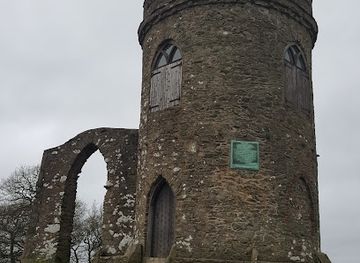
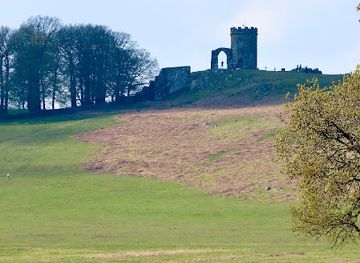
Old John Tower
Discover Old John Tower, an 18th-century folly atop Leicestershire’s highest hill offering stunning views and rich heritage in Bradgate Park.
-
Historical landmark
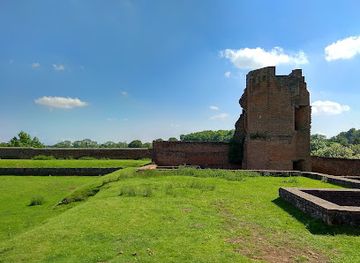
Bradgate House
Explore the haunting Tudor ruins of Bradgate House, childhood home of Lady Jane Grey, set within Leicestershire’s historic medieval deer park.


Explore Leicestershire on the map
Plan your trip on one map. See where the top cities, national parks and sights are, and book hotels and experiences in a few clicks.
Best hotels in Leicestershire
Best restaurants in Leicestershire
Leicestershire's food identity is closely linked to its farming country and market-town economy. Melton Mowbray pork pies are the county's best-known speciality, traditionally made with a distinctive raised crust, while the town is also strongly associated with Stilton cheese, whose production extends across parts of the wider English Midlands. Local farm shops, food halls and markets provide opportunities to sample cheeses, charcuterie, baked goods, preserves and seasonal produce. Traditional pubs and rural inns are common in villages and market towns, often offering familiar British dishes alongside locally sourced ingredients, while Leicester just beyond the county provides a broader international dining scene. Cafés are particularly useful stops in Market Harborough, Melton Mowbray, Loughborough and other larger centres, and canal-side dining around Foxton has a more leisurely character. Visitors should distinguish established regional specialities from products merely marketed as local, and should check current opening arrangements for independent producers and seasonal markets.
-
British
Cosy Club
Stylish British dining and vibrant bar in Leicester’s heart, blending timeless glamour with all-day menus and festive event spaces.
-
French
Bistrot Pierre - Leicester
Experience authentic French bistro dining in Leicester’s city centre with classic dishes, seasonal specials, and a warm Parisian atmosphere.
-
Italian
OGGI Italian Restaurant
Experience authentic Italian cuisine with fresh ingredients and warm hospitality at OGGI Italian Restaurant in Leicester’s vibrant London Road.
-
Italian
Casa Romana Restaurant
Experience authentic Italian flavors and cozy charm at Casa Romana, Leicester’s cherished seafood and pasta haven.


Best bars in Leicestershire
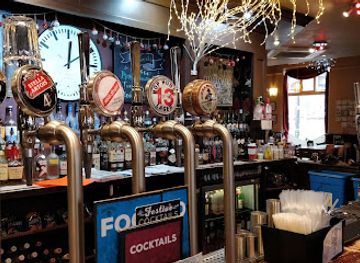
Evening life in Leicestershire is generally centred on traditional pubs, restaurants, cafés and live entertainment rather than a large clubbing scene. Loughborough has a younger, more energetic evening character because of its university population, with bars and venues concentrated around the town centre, while Leicester outside the county offers the region's largest choice of theatres, music venues, late bars and clubs. Market Harborough and Melton Mowbray provide a more compact selection of pubs, wine bars and restaurants, and rural villages are often oriented towards local inns and quiet social evenings. The county's brewing and food-producing traditions appear in independent pubs and taprooms, although the availability of particular venues changes over time. In country districts, taxis and pre-booked transport are important after dark, since buses may be limited and walking between villages is rarely practical.
-
Bar
Cosy Club
A vibrant blend of industrial heritage and modern charm, offering all-day dining and a secret garden in Leicester’s city centre.
-
Pub
Firebug
Leicester’s vibrant pub and live music venue blending extensive drinks, lively entertainment, and a welcoming atmosphere.
-
Pub
The Old Horse
A friendly, pet-welcoming Leicester pub with hearty roasts, unique charm, and a spacious garden for relaxed socializing.
-
Pub
The Globe - Pub & Kitchen
A traditional Leicester pub blending classic Everards ales, hearty local fare, and warm community spirit in a cozy historic setting.



Best nightclubs in Leicestershire
Evening life in Leicestershire is generally centred on traditional pubs, restaurants, cafés and live entertainment rather than a large clubbing scene. Loughborough has a younger, more energetic evening character because of its university population, with bars and venues concentrated around the town centre, while Leicester outside the county offers the region's largest choice of theatres, music venues, late bars and clubs. Market Harborough and Melton Mowbray provide a more compact selection of pubs, wine bars and restaurants, and rural villages are often oriented towards local inns and quiet social evenings. The county's brewing and food-producing traditions appear in independent pubs and taprooms, although the availability of particular venues changes over time. In country districts, taxis and pre-booked transport are important after dark, since buses may be limited and walking between villages is rarely practical.
-
Nightclub
Mosh
Leicester’s premier three-floor alternative nightclub, buzzing with indie, emo, and metal vibes and student-friendly drink deals.
-
Nightclub
The 2Funky Lounge
Leicester’s energetic two-floor nightclub with live music, private parties, and a rooftop terrace for unforgettable nights out.
-
Nightclub
The Basement
Leicester’s underground hotspot for late-night dancing, eclectic music, and unforgettable private events in a vintage-inspired setting.
-
Nightclub
Club Republic
Experience Leicester’s ultimate clubbing hotspot with immersive audiovisuals, live gigs, and a vibrant student-friendly atmosphere.



Best shops in Leicestershire
Shopping in Leicestershire is strongest in its market towns, where independent retailers, cafés, food shops and regular outdoor markets serve both residents and visitors. Market Harborough has a well-established independent shopping character, with boutiques, homeware, books, galleries and places selling gifts, while Loughborough combines a traditional town centre with larger everyday retailers and student-oriented businesses. Melton Mowbray is a practical place to seek regional food products, including pork pies, cheeses and other provisions associated with the county's agricultural economy. Farm shops and makers' outlets across rural districts sell preserves, baked goods, gardening products, crafts and seasonal produce, though opening patterns can be limited. Antiques, locally made gifts and books are often more rewarding purchases than generic souvenirs, and visitor attractions may stock history, railway or battlefield-themed items. For extensive city-centre retail, Leicester is nearby but outside Leicestershire's administrative boundary.
-
Shopping Centre
Haymarket Shopping Centre
Leicester's pioneering indoor shopping centre with 60+ stores, dining, and award-winning facilities.
-
Homewares Shop
The Range, Leicester
Inspiring homes and creative lives—where furniture, décor, and imagination meet under one expansive roof.
-
Shopping Centre
St George's Shopping Park
A vibrant open-air retail park in Leicester offering diverse shops, extended hours, and convenient amenities for a comprehensive shopping experience.
-
Gift shop
Narborough Hall
Discover unique gifts and local charm at Narborough Hall, a beloved gift shop nestled in the heart of Narborough village, Leicester.


Get your free copy of our complete guide to Leicestershire, delivered straight to you.
Everything on this page, from attractions and restaurants to essentials and local phrases, in one PDF you can read offline, print or share.
Already have an account? Sign in
Your Leicestershire guide is ready.
We'll send it to · Not you? Sign out

Getting your guide ready…
We are putting together a fresh copy of the Leicestershire guide. This can take up to a minute.
This can take a few moments. If your browser asks, choose Allow so the download can start. You'll find the guide in your Downloads folder.
Nothing happened? Download it again
Sorry, the guide is taking longer than usual. Please try again in a minute, or get it by email instead.
Leicestershire essentials
Currency and Payment
Safety
Emergency Situations
Do's and Don'ts
Local Tips
From Eve
Local phrases worth knowing
You don't need to get them perfect. A few words go a long way, and locals appreciate the effort.
Basics
| English | Local | Say it |
|---|---|---|
| Hello | Alright | [aw-reet] |
| Goodbye | See ya | [see ya] |
| Yes | Aye | [ai] |
| No | Nah | [nah] |
| Please/You're welcome | No problem | [no prob-lem] |
| Thank you | Cheers | [cheers] |
| Excuse me/Sorry | Sorry mate | [sor-ree mate] |
| How are you? | You alright? | [yoo aw-reet?] |
| Fine. And you? | I’m good, you? | [I'm good, yoo?] |
| Do you speak English? | Do ya speak English? | [doo ya speak ing-lish?] |
| I don't understand | I don’t get it | [I don't get it] |
Eating & Drinking
| English | Local | Say it |
|---|---|---|
| I'd like to see the menu, please | Can I see the menu, please? | [can I see the men-yoo, pleez?] |
| I don't eat meat | I’m a veggie | [I’m a veg-ee] |
| Cheers! | Cheers! | [cheers] |
| I would like to pay, please | Can I pay, please? | [can I pay, pleez?] |
Emergencies
| English | Local | Say it |
|---|---|---|
| Help! | Help! | [help] |
| Go away! | Get lost! | [get lost] |
| Call the Police! | Ring the coppers! | [ring the cop-pers] |
| Call a doctor! | Get a doc! | [get a dock] |
| I'm lost | I’m lost | [I’m lost] |
| I'm ill | I’m not well | [I’m not well] |
Shopping
| English | Local | Say it |
|---|---|---|
| I'd like to buy... | I wanna buy... | [I wanna buy...] |
| I'm just looking | Just browsing | [just brow-sing] |
| How much is it? | How much’s this? | [how much's this?] |
| That's too expensive | That's well pricey | [that's well pry-see] |
| Can you lower the price? | Can ya knock it down? | [can ya nok it down?] |
Time & Numbers
| English | Local | Say it |
|---|---|---|
| What time is it? | What time is it? | [what time is it?] |
| It's one o'clock | It's one o'clock | [it's one o'clock] |
| Half past (10) | Half ten | [half ten] |
| Morning | Mornin' | [mor-nin'] |
| Afternoon | Afternoon | [af-ter-noon] |
| Evening | Evenin' | [ee-venin'] |
| Yesterday | Yest'day | [yes-t'day] |
| Today | Today | [to-day] |
| Tomorrow | Tomorrah | [to-morra] |
| 1 | One | [one] |
| 2 | Two | [two] |
| 3 | Three | [three] |
| 4 | Four | [four] |
| 5 | Five | [five] |
| 6 | Six | [six] |
| 7 | Seven | [seven] |
| 8 | Eight | [eight] |
| 9 | Nine | [nine] |
| 10 | Ten | [ten] |
Transport & Directions
| English | Local | Say it |
|---|---|---|
| Where's a/the...? | Where’s the...? | [where's the...?] |
| What's the address? | What’s the address? | [what's the ad-dress?] |
| Can you show me (on the map)? | Can ya show me on the map? | [can ya show me on the map?] |
| When's the next (bus)? | When’s the next bus? | [when's the next bus?] |
| A ticket (to ....) | A ticket to... | [a tick-it to...] |
History of Leicestershire
Prehistoric Landscapes and Ancient Settlement
Leicestershire's earliest history survives in earthworks, burial sites, trackways and scattered archaeological remains rather than in a single monumental complex. The county's fertile river valleys and mixed soils supported settlement from prehistoric times, while the uplands of Charnwood offered stone, woodland and grazing. Iron Age communities established defended settlements and agricultural landscapes across the Midlands. Many later boundaries and roads followed older patterns of movement, meaning that the relationship between market towns, farmland and high ground has deep roots even where the visible prehistoric evidence is fragmentary.
The Roman Countryside
Roman rule brought administrative organisation, engineered roads, rural estates and new forms of production to the territory now known as Leicestershire. The principal Roman settlement was Ratae Corieltauvorum, the predecessor of modern Leicester and today outside the county's administrative boundary, but its influence extended into surrounding rural districts. Villas, pottery, roads and agricultural sites show how the wider landscape was integrated into Roman Britain. Roman patterns of land use did not simply disappear after the empire's withdrawal; some routes, settlements and field systems helped shape later medieval development.
Medieval Lords, Markets and Religious Houses
After the Norman Conquest, castles, manors and religious foundations reshaped Leicestershire's political and economic geography. Ashby-de-la-Zouch developed under the influence of the powerful Zouch family, while market towns such as Market Harborough and Melton Mowbray connected farming communities with regional trade. Abbeys and parish churches controlled land, organised production and provided religious focus until the Dissolution of the Monasteries in the sixteenth century. Medieval roads and market rights helped establish the town network that remains central to the county's identity.
Bosworth and the Tudor Succession, 1485
The Battle of Bosworth Field, fought on 22 August 1485 near Market Bosworth, ended the reign of Richard III and brought Henry Tudor to the English throne as Henry VII. The battle was the decisive engagement in the long conflict later known as the Wars of the Roses, although its location and precise course have been studied and interpreted over many years. Its legacy transformed an ordinary Leicestershire landscape into one of England's most important political heritage sites. The battlefield, visitor interpretation and surrounding countryside now explain both the military encounter and its role in Tudor history.
Canals, Industry and the Market Economy
The eighteenth and nineteenth centuries brought canals, turnpike roads, railways and industrial expansion. The Grand Union Canal's Foxton Locks, with their flight of ten chambers and associated inclined plane, reflects the engineering ambition of the period and the need to move coal and manufactured goods efficiently. Loughborough and Leicester became important centres for hosiery, framework knitting and engineering, while quarrying, brickmaking and coal mining shaped communities elsewhere in the county. Agricultural markets remained essential, linking specialist food production with expanding urban populations across the Midlands.
Railways and Engineering in the Modern County
Railways altered Leicestershire's economy and geography by connecting market towns, industrial districts and national markets. Loughborough became a significant railway centre, and the Great Central Railway formed a major north-south route through the county before changing transport patterns and eventually closing to regular passenger traffic in the twentieth century. Engineering, hosiery and food production continued to evolve, while coal-mining districts faced substantial change as pits closed. Preserved railway operations and industrial collections now help explain the technology, labour and commercial networks that shaped modern Leicestershire.
Landscape Restoration and Contemporary Identity
Late twentieth- and early twenty-first-century Leicestershire saw major changes in land use, especially in former mining areas of the west. Tree planting and environmental restoration associated with the National Forest created new woodland and recreational landscapes on land once dominated by extraction and industry. At the same time, historic estates, battlefields, canals and market towns became important to the county's visitor economy. Contemporary Leicestershire is therefore shaped by both continuity and transformation: long-established farming and food traditions exist alongside restored industrial sites, new woodland and a diverse population connected to neighbouring Leicester and the wider Midlands.
Leicestershire in Photos
Browse through our photo collection highlighting the charm and character of the destination.
Neighbouring regions of Leicestershire
The closest regions to Leicestershire, if you have time for more than one.
-

-

-

-
-


Swipe for more regions
Explore more

Explore more of United Kingdom
Discover the United Kingdom: A blend of rich history, stunning landscapes, and vibrant cities, offering a unique travel experience for every visitor.
Explore United Kingdom