

Free West Midlands Travel Guide & Mobile App
Explore West Midlands with free travel guides. Discover regional history, expert tips, proposed trips, and audio guides on web or mobile app.


Explore the West Midlands for Birmingham culture, industrial heritage, medieval towns, Shakespearean history and walking landscapes across central England.
Read more about West Midlands
When is the best time to visit West Midlands?
Best: June–August · 19–21°C| Month | High (°C) | Rainfall (mm) |
|---|---|---|
| January | 6 | 53 |
| February | 7 | 43 |
| March | 10 | 43 |
| April | 13 | 44 |
| May | 16 | 47 |
| June (best) | 19 | 52 |
| July (best) | 21 | 55 |
| August (best) | 21 | 57 |
| September | 18 | 51 |
| October | 14 | 58 |
| November | 10 | 52 |
| December | 7 | 56 |
Getting to and around West Midlands
How to get there
Transportation
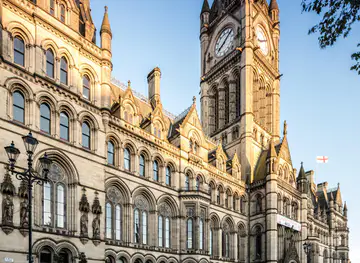
Top city travel guides in West Midlands
The cities of West Midlands, and the easiest places to base yourself.
-

-
-

-

-

-


Swipe for more cities
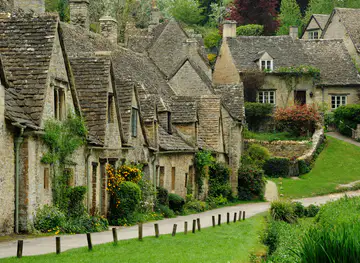
Destinations in West Midlands
Resorts, valleys and scenic spots worth a trip of their own.
-

-

-
-


Swipe for more destinations
Best attractions in West Midlands
The West Midlands offers an unusually broad range of attractions, from major city institutions to open countryside and industrial archaeology. Birmingham's museums, galleries, canals, concert venues and civic quarter form the region's largest cultural concentration, while Coventry combines two cathedrals, museums and a strong motor and transport heritage. The Black Country Living Museum near Dudley recreates working life and industry through historic buildings, demonstrations and collections, and the Ironbridge Gorge in Shropshire presents the landscape and technology of the Industrial Revolution. Historic houses and estates include Warwick Castle, Blenheim-like grandeur at Ragley Hall near Alcester and the National Trust's Berrington Hall in Herefordshire. Stratford-upon-Avon brings Shakespearean history and theatre, while Ludlow, Shrewsbury and Worcester provide museums, historic streets and architectural interest. Walkers can choose the Malvern Hills, the Shropshire Hills, Cannock Chase and extensive canal and reservoir routes; wildlife, gardens and country parks add gentler outdoor options. The region's attractions are widely distributed, so a thematic itinerary—urban culture, medieval towns, industrial heritage or hill country—usually works better than trying to see every district from one base.
-
Shopping Centre
Bullring & Grand Central
Birmingham's premier shopping and entertainment hub where luxury meets high street, dining meets entertainment, and festive magic meets urban convenience.
-
Wildlife and safari park
West Midlands Safari Park
Drive through African and Asian habitats to encounter lions, tigers and giraffes in a four-mile safari adventure.
-
Theme park
Cadbury World
Discover the magic of chocolate at Cadbury World, Birmingham’s immersive family attraction with interactive zones, history, and sweet delights.
-
Shopping Centre
Merry Hill
West Midlands' premier shopping and entertainment destination with 180+ retailers, dining, and leisure.


Best landmarks in West Midlands
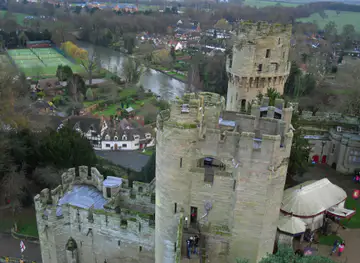
The West Midlands' landmarks express both its medieval inheritance and its industrial transformation. In Coventry, the bomb-damaged medieval cathedral and the modern cathedral beside it form one of Britain's most powerful architectural juxtapositions, symbolising destruction and reconstruction. Birmingham's Jewellery Quarter, canals, civic buildings and surviving industrial structures reveal the scale of its manufacturing past, while the Black Country's old furnaces, canals and factory landscapes preserve a different industrial identity. The Iron Bridge over the River Severn is the emblematic structure of Ironbridge Gorge and a landmark in the history of iron construction. Warwick Castle dominates the River Avon with medieval fortifications later reshaped as a grand residence, and Ludlow Castle stands above the town as a major Welsh Marches stronghold. Hereford Cathedral, Worcester Cathedral and Shrewsbury Abbey mark the importance of religious and civic centres, while Stratford-upon-Avon's timber-framed buildings carry national literary associations. In the countryside, the ridgeline of the Malvern Hills, the distinctive summits of the Shropshire Hills and the wooded landscape of Cannock Chase provide natural landmarks that contrast sharply with the region's urban skyline.
-
Museum
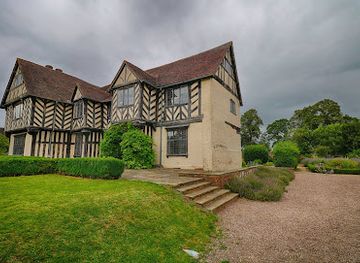
Blakesley Hall Museum
Step back 400 years in Birmingham’s Tudor gem, Blakesley Hall, where history, architecture, and tranquil gardens tell the story of a wealthy merchant family.
-
Historical landmark
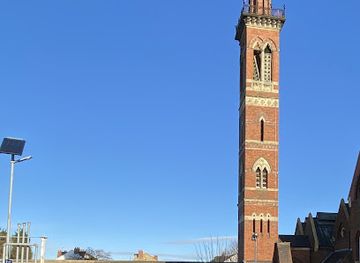
Edgbaston Waterworks Tower
Victorian industrial icon rumored to inspire Tolkien's Twin Towers—where engineering meets Middle-earth imagination.
-
Historical landmark
Galton Bridge
Explore Galton Bridge, a pioneering 1829 cast-iron marvel by Thomas Telford, standing proudly in Smethwick’s historic Galton Valley.
-
Historical landmark
Perrott's Folly
An 18th-century tower in Birmingham, steeped in history and Tolkien lore, now a cultural beacon for art and community.


Explore West Midlands on the map
Plan your trip on one map. See where the top cities, national parks and sights are, and book hotels and experiences in a few clicks.
Best hotels in West Midlands
Best restaurants in West Midlands
Dining in the West Midlands ranges from Birmingham's highly international restaurant scene to traditional pubs, farm shops, cafés and rural inns across the surrounding counties. Birmingham reflects the city's diverse communities, with established Indian, Pakistani, Bangladeshi, Middle Eastern, East Asian and European cuisines alongside modern British cooking. In the wider region, menus often draw on local agricultural produce, Herefordshire beef and cider, Worcestershire ingredients, Shropshire and Staffordshire cheeses, seasonal game, farmhouse baking and orchard fruit. Worcestershire sauce is a famous regional product, though it is a condiment rather than a complete local cuisine. Stratford-upon-Avon, Warwick, Ludlow, Shrewsbury, Worcester and Hereford offer a mixture of independent restaurants, pubs and cafés, while villages are more likely to concentrate dining around a small number of inns. Farmers' markets and food halls are useful for discovering cheeses, preserves, bread, cakes and cider. Booking is sensible for popular restaurants, theatre-district dining and well-regarded rural establishments, particularly at weekends.
-
Restaurant
The Lost & Found Birmingham
Discover botanical Victorian glamour at The Lost & Found Birmingham: inventive cocktails, hearty British classics, and quirky hideaways for unforgettable city-center escapes.
-
British
The Ivy Temple Row
A stylish British brasserie in Birmingham blending art deco elegance with classic dishes and impeccable service.
-
Fine dining
Adam's Restaurant
Experience Birmingham’s finest Michelin-starred modern British cuisine in an elegant Art Deco setting with impeccable service and inventive tasting menus.
-
Italian
Lucarelli Restaurant
Experience authentic Italian flavors and warm hospitality in stylish private domes at Lucarelli Restaurant, West Bromwich’s culinary gem.


Best bars in West Midlands
Evening life is centred on Birmingham, whose central districts offer traditional pubs, cocktail bars, craft beer venues, live music, comedy, theatres and nightclubs, with further activity around the university area and Digbeth. Coventry and Wolverhampton have substantial student, cultural and music scenes, while smaller cities and towns such as Worcester, Hereford, Shrewsbury, Stratford-upon-Avon and Warwick focus more on pubs, wine bars, restaurants and live performance. The Black Country retains a strong tradition of local pubs and historic drinking houses, although individual venues and opening arrangements change. Rural evenings generally revolve around country inns, dining and occasional music rather than a large club scene. Breweries, cider producers and independent taprooms appear across the region, but alcohol is not the only focus: theatres, concert halls, comedy venues and evening museum or cultural programmes broaden the options. Check current transport connections before staying late outside the major urban centres.
-
Bar
Pitcher & Piano Birmingham
A stylish canal-side bar in Brindley Place, Birmingham, perfect for all-day dining, cocktails, and vibrant social experiences.
-
Bar
The Botanist Gas Street Basin
A lush botanical bar and restaurant with canal views, seasonal menus, and live music in Birmingham’s vibrant Gas Street Basin.
-
Cocktail bar
Slug & Lettuce - Birmingham
Lively cocktail bar and restaurant at Brindley Place offering vibrant drinks, tasty bites, and late-night fun in Birmingham’s city centre.
-
Pub
Bacchus Bar
Discover Birmingham’s medieval-inspired basement pub, where historic charm meets lively atmosphere and quality British ales.


Best nightclubs in West Midlands
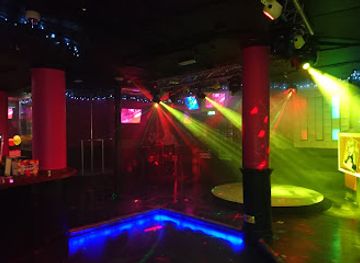
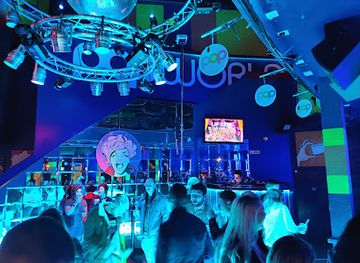
Evening life is centred on Birmingham, whose central districts offer traditional pubs, cocktail bars, craft beer venues, live music, comedy, theatres and nightclubs, with further activity around the university area and Digbeth. Coventry and Wolverhampton have substantial student, cultural and music scenes, while smaller cities and towns such as Worcester, Hereford, Shrewsbury, Stratford-upon-Avon and Warwick focus more on pubs, wine bars, restaurants and live performance. The Black Country retains a strong tradition of local pubs and historic drinking houses, although individual venues and opening arrangements change. Rural evenings generally revolve around country inns, dining and occasional music rather than a large club scene. Breweries, cider producers and independent taprooms appear across the region, but alcohol is not the only focus: theatres, concert halls, comedy venues and evening museum or cultural programmes broaden the options. Check current transport connections before staying late outside the major urban centres.
-
Nightclub
Reflex - Birmingham
Dive into the vibrant retro party scene at Reflex Birmingham, where 80s, 90s, and 00s hits fuel unforgettable nights on Broad Street.
-
Nightclub
Popworld - Birmingham
Birmingham’s vibrant pop music nightclub on Broad Street, delivering nonstop hits, fun vibes, and unforgettable party nights for the 18+ crowd.
-
Events Venue
The Night Owl
A cozy Digbeth venue where soulful retro beats and friendly vibes create unforgettable nights for all music lovers.
-
Gay night club
Nightingale Club
Birmingham’s legendary LGBTQ+ superclub, offering three floors of vibrant nightlife, diverse music, and a rich queer heritage in the heart of the Gay Village.


Best shops in West Midlands
Shopping varies from Birmingham's large-scale retail core and independent quarters to market-town high streets, farm shops and craft businesses in the wider region. Birmingham offers major department stores, shopping centres, the Jewellery Quarter's specialist makers and independent shops in areas such as Digbeth and the city centre, while Coventry and Wolverhampton provide substantial urban retail districts. Stratford-upon-Avon and Warwick combine mainstream shops with bookshops, antiques, galleries and Shakespeare-related merchandise, though visitors should distinguish locally made goods from generic souvenirs. Ludlow, Shrewsbury, Worcester and Hereford are useful for independent food shops, antiques, crafts and traditional markets. Rural districts are better suited to buying cider, preserves, cheese, bread, pottery and other regional produce than to extensive fashion shopping. Farmers' markets and specialist delis are particularly good sources of Herefordshire cider, Worcestershire products and Midlands cheeses. Shopping hours and market days vary, so checking local arrangements is advisable before making a dedicated trip.
-
Shopping outlet
McArthurGlen Designer Outlet West Midlands
Discover top designer brands and family-friendly fun at McArthurGlen Designer Outlet West Midlands, just 30 minutes from Birmingham.
-
Shopping Centre
St Andrew's Shopping Park
A vibrant shopping destination in Birmingham offering diverse stores, eateries, and convenient access for a fulfilling retail experience.
-
Shopping Centre
Princess Alice Retail Park
A premier retail park in Sutton Coldfield offering diverse shopping, dining, and wellness options with ample free parking and easy access.
-
Shopping Centre
Cornbow Shopping Centre
A modernized shopping hub in Halesowen blending major retailers, independent shops, and community amenities for a vibrant retail experience.


Get your free copy of our complete guide to West Midlands, delivered straight to you.
Everything on this page, from attractions and restaurants to essentials and local phrases, in one PDF you can read offline, print or share.
Already have an account? Sign in
Your West Midlands guide is ready.
We'll send it to · Not you? Sign out

Getting your guide ready…
We are putting together a fresh copy of the West Midlands guide. This can take up to a minute.
This can take a few moments. If your browser asks, choose Allow so the download can start. You'll find the guide in your Downloads folder.
Nothing happened? Download it again
Sorry, the guide is taking longer than usual. Please try again in a minute, or get it by email instead.
West Midlands essentials
Currency and Payment
Safety
Emergency Situations
Do's and Don'ts
Local Tips
From Eve
Local phrases worth knowing
You don't need to get them perfect. A few words go a long way, and locals appreciate the effort.
Basics
| English | Local | Say it |
|---|---|---|
| Hello | Ayup | [ey-up] |
| Goodbye | Ta-ra | [ta-ra] |
| Yes | Yeh | [yeh] |
| No | Nah | [nah] |
| Please/You're welcome | Please/No worries | [pleez/no wuh-riz] |
| Thank you | Cheers | [cheerz] |
| Excuse me/Sorry | Sorry | [sor-ree] |
| How are you? | Ow's it going? | [ow's it goin'?] |
| Fine. And you? | Sound. And you? | [sownd. An yew?] |
| Do you speak English? | Can ya speak English? | [can ya speek Inglish?] |
| I don't understand | I ain't got a clue | [I ain't got a clew] |
Eating & Drinking
| English | Local | Say it |
|---|---|---|
| I'd like to see the menu, please | Can I see the menu, please? | [can I see the men-yoo, pleez?] |
| I don't eat meat | I don't do meat | [I don't do meet] |
| Cheers! | Cheers! | [cheerz] |
| I would like to pay, please | Can I pay, please? | [can I pay, pleez?] |
Emergencies
| English | Local | Say it |
|---|---|---|
| Help! | Help! | [help] |
| Go away! | Jog on! | [jog on] |
| Call the Police! | Ring the coppers! | [ring the kop-ers] |
| Call a doctor! | Get a doctor! | [get a dok-ter] |
| I'm lost | I’m a bit lost | [I'm a bit lost] |
| I'm ill | I ain't well | [I ain't wel] |
Shopping
| English | Local | Say it |
|---|---|---|
| I'd like to buy... | I want to buy... | [I want to buy...] |
| I'm just looking | Just having a look | [just havin' a luk] |
| How much is it? | How much's that? | [how much's that?] |
| That's too expensive | That's a bit pricey | [that's a bit pry-see] |
| Can you lower the price? | Can ya knock the price down? | [can ya nok the pryce doun?] |
Time & Numbers
| English | Local | Say it |
|---|---|---|
| What time is it? | What time's it? | [what time's it?] |
| It's one o'clock | It's one o'clock | [it's one o'clock] |
| Half past (10) | Half ten | [half ten] |
| Morning | Mornin' | [mor-nin'] |
| Afternoon | Arvo | [arvo] |
| Evening | Evenin' | [eev-nin'] |
| Yesterday | Yest'day | [yes-t'day] |
| Today | Today | [to-day] |
| Tomorrow | Tomorrah | [to-mor-rah] |
| 1 | One | [won] |
| 2 | Two | [too] |
| 3 | Three | [three] |
| 4 | Four | [for] |
| 5 | Five | [five] |
| 6 | Six | [six] |
| 7 | Seven | [sev-en] |
| 8 | Eight | [eight] |
| 9 | Nine | [nine] |
| 10 | Ten | [ten] |
Transport & Directions
| English | Local | Say it |
|---|---|---|
| Where's a/the...? | Where's the...? | [where's the...?] |
| What's the address? | What’s the address? | [what’s the ad-dress?] |
| Can you show me (on the map)? | Can ya show me on the map? | [can ya show me on the map?] |
| When's the next (bus)? | When's the next bus? | [when's the next bus?] |
| A ticket (to ....) | A ticket to ... | [a tik-it to ...] |
History of West Midlands
Prehistoric Landscapes and Roman Frontiers
The West Midlands contains evidence of settlement and land use from prehistoric times, including hillforts, burial monuments and ancient trackways in areas such as the Malvern and Shropshire hills. The Romans established roads, forts and towns across the region, with Viroconium, now Wroxeter near Shrewsbury, becoming one of Roman Britain's largest urban centres. Other Roman routes connected the Midlands with Wales, the south-west and northern Britain. Although much of the modern landscape has changed, archaeological remains and road alignments demonstrate the region's long importance as a meeting point between lowland England and the Welsh borderlands.
Mercian Power and Medieval Towns
Much of the West Midlands formed the heartland of Mercia, one of the most powerful Anglo-Saxon kingdoms. Mercian influence helped shape settlements, ecclesiastical foundations and political boundaries that endured into the medieval period. After the Norman Conquest, castles and planned towns strengthened royal and aristocratic control, particularly along the Welsh border. Ludlow, Shrewsbury, Warwick and Hereford developed as centres of administration, trade and defence. Medieval churches, castle ruins, street plans and market traditions still reveal the region's position between central England and the contested frontier of Wales.
Medieval Trade, Wool and River Commerce
From the later Middle Ages, the region prospered through agriculture, livestock, wool and river-connected trade. Coventry became a major medieval city and a centre of textile production, while Worcester developed around the River Severn and its cathedral and market economy. Market towns such as Ludlow, Stratford-upon-Avon and Shrewsbury linked surrounding farms with wider commercial networks. Timber-framed buildings, guild traditions, medieval bridges and historic market squares preserve elements of this period, when the West Midlands was neither solely rural nor yet dominated by factories.
The Shakespearean and Tudor West Midlands
The late Tudor period left a particularly visible cultural legacy in Warwickshire. William Shakespeare was born in Stratford-upon-Avon in 1564, and the town's surviving buildings and institutions remain closely associated with his life and work. The wider region also experienced religious and political change during the Reformation and the Tudor consolidation of royal authority. Tudor timber framing, prosperous merchant houses and country estates survive in several towns, while the region's roads and markets continued to connect agricultural districts with growing urban centres.
Iron, Coal and the Industrial Revolution
The West Midlands became one of the principal laboratories of industrialisation. Coal, limestone, iron ore, waterpower and navigable rivers supported metalworking and manufacturing, particularly around Birmingham, Wolverhampton, Dudley and the Severn Gorge. Ironbridge is associated with Abraham Darby's successful use of coke for smelting iron and with the world's first iron bridge, opened in 1781. Birmingham developed a dense economy of workshops and specialist metal trades, while the Black Country acquired its name from the smoke and industrial activity that transformed its landscape.
Canals, Railways and Manufacturing Cities
The late eighteenth and nineteenth centuries brought canals and railways that connected the West Midlands to national and international markets. Birmingham became a major transport interchange, and its canal network carried coal, raw materials and finished goods through the city. Coventry became known for watchmaking, bicycles and later motor manufacturing; the Black Country specialised in iron, engineering, chainmaking and other industries. These developments created new urban communities and drove large-scale migration into manufacturing districts, leaving a legacy of canals, factories, civic buildings and working-class neighbourhoods.
War, Reconstruction and Post-industrial Change
The twentieth century brought both industrial expansion and severe disruption. Coventry suffered extensive bombing during the Second World War, and its rebuilt city centre became an important example of post-war planning, while the new cathedral stands beside the ruins of the medieval one. Birmingham and neighbouring industrial towns later faced factory closures and economic restructuring. From the late twentieth century onwards, investment in culture, universities, transport, canals and heritage helped reshape former industrial areas. The region today combines advanced manufacturing and engineering with services, education, tourism and creative industries.
West Midlands in Photos
Browse through our photo collection highlighting the charm and character of the destination.
Neighbouring regions of West Midlands
The closest regions to West Midlands, if you have time for more than one.
-

-

-
-

-


Swipe for more regions
Explore more

Explore more of United Kingdom
Discover the United Kingdom: A blend of rich history, stunning landscapes, and vibrant cities, offering a unique travel experience for every visitor.
Explore United Kingdom