

Greenan Castle Travel Guide
Free Guide: Explore the rugged ruins of Greenan Castle, a dramatic 16th-century tower house perched on Ayrshire’s scenic sea cliffs with centuries of history and stunning views.


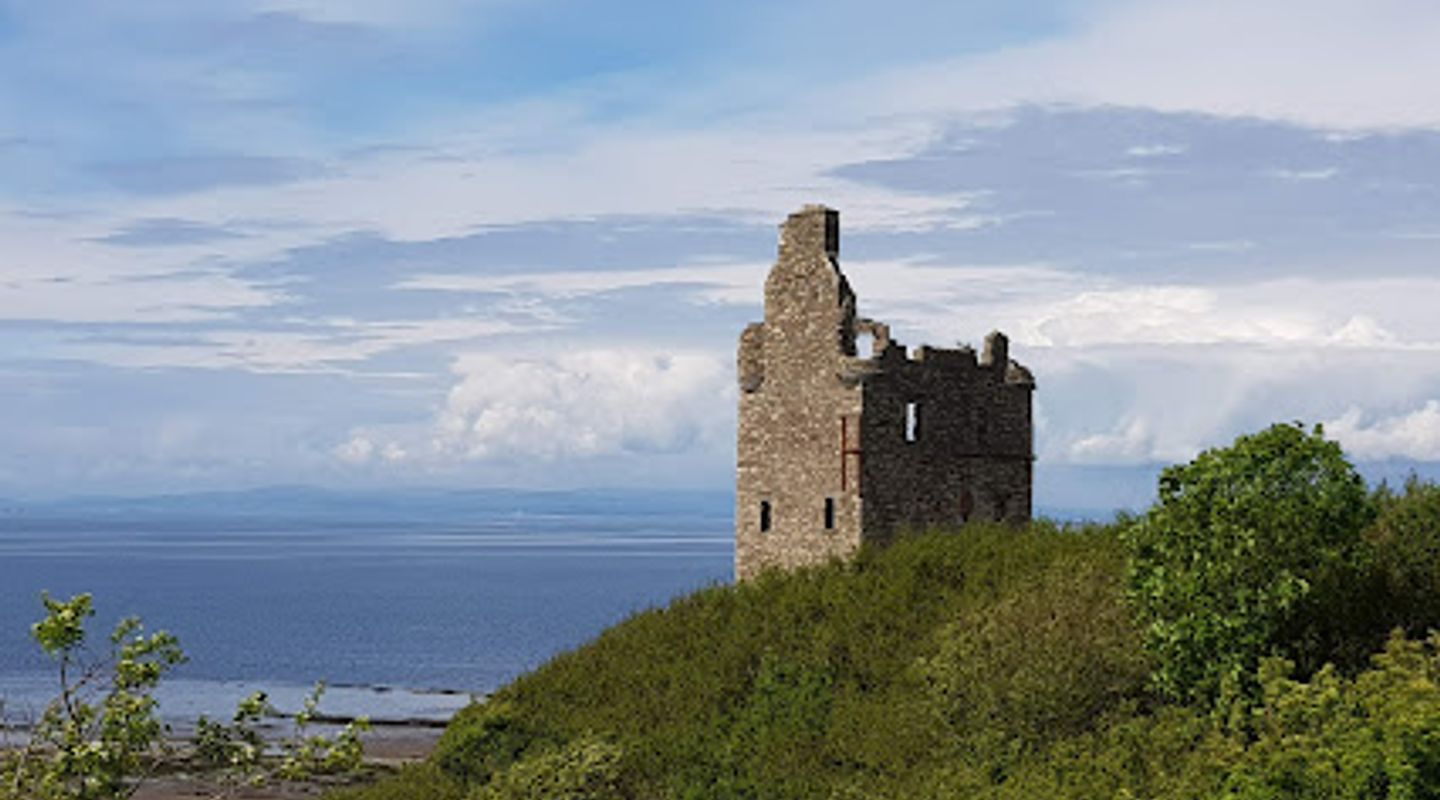
A brief summary of Greenan Castle
Explore the rugged ruins of Greenan Castle, a dramatic 16th-century tower house perched on Ayrshire’s scenic sea cliffs with centuries of history and stunning views.
Greenan Castle is a 16th-century ruined tower house perched on a sea cliff near Ayr, Scotland. Originally a promontory fort and motte-and-bailey structure from the 12th century, it was rebuilt by the Kennedy family in 1603. Though now a ruin, it offers stunning coastal views, traces of medieval fortifications, and a dramatic history including a notorious 1602 murder that inspired Sir Walter Scott. The site is rugged and largely unmodernized, ideal for history enthusiasts and photographers.
On-site amenities
 Trash bins
 Information boards
Opening hours
- Every dayOpen 24 hours
Opening hours as listed on the venue’s Google Business Profile. Hours can change for services and special events, so check with the venue before you go.
- Address
- Ayr KA7 4JU
Getting there
Bus
Car
Cycling
Discover more about Greenan Castle
Ancient Origins and Medieval Evolution
Greenan Castle sits atop a rocky promontory overlooking Greenan Beach, with a history stretching back to the 12th century. The site began as a promontory fort, likely a fortified farmstead, enclosed by multiple curved ditches and earthworks designed for defense. In the 12th century, this evolved into a motte-and-bailey structure built from timber and earth, typical of the period. The present stone tower house was constructed in 1603 by John Kennedy of Baltersan, whose initials appear above the doorway alongside those of his wife, Florence MacDowell.
Architectural Features and Ruins
The castle was a three-story tower house with thick walls containing a basement and a great hall, but no kitchen inside the tower itself. Adjacent to the tower are remnants of a walled courtyard and outbuildings, believed to have housed stables and a kitchen block. Today, the structure is a ruin, unsafe to enter, yet the surviving walls and turrets reveal its former grandeur. The castle’s cliffside location offers panoramic views east and west, including sights of Ayr town and landmarks such as The Wallace Tower and Ayr Town Hall.
A Tragic Tale of Clan Rivalry
Greenan Castle is linked to a dramatic episode of Scottish history. On May 12, 1602, Sir Thomas Kennedy of Culzean and his servant Lancelot departed from the castle to travel to Edinburgh. They were ambushed and murdered in nearby woods as revenge for a clan battle the previous year. This violent event inspired Sir Walter Scott’s short play "An Ayrshire Tragedy." The castle’s association with this story adds a poignant human dimension to its historic ruins.
Changing Hands and Decline
The lands of Greenan changed ownership multiple times, notably forfeited in 1476 by the Earl of Ross and granted in 1493 to William Douglas. The Kennedy family gained control in the early 17th century and maintained possession until the mid-18th century. Residential use ceased around 1766 when Thomas Kennedy, Earl of Cassillis, inherited the property, after which the castle gradually fell into ruin. By the late 18th century, it was recorded as roofless and abandoned.
Setting and Visitor Experience
Situated on a cliff edge above a two-mile stretch of beach, Greenan Castle is accessible via the beach or a nearby cycle path. The site remains largely undeveloped, with no dedicated visitor facilities such as parking or restrooms, emphasizing its wild, atmospheric character. Visitors can enjoy expansive coastal panoramas, explore the surrounding natural landscape, and photograph the evocative ruins. However, caution is advised due to the unstable condition of the structure.
Preservation and Legacy
Greenan Castle is a scheduled monument protected for its archaeological and historical significance. Despite its ruinous state, it continues to captivate visitors with its dramatic location and rich heritage. The castle stands as a testament to Scotland’s medieval past, clan history, and coastal defense architecture, offering a unique window into the region’s cultural landscape.
Evendo Review Centre
 Google
Guest reviews
Best time to go
Quietest: Jan, Feb & Dec · before 6am or at 10pm
Busy times are Evendo estimates for a typical year, to help you plan. Actual crowds vary with events, school holidays and the weather.
Explore Greenan Castle on the map
A handpicked selection of must-see spots near Greenan Castle, mapped for you.
Get your free copy of our complete guide to Greenan Castle, delivered straight to you.
Everything on this page, from opening hours and how to get there to Eve’s tips and the best time to go, in one PDF you can read offline, print or share.
Already have an account? Sign in
Your Greenan Castle guide is ready.
We'll send it to · Not you? Sign out

Getting your guide ready…
We are putting together a fresh copy of the Greenan Castle guide. This can take up to a minute.
This can take a few moments. If your browser asks, choose Allow so the download can start. You'll find the guide in your Downloads folder.
Nothing happened? Download it again
Sorry, the guide is taking longer than usual. Please try again in a minute, or get it by email instead.
Other nearby places you may find interesting
The closest places of the same kind, if this one is not quite what you had in mind.
-
-
-
-
-


Swipe for more places
More to explore near Greenan Castle

 Best experiences near Greenan Castle
 Best hotels near Greenan Castle
 Best landmarks near Greenan Castle
 Best attractions near Greenan Castle
 Best shops near Greenan Castle
 Best restaurants near Greenan Castle
 Best bars near Greenan Castle
Do you manage this location?
Take control to get all the benefits, like improved information, better appearance, and stronger visibility across AI-powered discovery.
Explore more
Explore more of Ayrshire
Discover Ayrshire: a coastal retreat in Scotland offering historic castles, scenic trails, and a rich cultural heritage awaiting your exploration.
Explore Ayrshire
Explore more of United Kingdom
Discover the United Kingdom: A blend of rich history, stunning landscapes, and vibrant cities, offering a unique travel experience for every visitor.
Explore United Kingdom
