
Burns Monument, Ayrshire Travel Guide
A majestic Grecian-style monument and tranquil gardens honoring Scotland’s national poet, Robert Burns, in his birthplace of Alloway.
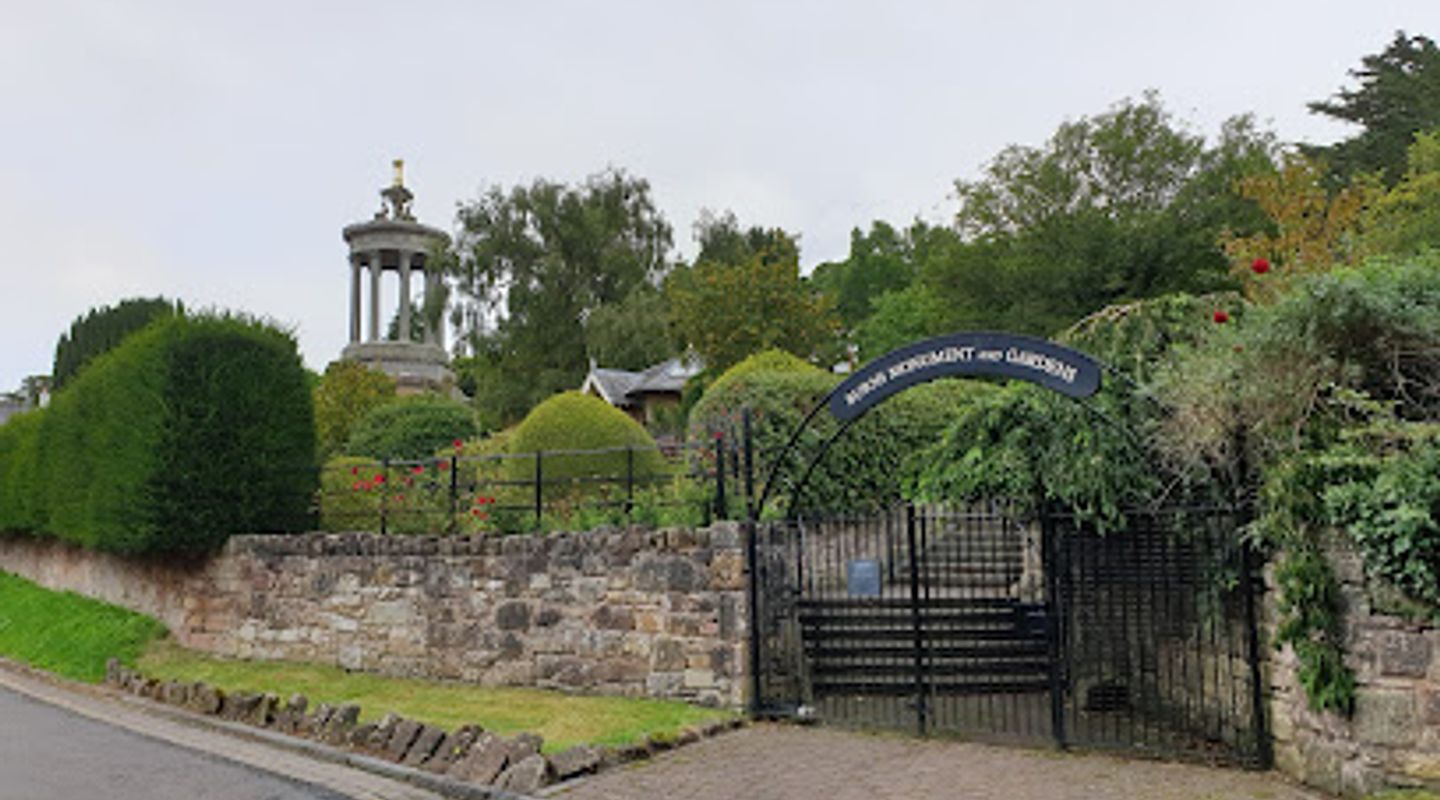
The Burns Monument and Memorial Gardens in Alloway, Ayrshire, are a striking tribute to Scotland’s national poet, Robert Burns. Built in 1823, this Grecian-style monument stands amidst beautifully maintained gardens overlooking the historic Brig o' Doon. Visitors can climb the monument for panoramic views, explore the statue house dedicated to Burns’s characters, and enjoy tranquil surroundings that celebrate the bard’s enduring legacy.
A brief summary to Burns Monument
- Ayr, Alloway, GB
- Duration: 1 to 2 hours
- Free
-
 Outdoor
- Mobile reception: 4 out of 5
- Monday 8:30 am-4 pm
- Tuesday 8:30 am-4 pm
- Wednesday 8:30 am-4 pm
- Thursday 8:30 am-4 pm
- Friday 8:30 am-4 pm
- Saturday 8:30 am-4 pm
- Sunday 8:30 am-4 pm

Know before you go
Hi, I'm Eve. Here are a few practical things to know before exploring Burns Monument.
- Climb the monument’s staircase for panoramic views of Alloway and the Brig o' Doon.
- Visit the statue house in the gardens to see figures from Burns’s famous works.
- Combine your visit with the nearby Robert Burns Birthplace Museum and Burns Cottage for a fuller experience.
- Wear comfortable footwear as some paths and monument stairs can be steep or uneven.
- The monument and gardens are free to enter, but donations help with ongoing maintenance.
Do you manage this location?
Take control to get all the benefits, like improved information, better appearance, and stronger visibility across AI-powered discovery. Learn more about listing your business on Evendo
Activate your presenceOther nearby places you may find interesting
The closest places of the same kind, if this one is not quite what you had in mind.
Explore Burns Monument on the Map
A handpicked selection of must-see spots near Burns Monument, mapped for you.
Getting There
-
Train and Bus
From Glasgow, take a train to Ayr (approximately 50 minutes). From Ayr, catch the local bus to Alloway (about 15 minutes). The Burns Monument is a short walk from the bus stop. Train tickets cost around £10-£15 one way; bus fares are approximately £2-£3.
-
Car
Drive from Ayr to Alloway via the Auld Brig Road, taking about 10 minutes. Parking is available near the Robert Burns Birthplace Museum and the Burns Monument. Note that parking may be limited during peak seasons. There is no charge for parking at the monument.
-
Walking
If staying in Ayr, a scenic 30-40 minute walk along the River Doon and through Alloway village leads to the Burns Monument. The terrain is mostly flat but includes some uneven paths in the gardens.
For the on-the-go comforts that matter to you
-
 Restrooms
-
 Drink Options
-
 Food Options
-
 Seating Areas
-
 Trash Bins
-
 Information Boards
Discover more about Burns Monument
A Historic Tribute to Scotland’s Bard
The Burns Monument, completed in 1823, is a Grecian-style temple dedicated to Robert Burns, Scotland’s beloved national poet. Situated in Alloway, his birthplace, the monument was funded by public subscription, reflecting the deep admiration Burns inspired shortly after his death. Designed by architect Thomas Hamilton, the 21-meter tall structure features nine pillars and a viewing platform that offers sweeping views of the surrounding Ayrshire countryside, including the iconic Brig o' Doon bridge, famously referenced in Burns’s poem "Tam o’ Shanter." The monument’s design incorporates symbolic elements, including mysterious markings linked to Burns’s Freemason membership, adding layers of intrigue to the site.Serene Gardens and Cultural Landscape
Surrounding the monument are the Burns Memorial Gardens, meticulously landscaped to enhance the visitor experience. The gardens feature a rose garden and a statue house housing figures from Burns’s works, such as Tam o’ Shanter and Souter Johnny, bringing his characters to life. The pathways wind through mature trees and floral displays, creating a peaceful setting for reflection. Benches placed throughout the gardens invite visitors to pause and absorb the tranquil atmosphere while overlooking the River Doon and the historic bridge, which remains a daily passage for locals.Visitor Experience and Accessibility
Entry to the Burns Monument and Gardens is free, making it an accessible cultural highlight for all. Visitors can climb the monument’s staircase to the viewing platform, although some sections may be steep and uneven. The gardens and monument are wheelchair accessible with some care, though certain historic areas nearby have uneven terrain. The site is well maintained with information boards that provide context on Burns’s life and the monument’s history. Nearby facilities include restrooms, a café, and a gift shop located at the Robert Burns Birthplace Museum, which is a short walk away.Connection to Robert Burns’s Legacy
The monument’s location in Alloway is deeply symbolic, marking the poet’s birthplace and the landscape that inspired much of his work. It anchors a wider network of Burns-related sites in the village, including the Burns Cottage, the Birthplace Museum, and Alloway Auld Kirk. Together, these sites offer a comprehensive insight into Burns’s life, his literary genius, and the cultural heritage of 18th-century Scotland. The monument and gardens continue to be a focal point for Burns celebrations and events, drawing visitors who wish to honor the bard’s enduring influence.Architectural and Cultural Significance
Architecturally, the Burns Monument is a fine example of early 19th-century neoclassical design, reflecting the era’s reverence for classical antiquity and the Enlightenment ideals Burns embodied. Its public subscription funding highlights the communal respect for Burns and the importance of literary heritage in Scottish identity. The monument stands not only as a memorial but also as a cultural landmark that celebrates the spirit of Scottish nationalism and the universal themes in Burns’s poetry.Ongoing Preservation and Community Role
Efforts to maintain and restore the monument and gardens are ongoing, supported by local fundraising and the National Trust for Scotland. The site remains a cherished community space, hosting cultural events and providing a serene environment for locals and visitors alike. Its combination of historical depth, architectural beauty, and natural tranquility ensures the Burns Monument and Memorial Gardens remain a vital part of Scotland’s cultural landscape.












Your all‑in‑one travel companion app
Explore expert travel guides, compare and book tours, experiences, hotels, and more—all from the palm of your hand. Download now for seamless trip planning wherever your wanderlust takes you.


Explore More of Ayrshire
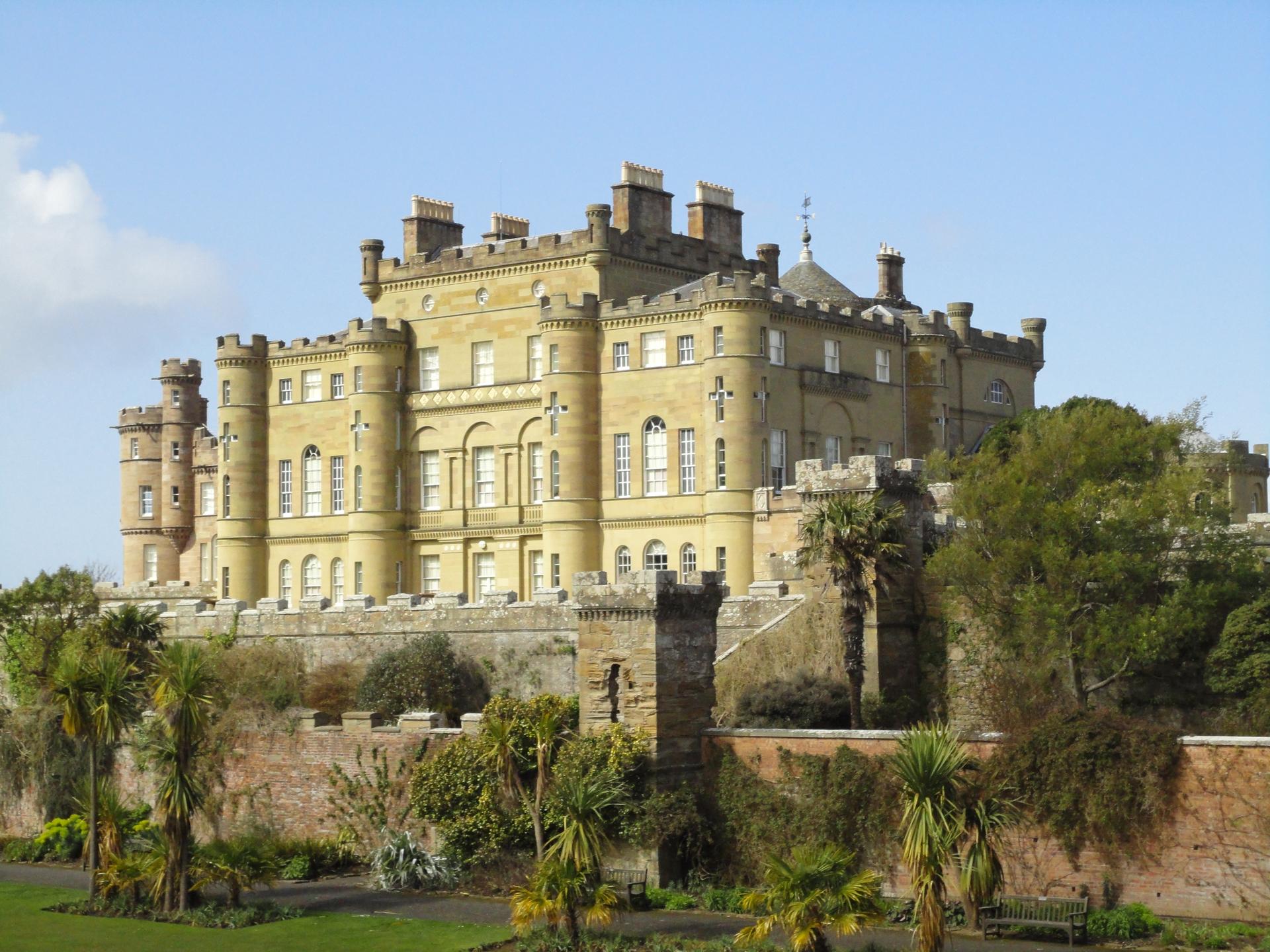
Looking beyond Burns Monument? Discover Ayrshire for broader travel guides, local hot-spots, and regional highlights.
Explore Ayrshire
Ayr’s largest inclusive live music venue, where local talent shines and communities unite in a vibrant, welcoming atmosphere.
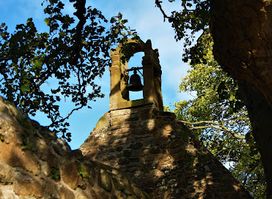
Explore the atmospheric 16th-century ruins of Alloway Auld Kirk, immortalized by Robert Burns in 'Tam o' Shanter' and steeped in Scottish literary history.
