

Pulteney weir, Bath Travel Guide
Free Guide: One of the world’s few bridges with shops on both sides, Pulteney Bridge is Bath’s stunning Georgian landmark blending history, commerce, and river views.


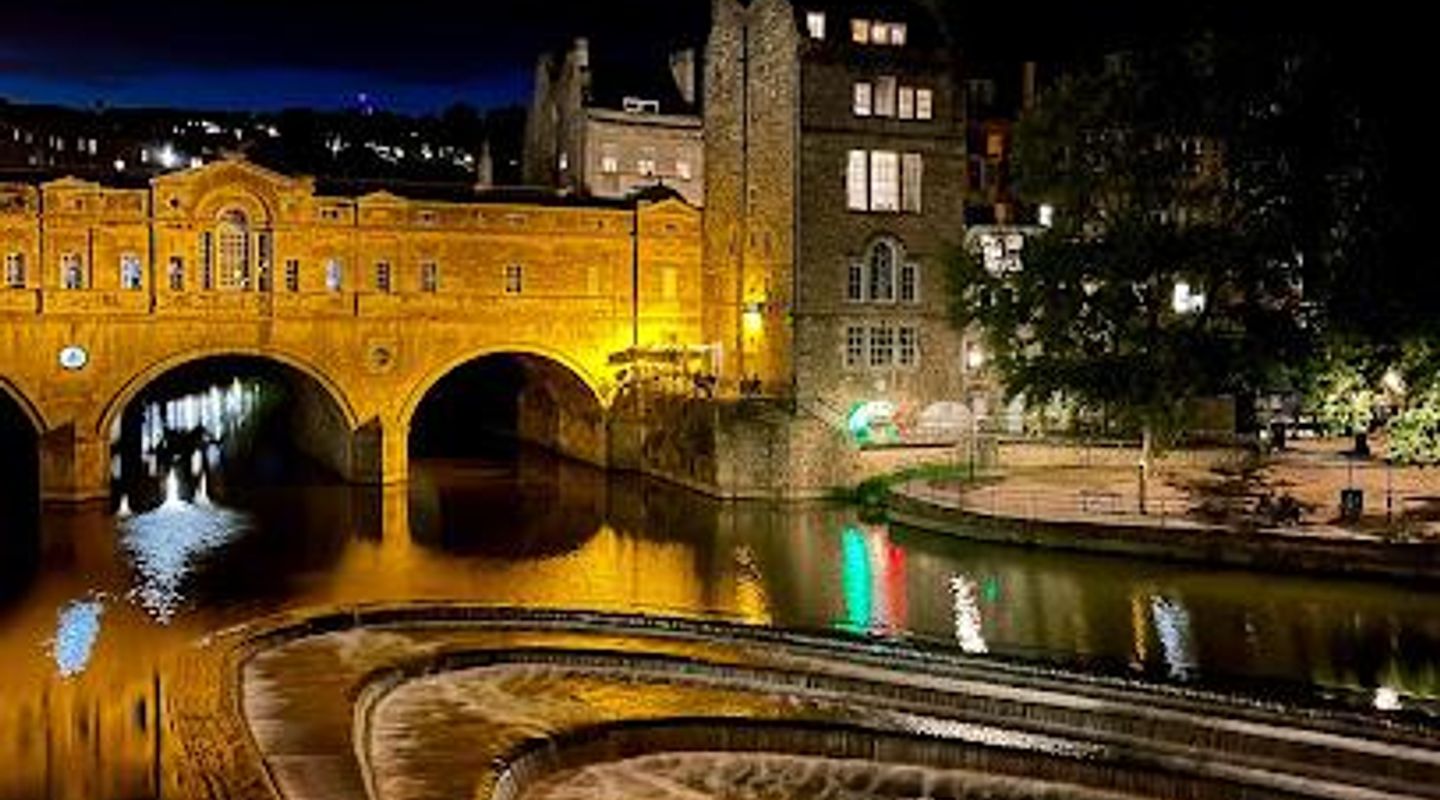
A brief summary of Pulteney weir
One of the world’s few bridges with shops on both sides, Pulteney Bridge is Bath’s stunning Georgian landmark blending history, commerce, and river views.
Pulteney Bridge in Bath is a striking example of Georgian architecture, completed in 1774 and designed by Robert Adam. It is one of only four bridges worldwide with shops spanning both sides, linking Bath’s city center to the Bathwick estate. Known for its classical Palladian style, decorative pediments, and distinctive leaded domes, it offers a unique blend of history, commerce, and scenic river views.
On-site amenities
 Restrooms
 Drink options
 Food options
 Seating areas
 Information boards
Opening hours
- Every dayOpen 24 hours
Opening hours as listed on the venue’s Google Business Profile. Hours can change for services and special events, so check with the venue before you go.
- Address
- Pulteney Bridge, Bath BA2 4AY
Getting there
Bus
Walking
Taxi
Discover more about Pulteney weir
An Architectural Gem Inspired by Palladian Ideals
Pulteney Bridge stands as one of Bath’s most iconic landmarks, celebrated for its elegant Georgian design by Robert Adam. Completed in 1774, the bridge was inspired by Andrea Palladio’s unbuilt design for Venice’s Rialto Bridge, incorporating classical elements such as pediments, pilasters, and a Venetian window motif above the central arch. It is one of only four bridges worldwide to feature continuous shops on both sides, creating a bustling commercial street suspended over the River Avon.
Historical Vision and Urban Development
The bridge was commissioned by William Johnstone Pulteney to connect Bath’s city center with the Bathwick estate, which he and his wife Frances Pulteney inherited in 1767. William envisioned a grand new suburb rivaling the western developments of Bath, necessitating a crossing that was both functional and spectacular. The bridge’s construction, costing £11,000, was part of a broader plan to unify the city with its expanding eastern lands, transforming Bath’s urban landscape.
Evolution Through Challenges and Restoration
Despite its initial grandeur, Pulteney Bridge faced challenges including flooding and commercial pressures that altered its original appearance. By the late 18th century, the bridge was widened and shops enlarged, sometimes at the expense of Adam’s refined elevations. Flood damage in 1799 and 1800 required rebuilding efforts, while the 20th century saw restoration projects aimed at preserving and partially returning the bridge to its original Palladian elegance. It was designated a Grade I listed building in 1955, underscoring its cultural and architectural significance.
A Living Landmark with Vibrant Atmosphere
Today, Pulteney Bridge remains a lively hub with independent shops, boutiques, and restaurants lining its narrow roadway. Visitors often admire its romantic charm from nearby Parade Gardens or the Crescent Weir, while boat trips on the River Avon offer unique perspectives of the bridge’s graceful arches. Its cinematic fame includes a memorable scene in the 2012 film adaptation of Les Misérables, adding to its cultural resonance.
Architectural Details and Visual Appeal
The bridge’s façades balance symmetry and classical restraint, with decorative leaded domes crowning each end. The narrow roadway between the shops creates an intimate, almost Venetian street feel, where the river is hidden beneath the bustling commerce. The bridge’s design skillfully plays with light and shadow, making it a favorite subject for artists and photographers capturing Bath’s historic charm.
Symbol of Bath’s Heritage and Innovation
Pulteney Bridge exemplifies Bath’s Georgian architectural heritage and the city’s spirit of innovation in urban planning. Its unique combination of functionality, beauty, and commercial vitality continues to inspire admiration. As a protected ancient monument and a Grade I listed structure, it stands as a testament to Bath’s enduring legacy as a center of culture, design, and history.
Evendo Review Centre
 Google
Guest reviews
Best time to go
Quietest: Jan, Feb & Dec · before 6am or from 11pm
Busy times are Evendo estimates for a typical year, to help you plan. Actual crowds vary with events, school holidays and the weather.
Explore Pulteney weir on the map
A handpicked selection of must-see spots near Pulteney weir, mapped for you.
Get your free copy of our complete guide to Pulteney weir, delivered straight to you.
Everything on this page, from opening hours and how to get there to Eve’s tips and the best time to go, in one PDF you can read offline, print or share.
Already have an account? Sign in
Your Pulteney weir guide is ready.
We'll send it to · Not you? Sign out

Getting your guide ready…
We are putting together a fresh copy of the Pulteney weir guide. This can take up to a minute.
This can take a few moments. If your browser asks, choose Allow so the download can start. You'll find the guide in your Downloads folder.
Nothing happened? Download it again
Sorry, the guide is taking longer than usual. Please try again in a minute, or get it by email instead.
Unlock the best of Pulteney weir
Skip-the-line tickets, guided tours with entry, and walking tours of the area, booked in a few clicks.


Other nearby places you may find interesting
The closest places of the same kind, if this one is not quite what you had in mind.
-
-
-
-
-


Swipe for more places
More to explore near Pulteney weir

 Best experiences near Pulteney weir
 Best hotels near Pulteney weir
 Best landmarks near Pulteney weir
 Best attractions near Pulteney weir
 Best shops near Pulteney weir
 Best restaurants near Pulteney weir
 Best bars near Pulteney weir
Do you manage this location?
Take control to get all the benefits, like improved information, better appearance, and stronger visibility across AI-powered discovery.
Explore more

Explore more of Bath
Discover Bath: A harmonious blend of Roman history, Georgian elegance, and natural beauty in the heart of England's countryside.
Explore Bath
Explore more of United Kingdom
Discover the United Kingdom: A blend of rich history, stunning landscapes, and vibrant cities, offering a unique travel experience for every visitor.
Explore United Kingdom
