St Peter's Cathedral, Belfast Travel Guide
Free Guide: A majestic Gothic Revival cathedral in Belfast, symbolizing faith, history, and community resilience with its iconic twin spires and vibrant worship life.


A brief summary of St Peter's Cathedral
A majestic Gothic Revival cathedral in Belfast, symbolizing faith, history, and community resilience with its iconic twin spires and vibrant worship life.
St Peter's Cathedral in Belfast is a striking Gothic Revival landmark built between 1860 and 1866. Known for its twin spires and intricate stained glass, it serves as the Catholic cathedral for the Diocese of Down and Connor. Positioned near the Falls Road and the Peace Wall, the cathedral is a symbol of faith, resilience, and community in a historically complex area of Belfast.
On-site amenities
 Restrooms
 Drink options
 Food options
 Seating areas
 Information boards
- Address
- St Peters Square N, Belfast BT12 4BU
- Phone
- Website
Getting there
Public Bus
Taxi or Rideshare
Walking
Discover more about St Peter's Cathedral
Origins Rooted in Community and Faith
St Peter's Cathedral was constructed in response to the rapid growth of Belfast's Catholic population in the mid-19th century. The foundation stone was laid in 1860, and the church officially opened in 1866, built largely through the donations of local parishioners and the generosity of Bernard Hughes, a prominent Catholic baker who donated the land. Initially intended as a parish church, it was elevated to cathedral status in 1986, becoming the seat of the Bishop of Down and Connor. Its establishment addressed the urgent need for more worship space as many Catholics previously struggled to attend Mass due to overcrowding.
Architectural Grandeur and Symbolism
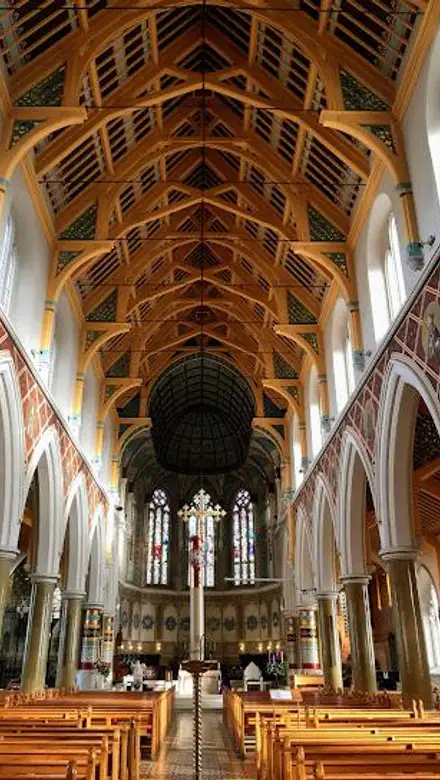
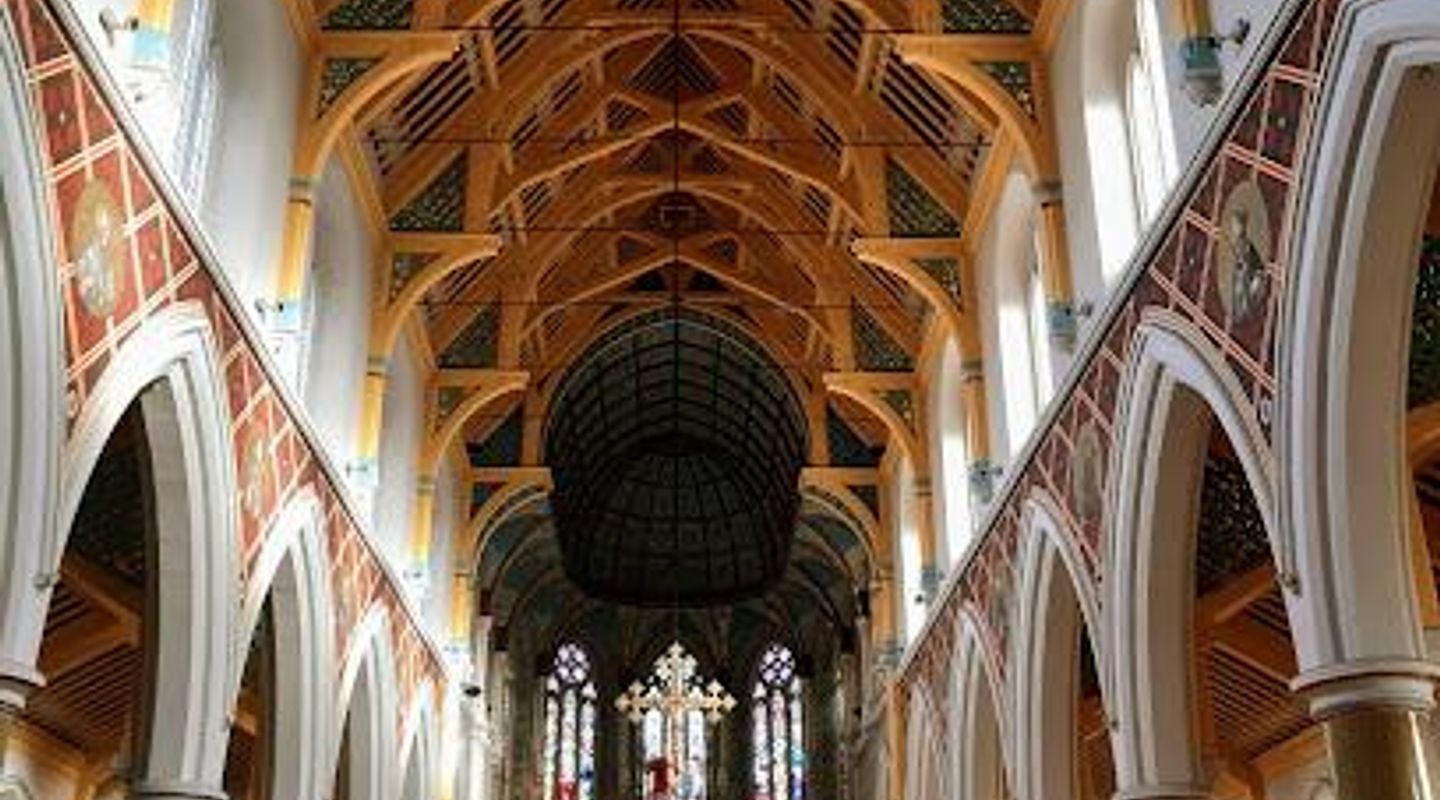
Designed in the Gothic Revival style by Father Jeremiah Ryan McAuley, an architect-turned-priest, and completed by John O’Neill, St Peter's stands out with its commanding twin spires added in 1886. These spires, visible across Belfast, contribute to the city’s skyline and symbolize hope and endurance. The cathedral is constructed from Caen stone and Irish marble, featuring five doorways, two porch entrances, and a notable sculpture depicting the liberation of St Peter from prison. Inside, the soaring hammerbeam roof and vibrant stained glass windows create a light, airy ambiance that contrasts with the heavy interiors typical of many Gothic churches.
Spiritual and Cultural Significance
Beyond its architectural beauty, St Peter’s has played a vital role in Belfast’s spiritual life, especially during turbulent times. Located near the Peace Wall, it has been a place of solace and reflection amid the city’s historical divisions. The cathedral also holds a special place in the temperance movement, where Fr James Aloysius Cullen composed the ‘Heroic Offering’ pledge promoting abstinence. Its renowned choir and restored pipe organ continue to enrich the worship experience, filling the space with music that echoes its rich heritage.
Community Engagement and Worship
Today, St Peter's remains an active center of worship and community support. It offers regular Masses, Eucharistic adoration, and hosts cultural events such as candlelight concerts and processions. The cathedral invites visitors to experience its prayerful atmosphere, whether for personal reflection or participation in its vibrant parish life. Its role extends beyond religion, serving as a beacon of hope and unity in West Belfast.
Artistic and Acoustic Highlights
The cathedral’s interior is adorned with intricate Pugin-esque details and some of the most beautiful Stations of the Cross in Ireland. The organ, installed in the late 19th century and carefully restored, along with the carillon of eleven bells cast in Dublin, contribute to the cathedral’s rich sensory experience. The bells, celebrated in local poetry, resonate as a proud emblem of the cathedral’s spirit and community connection.
Enduring Landmark in Belfast’s Urban Fabric
St Peter’s Cathedral stands not only as a religious site but also as a historic and cultural landmark in Belfast. Its Gothic Revival architecture, storied past, and community significance make it a must-see destination. The cathedral’s presence near the Falls Road and its proximity to murals and peace walls reflect Belfast’s complex history and ongoing journey toward reconciliation and peace.
Evendo Review Centre
 Google
Guest reviews
Best time to go
Quietest: Jan, Feb & Dec · before 6am or from 11pm
Busy times are Evendo estimates for a typical year, to help you plan. Actual crowds vary with events, school holidays and the weather.
Explore St Peter's Cathedral on the map
A handpicked selection of must-see spots near St Peter's Cathedral, mapped for you.
Get your free copy of our complete guide to St Peter's Cathedral, delivered straight to you.
Everything on this page, from opening hours and how to get there to Eve’s tips and the best time to go, in one PDF you can read offline, print or share.
Already have an account? Sign in
Your St Peter's Cathedral guide is ready.
We'll send it to · Not you? Sign out

Getting your guide ready…
We are putting together a fresh copy of the St Peter's Cathedral guide. This can take up to a minute.
This can take a few moments. If your browser asks, choose Allow so the download can start. You'll find the guide in your Downloads folder.
Nothing happened? Download it again
Sorry, the guide is taking longer than usual. Please try again in a minute, or get it by email instead.
Unlock the best of St Peter's Cathedral
Skip-the-line tickets, guided tours with entry, and walking tours of the area, booked in a few clicks.




Other nearby places you may find interesting
The closest places of the same kind, if this one is not quite what you had in mind.
-
The Dome Belfast's glass crown offering unobstructed 360-degree views of the city, mountains, and sea.
-
W5 An award-winning science and discovery centre in Belfast’s Titanic Quarter, where over 250 interactive exhibits spark curiosity and fun for all ages.
-
The Spire Of Hope, Belfast A soaring 40-metre steel beacon of hope atop Belfast’s historic St Anne’s Cathedral, shining brightly across the city skyline.
-
Victoria Park - Belfast A vibrant 60-acre park in East Belfast offering lakeside walks, sports, playgrounds, and unique planespotting near the city airport.
-
Titanic Mural A vibrant mural celebrating Belfast’s shipbuilding heritage and the spirit of the Titanic’s shipyard community.
Swipe for more places
More to explore near St Peter's Cathedral

 Best experiences near St Peter's Cathedral
 Best hotels near St Peter's Cathedral
 Best landmarks near St Peter's Cathedral
 Best attractions near St Peter's Cathedral
 Best shops near St Peter's Cathedral
 Best restaurants near St Peter's Cathedral
 Best bars near St Peter's Cathedral
Do you manage this location?
Take control to get all the benefits, like improved information, better appearance, and stronger visibility across AI-powered discovery.
Explore more

Explore more of Belfast
Discover Belfast, a city of history, culture, and modern charm, where the legacy of the Titanic meets vibrant street life and stunning natural beauty.
Explore Belfast
Explore more of United Kingdom
Discover the United Kingdom: A blend of rich history, stunning landscapes, and vibrant cities, offering a unique travel experience for every visitor.
Explore United Kingdom