

Belfast, United Kingdom Travel Guide
Belfast travel guide: explore Titanic Belfast, political murals, Victorian architecture, lively markets, music, museums and Northern Ireland's maritime history.
A City Shaped by Water and Industry
Belfast stands at the head of Belfast Lough, where the River Lagan reaches the Irish Sea, and its geography has long influenced its fortunes. The city grew from a modest settlement into a major industrial centre during the nineteenth century, powered by linen manufacturing, engineering and shipbuilding. That legacy remains visible in the former Harland and Wolff shipyard, the broad avenues of the Victorian centre and the renovated waterfront beside the Lagan.Heritage in the Streets
The city centre brings together grand civic architecture, traditional commercial streets and cultural institutions such as Belfast City Hall, the Ulster Museum and the Grand Opera House. In the Cathedral Quarter, former warehouses and narrow lanes now accommodate galleries, restaurants, music venues and independent businesses. Further west, the Falls and Shankill areas are known for their political murals and memorials, which document the opposing identities and painful history of the Troubles rather than reducing them to simple tourist imagery.Culture, Coast and Contemporary Belfast
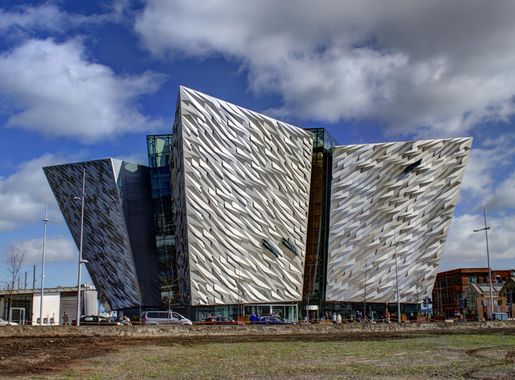
Titanic Belfast provides an immersive account of the city's shipbuilding history, while St George's Market offers food, crafts and local character under its historic iron-and-glass roof. Beyond the centre, Cave Hill rises above northern Belfast with expansive views across the lough and city. Belfast rewards visitors who combine its museums and architecture with conversations about memory, music, literature and the continuing transformation of a city whose past remains unusually present.
Know before you go
Hi, I'm Eve. Here are a few practical things to know before exploring Belfast.
- Use a guided black-cab tour or a well-researched walking tour to understand the political murals and communities of west Belfast.
- Allow time for both Titanic Belfast and the wider Maritime Mile, where shipbuilding heritage extends along the waterfront.
- Visit St George's Market from Friday to Sunday when its food, produce, craft and trading traditions are most apparent.
- Wear sturdy footwear for Cave Hill, whose paths can be uneven and exposed despite being close to the city.
- Check Translink journey information before travelling beyond the centre, particularly when using buses or trains for regional excursions.

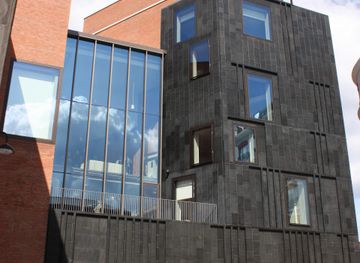

Explore Belfast: Things to Do, Places to Eat, Hotels & More
Handpicked recommendations for top attractions, local dining, accommodations, and more

Best attractions in Belfast
Top-rated picks
Best Attractions

Victoria Square
Belfast’s vibrant shopping centre with over 70 stores, diverse dining, an 8-screen cinema, and panoramic views from the iconic glass Dome.

St George's Market
Belfast’s vibrant Victorian market blending fresh local produce, crafts, antiques, and live music in a historic city centre setting.

CastleCourt Shopping Centre
Belfast’s vibrant shopping centre with over 80 stores, family-friendly facilities, and easy-access parking in the city centre.

Kelly's Cellars
Step into Belfast’s oldest pub, Kelly's Cellars, where centuries of history, lively trad music, and perfect pints of Guinness await.

Best landmarks in Belfast
Top-rated picks
Best Landmarks
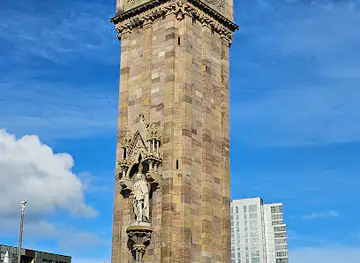
Albert Memorial Clock
Belfast’s leaning Victorian clock tower, a Gothic masterpiece honoring Prince Albert and a symbol of the city’s rich history and charm.

Beacon of Hope
A soaring symbol of peace and gratitude rising 19.5 meters above Belfast's heart.
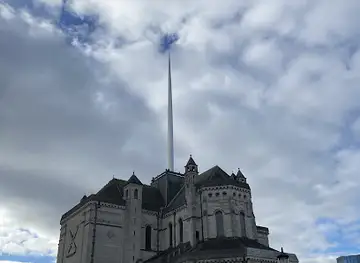
If Buildings Could Talk - Belfast Walking Tour
Belfast’s grand civic heart, where Edwardian architecture meets city history in Donegall Square’s green heart.

Belfast City Hall Tours
Baroque Revival masterpiece and civic heart of Belfast, where industrial heritage meets contemporary culture.

Best restaurants in Belfast
Top-rated picks
Best Restaurants

Bootleggers
Step into Belfast’s Bootleggers for bold American flavors, original cocktails, and a lively speakeasy vibe inspired by 1920s Prohibition.

Stix and Stones City Centre
Interactive steakhouse where you cook premium beef on heated stones at your table in vibrant Belfast.

Mourne Seafood Bar
Experience Belfast’s freshest seafood in a lively, rustic setting at Mourne Seafood Bar, where local catches meet warm hospitality.

Darcy's Belfast
Experience authentic Irish cuisine in a cozy family-run Belfast bistro known for local flavors and warm hospitality.

Best bars in Belfast
Top-rated picks
Best Bars
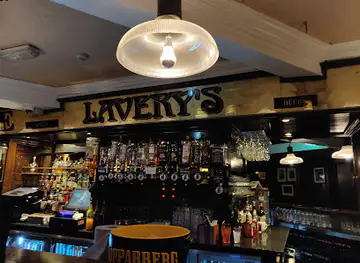
Lavery's
Belfast's oldest family bar: Victorian pub vibes, live music, pool halls, comedy, grub, and clubs across four epic venues.

Revolución de Cuba Belfast
Experience the vibrant spirit of Havana with Cuban cocktails, tapas, live salsa, and a stunning Art Nouveau setting in the heart of Belfast.

Sunflower Public House
Historic Belfast pub with a unique security cage entrance, lively live music, craft beers, wood-fired pizzas, and a welcoming beer garden.
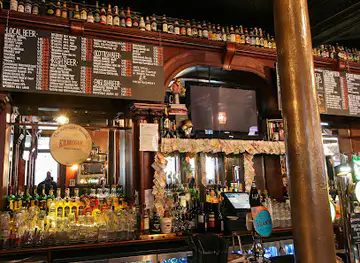
The Garrick
Authentic Victorian charm meets lively traditional music and hearty food in Belfast’s beloved Garrick Bar.

Best nightclubs in Belfast
Top-rated picks
Best Nightclubs

Alibi
Energetic Belfast nightclub with RnB beats, guest DJs, and a lively weekend scene in the heart of Queen’s Quarter.

Club Lux
Experience Belfast’s energetic nightlife at Club Lux, a vibrant nightclub and bar in the heart of the Cathedral Quarter.

Kremlin
Belfast’s vibrant gay nightclub offering dynamic music, lively atmosphere, and a cornerstone of LGBTQ+ nightlife culture.

Thompsons Garage
Experience Belfast’s underground club scene with live DJs, stylish vibes, and energetic nights at Thompsons Garage.

Best shops in Belfast
Top-rated picks
Best Shops

House of Fraser
A historic Belfast department store blending fashion, beauty, and homewares in the heart of Victoria Square’s vibrant shopping scene.

Carrolls Irish Gifts Belfast - Donegall Place
Discover authentic Irish culture and unique souvenirs at Carrolls Irish Gifts, a vibrant shop in Belfast’s bustling Donegall Place.

Carrolls Irish Gifts - Belfast
Discover authentic Irish heritage and craftsmanship at Carrolls Irish Gifts, Belfast’s iconic destination for quality souvenirs and traditional keepsakes.

Build-A-Bear Workshop
Create your own stuffed friend in an interactive workshop experience at Belfast's Victoria Square.

Explore Belfast on the Map
A handpicked selection of must-see spots in Belfast, mapped for you.
Belfast Essentials
-
Belfast is served by Belfast International Airport, about 18 miles north-west of the city, and George Best Belfast City Airport, close to the centre on the eastern side of the city. The latter is particularly convenient for some domestic and regional flights, while Belfast International handles a wider range of routes. Translink operates rail services from Belfast Grand Central Station to destinations across Northern Ireland and connects with the Republic of Ireland railway network at Newry, though services and connections should be checked in advance. Long-distance buses also use Belfast Grand Central Station. Road links include the M1 from the south and the M2 and M22 from the north and north-west, while ferry services connect Belfast with Britain.
-
Central Belfast is compact enough to explore on foot, with many principal sights within walking distance of City Hall, the Cathedral Quarter and the waterfront. Translink operates Metro bus services in Belfast, while the Glider rapid-transit service links parts of east and west Belfast through the city centre. NI Railways provides connections to suburban and regional destinations from Belfast Grand Central Station, with additional stations serving areas such as Botanic and Titanic Quarter. Taxis are widely used, and app-based options may be available, but visitors should use recognised operators. Driving is practical for excursions beyond the city, although one-way streets, bus lanes, parking restrictions and pedestrian areas make a car unnecessary for central sightseeing.
-
The currency is the pound sterling, with the international code GBP. Northern Ireland banknotes are issued by local banks and are legal currency within the United Kingdom, although some businesses elsewhere in Britain may be less familiar with them; Bank of England notes are also accepted in Belfast. Cards and contactless payments are common in hotels, shops, museums, restaurants and transport, but smaller cafés, market traders and independent businesses may occasionally prefer cash. ATMs are available throughout the centre, though international card issuers may apply their own fees or exchange rates. Travellers should keep a modest amount of sterling available and check whether their bank requires advance notice of overseas spending.
-
Belfast is generally straightforward for visitors, but ordinary urban precautions remain appropriate. Keep valuables secure in crowded areas, on public transport and around busy nightlife streets, and avoid leaving luggage or visible possessions in vehicles. At night, stay on well-used routes and use a recognised taxi if returning to accommodation outside the central area. The political history of west Belfast is best approached respectfully: murals and memorials are often connected to living community identities, so ask before photographing people or private spaces. Weather can change quickly, particularly on Cave Hill and along the lough, where wet or windy conditions can make paths slippery. Follow local safety notices and avoid entering restricted or derelict areas.
-
In the United Kingdom, dial 999 or 112 for an emergency requiring police, fire and rescue, or ambulance services. Give the operator the city, street name, nearby landmark and the nature of the problem, and stay on the line until told to disconnect. For urgent but non-life-threatening medical advice, NHS 111 is the relevant service in Northern Ireland; pharmacies and GP services can advise on less serious problems. European visitors should carry appropriate travel or health documentation, while all international travellers should have comprehensive travel insurance. Belfast has major hospitals including the Royal Victoria Hospital and Belfast City Hospital, but emergency callers should follow the instructions of the ambulance service rather than travelling independently when serious injury or illness is involved.
-
Use Northern Ireland and Belfast rather than assuming that local political and national identities are interchangeable, and approach constitutional questions with tact. Ask permission before photographing people, community murals or memorial activity, particularly in areas shaped by the Troubles. In churches and other religious buildings, dress and behave respectfully, and follow any instructions about services or photography. Queueing is customary, public transport is generally orderly, and tipping in restaurants is discretionary rather than compulsory; around 10 per cent is often given for good table service when a service charge has not already been added. Avoid treating political history as entertainment, and never climb on memorials, barriers or historic structures.
-
The city centre, Cathedral Quarter, Queen's Quarter and Titanic Quarter each offer a different introduction to Belfast: civic architecture and shopping, cultural nightlife, university life and maritime regeneration respectively. St George's Market is useful for experiencing local produce and crafts, while the Botanic Gardens and nearby Ulster Museum create a quieter cultural route south of the centre. For wide views, Cave Hill is accessible from north Belfast, but it requires proper footwear and weather awareness. The Maritime Mile works well as a waterside walk linking civic and shipbuilding heritage. Visitors interested in the Troubles should compare several perspectives through museums, tours and community history rather than relying on a single narrative.
When is the best time to visit Belfast?
Useful Local Phrases for Belfast
You don't need to speak the language perfectly. Even learning a few simple words can make conversations warmer—and locals usually appreciate the effort.
— Eve

Here are the phrases I use most often in Belfast. Try a few—you'll be surprised how far they go! 😊
❤️
-
- HelloHiya
[hi-ya] - GoodbyeCatch ye laters
[catch yee lay-ters] - YesAye
[aye] - NoNaw
[naw] - Please/You're welcomePlease/No bother
[please/no bah-ther] - Thank youCheers
[cheers] - Excuse me/SorrySorry/Ma bad
[sorry/ma bad] - How are you?How's she cuttin'?
[hows she cut-tin] - Fine. And you?Grand. Yerself?
[grand. yer-self] - Do you speak English?Can ye speak English?
[can yee speak english] - I don't understandI'm pure scundered
[i'm pure scun-dered]
- HelloHiya
-
- I'd like to see the menu, pleaseWill ye hand me the menu, please?
[will yee hand me the menu, please] - I don't eat meatI'm veggie
[i'm veg-gie] - Cheers!Sláinte!
[slahn-che] - I would like to pay, pleaseI'll settle up, please
[i'll settle up, please]
- I'd like to see the menu, pleaseWill ye hand me the menu, please?
-
- Help!Help!
[help] - Go away!Away on!
[away on] - Call the Police!Ring the peelers!
[ring the peel-ers] - Call a doctor!Get a quack!
[get a quack] - I'm lostI'm gone astray
[i'm gone astray] - I'm illI'm pure wick
[i'm pure wick]
- Help!Help!
-
- I'd like to buy...I want tae get...
[i want tae get] - I'm just lookingI'm just havin' a dander
[i'm just havin' a dan-der] - How much is it?Hoo much is it?
[hoo much is it] - That's too expensiveThat's pure dear
[that's pure deer] - Can you lower the price?Can ye gie us a dander on the price?
[can yee gee us a dan-der on the price]
- I'd like to buy...I want tae get...
-
- What time is it?Hoo late is it?
[hoo late is it] - It's one o'clockIt's one on the nose
[it's one on the nose] - Half past (10)Half ten
[half ten] - MorningMornin'
[morn-in] - AfternoonThe back of two
[the back of two] - EveningThe gloamin'
[the gloamin] - YesterdayYest'day
[yes-t'day] - TodayThe day
[the day] - TomorrowMorn
[morn] - 1Aye
[aye] - 2Twa
[twa] - 3Thrae
[thray] - 4Fower
[fow-er] - 5Fife
[fife] - 6Sax
[sax] - 7Seiven
[seiv-en] - 8Ach
[ach] - 9Noin
[noin] - 10Tain
[tain]
- What time is it?Hoo late is it?
-
- Where's a/the...?Where's the...?
[where's the] - What's the address?Where's the gaff?
[where's the gaff] - Can you show me (on the map)?Can ye gie us a look on the map?
[can yee gee us a look on the map] - When's the next (bus)?When's the next bus due?
[when's the next bus due] - A ticket (to ....)A ticket til...
[a ticket til]
- Where's a/the...?Where's the...?
History of Belfast
-
Belfast developed around the River Lagan and a crossing point near the meeting of the Lagan and the River Farset. The name is generally associated with the Irish Béal Feirste, meaning the mouth of the Farset. Medieval settlement was modest, but the area lay within the lordship of Belfast and was influenced by Gaelic, Anglo-Norman and later English administration. A castle associated with the settlement was rebuilt by the O'Neill family in the early seventeenth century before passing to the Chichester family. The medieval landscape has largely disappeared beneath the modern city, yet the waterways and the strategic position at the head of Belfast Lough still explain Belfast's later commercial importance.
-
Belfast expanded significantly in the seventeenth century during the Plantation of Ulster, when English and Scottish settlers arrived and new patterns of landownership and trade developed. Sir Arthur Chichester established a borough and encouraged the settlement's commercial growth. By the eighteenth century, Belfast had become an important port with links to Britain and the Atlantic world. Linen production, rope-making, ship repair and food trading strengthened its economy, while Presbyterian, Anglican, Catholic and other communities contributed to a changing social fabric. The town's planned streets and commercial institutions began to establish the urban framework later expressed in its Georgian and Victorian architecture.
-
The nineteenth century transformed Belfast into one of Ireland's leading industrial cities. Linen manufacture earned it the nickname Linenopolis, while engineering firms and shipyards expanded along the River Lagan and Belfast Lough. Harland and Wolff, founded in 1861, became the city's most famous shipbuilder and constructed RMS Titanic and many other vessels. Belfast received city status in 1888, reflecting its economic and political importance within the United Kingdom. New civic buildings, warehouses, churches, theatres and commercial streets followed, including Belfast City Hall, which opened in 1906. Industrial wealth also brought severe social inequalities, with crowded housing and difficult working conditions shaping everyday life.
-
The early twentieth century brought intense political conflict over Ireland's constitutional future. Under the Government of Ireland Act 1920, Northern Ireland was established, and Belfast became its capital when the new political arrangements took effect in 1921. The city experienced periods of communal tension and violence, including serious disturbances in the 1920s. Stormont, the seat of the Northern Ireland Parliament from 1932, symbolised the region's new political structure. Belfast also endured bombing and disruption during the Second World War, including the Belfast Blitz of 1941. Partition deepened existing divisions in identity, housing and politics, influences that remained visible in the city's neighbourhoods for decades.
-
From the late 1960s, Belfast became a central setting of the conflict known as the Troubles, involving nationalist and republican, unionist and loyalist communities, the British state and other political actors. Civil-rights protests, street violence, paramilitary activity, military deployment, bombings and deaths profoundly affected daily life. Peace walls, interface areas and political murals emerged as physical expressions of separation and competing historical narratives. The conflict was not confined to Belfast, and its causes and responsibilities remain subjects of historical and political debate. The 1998 Belfast Agreement, also known as the Good Friday Agreement, created a framework for devolved government and peaceful constitutional change, although community divisions have not disappeared.
-
After the peace process, Belfast underwent extensive regeneration while retaining the marks of its industrial and political past. The former shipyard and docklands were redeveloped through projects including Titanic Belfast, opened in 2012, and the wider Maritime Mile. Cathedral Quarter warehouses and streets gained new cultural and hospitality uses, while the city centre developed a stronger arts and visitor economy. The restored Crumlin Road Gaol and the Ulster Museum contribute to a broader interpretation of Belfast's past, spanning political history, social life and material culture. Contemporary Belfast remains shaped by debates about identity, language, memory and governance, but its public spaces increasingly bring heritage, culture and urban renewal into contact.
Cities near Belfast
The closest cities to Belfast, if you have time for more than one stop.


Your all‑in‑one travel companion app
Explore expert travel guides, compare and book tours, experiences, hotels, and more—all from the palm of your hand. Download now for seamless trip planning wherever your wanderlust takes you.


Belfast in Photos
Browse through our photo collection highlighting the charm and character of the destination.


Belfast: Maritime Heritage and Living History
<h3>A City Shaped by Water and Industry</h3> Belfast stands at the head of Belfast Lough, where the River Lagan reaches the Irish Sea, and its geography has long influenced its fortunes. The city grew from a modest settlement into a major industrial centre during the nineteenth century, powered by linen manufacturing, engineering and shipbuilding. That legacy remains visible in the former Harland and Wolff shipyard, the broad avenues of the Victorian centre and the renovated waterfront beside the Lagan. <h3>Heritage in the Streets</h3> The city centre brings together grand civic architecture, traditional commercial streets and cultural institutions such as Belfast City Hall, the Ulster Museum and the Grand Opera House. In the Cathedral Quarter, former warehouses and narrow lanes now accommodate galleries, restaurants, music venues and independent businesses. Further west, the Falls and Shankill areas are known for their political murals and memorials, which document the opposing identities and painful history of the Troubles rather than reducing them to simple tourist imagery. <h3>Culture, Coast and Contemporary Belfast</h3> Titanic Belfast provides an immersive account of the city's shipbuilding history, while St George's Market offers food, crafts and local character under its historic iron-and-glass roof. Beyond the centre, Cave Hill rises above northern Belfast with expansive views across the lough and city. Belfast rewards visitors who combine its museums and architecture with conversations about memory, music, literature and the continuing transformation of a city whose past remains unusually present.
Explore More of Yorkshire Dales National Park

Looking beyond Belfast? Discover Yorkshire Dales National Park for broader travel guides, local hot-spots, and regional highlights.
Explore Yorkshire Dales National ParkExplore More of United Kingdom

Looking beyond Belfast? Discover United Kingdom for broader travel guides, local hot-spots, and regional highlights.
Explore United Kingdom