

Titanic Quarter (Belfast) Travel Guide - Free
Explore Titanic Quarter in Belfast with Evendo's free guide. Find the best shops, historic streets, restaurants, and gems on web or mobile.


Titanic Quarter in Belfast combines shipbuilding heritage, Titanic Belfast, waterfront walks, SS Nomadic, museums, events and easy access to the city centre.
Shipyard Origins and Waterfront Setting
Titanic Quarter occupies the historic maritime landscape of Queen’s Island, east of Belfast city centre, where the industrial skyline of Harland and Wolff once dominated the River Lagan. The district retains an unmistakable sense of scale: broad quays, dry docks, engineering buildings and open waterfront spaces recall the era when Belfast was one of the world’s leading shipbuilding centres. Today, former industrial land has been reshaped for museums, offices, apartments, hotels, events and public promenades, while the working harbour remains part of the view.Read more about Titanic Quarter
The Titanic Story
Contemporary Quarter
Best attractions in Titanic Quarter
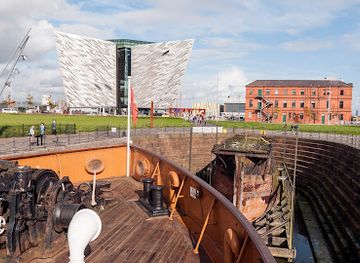
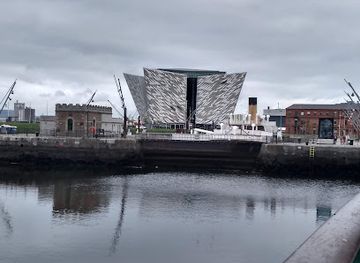
Titanic Belfast is the quarter’s principal attraction, using galleries, reconstructed interiors and displays to explain Belfast’s shipbuilding industry, the design and construction of Titanic, and the lives connected with the work. Beside it, SS Nomadic is the last surviving White Star Line vessel and offers a close-scale maritime experience inside a carefully preserved tender. Thompson Dock reveals the enormous dimensions required for Olympic-class liners, while the nearby pump-house and dockside structures help visitors understand the engineering behind the shipyard. HMS Caroline, permanently berthed in the harbour, adds a naval perspective through its restored decks and wartime interpretation. The SSE Arena brings major entertainment and sporting events to the waterfront, while public promenades, slipway views and open quays provide a quieter way to read the area’s industrial geography. The quarter’s modern architecture and riverside routes complete the sightseeing experience.
-
 Museum
Titanic Belfast
Relive the Titanic's epic story at her birthplace: immersive galleries, authentic artifacts, and shipyard legacy on Belfast's Maritime Mile.
1 min walk · 0.1 km from neighbourhood centre
-
Tourist attraction
SS Nomadic
Step aboard the SS Nomadic, Titanic’s tender and the last White Star Line ship, for an immersive journey into Belfast’s maritime heritage and ocean liner luxury.
2 min walk · 0.1 km from neighbourhood centre
-
Historical place
Titanic's Dock & Pump House
Explore the vast dry dock and historic pump house where Titanic was fitted out, a monumental symbol of Belfast’s shipbuilding legacy.
12 min walk · 1.0 km from neighbourhood centre
-
Business Park
Titanic Quarter Limited
Explore Belfast’s Titanic Quarter: where maritime history meets vibrant urban regeneration along the scenic waterfront.
1 min walk · 0.1 km from neighbourhood centre

Best landmarks in Titanic Quarter
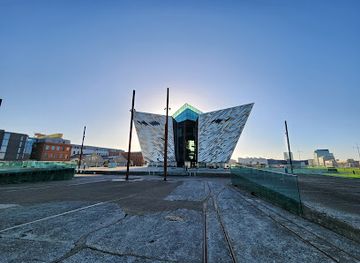
Titanic Belfast is both a major visitor attraction and a landmark of the regenerated waterfront, its sharp, metallic forms recalling the maritime engineering that shaped Queen’s Island. The former Harland and Wolff drawing offices, now incorporated into Titanic Hotel Belfast, retain an important connection with the company that designed and built the great liners. Thompson Dock is the quarter’s most powerful industrial landmark: its immense basin conveys the scale of Olympic-class ship construction more effectively than a conventional monument. The adjacent pump-house machinery and dock structures record the practical systems that kept the dock working. SS Nomadic, preserved near the museum, links the site to White Star Line service, while HMS Caroline provides a rare surviving warship landmark within Belfast Harbour. Together, these places make the waterfront legible as an industrial landscape rather than a collection of isolated exhibits.
-
Bar
Titanic Hotel Belfast
Luxury in the heart of Titanic history: nautical-themed elegance amid Belfast's shipbuilding legacy.
1 min walk · 0.1 km from neighbourhood centre
-
Historical landmark
Slipways
Step onto the historic Slipways where Titanic was born, amid Belfast’s maritime legacy and stunning waterfront vistas.
2 min walk · 0.2 km from neighbourhood centre
Explore Titanic Quarter on the map
A handpicked selection of must-see spots in Titanic Quarter, mapped for you.
Best hotels in Titanic Quarter
Best restaurants in Titanic Quarter
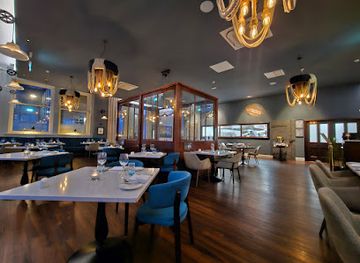
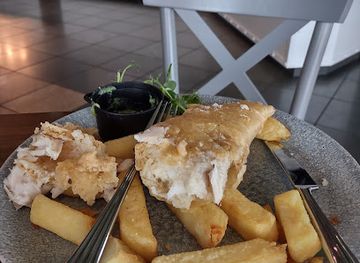
Dining in Titanic Quarter is concentrated around its museums, hotels, arena and newer mixed-use developments rather than a dense traditional restaurant street. Titanic Hotel Belfast occupies the former Harland and Wolff headquarters and drawing offices, where the Drawing Office Two restaurant and hotel bars make use of the building’s shipyard setting; Hickson’s Point provides another hospitality space within the hotel complex. Visitors to Titanic Belfast will find food and drink facilities associated with the attraction, while the SSE Arena area becomes busier around concerts and sporting events. The quarter’s restaurants tend towards contemporary hotel dining, casual meals and event-led options, with the centre of Belfast offering a much broader choice across the river. Its culinary identity is therefore closely tied to heritage buildings, waterfront redevelopment and visitor attractions rather than a longstanding local food market or specialist dining district.
-
Brasserie
Novelli at City Quays
Stylish Mediterranean brasserie on Belfast’s waterfront with stunning harbor views and all-day dining.
10 min walk · 0.8 km from neighbourhood centre
-
Restaurant
Drawing Office Two Bar
Historic elegance meets casual dining in the original Titanic drawing offices with a vibrant bar and all-day menu.
1 min walk · 0.1 km from neighbourhood centre
-
Fine dining
The Wolff Grill Restaurant
Elegant fine dining with nautical charm and Titanic heritage views, nestled in Belfast’s historic Titanic Hotel.
2 min walk · 0.1 km from neighbourhood centre
-
Irish
The Pantry at Titanic Belfast
Savor locally inspired dishes in a historic setting at The Pantry, Titanic Belfast’s welcoming restaurant celebrating Northern Ireland’s finest produce.
2 min walk · 0.1 km from neighbourhood centre
Best bars in Titanic Quarter
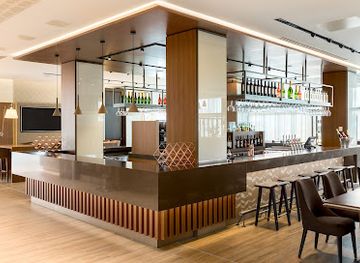
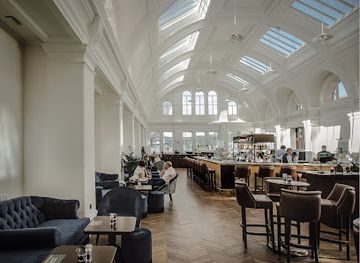
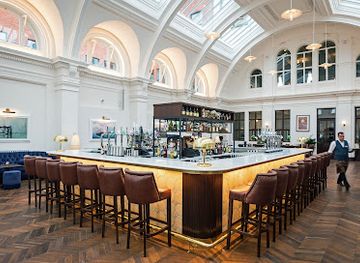
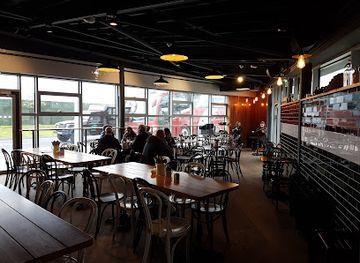
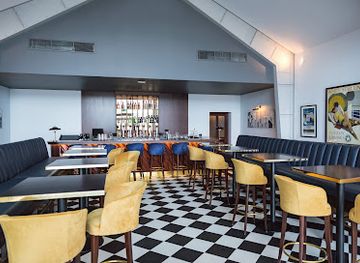
Titanic Quarter is not one of Belfast’s principal late-night club districts, and evening activity usually follows the programme of the SSE Arena, hotel restaurants and waterfront events. Titanic Hotel Belfast provides the area’s most distinctive drinking settings, including spaces within the former Harland and Wolff headquarters, while Hickson’s Point offers a heritage-themed bar environment connected with the hotel complex. Concerts, sporting fixtures and exhibitions can bring a substantial temporary crowd, but the streets are generally more spacious and quieter between events than those around Belfast’s Cathedral Quarter. Visitors seeking a wider choice of pubs, cocktail bars, live-music rooms and nightclubs will find the central districts across the river more useful, with the walk or short transport journey planned around the time of the return trip.
-
Pub
The American Bar
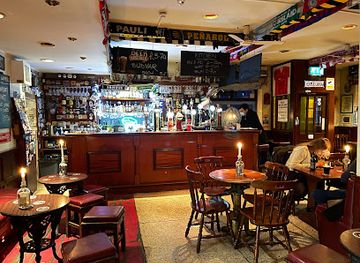
Historic Sailortown pub pouring perfect pints, live tunes, and bargain bites in Belfast's Docklands—a raw gem for locals and music seekers.
8 min walk · 0.7 km from neighbourhood centre
-
Bar
Drawing Office Two Bar
Historic Harland & Wolff drawing office turned vibrant bar, where Titanic's legacy meets modern Irish dining under a soaring vaulted ceiling.
1 min walk · 0.1 km from neighbourhood centre
-
Irish pub
Hickson's Point
Historic Irish pub in Belfast’s Titanic Quarter offering traditional fare and a cozy maritime atmosphere near the iconic Titanic Belfast museum.
1 min walk · 0.1 km from neighbourhood centre
-
Cocktail bar
The Harland Bar
Elegant piano bar in Harland & Wolff's historic offices, serving Titanic-inspired cocktails amid shipyard artefacts and live music in Belfast's Titanic Quarter.
1 min walk · 0.1 km from neighbourhood centre
Best shops in Titanic Quarter
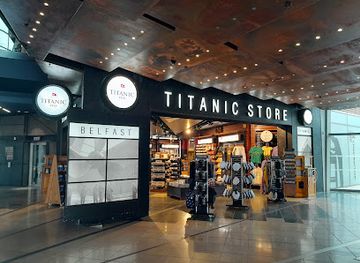
Shopping in Titanic Quarter is limited and closely linked to its attractions rather than organised around a conventional retail street. Titanic Belfast and SS Nomadic have visitor shops focused on maritime history, Belfast’s shipbuilding legacy, books, souvenirs and design-led gifts. Hotel and event venues provide a small number of additional retail and convenience opportunities, while the wider quarter’s offices, university buildings and apartments create a more local everyday presence than a specialist shopping scene. The best experience is browsing for historically themed items after visiting the exhibitions, rather than expecting independent boutiques, vintage shops or a traditional market. For fashion, books, food shopping and a broader mix of independent retailers, Belfast city centre is nearby across the river and offers a substantially wider choice than the waterfront district.
-
Souvenir Shop
Titanic Store
Discover Titanic treasures in Belfast's shipyard heart: exclusive memorabilia, local crafts, and publications that sail the story of the unsinkable ship into your hands.
1 min walk · 0.1 km from neighbourhood centre
Titanic Quarter essentials
Getting There
Getting Around
Safety
Emergency Situations
Do's and Don'ts
Local Tips

From Eve
Local phrases worth knowing
You don't need to get them perfect. A few words go a long way, and locals appreciate the effort.
Basics
| English | Local | Say it |
|---|---|---|
| Hello | Hiya | [hi-ya] |
| Goodbye | Cheerio | [cheer-io] |
| Yes | Aye | [aye] |
| No | Naw | [naw] |
| Please/You're welcome | Please/You're welcome | [Please/You're welcome] |
| Thank you | Cheers | [cheers] |
| Excuse me/Sorry | Pardon | [par-don] |
| How are you? | How's it going? | [hows it go-ing] |
| Fine. And you? | Grand. Yourself? | [grand. your-self] |
| Do you speak English? | D'ye speak English? | [d'ye speak English] |
| I don't understand | I dinnae ken | [I din-aye ken] |
Eating & Drinking
| English | Local | Say it |
|---|---|---|
| I'd like to see the menu, please | Can I see the menu, please | [Can I see the menu, please] |
| I don't eat meat | I dinnae eat meat | [I din-aye eat meat] |
| Cheers! | Cheers! | [cheers] |
| I would like to pay, please | I'll pay now, please | [I'll pay now, please] |
Emergencies
| English | Local | Say it |
|---|---|---|
| Help! | Help! | [help] |
| Go away! | Away wi' ye! | [Away wi' ye] |
| Call the Police! | Phone the Polis! | [Phone the Polis] |
| Call a doctor! | Phone a doctor! | [Phone a doctor] |
| I'm lost | I'm lost | [I'm lost] |
| I'm ill | I'm no' well | [I'm no' well] |
Shopping
| English | Local | Say it |
|---|---|---|
| I'd like to buy... | I'm lookin' to buy... | [I'm look-in to buy] |
| I'm just looking | I'm just lookin' | [I'm just look-in] |
| How much is it? | How much does it cost? | [How much does it cost] |
| That's too expensive | That's pure dear | [That's pure dear] |
| Can you lower the price? | Can ye gie me a better price? | [Can ye gie me a bet-ter price] |
Time & Numbers
| English | Local | Say it |
|---|---|---|
| What time is it? | Whit time is it? | [Whit time is it] |
| It's one o'clock | It's one o'clock | [It's one o'clock] |
| Half past (10) | Half ten | [Half ten] |
| Morning | Mornin' | [Morn-in] |
| Afternoon | Afternune | [After-nune] |
| Evening | Evenin' | [Even-in] |
| Yesterday | Yest'reen | [Yest-reen] |
| Today | The day | [The day] |
| Tomorrow | Morn | [Morn] |
| 1 | Ane | [Ane] |
| 2 | Twa | [Twa] |
| 3 | Three | [Three] |
| 4 | Fower | [Fower] |
| 5 | Five | [Five] |
| 6 | Sax | [Sax] |
| 7 | Seven | [Seven] |
| 8 | Acht | [Acht] |
| 9 | Nine | [Nine] |
| 10 | Ten | [Ten] |
Transport & Directions
| English | Local | Say it |
|---|---|---|
| Where's a/the...? | Whaur's a/the...? | [Whaur's a/the] |
| What's the address? | Whit's the address? | [Whit's the address] |
| Can you show me (on the map)? | Can ye show me (on the map)? | [Can ye show me (on the map)] |
| When's the next (bus)? | When's the next (bus)? | [When's the next (bus)] |
| A ticket (to ....) | A ticket (tae ....) | [A ticket (tae)] |
History of Titanic Quarter
Queen’s Island Takes Shape
The district developed on Queen’s Island, a man-made area formed in Belfast Lough as the harbour was improved during the nineteenth century. Its position beside deep water made it suitable for heavy industry, timber storage, engineering and shipbuilding, separating the working waterfront from the denser streets of central Belfast. The island became closely associated with the port’s expansion and with the industrial infrastructure that enabled increasingly large vessels to be built and fitted out. The broad spaces and dock basins that characterise Titanic Quarter today are a direct physical legacy of this period of harbour construction and industrial planning.
Harland and Wolff’s Shipbuilding Era
Edward Harland and Gustav Wolff established the Harland and Wolff shipyard in 1861, and the company became the defining industrial presence on Queen’s Island. Its yards produced merchant ships and ocean liners for the White Star Line, supported by a large workforce of skilled tradespeople, engineers and dock labourers. RMS Olympic was launched in 1910, RMS Titanic in 1911 and HMHS Britannic in 1914, making the Queen’s Island yards internationally recognised. The surviving Thompson Dock, pump-house structures and dockside lines preserve the setting in which these vessels were assembled, while the area’s identity remains inseparable from shipbuilding.
War, Industry and Decline
The shipyard’s work expanded during both world wars, when Belfast’s heavy engineering and maritime industries became important to Britain’s war effort. Queen’s Island was affected by the wider industrial pressures and wartime risks facing Belfast, although its principal story remained one of production, repair and employment. After the Second World War, changing ship sizes, international competition and technological shifts weakened the traditional shipbuilding economy. Harland and Wolff continued operating, but employment declined sharply during the later twentieth century, leaving large areas of underused industrial land beside the river and harbour.
Regeneration as Titanic Quarter
From the early twenty-first century, Queen’s Island was recast as Titanic Quarter, a large mixed-use regeneration area intended to combine heritage, education, commerce, housing and leisure. Titanic Belfast opened in 2012, a century after Titanic’s launch, and became the focal point of a new interpretation of the city’s maritime past. The former shipyard landscape was joined by the SSE Arena, hotel and office developments, Ulster University facilities and improved public routes along the waterfront. Regeneration has not erased the industrial setting: the docks, slipways and surviving structures continue to anchor the quarter’s contemporary identity.
Titanic Quarter in Photos
Browse through our photo collection highlighting the charm and character of the destination.
Neighbourhoods near Titanic Quarter
The closest neighbourhoods to Titanic Quarter, if you have time for more than one stop.
-

-


Swipe for more neighbourhoods
Explore more

Explore more of Belfast
Belfast travel guide: explore Titanic Belfast, political murals, Victorian architecture, lively markets, music, museums and Northern Ireland's maritime history.
Explore Belfast