North Berwick Law, Berwickshire Travel Guide
Explore North Berwick Law, a towering volcanic hill with ancient forts, wartime relics, and breathtaking panoramic views over Scotland’s Firth of Forth.
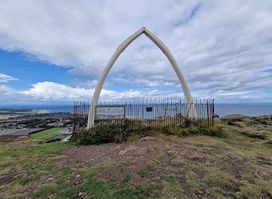
North Berwick Law is a striking conical hill rising 187 meters above sea level in East Lothian, Scotland. This ancient volcanic plug, steep on its north side, offers panoramic views of the Firth of Forth, Bass Rock, and beyond. The summit features relics from Iron Age forts and military lookouts from the Napoleonic Wars and World War II, crowned by a distinctive replica whale's jawbone. A well-marked trail leads visitors to this free-access natural landmark.
A brief summary to North Berwick Law
- North Berwick, GB
- Duration: 1 to 2 hours
- Free
-
 Outdoor
- Mobile reception: 4 out of 5

Know before you go
Hi, I'm Eve. Here are a few practical things to know before exploring North Berwick Law.
- Visit on a clear, calm day to enjoy the best panoramic views and avoid strong summit winds.
- Wear sturdy footwear as the trail is steep and rocky in places, especially on the north side.
- Stay on the marked path to protect archaeological sites and prevent soil erosion.
- Bring water and snacks, as there are no facilities at the summit or along the trail.
- Consider visiting early or late in the day to avoid crowds and enjoy a tranquil atmosphere.
Do you manage this location?
Take control to get all the benefits, like improved information, better appearance, and stronger visibility across AI-powered discovery. Learn more about listing your business on Evendo
Activate your presenceOther nearby places you may find interesting
The closest places of the same kind, if this one is not quite what you had in mind.

Explore North Berwick Law on the Map
A handpicked selection of must-see spots near North Berwick Law, mapped for you.
Unlock the Best of North Berwick Law
Buy tickets
-
No tickets available
Book tours with entry


Book tours without entry
-
No tours available
Getting There
-
Train and Walk
Take the ScotRail train from Edinburgh to North Berwick, which runs approximately every hour and more frequently on Saturdays. From North Berwick station, it is a 20-minute walk to the base of North Berwick Law via town streets and Law Road. This option is ideal for those relying on public transport and wanting a scenic approach.
-
Car Access
Drive via the B1347 road south out of North Berwick. Parking is available near the foot of the hill, close to Law Primary School. The drive from Edinburgh takes about 40 to 60 minutes depending on traffic. Note that parking can be limited on busy days, and the access road climbs steeply.
-
Cycling
Cyclists can take the B1347 road from North Berwick town center to the hill’s base. The route involves some steep sections and requires moderate fitness. Secure bike parking is limited near the trailhead, so plan accordingly.
For the on-the-go comforts that matter to you
-
 Parking
-
 Information Boards
Discover more about North Berwick Law
Geological Wonder and Natural Landmark
North Berwick Law stands prominently at 187 meters (613 feet) above sea level, dominating the skyline of the East Lothian town of North Berwick. Formed over 350 million years ago as a volcanic plug, it is the hardened core of an ancient volcano, with surrounding softer rock eroded away by glaciers during the Ice Age. Its conical shape and steep northern gradient make it a distinctive feature visible for miles around, including from Edinburgh and parts of Fife. The hill is classified as a "law," a Lowland Scots term for a prominent hill, and is ranked as the second most prominent peak in East Lothian.Historical Significance and Archaeological Heritage
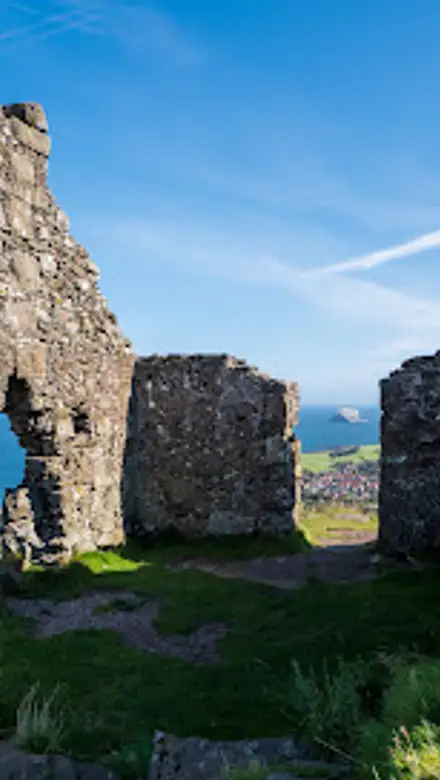
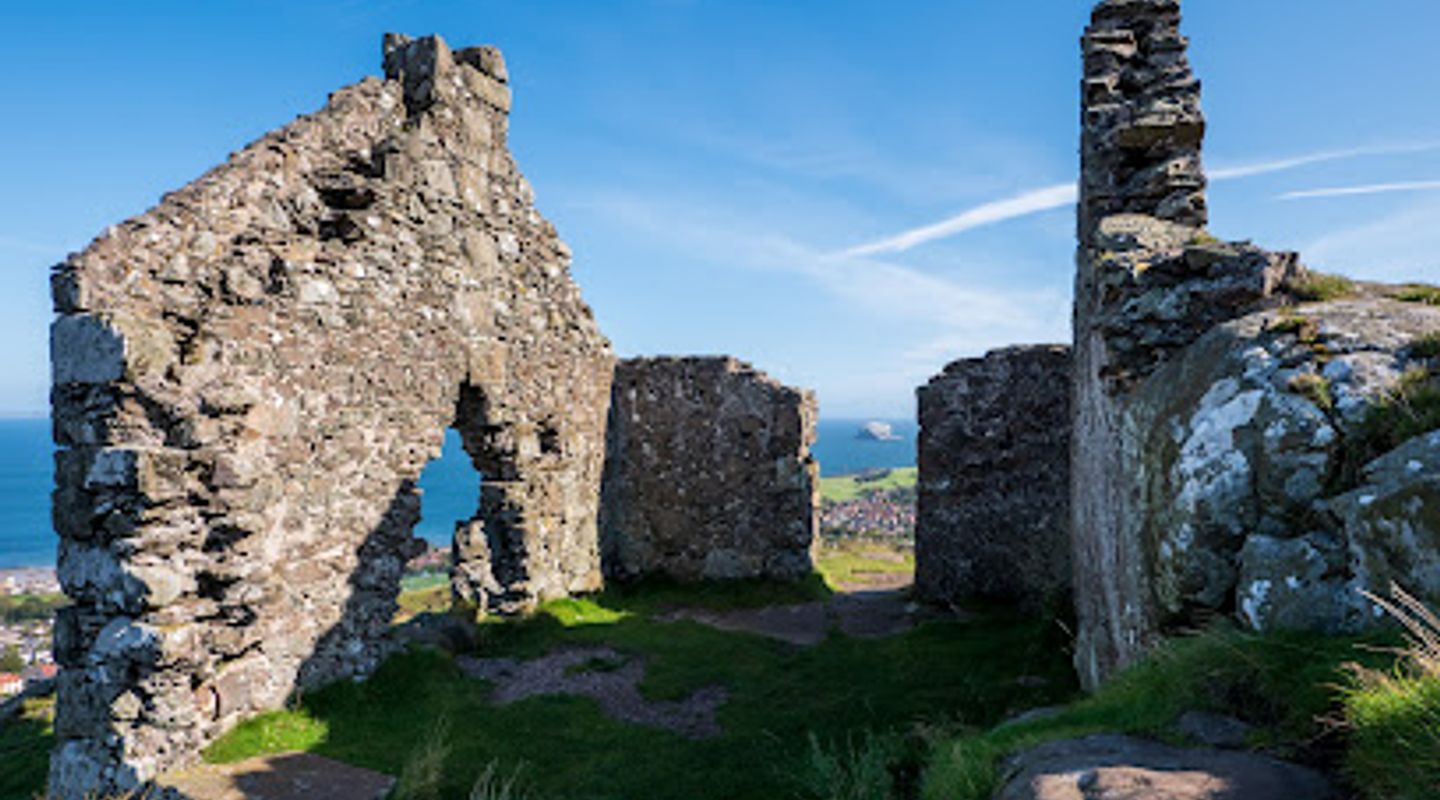
The summit and slopes of North Berwick Law reveal a rich tapestry of human history. Archaeological excavations have uncovered remains of an Iron Age hillfort, including at least 21 roundhouses, defensive stone walls, and farming field systems dating back around 2,000 years. Later, the hill served strategic military purposes; remnants of lookout posts from the Napoleonic Wars and World War II still stand near the summit. Historically, it was a vital vantage point for spotting naval threats entering the Firth of Forth, with watchfires lit to warn of approaching enemies. The hill’s military use extends back to the 16th century when nuns from a nearby convent maintained a watch for the English navy.Summit Features and Iconic Whale Jawbone
At the summit, visitors encounter a striking fiberglass replica of a whale's jawbone, a symbol of the town’s maritime heritage. This replaces the original whale jawbones that were displayed there for over 250 years but deteriorated due to weather exposure. The summit also holds the ruins of military structures and offers a peaceful atmosphere where history and nature converge. The panoramic vistas from the top include sweeping views over the Firth of Forth estuary, Bass Rock, the Isle of May, the Lammermuir Hills, and landmarks such as Arthur’s Seat and the Forth Bridges.Visitor Experience and Outdoor Activities
A well-maintained, waymarked footpath leads from a car park at the hill’s base to the summit, making the climb accessible though moderately steep in places. The round trip typically takes about an hour, rewarding hikers with spectacular scenery and a chance to explore the hill’s geological and historical features. The site is a popular spot for picnics, photography, and nature observation, with unique flora such as mosses and lichens adapted to the rocky environment. For the adventurous, the rocky faces offer opportunities for rock climbing, and the annual North Berwick Law Race attracts athletes eager to challenge the steep ascent.Access and Practical Information
North Berwick Law is freely accessible year-round with no admission fee. The best visits occur on clear, calm days to fully appreciate the expansive views and avoid the often strong winds at the summit. Facilities such as restrooms and cafes are available in North Berwick town but not on the hill itself. The site is reachable by car via the B1347 road, with parking available near the trailhead, or by a 20-minute walk from North Berwick railway station. Visitors are encouraged to stay on established paths to protect the environment and archaeological sites.Community and Cultural Connections
The Law is deeply embedded in local culture and history, celebrated in events such as the lighting of a bonfire in 1953 to mark Queen Elizabeth II’s coronation. It has inspired naturalists like John Muir, who grew up nearby, and remains a cherished landmark symbolizing the connection between East Lothian’s natural beauty and its maritime and military heritage. Its presence continues to shape the identity of North Berwick and offers a serene yet invigorating experience for those who climb it.












Your all‑in‑one travel companion app
Explore expert travel guides, compare and book tours, experiences, hotels, and more—all from the palm of your hand. Download now for seamless trip planning wherever your wanderlust takes you.


Explore More of Berwickshire
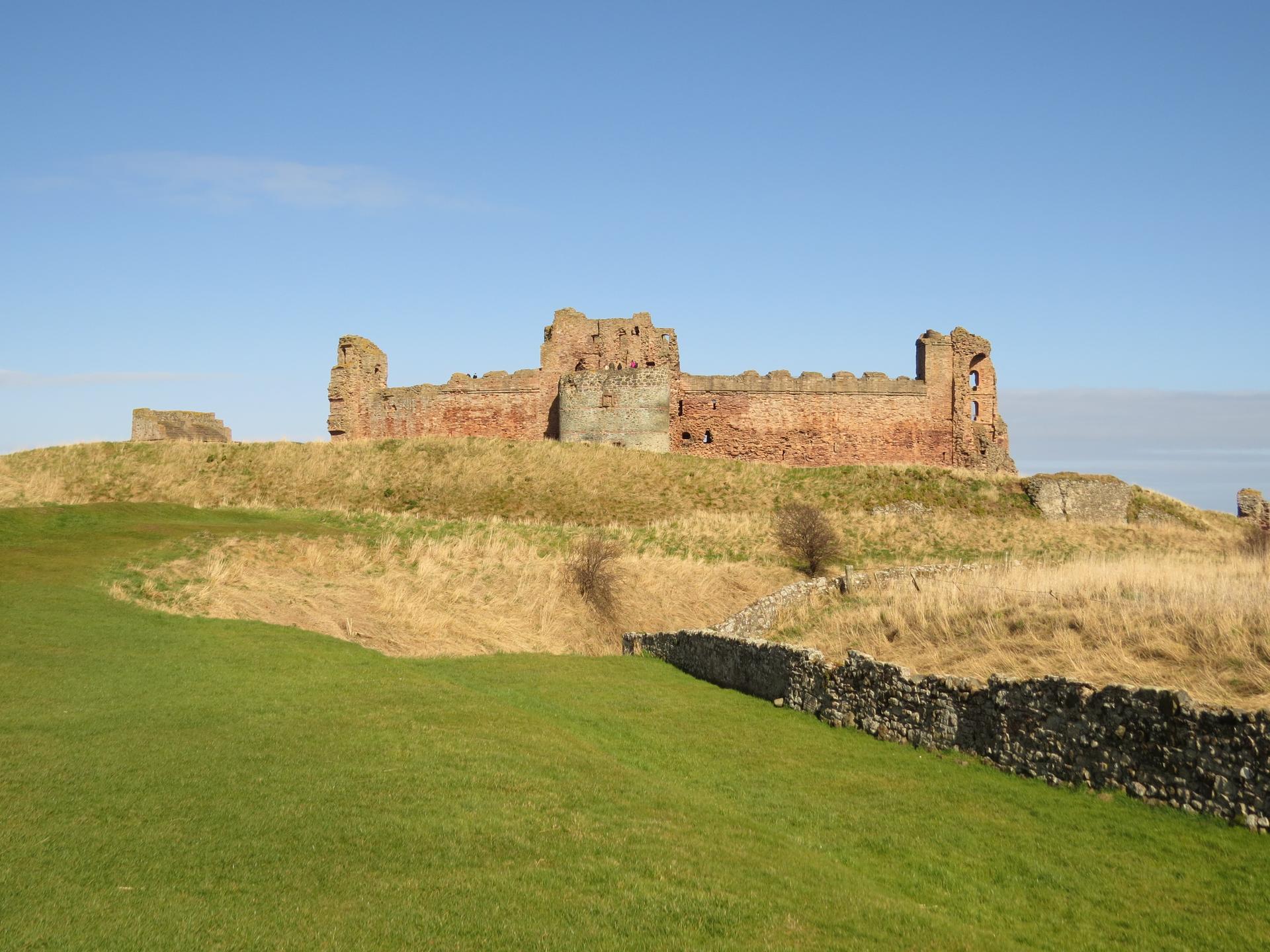
Looking beyond North Berwick Law? Discover Berwickshire for broader travel guides, local hot-spots, and regional highlights.
Explore Berwickshire