

Bass Rock Travel Guide
Free Guide: A dramatic volcanic island home to the world’s largest northern gannet colony and rich Scottish heritage in the Firth of Forth.


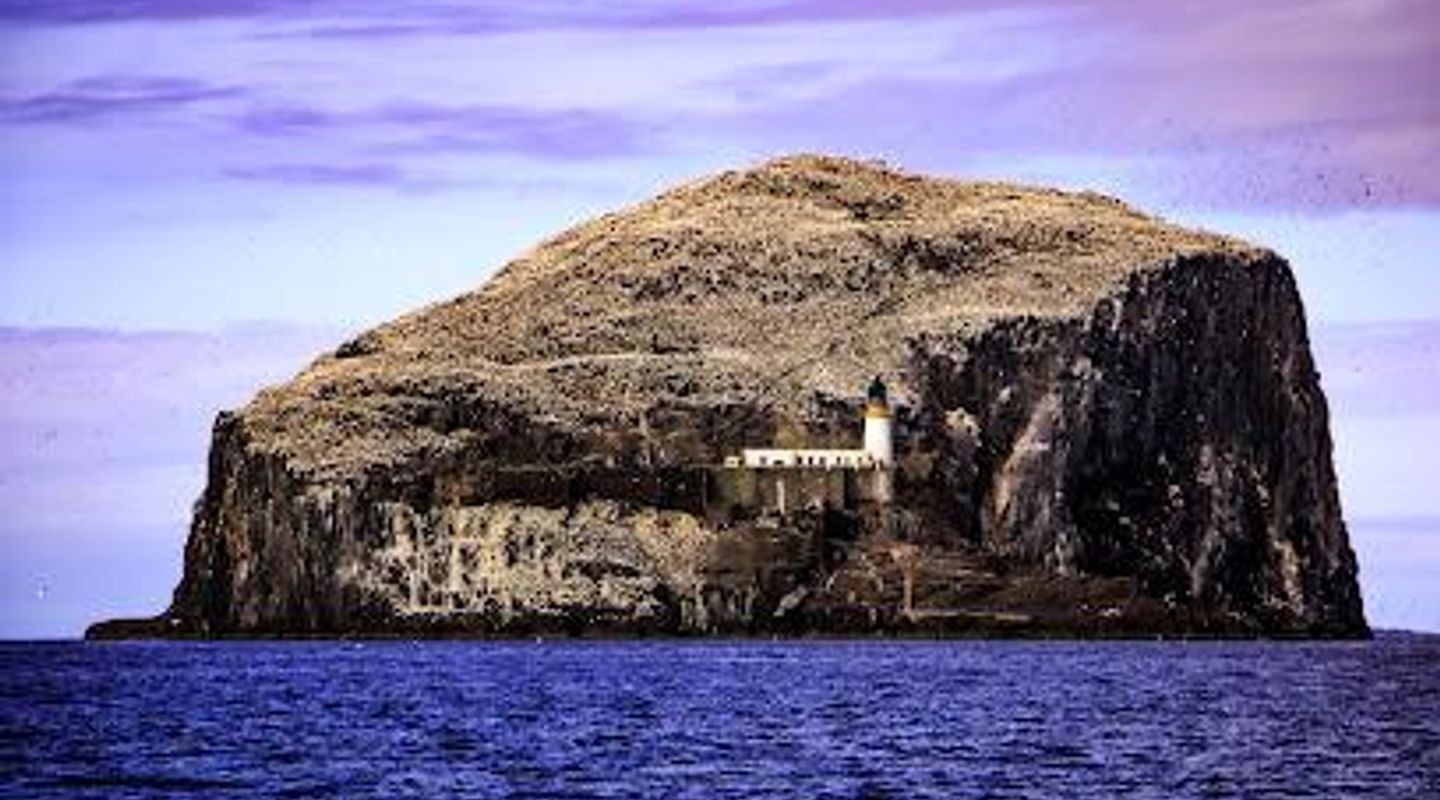
A brief summary of Bass Rock
A dramatic volcanic island home to the world’s largest northern gannet colony and rich Scottish heritage in the Firth of Forth.
Bass Rock is a steep volcanic island in the Firth of Forth, Scotland, renowned as the world's largest northern gannet colony. Rising 107 meters above sea level, it features sheer cliffs, historic castle ruins, and a lighthouse. Uninhabited today, it holds rich natural and cultural heritage, including early Christian hermitage and a 17th-century prison. The island's dramatic wildlife spectacle and geological prominence make it a unique natural landmark.
On-site amenities
 Restrooms
 Drink options
 Food options
 Seating areas
 Information boards
 Visitor centre
- Address
- Bass Rock
Getting there
Boat
Public Transport plus Walking
Car
Discover more about Bass Rock
A Volcanic Landmark in the Firth of Forth
Bass Rock is a striking volcanic plug located about 2 kilometers offshore in the Firth of Forth, east Scotland. Rising 107 meters (351 feet) above sea level, this steep-sided island is formed from phonolitic trachyte rock, a remnant of ancient volcanic activity dating back some 340 million years. Its sheer cliffs and natural tunnel, which extends 105 meters through the rock, create a dramatic and rugged landscape that dominates the southern entrance to the Firth. The rock’s geology is closely related to nearby formations such as North Berwick Law and Edinburgh’s Arthur’s Seat, marking it as a significant geological feature in the region.
A Sanctuary for Seabirds and Wildlife
Bass Rock is internationally recognized as the largest single colony of northern gannets in the world, hosting over 150,000 birds—approximately 10% of the global population. The island’s white appearance from a distance is due to the dense coverage of gannets and their guano. Alongside gannets, the rock supports colonies of shags, guillemots, razorbills, puffins, and eider ducks. Seals are often seen resting on the rocky shores below. Protected as a Site of Special Scientific Interest, Bass Rock is a vital habitat for these species and a key location for ornithological study and conservation.
Historic Layers: Hermitage, Castle, and Prison
Though uninhabited now, Bass Rock has a rich human history. In the 7th century, it was home to St Baldred, an early Christian hermit who lived in a cell on the rock. Later, a castle was constructed, with ruins still visible today, including a curtain wall built for artillery defense. The island served as a state prison during the 17th century, notably incarcerating Covenanters and political prisoners. The fortress was dismantled in 1701, but the site remains a poignant reminder of Scotland’s turbulent past. Ownership passed through the Lauder family for centuries before being acquired by the Dalrymple family in 1706, who still hold it.
The Lighthouse and Modern Conservation
In 1902, the Bass Rock Lighthouse was constructed on the island’s summit to aid navigation at the Firth’s entrance. Designed by David Stevenson, it was automated in 1988 and remains operational. Today, Bass Rock is managed with a focus on wildlife protection and scientific research. The Scottish Seabird Centre in North Berwick offers boat trips and live video feeds from solar-powered cameras installed on the rock, allowing visitors to observe the gannets and other wildlife without disturbing the fragile ecosystem.
Visitor Experience and Natural Spectacle
While landing on Bass Rock is restricted to protect its wildlife, boat tours provide spectacular views of the island’s cliffs and the frenetic activity of the gannet colony. Visitors witness thousands of birds soaring, diving at high speeds into the sea to fish, and nesting in dense colonies. The sensory experience includes the cries of seabirds, the salty sea air, and the sight of the rock’s stark white surface contrasting with the deep blue waters. The island’s remote and rugged character offers a unique glimpse into Scotland’s natural and historical heritage.
Legacy and Cultural Significance
Bass Rock’s name endures in the scientific name of the northern gannet, Morus bassanus, highlighting its global ornithological importance. It has inspired literature and folklore, symbolizing isolation and resilience. The island’s combination of geological grandeur, wildlife abundance, and layered human history make it a landmark of both natural wonder and cultural depth on Scotland’s east coast.
Evendo Review Centre
 Google
Guest reviews
Best time to go
Quietest: Jan, Feb & Dec · before 3am
Busy times are Evendo estimates for a typical year, to help you plan. Actual crowds vary with events, school holidays and the weather.
Explore Bass Rock on the map
A handpicked selection of must-see spots near Bass Rock, mapped for you.
Get your free copy of our complete guide to Bass Rock, delivered straight to you.
Everything on this page, from opening hours and how to get there to Eve’s tips and the best time to go, in one PDF you can read offline, print or share.
Already have an account? Sign in
Your Bass Rock guide is ready.
We'll send it to · Not you? Sign out

Getting your guide ready…
We are putting together a fresh copy of the Bass Rock guide. This can take up to a minute.
This can take a few moments. If your browser asks, choose Allow so the download can start. You'll find the guide in your Downloads folder.
Nothing happened? Download it again
Sorry, the guide is taking longer than usual. Please try again in a minute, or get it by email instead.
Unlock the best of Bass Rock
Skip-the-line tickets, guided tours with entry, and walking tours of the area, booked in a few clicks.

Other nearby places you may find interesting
The closest places of the same kind, if this one is not quite what you had in mind.
-
-
-
-
-


Swipe for more places
More to explore near Bass Rock

 Best experiences near Bass Rock
 Best hotels near Bass Rock
 Best landmarks near Bass Rock
 Best attractions near Bass Rock
 Best shops near Bass Rock
 Best restaurants near Bass Rock
 Best bars near Bass Rock
Do you manage this location?
Take control to get all the benefits, like improved information, better appearance, and stronger visibility across AI-powered discovery.
Explore more
Explore more of Fife
Discover Fife, Scotland’s Kingdom of History and Natural Beauty, featuring St. Andrews, ancient ruins, charming fishing villages, and stunning coastal walks.
Explore Fife
Explore more of United Kingdom
Discover the United Kingdom: A blend of rich history, stunning landscapes, and vibrant cities, offering a unique travel experience for every visitor.
Explore United Kingdom
