Pulteney Bridge: Bath’s Iconic Palladian Landmark
An 18th-century Palladian masterpiece with shops spanning both sides, linking Bath’s historic heart to the charming Bathwick estate.
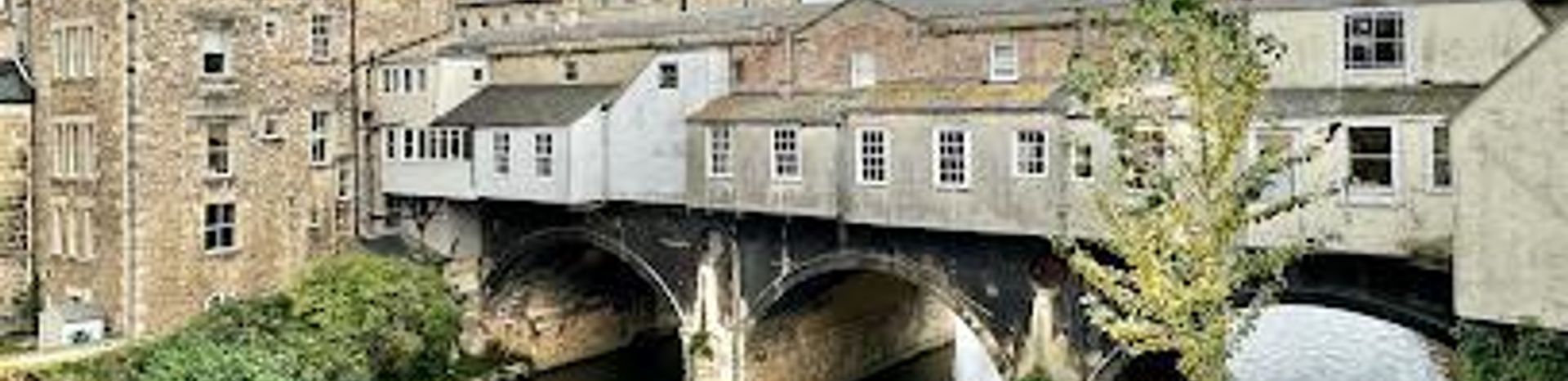
Pulteney Bridge in Bath, England, is a stunning 18th-century Palladian-style bridge spanning the River Avon. Completed in 1774 and designed by Robert Adam, it uniquely features shops along its full length on both sides, a rarity worldwide. Connecting Bath’s city center with the historic Bathwick estate, the bridge is renowned for its elegant architecture, historic significance, and vibrant commercial heritage.
A brief summary to Pulteney Bridge
- Bridge St, Bath, BA2 4AT, GB
- Click to display
- Duration: 0.5 to 2 hours
- Free
-
 Outdoor
- Mobile reception: 5 out of 5

Know before you go
Hi, I'm Eve. Here are a few practical things to know before exploring Pulteney Bridge.
- Visit early morning or late afternoon for softer light and fewer crowds, ideal for photography.
- Take time to explore the unique shops along the bridge, many offering local crafts and souvenirs.
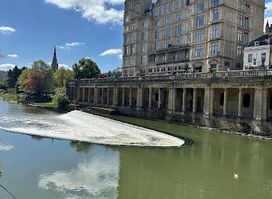
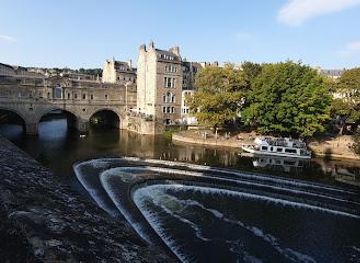
- Pause on the bridge to enjoy views of the River Avon and the crescent-shaped weir nearby.
- Combine your visit with nearby Bath attractions like the Roman Baths and Royal Crescent for a full Georgian experience.
Do you manage this location?
Take control to get all the benefits, like improved information, better appearance, and stronger visibility across AI-powered discovery. Learn more
Activate your presence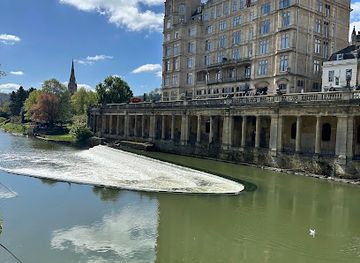
Getting There
-
Bus
Take local bus services from Bath city center to stops near Pulteney Bridge; journeys typically last 10–15 minutes with frequent departures. Tickets cost approximately £2–£4. Note that buses may be less frequent on weekends.
-
Walking
From central Bath, a pleasant 10–15 minute walk along pedestrian-friendly streets leads to Pulteney Bridge. The terrain is mostly flat and accessible for wheelchairs and strollers.
-
Taxi
Taxis from Bath Railway Station to Pulteney Bridge take around 5–10 minutes depending on traffic, costing approximately £5–£10. Availability is good throughout the day.
For the on-the-go comforts that matter to you
-
 Restrooms
-
 Drink Options
-
 Food Options
-
 Seating Areas
-
 Information Boards
Discover more about Pulteney Bridge
An Architectural Marvel Inspired by Italy
Pulteney Bridge stands as one of Bath’s most iconic landmarks, designed by the celebrated Scottish architect Robert Adam. Completed in 1774, its Palladian style draws heavily from the classical architecture of Andrea Palladio and was inspired by the famous Italian bridges Ponte Vecchio in Florence and the Rialto in Venice. Adam’s design was revolutionary for its time, integrating shops across the entire span of the bridge on both sides, making it one of only four such bridges worldwide. The southern façade of the bridge retains much of Adam’s original temple-like elegance, with symmetrical wings, Doric pilasters, and a prominent Venetian window crowning the central bay.Historical Significance and Urban Connection
The bridge was commissioned by William Johnstone Pulteney to connect Bath’s city center with the Bathwick estate, which he aimed to develop as a new town rivaling the west side of Bath. Construction began in 1769 and overcame challenges such as the River Avon’s strong currents and the need for durable foundations using local Bath stone. Upon opening, Pulteney Bridge transformed Bath’s urban landscape by facilitating easy access and commerce between these areas. Originally hosting a variety of shops including milliners and jewelers, it quickly became a bustling social and commercial hub.Evolution and Preservation Through the Centuries
Within two decades, commercial demand led to expansions and alterations, including widening the bridge and enlarging shops. Flood damage in the late 18th century necessitated rebuilding parts of the north side, which introduced asymmetrical cantilevered shop extensions that remain today. The 19th and 20th centuries saw further modifications, with efforts to preserve and partially restore the bridge’s original Palladian charm. Despite these changes, the bridge’s architectural integrity and historic character continue to captivate visitors.Distinctive Features and Visual Appeal
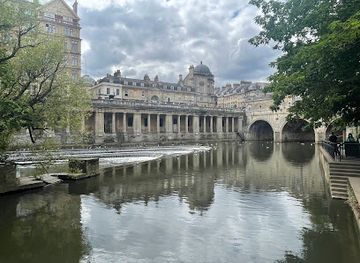
The bridge’s three segmental arches gracefully span the River Avon, framing picturesque views of the river and the crescent-shaped weir nearby. The southern side’s classical symmetry contrasts with the north side’s more eclectic extensions, offering a visual narrative of the bridge’s evolving history. Constructed primarily of limestone with a pitched Welsh slate roof, the bridge’s elegant proportions and detailed ornamentation embody Georgian architectural ideals.Cultural and Social Impact in Bath
Pulteney Bridge is not only a functional crossing but also a cultural icon that reflects Bath’s Georgian-era transformation. It complements other architectural masterpieces in the city, such as the Royal Crescent and the Roman Baths, contributing to Bath’s reputation as a center of historic beauty and design. The bridge remains a lively commercial space and a popular spot for photography, leisurely strolls, and appreciation of Bath’s heritage.Contemporary Experience and Visitor Engagement
Today, visitors can explore the shops lining the bridge, enjoy views of the River Avon, and immerse themselves in the bridge’s rich history. The juxtaposition of classical design and later additions provides a unique story of architectural adaptation. Pulteney Bridge continues to be a symbol of Bath’s enduring charm and a testament to 18th-century ingenuity and style.Explore the best of what Pulteney Bridge has to offer













More about Wiltshire
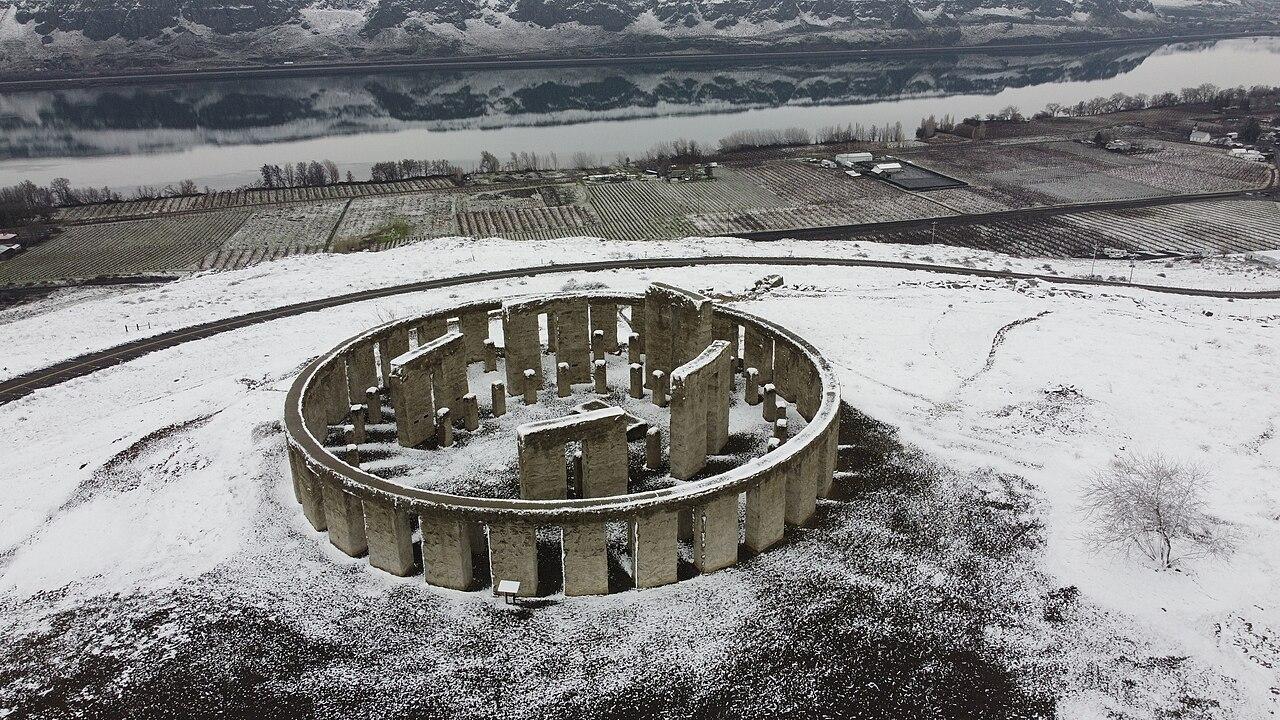
Discover Wiltshire: Home to Stonehenge, stunning landscapes, and charming villages, this county offers a perfect blend of history, nature, and quintessential English charm.
Tell me more about Wiltshire