

Giant's Hill, Cambridge Travel Guide
Free Guide: Low earthworks and a wet moat mark an abandoned 12th-century royal siege castle on the Cambridgeshire fen edge.


A brief summary of Giant's Hill
Low earthworks and a wet moat mark an abandoned 12th-century royal siege castle on the Cambridgeshire fen edge.
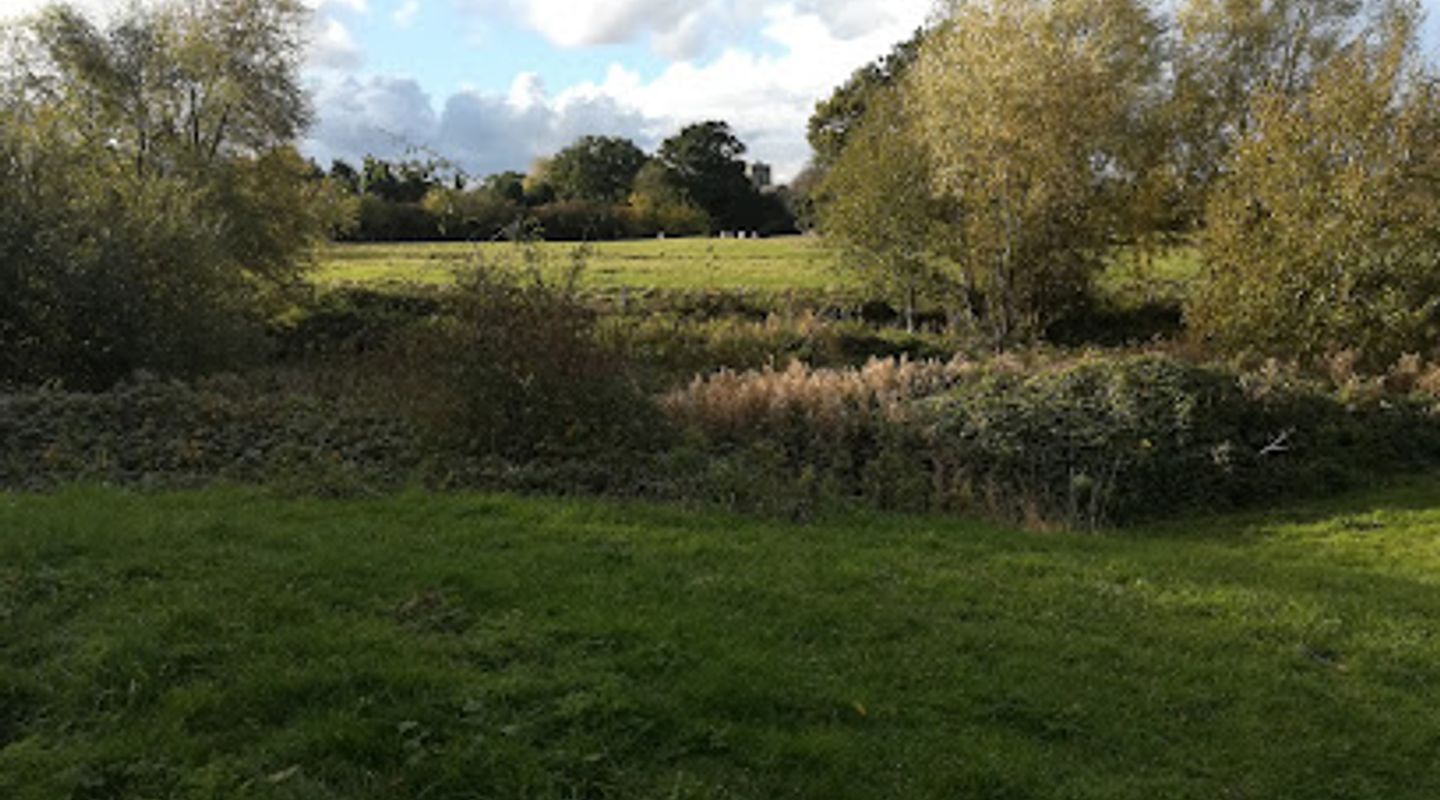
A low grassy motte and wet moat survive from an abandoned 12th-century timber castle built during The Anarchy. Located immediately east of Rampton church in the Cambridgeshire fens, the Scheduled Monument preserves house platforms, ridge-and-furrow and a flat island roughly 50 m by 45 m. Visitors walk the ditch circuit on uneven grass, cross a short wooden causeway and read a single information board. The setting is quiet fen-edge pasture with willows, open fields and the church tower; no keep or ruins remain. Most stops last under an hour and combine naturally with the adjacent Grade II* thatched church.
On-site amenities
 Information boards
Opening hours
- Every dayOpen 24 hours
Opening hours as listed on the venue’s Google Business Profile. Hours can change for services and special events, so check with the venue before you go.
- Address
- 13 Church End Cambridge Rampton
- Website
Getting there
Driving
Public transport
Cycling
Discover more about Giant's Hill
History and context
Giant’s Hill, also known as Rampton Castle, is an unfinished mid-12th-century earthwork begun by King Stephen’s forces to contain Geoffrey de Mandeville during The Anarchy. Construction halted after de Mandeville’s death at Burwell in 1144. The moat cuts through earlier medieval village crofts, preserving house platforms and part of the associated field system. Later use as a de Lisle residence is suggested by a 1270 market grant and licensed chapel. Home Guard trenches dug in 1942 exposed 15th-century rubble; the concrete gun-emplacement base remains visible on the island.
Physical setting and scale
The site occupies flat Ampthill Clay fen-edge pasture at 5–7 m above OD on the western edge of Little North Fen. The central island is a low trapezoidal platform only 1.5 m high, surrounded by a ditch up to 40 m wide and 2 m deep that usually holds standing water. An outer spoil bank runs along the north side and a ramped causeway crosses the southwest corner. The whole monument sits within a larger scheduled area of ridge-and-furrow and croft earthworks immediately east of All Saints’ churchyard.
Visitor experience
Access is informal and self-guided. Walkers follow the grassy perimeter, cross the wooden walkway onto the platform, read the information board and photograph the moat and waterside trees. No indoor interpretation, staffed facilities or ticketed circuit exist. The atmosphere remains quiet and rural; livestock may graze the surrounding pasture. Most visitors spend 15–45 minutes before continuing to the church or village. The subtle earthworks reward prior reading or close attention rather than dramatic height.
Access and transport
From central Cambridge the site is 6–8 miles north via Histon or Cottenham. Driving takes 15–25 minutes; village roads are narrow and parking is informal street-side near the church or village green. Stagecoach service 8 reaches Cottenham in 30–40 minutes, after which a flat 1.5-mile walk completes the journey. Cycling on level fen roads takes 30–50 minutes. Direct buses into Rampton itself are limited.
Practical conditions and facilities
The site is open year-round with no admission charge. After rain the clay becomes muddy and the moat fuller; waterproof footwear is advisable. No toilets, café or shelter stand on the earthwork, though All Saints’ Church and The Black Horse pub lie a few minutes’ walk away. The single information board and wooden walkway are the only formal provisions.
Evendo Review Centre
 Google
Guest reviews
Best time to go
Quietest: Jan, Feb & Dec · before 8am or from 8pm
Busy times are Evendo estimates for a typical year, to help you plan. Actual crowds vary with events, school holidays and the weather.
Explore Giant's Hill on the map
A handpicked selection of must-see spots near Giant's Hill, mapped for you.
Get your free copy of our complete guide to Giant's Hill, delivered straight to you.
Everything on this page, from opening hours and how to get there to Eve’s tips and the best time to go, in one PDF you can read offline, print or share.
Already have an account? Sign in
Your Giant's Hill guide is ready.
We'll send it to · Not you? Sign out

Getting your guide ready…
We are putting together a fresh copy of the Giant's Hill guide. This can take up to a minute.
This can take a few moments. If your browser asks, choose Allow so the download can start. You'll find the guide in your Downloads folder.
Nothing happened? Download it again
Sorry, the guide is taking longer than usual. Please try again in a minute, or get it by email instead.
Other nearby places you may find interesting
The closest places of the same kind, if this one is not quite what you had in mind.
-
King's College Chapel Perpendicular Gothic chapel on King's Parade with fan-vaulted ceiling and extensive stained glass in central Cambridge.
-
Castle Mound: site of medieval Cambridge Castle Earthwork remains of medieval Cambridge Castle offering open city views from a compact grass mound.
-
Jesus Lock A working lock and footbridge on the River Cam north of Cambridge city centre, used by boaters and walkers along the historic navigation.
-
Bridge of Sighs Enclosed 19th-century bridge linking St John's College buildings across the River Cam in Cambridge.
-
Hills Road War Memorial Stone column at the Station Road junction listing Cambridge residents lost in the two world wars.
Swipe for more places
More to explore near Giant's Hill

 Best experiences near Giant's Hill
 Best hotels near Giant's Hill
 Best landmarks near Giant's Hill
 Best attractions near Giant's Hill
 Best shops near Giant's Hill
 Best restaurants near Giant's Hill
 Best bars near Giant's Hill
Do you manage this location?
Take control to get all the benefits, like improved information, better appearance, and stronger visibility across AI-powered discovery.
Explore more

Explore more of Cambridge
Cambridge travel guide: explore historic colleges, the River Cam, museums, medieval chapels, riverside punting, independent shops and local culture.
Explore Cambridge
Explore more of United Kingdom
Discover the United Kingdom: A blend of rich history, stunning landscapes, and vibrant cities, offering a unique travel experience for every visitor.
Explore United Kingdom
