

Queen Victoria Statue Travel Guide
Free Guide: A majestic marble statue of Queen Victoria by her daughter, marking the birthplace and childhood home of one of Britain’s most iconic monarchs.


A brief summary of Queen Victoria Statue
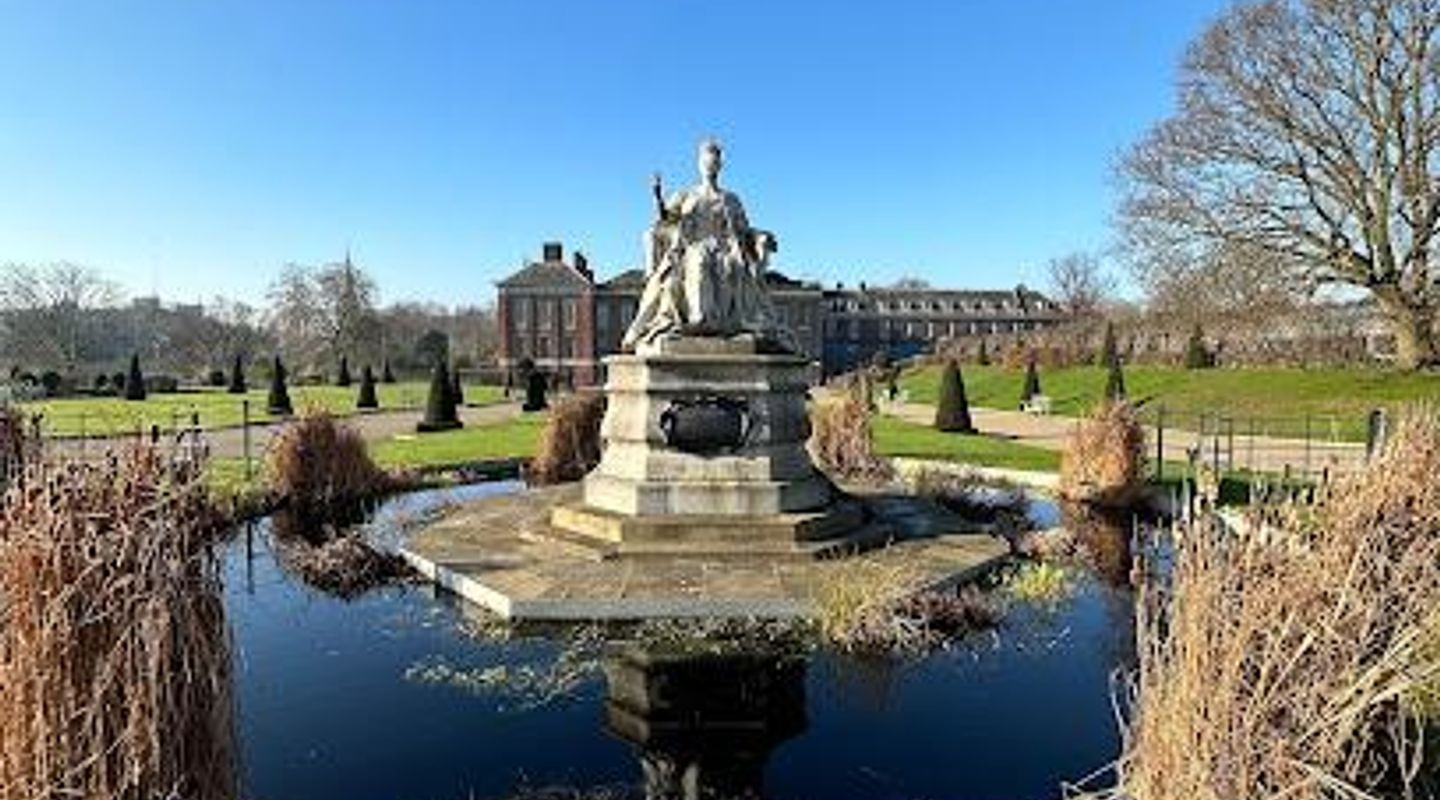
A majestic marble statue of Queen Victoria by her daughter, marking the birthplace and childhood home of one of Britain’s most iconic monarchs.
The Queen Victoria Statue, located in Kensington Palace Gardens, London, is a striking white marble sculpture depicting Queen Victoria at age 18 in her coronation robes. Designed by her daughter Princess Louise and unveiled in 1893, it commemorates Victoria's Golden Jubilee and her deep connection to Kensington Palace, her birthplace and childhood home.
On-site amenities
 Restrooms
 Drink options
 Food options
 Seating areas
 Information boards
- Address
- Kensington Palace Gardens, London W8 4PU
- Phone
Getting there
London Underground
Bus
Taxi or Rideshare
Discover more about Queen Victoria Statue
A Regal Tribute Sculpted by Royal Hands
The Queen Victoria Statue stands prominently in Kensington Palace Gardens, just outside the grounds of Kensington Palace, where Victoria was born in 1819 and lived until her accession to the throne at age 18. This white marble statue portrays her as a young queen, seated in her coronation robes with crown and scepter, capturing the moment she began her reign in 1837. Remarkably, the statue was designed by her fourth daughter, Princess Louise, Duchess of Argyll, a talented sculptress who submitted the design anonymously. The statue was commissioned by the Kensington Golden Jubilee Memorial Executive Committee to celebrate Victoria’s 50 years on the throne and was unveiled by the Queen herself in 1893.
Historical Significance and Artistic Details
The statue not only commemorates Queen Victoria’s Golden Jubilee but also symbolizes her lifelong connection to Kensington Palace, where she was raised under the strict 'Kensington System' and where she received the news of her accession. The sculpture reflects the Victorian era’s grandeur and royal dignity, rendered in fine white marble that has weathered time and history. During World War II, the statue sustained damage from shrapnel, notably losing its nose, which was subsequently replaced in 1952 and again restored in 2012 for Queen Elizabeth II’s Golden Jubilee. The statue is Grade II listed, recognizing its architectural and historic importance.
Kensington Palace: The Queen’s Childhood and Legacy
Kensington Palace itself is a site of rich royal heritage, having been home to Queen Victoria from birth until her move to Buckingham Palace. The palace’s gardens, including the site of this statue, are steeped in history, hosting other memorials such as the statue of Diana, Princess of Wales. Victoria’s reign, known as the Victorian Era, was marked by significant industrial, political, and cultural changes that shaped modern Britain. The statue serves as a tangible link to this transformative period and to Victoria’s personal story.
Visitor Experience and Surroundings
Approaching the statue, visitors are greeted by the serene setting of Kensington Palace Gardens, framed by the palace’s garden facade and the nearby Round Pond. The statue’s imposing pedestal and the youthful, regal depiction of Victoria create a majestic introduction to the palace grounds. Nearby, the public can explore the State Apartments, the Sunken Garden, and other royal memorials, enriching the historical context of the visit. The statue’s presence invites reflection on the continuity of the British monarchy and the enduring legacy of Queen Victoria.
Artistic Legacy of Princess Louise
Princess Louise’s role as the sculptor adds a unique dimension to the statue’s story. As a royal and an accomplished artist, her work bridges personal family history and public commemoration. Living at Kensington Palace, she sculpted the statue in her studio on the palace grounds, blending intimate knowledge of her mother with artistic skill. This personal connection elevates the statue beyond a mere monument to a deeply meaningful family tribute.
Preservation and Cultural Importance
The statue’s Grade II listing ensures its protection as a heritage asset, preserving it for future generations. It stands as a cultural landmark within London’s royal landscape, embodying both the personal history of Queen Victoria and the broader narrative of British monarchy and empire. The statue continues to inspire visitors, historians, and art enthusiasts alike, symbolizing the enduring impact of one of Britain’s most iconic monarchs.
Evendo Review Centre
 Google
Guest reviews
Best time to go
Quietest: Jan, Feb & Dec · before 6am or at 9pm
Busy times are Evendo estimates for a typical year, to help you plan. Actual crowds vary with events, school holidays and the weather.
Explore Queen Victoria Statue on the map
A handpicked selection of must-see spots near Queen Victoria Statue, mapped for you.
Get your free copy of our complete guide to Queen Victoria Statue, delivered straight to you.
Everything on this page, from opening hours and how to get there to Eve’s tips and the best time to go, in one PDF you can read offline, print or share.
Already have an account? Sign in
Your Queen Victoria Statue guide is ready.
We'll send it to · Not you? Sign out

Getting your guide ready…
We are putting together a fresh copy of the Queen Victoria Statue guide. This can take up to a minute.
This can take a few moments. If your browser asks, choose Allow so the download can start. You'll find the guide in your Downloads folder.
Nothing happened? Download it again
Sorry, the guide is taking longer than usual. Please try again in a minute, or get it by email instead.
Unlock the best of Queen Victoria Statue
Skip-the-line tickets, guided tours with entry, and walking tours of the area, booked in a few clicks.


Other nearby places you may find interesting
The closest places of the same kind, if this one is not quite what you had in mind.
-
-
-
-
-


Swipe for more places
More to explore near Queen Victoria Statue

 Best experiences near Queen Victoria Statue
 Best hotels near Queen Victoria Statue
 Best landmarks near Queen Victoria Statue
 Best attractions near Queen Victoria Statue
 Best shops near Queen Victoria Statue
 Best restaurants near Queen Victoria Statue
 Best bars near Queen Victoria Statue
Do you manage this location?
Take control to get all the benefits, like improved information, better appearance, and stronger visibility across AI-powered discovery.
Explore more

Explore more of Devon
Discover Devon: A blend of stunning coastlines, historic cities, and charming villages perfect for outdoor adventures and culinary delights in the heart of England's West Country.
Explore Devon
Explore more of United Kingdom
Discover the United Kingdom: A blend of rich history, stunning landscapes, and vibrant cities, offering a unique travel experience for every visitor.
Explore United Kingdom
