

Free Dorset Travel Guide & Mobile App
Explore Dorset with free travel guides. Discover regional history, expert tips, proposed trips, and audio guides on web or mobile app.


Explore Dorset’s Jurassic Coast, chalk downs, fossil towns, historic villages and coastal harbours through walking, heritage and local food.
Read more about Dorset
When is the best time to visit Dorset?
Best: June–August · 20–22°C| Month | High (°C) | Rainfall (mm) |
|---|---|---|
| January | 8 | 60 |
| February | 8 | 50 |
| March | 10 | 50 |
| April | 13 | 50 |
| May | 17 | 40 |
| June (best) | 20 | 40 |
| July (best) | 22 | 40 |
| August (best) | 22 | 50 |
| September | 19 | 50 |
| October | 15 | 50 |
| November | 11 | 60 |
| December | 8 | 60 |
Getting to and around Dorset
How to get there
Transportation
Best attractions in Dorset
Dorset’s attractions range from internationally recognised geology to deeply layered historic sites. Along the Jurassic Coast, visitors can walk among the cliffs and coves of West Dorset, explore fossil-rich shores around Lyme Regis, or follow the coast near Lulworth and the Isle of Purbeck. Beaches and harbours at Weymouth, Swanage and Lyme Regis support swimming, boating and family days, while Chesil Beach and the Fleet lagoon offer a more dramatic coastal setting. Inland, Maiden Castle near Dorchester demonstrates the scale of Iron Age settlement, and the Dorset County Museum explores the county’s archaeology, geology and literary associations. Corfe Castle, Sherborne’s historic buildings, Kingston Lacy and the gardens of Mapperton provide contrasting architectural and landscape experiences. Heathland, chalk downs and woodland are well suited to walking, cycling, horse riding and wildlife watching. The attraction landscape is dispersed, with small museums, churches, manor houses and market-town events often rewarding visitors who allow time between major coastal stops.
-
Tourist attraction
Sandbanks Beach
Britain's Blue Flag beacon—golden sands, sheltered waters, and three decades of coastal excellence.
-
Places of interest
Charmouth Heritage Coast Centre
Free fossil museum and guide to one of England's most productive Jurassic Coast hunting grounds.
-
Country park
Poole Park
Discover Poole Park’s vast saltwater lake, vibrant gardens, and family-friendly activities in the heart of Dorset’s coastal town.
-
Art gallery
Russell Cotes Art Gallery & Museum
A Victorian cliff-top villa turned museum, showcasing eclectic art and global treasures with stunning sea views on Bournemouth’s East Cliff.


Best landmarks in Dorset
Dorset’s most recognisable landmarks are closely tied to its geology and long settlement history. The limestone arch of Durdle Door and the curved cove at Lulworth are iconic Jurassic Coast formations, while Old Harry Rocks mark the eastern end of the Purbeck coastline with tall chalk stacks and pinnacles. Inland, Maiden Castle’s extensive ramparts south of Dorchester show the scale of Iron Age engineering. Corfe Castle rises above the village of the same name, its broken walls recalling both Norman authority and Civil War destruction. The Cerne Abbas Giant, cut into the chalk hillside, is one of England’s most debated prehistoric figures, though its exact origins remain uncertain. Sherborne Abbey represents centuries of religious architecture, and the ruined abbey at Cerne Abbas evokes the power of medieval monastic institutions. Chesil Beach, stretching between Portland and West Bay, is a major natural feature whose shingle ridge and sheltered Fleet lagoon have shaped local ecology and settlement.
-
Historical landmark
Shute's Lane
Explore Shute's Lane, a mystical ancient holloway in Dorset carved by centuries of footsteps, livestock, and legend beneath a vaulted canopy of trees.

Explore Dorset on the map
Plan your trip on one map. See where the top cities, national parks and sights are, and book hotels and experiences in a few clicks.
Best hotels in Dorset
Best bars in Dorset
Dorset’s evening culture is centred more on pubs, restaurants, live music and seaside entertainment than on a large club scene. Weymouth has the broadest concentration of late-opening bars and informal venues, with a seasonal atmosphere linked to its harbour and beach. Dorchester and Bournemouth, the latter outside Dorset’s current administrative county but nearby, provide additional options for theatre, live music and later nights. In Bridport, Lyme Regis, Swanage and Sherborne, evenings generally focus on traditional pubs, wine bars, small music venues and dining rather than large nightclubs. Rural areas are quieter, and the distance between villages makes taxis or a designated driver important when public transport has ended. Breweries and pubs may showcase Dorset ales and cider, while coastal towns offer non-alcoholic refreshments, cafés and early evening dining for visitors who prefer a relaxed night.
-
Cocktail bar
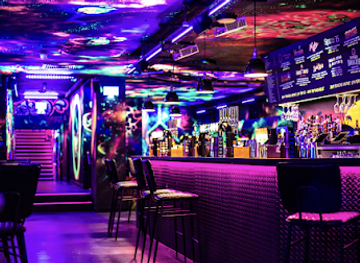
NQ64 Soho
Dive into a neon-lit world of retro arcade games and creative cocktails in the heart of Soho’s nightlife.
-
Cocktail bar
The Last Tuesday Society & Absinthe Parlour
Discover East London's unique blend of cocktail artistry and eccentric curiosities at The Last Tuesday Society & Absinthe Parlour.
-
Cocktail bar
The Tipsy Bird
Quirky vintage cocktail bar in Belfast city centre with live music, themed events, and a vibrant outdoor garden space.
-
Bar
The Hideout
Discover Bath’s hip-hop inspired whisky bar nestled in a historic cellar, blending quirky charm with expertly crafted cocktails and a welcoming vibe.


Get your free copy of our complete guide to Dorset, delivered straight to you.
Everything on this page, from attractions and restaurants to essentials and local phrases, in one PDF you can read offline, print or share.
Already have an account? Sign in
Your Dorset guide is ready.
We'll send it to · Not you? Sign out

Getting your guide ready…
We are putting together a fresh copy of the Dorset guide. This can take up to a minute.
This can take a few moments. If your browser asks, choose Allow so the download can start. You'll find the guide in your Downloads folder.
Nothing happened? Download it again
Sorry, the guide is taking longer than usual. Please try again in a minute, or get it by email instead.
Dorset essentials
Currency and Payment
Safety
Emergency Situations
Do's and Don'ts
Local Tips
From Eve
Local phrases worth knowing
You don't need to get them perfect. A few words go a long way, and locals appreciate the effort.
Basics
| English | Local | Say it |
|---|---|---|
| Hello | Alright | [aw-reet] |
| Goodbye | See ya | [see ya] |
| Yes | Aye | [eye] |
| No | Naw | [naw] |
| Please/You're welcome | Cheers | [cheers] |
| Thank you | Ta | [tah] |
| Excuse me/Sorry | Sorry | [sorry] |
| How are you? | How's it going? | [how's it goin'?] |
| Fine. And you? | Good, you? | [good, you?] |
| Do you speak English? | You speak English, do ya? | [you speak English, do ya?] |
| I don't understand | I don’t get it | [I don’t get it] |
Eating & Drinking
| English | Local | Say it |
|---|---|---|
| I'd like to see the menu, please | Can I have the menu, please? | [can I 'ave the menu, please?] |
| I don't eat meat | I’m a veggie | [I'm a veggie] |
| Cheers! | Cheers! | [cheers] |
| I would like to pay, please | Can I pay, please? | [can I pay, please?] |
Emergencies
| English | Local | Say it |
|---|---|---|
| Help! | Help! | [help] |
| Go away! | Clear off! | [clear off] |
| Call the Police! | Ring the coppers! | [ring the coppers] |
| Call a doctor! | Get a doc! | [get a doc] |
| I'm lost | I’m a bit lost | [I'm a bit lost] |
| I'm ill | I’m not well | [I'm not well] |
Shopping
| English | Local | Say it |
|---|---|---|
| I'd like to buy... | I want to buy... | [I want to buy...] |
| I'm just looking | Just browsing | [just browsing] |
| How much is it? | How much's that? | [how much's that?] |
| That's too expensive | That's a bit pricey | [that's a bit pricey] |
| Can you lower the price? | Can you knock it down? | [can you knock it down?] |
Time & Numbers
| English | Local | Say it |
|---|---|---|
| What time is it? | What's the time? | [what's the time?] |
| It's one o'clock | It's one | [it's one] |
| Half past (10) | Half ten | [half ten] |
| Morning | Mornin' | [mornin'] |
| Afternoon | Arvo | [arvo] |
| Evening | Evenin' | [evenin'] |
| Yesterday | Yesterday | [yesterday] |
| Today | Today | [today] |
| Tomorrow | Tomorrow | [tomorrow] |
| 1 | One | [one] |
| 2 | Two | [two] |
| 3 | Three | [three] |
| 4 | Four | [four] |
| 5 | Five | [five] |
| 6 | Six | [six] |
| 7 | Seven | [seven] |
| 8 | Eight | [eight] |
| 9 | Nine | [nine] |
| 10 | Ten | [ten] |
Transport & Directions
| English | Local | Say it |
|---|---|---|
| Where's a/the...? | Where’s the...? | [where's the...?] |
| What's the address? | What’s the address? | [what's the address?] |
| Can you show me (on the map)? | Can you show me on the map? | [can you show me on the map?] |
| When's the next (bus)? | When’s the next bus? | [when's the next bus?] |
| A ticket (to ....) | A ticket to... | [a ticket to...] |
History of Dorset
Prehistoric Dorset and the Neolithic Landscape
Dorset contains a remarkable concentration of prehistoric monuments, reflecting thousands of years of farming, burial and ceremonial activity. The chalk downs preserve barrows, enclosed settlements and hillforts, while sites such as Maiden Castle show how communities organised labour and defended important places during the Iron Age. The rounded mound of Knowlton Church stands within a prehistoric ceremonial landscape later occupied by a medieval church. These remains are not isolated curiosities: they form part of the wider archaeological character of the county, where fields, ridgelines and ancient trackways still reveal how earlier societies used the land.
The Roman Settlement of Durnovaria
After the Roman conquest of southern Britain, a settlement known as Durnovaria developed at modern Dorchester, probably near an earlier native centre. Its town walls, streets, houses and public buildings made it an important administrative and commercial base. Roman occupation also influenced roads, agriculture and rural villas across Dorset, including the well-preserved Roman town house in Dorchester. The later county town grew over much of the Roman settlement, but archaeological remains and museum collections continue to explain how Roman urban life connected Dorset with the wider province of Britannia.
Saxon Kingdoms and Medieval Abbeys
Following the end of Roman rule, Dorset became part of the developing Anglo-Saxon kingdom of Wessex. Christianity took root through monasteries and minsters, including Sherborne, which became a significant religious centre. Medieval institutions shaped settlement, landholding and routes across the county, while abbeys and churches accumulated influence and wealth. Cerne Abbas grew around its Benedictine abbey, founded in the tenth century, and its ruins remain among Dorset’s most evocative medieval remains. Parish churches, monastic sites and the street plans of market towns preserve much of this period’s enduring legacy.
Castles, Ports and Medieval Power
Dorset’s strategic coast and inland routes encouraged the construction of castles and fortified settlements. Corfe Castle, built after the Norman Conquest and later associated with royal power, controlled an important route through the Purbeck hills. Sherborne Castle and the old town’s fortified history reflect the importance of the area’s religious and political institutions. Along the coast, ports such as Weymouth developed through fishing, trade and maritime connections. Medieval wool production and agriculture also supported market towns, linking Dorset’s rural economy to national and international commerce.
Civil War and the Defeat of the Monarchy
Dorset was contested during the English Civil War in the seventeenth century. Corfe Castle was held for the Crown by Lady Bankes and withstood a prolonged Parliamentarian siege before its eventual fall in 1646; the ruined castle still conveys the conflict’s destructive impact. Dorchester and other towns experienced shifting loyalties, military occupation and political tension. The war followed decades of religious and constitutional dispute, and its effects reached ordinary communities through taxation, requisitioning and disruption to trade. The county’s castles and fortified houses make this national crisis especially tangible.
Agriculture, Industry and the Georgian Landscape
For centuries Dorset was predominantly agricultural, with sheep farming, dairying and arable cultivation shaping its villages and estates. Landowning families influenced towns, roads and parks, while estate improvements and enclosure altered the appearance of the countryside. Some places also developed specialised industries: Bridport became known for rope and net making, a tradition that remains central to its historical identity. Georgian expansion changed Weymouth, where royal visits and seaside fashion helped establish the town as a resort. Country houses such as Kingston Lacy reflect the wealth and taste generated by this rural economy.
Thomas Hardy and Modern Dorset
The novelist and poet Thomas Hardy was born near Dorchester and set many fictional places in a landscape closely based on Dorset. His Wessex novels transformed local scenery, villages and social change into internationally recognised literature, although the real county is more varied than its literary image. The nineteenth and twentieth centuries also brought railways, tourism, military use and changing agriculture. Weymouth, Swanage and other coastal settlements expanded as seaside destinations, while later conservation work helped protect the Jurassic Coast, heathlands and historic landscapes that now form a central part of Dorset’s identity.
Dorset in Photos
Browse through our photo collection highlighting the charm and character of the destination.
Neighbouring regions of Dorset
The closest regions to Dorset, if you have time for more than one.
-

-

-

-

-


Swipe for more regions
Explore more

Explore more of United Kingdom
Discover the United Kingdom: A blend of rich history, stunning landscapes, and vibrant cities, offering a unique travel experience for every visitor.
Explore United Kingdom