Dunino Den: Ancient Druidic Ritual Site Near St Andrews
Explore Dunino Den, a mystical ancient Druidic site near St Andrews, where pagan rituals and early Christian symbols blend in a serene woodland setting.
Dunino Den, located just south of St Andrews, is a mystical ancient site known for its Druidic and pagan heritage. Featuring carved footprints, a sacred well, and rock-cut steps leading into a wooded den, it was historically used for rituals and ceremonies. Visitors today find a supernatural atmosphere enhanced by Celtic crosses, symbolic carvings, and offerings left by modern-day pilgrims, making it a unique cultural landmark steeped in Scotland’s ancient spiritual traditions.
A brief summary to Dunino Den
- St Andrews, GB
- Duration: 0.5 to 2 hours
- Free
-
 Outdoor
- Mobile reception: 4 out of 5

Know before you go
Hi, I'm Eve. Here are a few practical things to know before exploring Dunino Den.
- Wear sturdy shoes as the path and steps down into the den are uneven and can be slippery, especially after rain.
- Respect the site by not removing coins or offerings left by visitors, as local belief holds this brings bad luck.
- Visit early in the day to enjoy a quieter, more tranquil atmosphere and better lighting for photography.
- Combine your visit with nearby historic sites in St Andrews for a fuller understanding of the region’s layered history.
Do you manage this location?
Take control to get all the benefits, like improved information, better appearance, and stronger visibility across AI-powered discovery. Learn more
Activate your presence
Getting There
-
Car
Drive from central St Andrews southwards for about 8 kilometers (5 miles) to Dunino Church, where parking is available. From there, a 10-15 minute walk on an unpaved woodland path leads to Dunino Den. The road is narrow but accessible; parking near the church is limited during peak times.
-
Bus and Walk
Take the local bus service from St Andrews to the village of Dunino, approximately 20 minutes travel time. From Dunino Church, follow the marked footpath through the woods for about 10-15 minutes to reach Dunino Den. Note the path is uneven and may be slippery in wet weather.
-
Walking
For active travelers, a scenic 5-mile walk from St Andrews town center to Dunino Den is possible, passing through rural landscapes and farmland. The terrain includes woodland trails and some uneven ground, suitable for experienced walkers with proper footwear.
For the on-the-go comforts that matter to you
-
 Restrooms
-
 Parking
-
 Information Boards
Discover more about Dunino Den
Origins and Ancient Ritual Significance
Dunino Den is an ancient sacred site dating back to around 4000 BC, situated approximately five miles south of St Andrews. It is believed to have been a place of worship for Druids and other pagan practitioners, who were the learned spiritual leaders of ancient Scotland. The site’s most prominent features include two large crags known as the "Altar Stone" and "Pulpit Rock," with a well atop the altar stone thought to have been used in sacrificial or ritualistic ceremonies. A carved footprint near the well is reminiscent of inauguration rites, where kings or chieftains were anointed, underscoring the site's importance in ancient power and religious traditions.Medieval Christian Influence and Symbolism
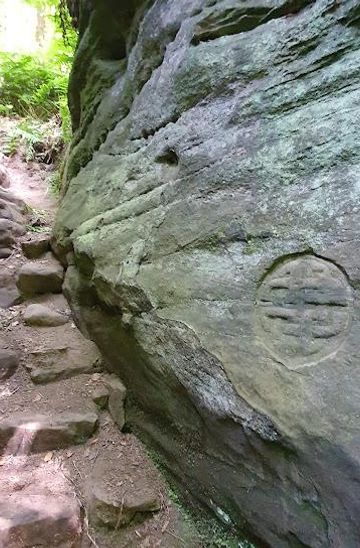
Though originally pagan, Dunino Den reflects a complex layering of spiritual history. The presence of a large Celtic cross incised into the rock face suggests early medieval Christian reinterpretation or assimilation of the site. This cross, weathered but still visible, may symbolize an effort by Christian monks to convert or sanctify the pagan landscape. Nearby, a Pictish stone with cross carvings, possibly a priest’s tombstone dating from around 800 AD, stands in the churchyard above the den, linking the site to early Christian communities and their rituals.Physical Features and Visitor Experience
Visitors approach Dunino Den through a wooded area behind Dunino Church, following a path that leads to the altar stone. Narrow, winding steps carved into the rock descend into the den itself, where visitors can see Celtic crosses, faces, and mystical symbols etched into the cliffs. The atmosphere is charged with a supernatural aura, enhanced by offerings such as ribbons, coins, beads, and even personal items left by those who continue to honor the site’s spiritual legacy. The natural setting, with its stream and dense woodland, adds to the sense of stepping into a timeless ritual space.Modern-Day Significance and Folklore
Today, Dunino Den remains a place of spiritual significance, often regarded as a gateway to the otherworld. Visitors and locals alike leave offerings and messages for ancestors and loved ones, continuing ancient traditions of reverence and remembrance. Folklore also speaks of fairies and Celtic creatures inhabiting the area, further enriching the site’s mystical reputation. The belief that removing coins from the site brings bad luck underscores the respect and care visitors maintain for this sacred place.Surrounding Historical Context
The site is part of a broader ritual landscape that includes the nearby Dunino Church, likely built on the site of an early Pictish monastery or church patronized by local rulers. Excavations have uncovered medieval foundations, suggesting continuous spiritual use over centuries. Folklore mentions a now-lost stone circle in the vicinity, hinting at an even older ceremonial tradition. This layering of pagan, Pictish, and Christian elements makes Dunino Den a unique testament to Scotland’s complex religious and cultural history.Preservation and Visitor Considerations
Dunino Den is a relatively secluded site with unpaved paths and uneven, sometimes slippery steps. Visitors are advised to wear sturdy footwear and exercise caution, especially in wet conditions. Parking is available near Dunino Church, from where the den is accessible via a short woodland walk. The site’s preservation relies on respectful visitation, as the delicate carvings and natural features are vulnerable to damage. Its tranquil yet evocative ambiance offers a profound connection to Scotland’s ancient past and spiritual heritage.Explore the best of what Dunino Den has to offer













More about Fife
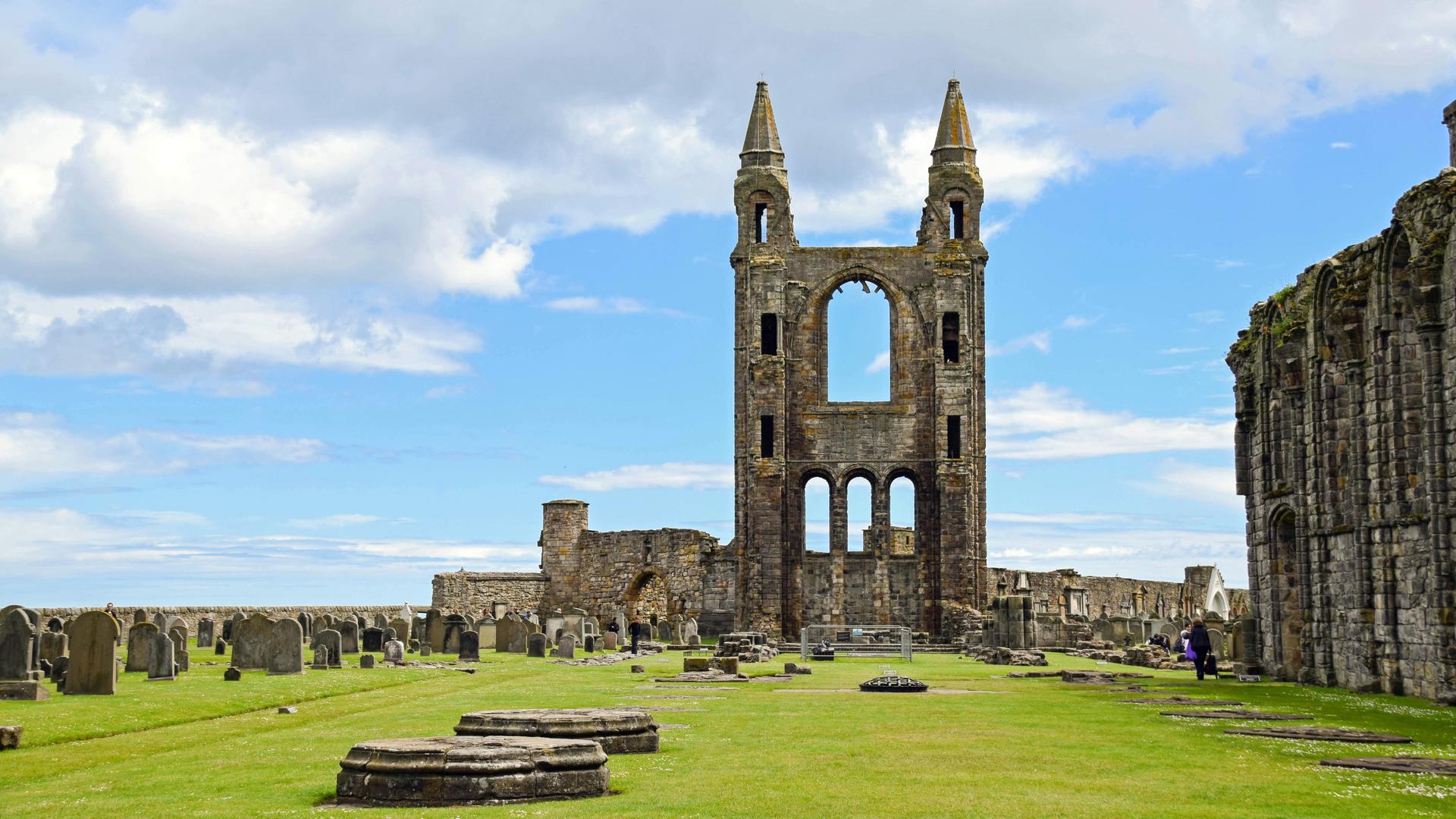
Discover Fife, Scotland’s Kingdom of History and Natural Beauty, featuring St. Andrews, ancient ruins, charming fishing villages, and stunning coastal walks.
Tell me more about Fife
Discover the heritage and craft of Lowland single malt whisky at Kingsbarns Distillery, where tradition meets the scenic beauty of Fife’s countryside.
Descend into Scotland’s Cold War past at this vast underground nuclear command bunker near St Andrews.