

Kellie Castle Travel Guide
Free Guide: Discover Kellie Castle’s enchanting blend of medieval heritage, Victorian artistry, and fragrant gardens in the heart of Fife.


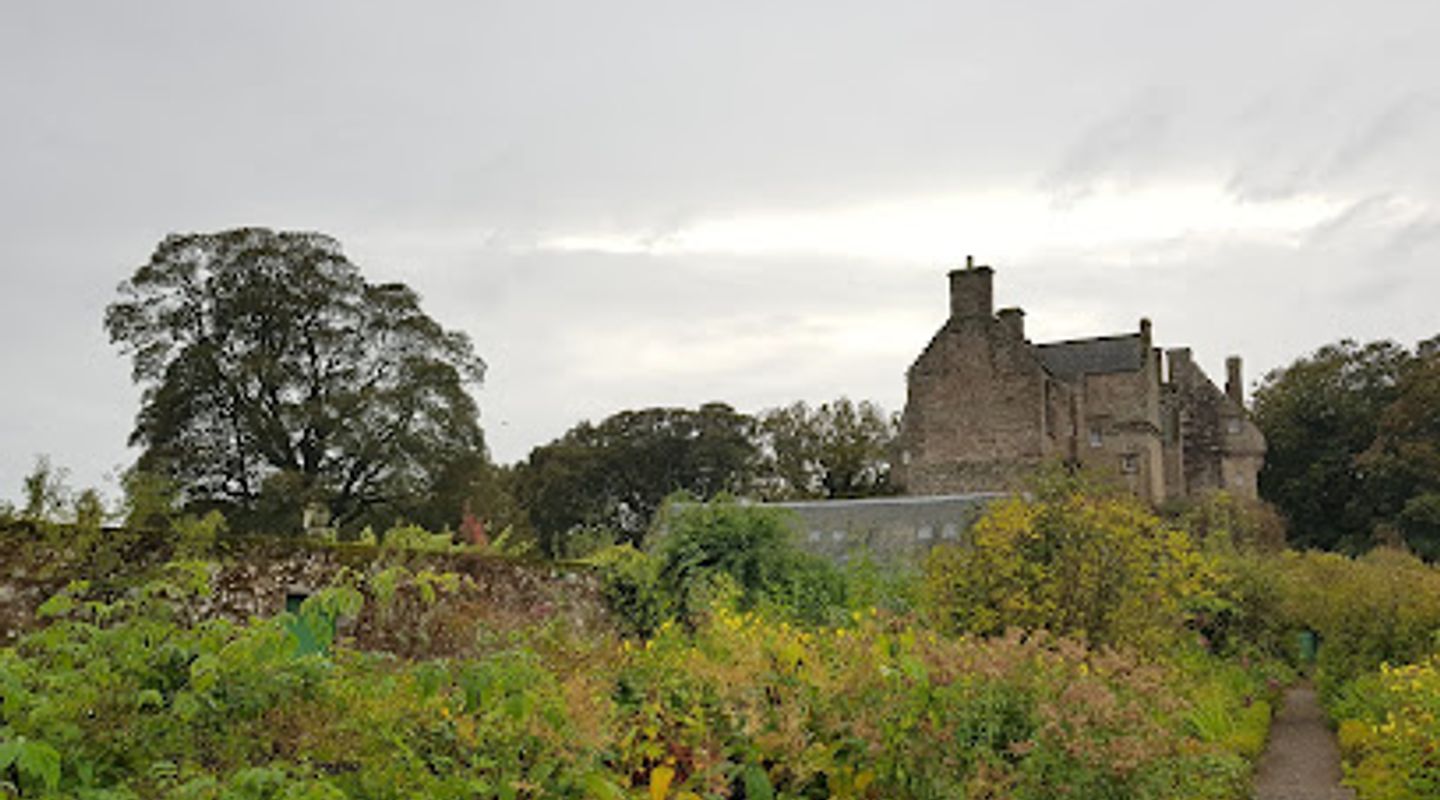
A brief summary of Kellie Castle
Discover Kellie Castle’s enchanting blend of medieval heritage, Victorian artistry, and fragrant gardens in the heart of Fife.
Kellie Castle, near Pittenweem in Fife, Scotland, is a captivating historic castle dating back to the 14th century. Known for its distinctive Scots Baronial architecture, it features crow-stepped gables, corbelled towers, and ornate plaster ceilings. Once home to the Oliphant and Erskine families, it was restored in the late 19th century by the Lorimer family. Today, Kellie Castle offers visitors a blend of medieval stonework, Victorian interiors, and a fragrant Arts & Crafts garden, making it a treasured National Trust for Scotland site.
On-site amenities
 Restrooms
 Drink options
 Food options
 Seating areas
 Trash bins
 Information boards
 Visitor centre
Opening hours
- Mon10:30 am–5 pm
- TueClosed
- WedClosed
- Thu10:30 am–5 pm
- Fri10:30 am–5 pm
- Sat10:30 am–5 pm
- Sun10:30 am–5 pm
Opening hours as listed on the venue’s Google Business Profile. Hours can change for services and special events, so check with the venue before you go.
- Address
- Kellie Castle, Pittenweem, Anstruther KY10 2RE
- Phone
- Website
Getting there
Train and Bus
Car
Walking
Discover more about Kellie Castle
Origins and Architectural Evolution
Kellie Castle's history stretches back to at least the 14th century, with the earliest parts of the castle, including the northwest tower, dating from around 1360. Originally owned by the Siward family and later the Oliphants, the castle began as a tower house and gradually expanded. The 4th Lord Oliphant added the east tower in 1573, likely as a jointure house for his wife, Margaret Hay. Over the next decades, the castle grew into a distinctive T-plan Scots Baronial structure, characterized by crow-stepped gables, corbelled turrets, and imposing chimneys. The castle's unique skewed alignment between the east tower and main range reflects its layered construction history.
The Erskine Era and Royal Connections
In 1617, Kellie Castle was sold to Sir Thomas Erskine, who was later made the Earl of Kellie by King James VI. The King himself stayed at the castle during his only visit to Scotland after the Union of the Crowns. Notably, the library ceiling bears one of Scotland’s earliest ornamental plaster ceilings in the London style, dated 1617 and monogrammed for Thomas Viscount Fenton. The Erskines maintained the castle through much of the 17th century, embedding it further in Scotland’s noble heritage.
Decline and Revival by the Lorimers
After being abandoned in 1829, Kellie Castle fell into disrepair until the late 19th century when James Lorimer, a law professor, leased the property. His son, Sir Robert Lorimer, a renowned architect, undertook significant restoration and interior redesign, blending Victorian Arts & Crafts style with the castle’s medieval fabric. The Lorimer family’s artistic legacy remains visible in the castle’s furniture and decorative details. The castle was eventually acquired by the National Trust for Scotland and opened to the public, preserving its historical and artistic significance.
Enchanting Gardens and Artistic Legacy
Surrounding the castle is an Arts & Crafts garden, lovingly restored and maintained with organic herbaceous borders, old roses, and fruit and vegetable plots. The garden’s scents and colors complement the castle’s historic atmosphere. Nearby, the stables house an exhibition dedicated to Hew Lorimer, a celebrated sculptor and son of Sir Robert, whose works include the monumental granite statue Our Lady of the Isles. Visitors can explore his studio, preserved as it was at the time of his death.
Atmosphere and Hauntings
Kellie Castle is reputedly haunted by two spirits: James Lorimer, whose ghost reportedly appears seated in a corridor, and Anne Erskine, who is said to haunt a spiral staircase where she tragically fell to her death. Visitors sometimes hear footsteps or glimpse a pair of red shoes running up the stairs, adding a layer of mysterious folklore to the castle’s rich history.
Visiting Today
Today, Kellie Castle stands as one of Scotland’s finest examples of Scots Baronial domestic architecture, combining medieval strength with Victorian charm. The National Trust for Scotland offers tours showcasing the castle’s plaster ceilings, painted panelling, and fine furnishings. The castle’s location near the scenic Fife coast adds to its appeal, making it a captivating destination for history lovers, architecture enthusiasts, and garden admirers alike.
Evendo Review Centre
 Google
Guest reviews
Best time to go
Quietest: Jan, Feb & Dec · before 7am or from 8pm
Busy times are Evendo estimates for a typical year, to help you plan. Actual crowds vary with events, school holidays and the weather.
Explore Kellie Castle on the map
A handpicked selection of must-see spots near Kellie Castle, mapped for you.
Get your free copy of our complete guide to Kellie Castle, delivered straight to you.
Everything on this page, from opening hours and how to get there to Eve’s tips and the best time to go, in one PDF you can read offline, print or share.
Already have an account? Sign in
Your Kellie Castle guide is ready.
We'll send it to · Not you? Sign out

Getting your guide ready…
We are putting together a fresh copy of the Kellie Castle guide. This can take up to a minute.
This can take a few moments. If your browser asks, choose Allow so the download can start. You'll find the guide in your Downloads folder.
Nothing happened? Download it again
Sorry, the guide is taking longer than usual. Please try again in a minute, or get it by email instead.
Other nearby places you may find interesting
The closest places of the same kind, if this one is not quite what you had in mind.
-
-
-
-
-


Swipe for more places
More to explore near Kellie Castle

 Best experiences near Kellie Castle
 Best hotels near Kellie Castle
 Best landmarks near Kellie Castle
 Best attractions near Kellie Castle
 Best shops near Kellie Castle
 Best restaurants near Kellie Castle
 Best bars near Kellie Castle
Do you manage this location?
Take control to get all the benefits, like improved information, better appearance, and stronger visibility across AI-powered discovery.
Explore more
Explore more of Berwickshire
Discover Berwickshire: A blend of coastal beauty, historic landmarks, and charming villages in Scotland's serene southeastern corner.
Explore Berwickshire
Explore more of United Kingdom
Discover the United Kingdom: A blend of rich history, stunning landscapes, and vibrant cities, offering a unique travel experience for every visitor.
Explore United Kingdom
