McLennan Arch, Glasgow Travel Guide
Free Guide: A majestic neoclassical archway marking the historic entrance to Glasgow Green, symbolizing the city’s rich heritage and architectural grandeur.


A brief summary of McLennan Arch
A majestic neoclassical archway marking the historic entrance to Glasgow Green, symbolizing the city’s rich heritage and architectural grandeur.
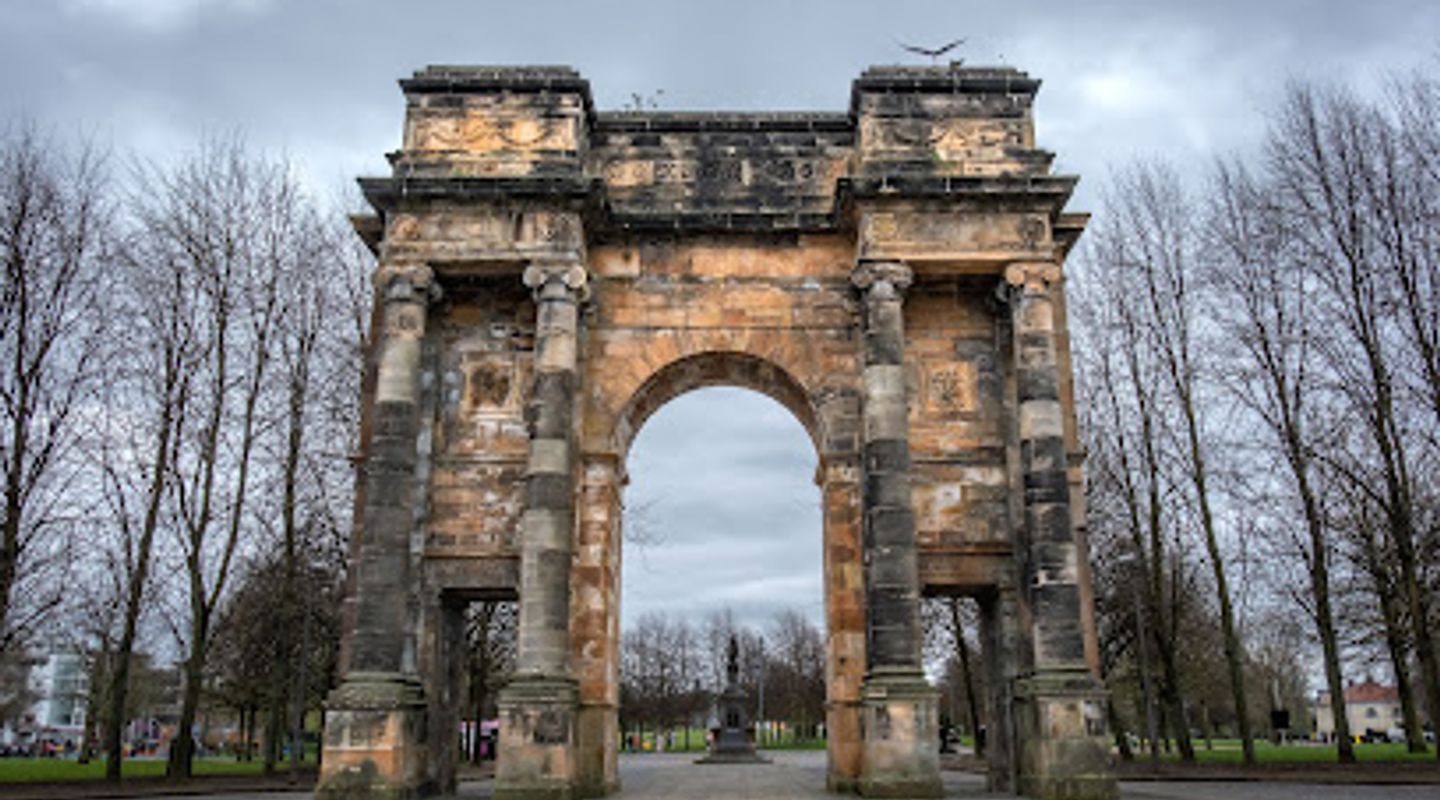
The McLennan Arch is a striking neoclassical monument standing at the entrance of Glasgow Green, the city's oldest park. Originally part of the late 18th-century Glasgow Assembly Rooms, this grand arch has been relocated multiple times before settling in its current position in 1991. It symbolizes Glasgow's rich architectural heritage and social history, serving as a picturesque gateway and a testament to the city's evolution from an industrial hub to a vibrant modern city.
On-site amenities
 Restrooms
 Seating areas
 Information boards
Opening hours
- Every dayOpen 24 hours
Opening hours as listed on the venue’s Google Business Profile. Hours can change for services and special events, so check with the venue before you go.
- Address
- Glasgow Green, Saltmarket, Glasgow G1 5JZ
- Website
Getting there
Public Transport
Bus
Walking
Discover more about McLennan Arch
Origins and Architectural Heritage
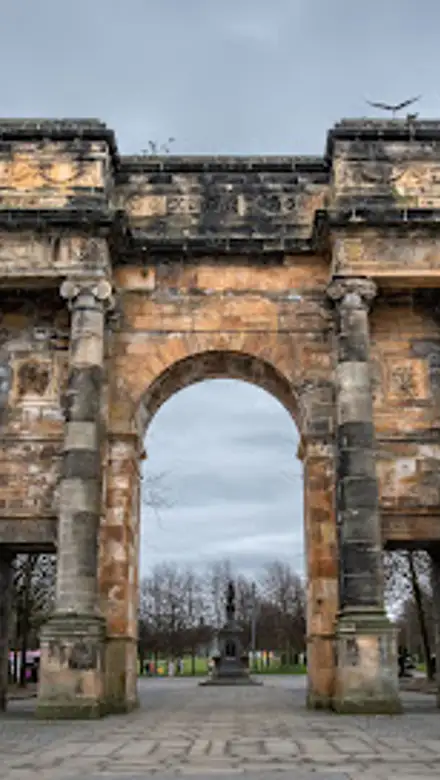
The McLennan Arch originated as the central feature of the Glasgow Assembly Rooms, designed by renowned architects Robert and James Adam in 1796. The Assembly Rooms were a social hub for Glasgow’s wealthy elite, hosting gatherings and events in an elegant neoclassical setting. The arch itself, with its four large Ionic columns and wide central opening, originally framed a grand window on Ingram Street, embodying the refined architectural tastes of the era.
Preservation and Multiple Relocations
When the Assembly Rooms were demolished in 1890 to make way for urban development, the arch was rescued by Bailie James McLennan, a prominent local merchant and philanthropist. His intervention preserved this architectural gem, which was first relocated to Monteith Row in 1893. It was subsequently moved twice more—once in 1922 to the Greendyke Street end of Glasgow Green, and finally in 1991 to its present site facing the Old High Court in the Saltmarket. Each move reflects Glasgow’s changing urban landscape and the community’s commitment to preserving its heritage.
Symbolism and Cultural Significance
More than just a monument, the McLennan Arch stands as a symbol of Glasgow’s rich history and cultural identity. Positioned at the entrance to Glasgow Green, the city’s oldest public park dating back to the 15th century, the arch marks a gateway to a space that has witnessed centuries of social, political, and cultural events. Glasgow Green itself has been a focal point for public gatherings, protests, and celebrations, making the arch a silent witness to the city’s evolving narrative.
Setting Within Glasgow Green
Glasgow Green, where the arch now stands, is a sprawling urban park on the north bank of the River Clyde. The park’s lush greenery and open spaces provide a scenic backdrop that contrasts beautifully with the classical stone of the arch. This setting enhances the arch’s visual impact, making it a favorite subject for photographers and a peaceful spot for visitors to appreciate Glasgow’s architectural past amid nature.
Architectural Details and Artistic Features
The McLennan Arch is notable for its elegant Ionic columns and the intricate stonework that adorns its façade. Two plaques above the smaller arch openings feature figures that likely represent music and the muses, linking the monument to the arts and cultural pursuits once celebrated in the Assembly Rooms. The sandstone used in its construction has weathered over time, lending the arch a dignified patina that speaks to its long history.
Legacy and Visitor Experience
Today, the McLennan Arch is more than a historical relic; it is a vibrant part of Glasgow’s urban fabric. It welcomes visitors to Glasgow Green and serves as a tangible connection to the city’s past. Whether bathed in the golden light of dawn or framed by the greenery of the park, the arch offers a moment to reflect on Glasgow’s journey through time—from its industrial roots to its present-day cultural dynamism.
Evendo Review Centre
 Google
Guest reviews
Best time to go
Quietest: Jan, Feb & Dec · before 3am
Busy times are Evendo estimates for a typical year, to help you plan. Actual crowds vary with events, school holidays and the weather.
Explore McLennan Arch on the map
A handpicked selection of must-see spots near McLennan Arch, mapped for you.
Get your free copy of our complete guide to McLennan Arch, delivered straight to you.
Everything on this page, from opening hours and how to get there to Eve’s tips and the best time to go, in one PDF you can read offline, print or share.
Already have an account? Sign in
Your McLennan Arch guide is ready.
We'll send it to · Not you? Sign out

Getting your guide ready…
We are putting together a fresh copy of the McLennan Arch guide. This can take up to a minute.
This can take a few moments. If your browser asks, choose Allow so the download can start. You'll find the guide in your Downloads folder.
Nothing happened? Download it again
Sorry, the guide is taking longer than usual. Please try again in a minute, or get it by email instead.
Unlock the best of McLennan Arch
Skip-the-line tickets, guided tours with entry, and walking tours of the area, booked in a few clicks.


Other nearby places you may find interesting
The closest places of the same kind, if this one is not quite what you had in mind.
-
-
-
-
-


Swipe for more places
More to explore near McLennan Arch

 Best experiences near McLennan Arch
 Best hotels near McLennan Arch
 Best landmarks near McLennan Arch
 Best attractions near McLennan Arch
 Best shops near McLennan Arch
 Best restaurants near McLennan Arch
 Best bars near McLennan Arch
Do you manage this location?
Take control to get all the benefits, like improved information, better appearance, and stronger visibility across AI-powered discovery.
Explore more

Explore more of Gorbals
Discover Gorbals in Glasgow: A blend of historical landmarks, cultural hubs, and green spaces, reflecting the city's rich heritage and modern vibrancy.
Explore Gorbals
Explore more of Glasgow
Discover Glasgow, Scotland's cultural capital, where history, architecture, and vibrant arts scene meet, offering a unique and unforgettable travel experience.
Explore Glasgow