

Gorbals (Glasgow) Travel Guide - Free
Explore Gorbals in Glasgow with Evendo's free guide. Find the best shops, historic streets, restaurants, and gems on web or mobile.


Gorbals in Glasgow blends working-class history, striking architecture, riverside walks, independent food spots and easy access to the city centre.
Working-Class Roots and New Urban Form
Gorbals lies immediately south of the River Clyde, close enough to Glasgow city centre for its skyline and institutions to remain part of the everyday view. Its identity was shaped by dense tenement living, industrial employment and successive waves of migration, but the neighbourhood visitors see today is largely the result of extensive twentieth-century redevelopment. Broad roads, newer housing and landscaped public spaces now stand alongside surviving Victorian buildings and older street alignments, creating a district where urban change is unusually legible.Read more about Gorbals
Landmarks of a Changing District
Everyday Southside Glasgow
Best attractions in Gorbals
Gorbals’ attractions are primarily architectural and urban rather than large ticketed institutions. The remains of Caledonia Road Church offer one of the most striking encounters, with Alexander “Greek” Thomson’s ambitious design surviving as a roofless landmark amid later housing. Gorbals Halls, a substantial historic civic building on Gorbals Street, points to the public institutions that once served the densely populated district. The streets around Crown Street and Ballater Street provide a readable contrast between Victorian remnants, post-war planning and newer regeneration. Routes towards the Clyde open broader views and connect with riverside walking, while Glasgow Green is nearby across the neighbourhood’s eastern edge rather than within Gorbals itself. The former Citizens Theatre building has cultural importance, although redevelopment means visitors should check current access arrangements. For many travellers, the principal attraction is the neighbourhood’s layered townscape and the opportunity to see how Glasgow rebuilt a historic working district.
-
 Tourist attraction
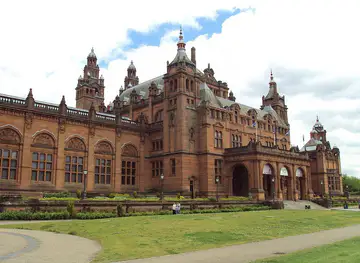
Kelvingrove Art Gallery and Museum
Explore Glasgow’s iconic Kelvingrove Art Gallery and Museum, home to diverse collections and masterpieces in a stunning historic building.
9 min drive · 2.9 km from neighbourhood centre
-
Park and Garden
George Square
Glasgow’s iconic civic square, blending historic grandeur, striking monuments, and vibrant public life at the city’s heart.
15 min walk · 1.2 km from neighbourhood centre
-
History museum
People's Palace
Discover Glasgow’s vibrant social history and tranquil Winter Gardens in a landmark museum nestled within historic Glasgow Green.
15 min walk · 1.2 km from neighbourhood centre
-
Cemetery
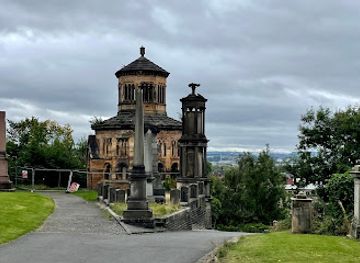
The Glasgow Necropolis
Explore Glasgow’s atmospheric Victorian garden cemetery with grand monuments, rich history, and panoramic city views.
6 min drive · 2.0 km from neighbourhood centre


Best landmarks in Gorbals
Caledonia Road Church is Gorbals’ most distinctive architectural landmark, a nineteenth-century Presbyterian church designed by Alexander “Greek” Thomson and now preserved largely as a dramatic ruin after fire and later decline. Its remaining walls and tower demonstrate Thomson’s classical imagination while also recording the physical losses that accompanied twentieth-century change. Gorbals Halls on Gorbals Street represents another aspect of local history: civic and social infrastructure built for a large working population. The surrounding street plan, surviving tenements and newer housing are landmarks in a broader sense, showing the transitions from Victorian density through post-war clearance to contemporary regeneration. The former Citizens Theatre building has been an important cultural marker on Gorbals Street, although redevelopment has affected its accessibility. These structures matter less as isolated monuments than as evidence of the institutions, beliefs and urban ambitions that shaped the district.
-
Historical landmark
McLennan Arch
A majestic neoclassical archway marking the historic entrance to Glasgow Green, symbolizing the city’s rich heritage and architectural grandeur.
8 min walk · 0.7 km from neighbourhood centre
-
Monument
Glasgow 2014 Monument
A vibrant tribute in Glasgow Green celebrating the city’s proud hosting of the 2014 Commonwealth Games and its sporting legacy.
10 min walk · 0.8 km from neighbourhood centre
-
Historical landmark
Nelson's Monument, Glasgow
A towering 44-meter obelisk on Glasgow Green honoring Admiral Nelson’s naval victories and Glasgow’s pioneering civic spirit.
12 min walk · 1.0 km from neighbourhood centre
-
Historical landmark
The Gatekeeper
A striking bronze figure guarding Glasgow’s Gorbals, blending art, history, and community spirit in a unique urban landmark.
8 min walk · 0.6 km from neighbourhood centre


Explore Gorbals on the map
A handpicked selection of must-see spots in Gorbals, mapped for you.
Best hotels in Gorbals
Best restaurants in Gorbals
Gorbals has a modest, changing dining scene rather than a concentrated restaurant quarter. Small cafés, takeaways and local eateries are found along or near the main roads, with further options around Crown Street and the approaches towards the city centre. The area’s history of migration and working-class urban life is reflected in the practical mix of food shops and casual places to eat, although the neighbourhood should not be presented as a specialist culinary enclave. Visitors seeking a broader choice can walk north across the river into the centre or east towards neighbouring districts, taking care not to confuse those areas with Gorbals itself. Independent businesses may change more quickly than the stone buildings around them, so current opening information is worth checking. Eating here works best as part of a wider exploration of the Southside, rather than as a destination built around high-profile dining.
-
Italian
Sugo Pasta
Experience authentic, handmade regional Italian pasta in Glasgow’s vibrant Merchant City at Sugo Pasta, where tradition meets lively city dining.
12 min walk · 1.0 km from neighbourhood centre
-
Restaurant
The butterfly and the pig
A whimsical haven in Glasgow offering hearty Scottish comfort food, vintage afternoon tea, and lively entertainment in a cozy shabby-chic setting.
19 min walk · 1.5 km from neighbourhood centre
-
Thai
Chaophraya
Experience authentic Thai cuisine in Glasgow’s elegant Townhouse, blending rich flavors with a sophisticated setting and vibrant cocktails.
16 min walk · 1.2 km from neighbourhood centre
-
Vegan
Mono
Glasgow’s vibrant vegan café-bar blending creative plant-based cuisine, indie music vibes, and a unique record shop atmosphere.
10 min walk · 0.8 km from neighbourhood centre


Best bars in Gorbals
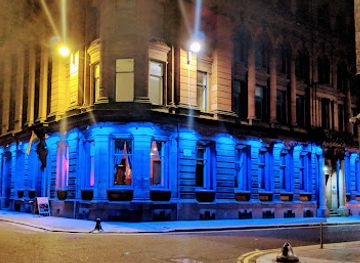
Gorbals is not one of Glasgow’s principal nightlife districts, and its evenings are generally quieter and more residential than those around Sauchiehall Street, Merchant City or the city centre. Local pubs and casual bars provide neighbourhood-scale places to meet, particularly along the main corridors, but the area has few reasons for visitors to expect a dense run of clubs. Cultural evenings connected with the wider Southside or nearby city-centre venues can broaden the options, although those destinations should be described as outside Gorbals. After dark, the most relevant local consideration is respectful movement through residential streets: keep noise down, use established routes and check transport connections in advance. The neighbourhood’s evening atmosphere is better understood through its homes, community facilities and illuminated architecture than through a dedicated late-night entertainment scene.
-
Grill
Saint Luke's & The Winged Ox
A lively Glasgow venue blending soulful cuisine, live music, and vibrant community spirit in a cozy, welcoming setting.
17 min walk · 1.4 km from neighbourhood centre
-
Grill
The Social
Cocktail haven in Merchant City with quirky drinks, wood-fired eats, terrace views, and late-night DJ vibes in Royal Exchange Square.
12 min walk · 1.0 km from neighbourhood centre
-
Brazilian
Boteco Do Brasil
Experience the vibrant spirit of Brazil in Glasgow with tropical cocktails, lively music, and authentic tapas until the early hours.
12 min walk · 0.9 km from neighbourhood centre
-
Pub
Clutha & Victoria Bar
Glasgow's 200-year-old riverside pub icon: live music, historic vibes, and Clutha spirit since 1819—pints, pizzas, and performances await.
7 min walk · 0.5 km from neighbourhood centre


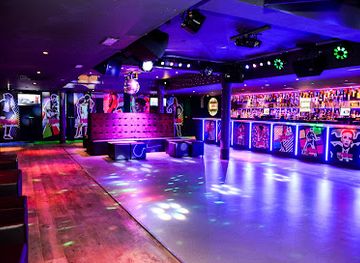
Best nightclubs in Gorbals
Gorbals is not one of Glasgow’s principal nightlife districts, and its evenings are generally quieter and more residential than those around Sauchiehall Street, Merchant City or the city centre. Local pubs and casual bars provide neighbourhood-scale places to meet, particularly along the main corridors, but the area has few reasons for visitors to expect a dense run of clubs. Cultural evenings connected with the wider Southside or nearby city-centre venues can broaden the options, although those destinations should be described as outside Gorbals. After dark, the most relevant local consideration is respectful movement through residential streets: keep noise down, use established routes and check transport connections in advance. The neighbourhood’s evening atmosphere is better understood through its homes, community facilities and illuminated architecture than through a dedicated late-night entertainment scene.
-
Gay night club
Polo Lounge
Glasgow's biggest gay club: cabaret glamour, pounding beats, and inclusive vibes across three floors till dawn.
12 min walk · 0.9 km from neighbourhood centre
-
Nightclub
Cathouse Rock Club
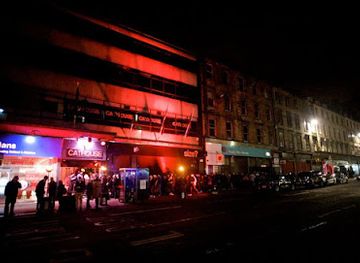
Glasgow’s long-running alternative rock and metal club — compact, loud and late-night, with multi-level rooms and a loyal scene.
11 min walk · 0.8 km from neighbourhood centre
-
Nightclub
Sub Club
Dive into Glasgow's underground heartbeat at Sub Club, where legendary house and techno beats throb through a low-ceilinged basement for 35+ years of pure rave immersion.
9 min walk · 0.7 km from neighbourhood centre
-
Nightclub
Club Tropicana & Venga
Relive 80s & 90s nightclub glory in Glasgow's city center with themed rooms, slushie cocktails, and non-stop retro hits—perfect for group celebrations.
13 min walk · 1.1 km from neighbourhood centre
Best shops in Gorbals
Shopping in Gorbals is principally local and practical, concentrated around Gorbals Street, Crown Street and adjoining neighbourhood roads rather than organised as a major retail destination. Convenience shops, food businesses, cafés and everyday services serve residents, while the compact independent offers can be useful for provisions during a walk. The neighbourhood does not have the specialist vintage, fashion or craft concentration associated with some other parts of Glasgow, and visitors should not expect a large traditional market or a continuous boutique street. For department stores and a much wider selection, the city centre is close across the river; for Southside independent retail, neighbouring districts provide alternatives outside Gorbals. The character of shopping here lies in observing how local commerce fits into regenerated housing and older streets, with individual businesses and opening arrangements subject to change.
-
Vintage Clothing Shop
Mr Ben Retro Clothing
A compact, well-curated vintage boutique in Merchant City where careful curation meets tactile, era-spanning garments and accessory finds.
9 min walk · 0.7 km from neighbourhood centre
-
Gift shop
Osiris - Alternative Fashion Store
Dive into goth, emo, and punk paradise on Queen Street—unique alternative fashion, quality jewelry, and subculture staples await in Glasgow's edgiest store.
11 min walk · 0.9 km from neighbourhood centre
-
Gift shop
Social Recluse
Discover quirky gifts, retro posters, and indie clothing in the heart of Glasgow's Merchant City—a treasure trove for unique souvenirs and stylish finds.
10 min walk · 0.8 km from neighbourhood centre
-
Convenience Store
Grab n Go convenience store
A compact, dependable convenience store on Gorbals Street offering snacks, basics and friendly counter service for locals and passersby.
2 min walk · 0.2 km from neighbourhood centre


Gorbals essentials
Getting There
Getting Around
Safety
Emergency Situations
Do's and Don'ts
Local Tips

From Eve
Local phrases worth knowing
You don't need to get them perfect. A few words go a long way, and locals appreciate the effort.
Basics
| English | Local | Say it |
|---|---|---|
| Hello | Hawrite | [huh-rite] |
| Goodbye | Cheerio | [cheer-ee-oh] |
| Yes | Aye | [ay] |
| No | Naw | [naw] |
| Please/You're welcome | Please/You're welcome | [Please/You're welcome] |
| Thank you | Cheers | [cheers] |
| Excuse me/Sorry | Excuse me/Sorry | [Excuse me/Sorry] |
| How are you? | How's it gaun? | [hows it gone] |
| Fine. And you? | A'm no bad, whit aboot yersel? | [am no bad, whit aboot yersel] |
| Do you speak English? | Dae ye speak English? | [day ye speak English] |
| I don't understand | Ah dinnae ken | [ah dinnae ken] |
Eating & Drinking
| English | Local | Say it |
|---|---|---|
| I'd like to see the menu, please | Can ah see the menu, please | [kan ah see the menu, please] |
| I don't eat meat | Ah dinnae eat meat | [ah dinnae eat meat] |
| Cheers! | Cheers! | [cheers] |
| I would like to pay, please | Ah wid like tae pay, please | [ah wid like tae pay, please] |
Emergencies
| English | Local | Say it |
|---|---|---|
| Help! | Help! | [help] |
| Go away! | Gies peace! | [geez peace] |
| Call the Police! | Phone the Polis! | [fone the polis] |
| Call a doctor! | Phone a doctor! | [fone a doctor] |
| I'm lost | Ah'm aff ma heid | [am aff ma heid] |
| I'm ill | Ah'm no' feelin' great | [am no feelin great] |
Shopping
| English | Local | Say it |
|---|---|---|
| I'd like to buy... | Ah wid like tae buy... | [ah wid like tae buy] |
| I'm just looking | Ah'm jist haein a swatch | [am jist haein a swatch] |
| How much is it? | Hoo much is it? | [hoo much is it] |
| That's too expensive | That's pure dear | [that's pure dear] |
| Can you lower the price? | Can ye gie's a discount? | [can ye gie's a discount] |
Time & Numbers
| English | Local | Say it |
|---|---|---|
| What time is it? | Whit time is it? | [whit time is it] |
| It's one o'clock | It's yin o'clock | [it's yin o'clock] |
| Half past (10) | Half ten | [half ten] |
| Morning | Mornin' | [mornin] |
| Afternoon | Efternuin | [eft-er-nuin] |
| Evening | Evenin' | [evenin] |
| Yesterday | Yesterday | [yesterday] |
| Today | The day | [the day] |
| Tomorrow | The morra | [the morra] |
| 1 | Yin | [yin] |
| 2 | Twa | [twa] |
| 3 | Three | [three] |
| 4 | Fower | [fower] |
| 5 | Fae | [fae] |
| 6 | Sixer | [sixer] |
| 7 | Seiven | [seiven] |
| 8 | Echt | [echt] |
| 9 | Niner | [niner] |
| 10 | Ten | [ten] |
Transport & Directions
| English | Local | Say it |
|---|---|---|
| Where's a/the...? | Whaur's a/the...? | [whaur's a/the] |
| What's the address? | Whit's the address? | [whit's the address] |
| Can you show me (on the map)? | Can ye show me (on the map)? | [can ye show me (on the map)] |
| When's the next (bus)? | Whit time's the next (bus)? | [whit time's the next (bus)] |
| A ticket (to ....) | A ticket (tae ....) | [a ticket (tae)] |
History of Gorbals
From Rural Estate to Glasgow Parish
The name Gorbals is generally associated with the medieval lands of the Glasgow area, and the district developed from rural and ecclesiastical land into a settled parish south of the Clyde. Gorbals was incorporated into Glasgow in 1662, an important change that brought the locality more closely into the city’s civic and economic orbit. Its position beside the river and near routes into Glasgow encouraged gradual urban growth, while the parish church and local crossing points helped give the area a recognisable centre. The neighbourhood’s later industrial importance grew from this strategic relationship with the expanding city rather than from an isolated foundation.
Industry and Dense Victorian Housing
During the nineteenth century, Glasgow’s industrial expansion transformed Gorbals into a densely populated working-class district. Factories, warehouses, workshops and employment linked to the Clyde drew workers into the area, while tenements replaced much of the earlier low-rise settlement. New churches, schools, halls and commercial premises followed, reflecting both the size and social complexity of the population. Caledonia Road Church, designed by Alexander “Greek” Thomson and opened in the 1850s, belonged to this period of ambitious civic and religious construction. The resulting neighbourhood was prosperous in architectural terms but frequently overcrowded, with sharp inequalities in housing and public health.
Migration and Urban Community
Industrial Gorbals attracted people from across Scotland and Ireland as well as Jewish, Italian and other migrant communities who contributed to its commercial, religious and social life. The district became known for crowded tenements, street markets, local shops and strong neighbourhood networks, although popular descriptions of the old Gorbals often simplified a more varied social history. Religious buildings, schools, clubs and civic halls provided important meeting places. Its proximity to factories, railway infrastructure and the Clyde made the area a practical home for workers, while the mixture of languages, faiths and occupations helped shape the distinctive urban culture remembered in local histories.
Clearance, Redevelopment and Reconstruction
From the mid-twentieth century, Glasgow’s response to overcrowding led to large-scale clearance and redevelopment across Gorbals. Many Victorian tenements were demolished, and residents were rehoused in new estates and elsewhere in the city. The rebuilt neighbourhood introduced wider roads, towers and modern flats, but the disruption of established communities and the loss of historic fabric remained contested aspects of the process. Later regeneration replaced or altered many of the early post-war structures, bringing new housing, landscaping and street layouts. Today’s Gorbals is therefore a layered landscape in which Victorian survivals, twentieth-century planning and contemporary development sit close together.
Cultural Memory in the Contemporary Gorbals
In recent decades, Gorbals has continued to change through housing investment, public-realm improvements and its growing connection with the wider Southside and city centre. The neighbourhood’s past remains visible in landmarks such as Caledonia Road Church and Gorbals Halls, while the former Citizens Theatre building on Gorbals Street has carried particular cultural significance despite redevelopment pressures and closure for restoration. Community memory, archival work and local interpretation have helped preserve stories of tenement life, migration and clearance. Gorbals is now less an entertainment quarter than a residential district whose importance lies in the way Glasgow’s social and architectural history can be read in its streets.
Gorbals in Photos
Browse through our photo collection highlighting the charm and character of the destination.
Neighbourhoods near Gorbals
The closest neighbourhoods to Gorbals, if you have time for more than one stop.
-

-

-
-


Swipe for more neighbourhoods
Explore more

Explore more of Glasgow
Glasgow blends Victorian architecture, major museums, live music and riverside culture with welcoming neighbourhoods and Scotland’s landscapes.
Explore Glasgow