

Arnside Tower, Lancashire Travel Guide
Explore Arnside Tower, a hauntingly beautiful 15th-century pele tower ruin nestled on a limestone knoll with stunning estuary views in Cumbria.
Arnside Tower is a late-medieval, L-shaped pele tower near Arnside, Cumbria, dating from the late 14th to 15th century. Originally five storeys tall, it served as a fortified residence during turbulent border times. Now a roofless ruin, it stands on a limestone knoll overlooking marshes and the Kent estuary, offering striking views from nearby footpaths. The tower’s history includes fire damage in 1602, partial dismantling in the 17th century, and storm damage in 1884. It remains a significant historic landmark owned by the Dallam Tower Estate.
A brief summary to Arnside Tower
- Carnforth, Far Arnside, GB
- Click to display
- Duration: 0.5 to 2 hours
- Free
-
 Outdoor
- Mobile reception: 4 out of 5

Know before you go
Hi, I'm Eve. Here are a few practical things to know before exploring Arnside Tower.
- View Arnside Tower safely from the adjacent public footpath; the ruins are unstable and not recommended for close entry.
- Bring a camera with a good zoom lens to capture detailed shots of the tower’s architectural features from a distance.
- Visit on clear days for the best panoramic views of the Kent estuary and surrounding marshlands.
- Wear sturdy footwear as the incline to the tower is gentle but the terrain can be rocky in places.
Do you manage this location?
Take control to get all the benefits, like improved information, better appearance, and stronger visibility across AI-powered discovery. Learn more about listing your business on Evendo
Activate your presenceOther nearby places you may find interesting
The closest places of the same kind, if this one is not quite what you had in mind.


Explore Arnside Tower on the Map
A handpicked selection of must-see spots near Arnside Tower, mapped for you.
Getting There
-
Bus
Take the local bus service from Carnforth or Milnthorpe to Arnside village, a journey of approximately 20-30 minutes. From Arnside, the tower is about 2 km away on foot via rural paths. Bus services run several times daily, with fares around £3-£5.
-
Car
Driving from Carnforth or Milnthorpe takes about 10-15 minutes. Parking is limited near the tower; visitors should park in Arnside village and walk the 2 km countryside path to the site. The terrain includes gentle inclines and some rocky sections.
-
Walking
For walkers, a scenic 2 km hike from Arnside village to the tower is recommended. The trail features gentle inclines and uneven, rocky ground, suitable for those with moderate fitness. Allow 30-45 minutes each way.
For the on-the-go comforts that matter to you
-
 Seating Areas
-
 Information Boards
Discover more about Arnside Tower
Origins and Architectural Distinction
Arnside Tower is a remarkable example of a late medieval pele tower, constructed in the late 14th or early 15th century. Unlike many pele towers in Cumbria, Arnside Tower features an unusual L-shaped design more common in Scottish tower houses, providing increased living space and defensive advantages. Originally, the tower rose five storeys high, built from limestone rubble atop a natural limestone knoll, strategically positioned to overlook the Kent estuary and marshes. Its design shares similarities with notable structures such as Ashby de la Zouch Castle and Barden Tower, reflecting influences from both English and Scottish medieval architecture.Historical Role and Ownership
The tower was likely built to provide protection against Border Reivers—raiders common in the Anglo-Scottish borderlands during the medieval period. Arnside Tower’s earliest recorded mention dates to 1517, linked to the Middleton family, with ownership later passing to the Stanley family for over 300 years. In 1815, it was sold to Daniel Wilson of the Dallam Tower Estate, which still owns the site. The tower’s history is marked by a significant fire in 1602, probably accidental, after which it was repaired and modernized. It remained occupied into the late 18th century before partial dismantling and decay set in.Structural Changes and Decline
The 1602 fire led to changes in the tower’s defensive features, including the addition of larger windows as the border region became more peaceful under unified English and Scottish rule. In 1884, a severe storm caused the collapse of the south-west wall and central partition, leaving the tower roofless and floorless. Despite some structural repairs in recent decades, the tower is classified as a Scheduled Monument and Grade II* listed building but remains in a ruinous state, with interior access discouraged due to safety concerns.Setting and Visitor Experience
Arnside Tower stands amid fields near Arnside Knott, a prominent hill offering panoramic views of the Kent estuary and surrounding countryside. Visitors can enjoy excellent views of the tower from a public footpath running alongside it, capturing its dramatic silhouette framed by trees and open skies. The tower’s remote and tranquil setting invites reflection on its storied past and the rugged landscape that shaped its purpose.Conservation and Significance
Recognized for its regional and national historic importance, Arnside Tower has been the focus of conservation interest since the early 2000s. Collaborative efforts involving the Dallam Tower Estate, local councils, and heritage organizations aim to preserve the structure despite ongoing challenges from weathering and neglect. The tower stands as a poignant reminder of the border conflicts and feudal history of northern England, embodying architectural and cultural heritage unique to Cumbria.Architectural Features and Interior Remnants
Although largely a shell today, the tower’s surviving walls reveal doorways, fireplaces, and possibly a piscina on the first floor. The turret staircase remains largely intact, hinting at the tower’s original layout with service rooms on the ground floor, a hall above, and sleeping quarters and storage on upper levels. The building’s thick walls and vaulted rooms underscore its defensive and domestic functions, blending comfort with security in a turbulent era.












Your all‑in‑one travel companion app
Explore expert travel guides, compare and book tours, experiences, hotels, and more—all from the palm of your hand. Download now for seamless trip planning wherever your wanderlust takes you.


Explore More of Lancashire
Looking beyond Arnside Tower? Discover Lancashire for broader travel guides, local hot-spots, and regional highlights.
Explore Lancashire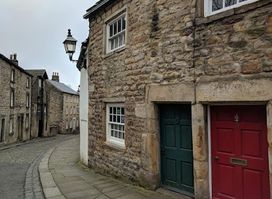
Step into 18th-century Lancaster at The Cottage Museum, a tiny immersive home showcasing working-class life and rich local history.

Discover the enchanting limestone gorge and legendary Fairy Steps near Milnthorpe, a scenic family-friendly walk rich in natural beauty and folklore.
