Temple Works, Leeds Travel Guide
Free Guide: Discover Temple Works, Leeds’ iconic Egyptian Revival flax mill blending industrial heritage with architectural grandeur and future cultural renewal.


A brief summary of Temple Works
Discover Temple Works, Leeds’ iconic Egyptian Revival flax mill blending industrial heritage with architectural grandeur and future cultural renewal.
Temple Works is a Grade I listed former flax mill in Holbeck, Leeds, renowned for its striking Egyptian Revival architecture and industrial heritage. Built between 1836 and 1840, it features a vast single-storey weaving shed with a grass-covered roof once grazed by sheep to regulate humidity. Now undergoing redevelopment, Temple Works stands as a unique testament to Leeds’ 19th-century industrial innovation and architectural ambition.
On-site amenities
 Information boards
 Seating areas
 Trash bins
Opening hours
- MonOpen 24 hours
- TueClosed
- Wed7 am–9 pm
- Thu7 am–9 pm
- Fri7 am–9 pm
- Sat12 pm–5 pm
- SunOpen 24 hours
Opening hours as listed on the venue’s Google Business Profile. Hours can change for services and special events, so check with the venue before you go.
- Address
- 17 Marshall St, Holbeck, Leeds LS11 9EH
- Phone
- Website
Getting there
Public Bus
Train and Walk
Taxi or Rideshare
Discover more about Temple Works
Architectural Grandeur Inspired by Ancient Egypt
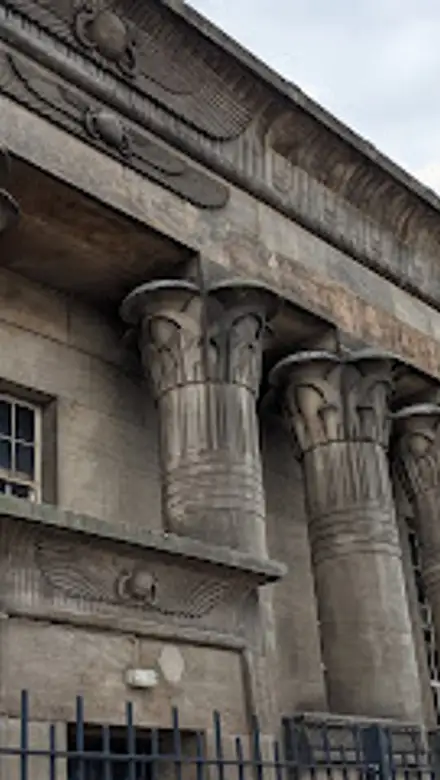
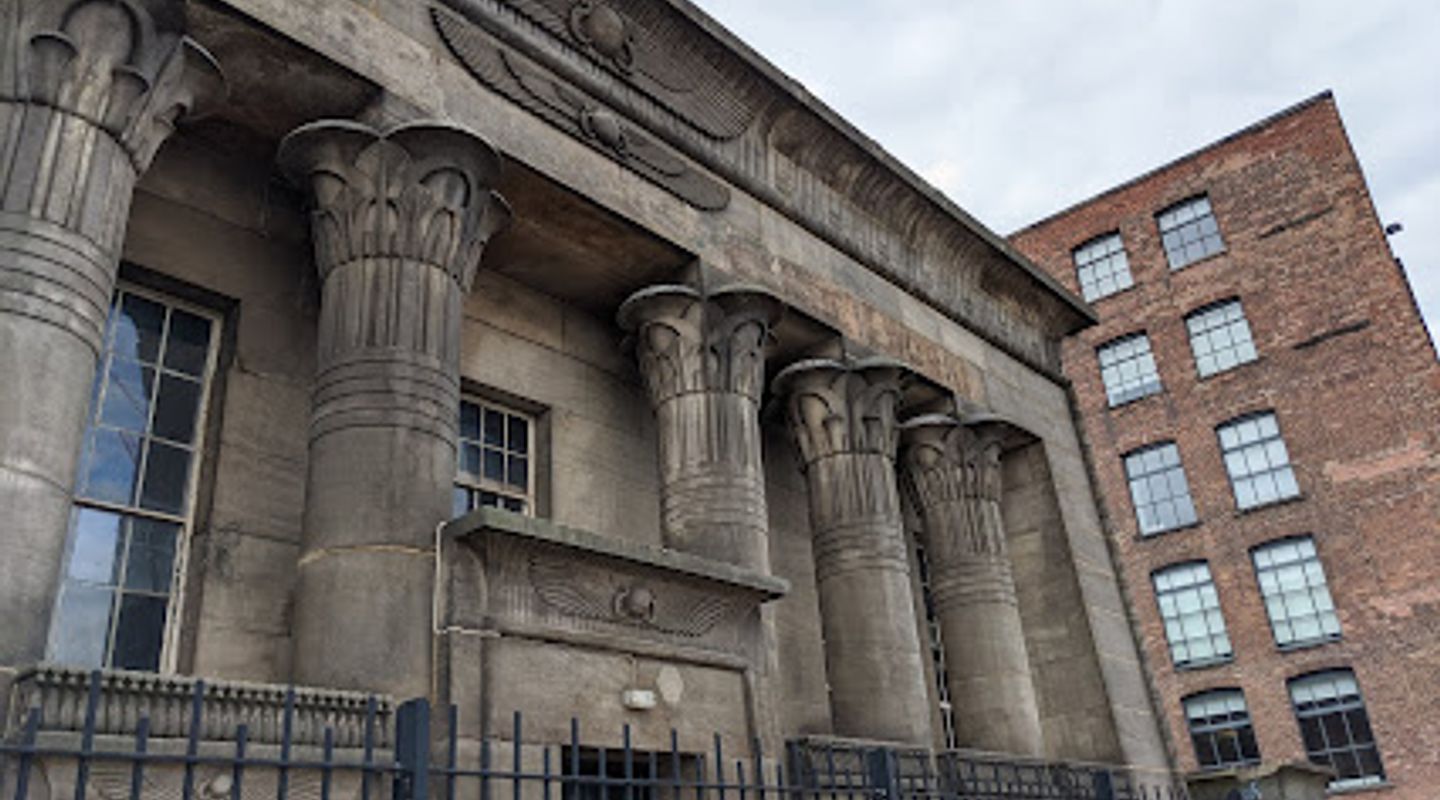
Temple Works is an extraordinary example of Egyptian Revival architecture, designed by Joseph Bonomi the Younger and engineer James Coombe in the mid-19th century. Its façade is modeled on the Temple of Horus at Edfu, Egypt, making it a distinctive landmark in Leeds. The building’s design was not merely aesthetic; it was functional, housing one of the largest single-room weaving sheds in the world at the time. The roof was famously turfed and maintained with grazing sheep to control humidity, essential for flax processing.
Industrial Innovation at Its Peak
Constructed between 1836 and 1840 for industrialist John Marshall, Temple Works was built to accommodate advanced flax spinning and weaving machinery powered by a 240-horsepower double-beam engine. The mill’s single-storey design allowed for expansive, well-lit workspaces illuminated by large conical glass skylights. Underground vaulted cellars contained passageways, workshops, and workers’ baths, reflecting progressive industrial welfare for its era.
Historical Significance and Social Legacy
Temple Works played a pivotal role in Leeds’ industrial boom, symbolizing the city’s global prominence in textile manufacturing. It employed thousands and was notable for its scale and ambition. After the decline of textile production in the mid-20th century, the building found new use as a warehouse before falling vacant in the early 2000s. Its Grade I listing recognizes both its architectural uniqueness and its social history spanning generations of industrial workers.
Challenges and Preservation Efforts
Though a beloved landmark, Temple Works has faced significant structural challenges, including roof collapses and deterioration due to decades of vacancy. Recent efforts have secured government grants aimed at restoration and adaptive reuse, including plans to transform the site into a cultural hub such as the British Library North. These initiatives reflect a commitment to preserving this industrial heritage while revitalizing the Holbeck area.
Visitor Experience and Current Status
Currently, Temple Works is primarily accessible for exterior viewing as redevelopment continues. Its location in Holbeck is easily reachable from Leeds city centre, with scenic walks along the canal enhancing the approach. Photography enthusiasts are drawn to its iconic façade and industrial details, especially in morning light. While interior access is limited, the building’s scale and historic aura offer a compelling glimpse into Leeds’ industrial past.
Future Prospects and Cultural Impact
The restoration of Temple Works is poised to breathe new life into this architectural gem, blending heritage with contemporary cultural use. Its transformation is anticipated to contribute significantly to the regeneration of South Bank Leeds, fostering community engagement and celebrating the city’s industrial legacy. Temple Works remains a powerful symbol of innovation, resilience, and the enduring spirit of Leeds.
Evendo Review Centre
 Google
Guest reviews
Best time to go
Quietest: Jan, Feb & Dec · before 6am or at 8pm
Busy times are Evendo estimates for a typical year, to help you plan. Actual crowds vary with events, school holidays and the weather.
Explore Temple Works on the map
A handpicked selection of must-see spots near Temple Works, mapped for you.
Get your free copy of our complete guide to Temple Works, delivered straight to you.
Everything on this page, from opening hours and how to get there to Eve’s tips and the best time to go, in one PDF you can read offline, print or share.
Already have an account? Sign in
Your Temple Works guide is ready.
We'll send it to · Not you? Sign out

Getting your guide ready…
We are putting together a fresh copy of the Temple Works guide. This can take up to a minute.
This can take a few moments. If your browser asks, choose Allow so the download can start. You'll find the guide in your Downloads folder.
Nothing happened? Download it again
Sorry, the guide is taking longer than usual. Please try again in a minute, or get it by email instead.
Other nearby places you may find interesting
The closest places of the same kind, if this one is not quite what you had in mind.
-
-
-
-
-


Swipe for more places
More to explore near Temple Works

 Best experiences near Temple Works
 Best hotels near Temple Works
 Best landmarks near Temple Works
 Best attractions near Temple Works
 Best shops near Temple Works
 Best restaurants near Temple Works
 Best bars near Temple Works
Do you manage this location?
Take control to get all the benefits, like improved information, better appearance, and stronger visibility across AI-powered discovery.
Explore more

Explore more of Leeds
Discover Leeds: A dynamic city where history meets innovation, offering cultural treasures, stunning architecture, and a gateway to the scenic Yorkshire Dales.
Explore Leeds
Explore more of United Kingdom
Discover the United Kingdom: A blend of rich history, stunning landscapes, and vibrant cities, offering a unique travel experience for every visitor.
Explore United Kingdom