

Walmgate, Leeds Travel Guide
Free Guide: Medieval street where York's industrial past meets Georgian grandeur and Victorian social history.


A brief summary of Walmgate
Medieval street where York's industrial past meets Georgian grandeur and Victorian social history.
Walmgate is a historic street in York's medieval core, stretching 600 meters from Foss Bridge to Walmgate Bar—one of the city's most significant gateways. This atmospheric thoroughfare reveals layers of York's past, from Anglo-Scandinavian settlements through industrial Victorian times. The street is lined with Grade II listed buildings, medieval churches, and archaeological treasures, making it essential for understanding York's evolution as a major medieval trading and manufacturing hub.
On-site amenities
 Food options
 Drink options
 Restrooms
 Information boards
 Seating areas
- Address
- York
Getting there
Walking from York City Centre
Bus from York Station
Cycling from York Centre
Parking near Walmgate
Discover more about Walmgate
A Gateway Through Time
Walmgate is one of York's most historically layered streets, running 600 meters from Foss Bridge to Walmgate Bar, one of the four principal gateways through the medieval city walls. The street likely follows a Roman road alignment, though definitive evidence of Roman settlement remains limited. What is certain is that Walmgate became a vital thoroughfare during the Anglo-Scandinavian period, when the area saw the establishment of stake and wattle buildings dating to the 10th century. The street's name itself carries this cultural heritage—originally known as Walbegate, with "Walbe" likely deriving from an Anglo-Scandinavian personal name, reflecting the region's blend of Norse and Saxon influences.
Medieval Industrial Heart
During the medieval period, Walmgate evolved into York's primary industrial and commercial hub, sandwiched between the city's defensive walls and the River Foss. Archaeological excavations have revealed a complex sequence of buildings spanning from the 10th to the 20th century, uncovering evidence of workshops, craftspeople, and merchants who shaped the city's economy. The street hosted numerous guildhalls and served as a major trading artery, with burgage plots—the characteristic long, narrow medieval property divisions—still visible in the street's layout today. This industrial character persisted through the post-medieval period, with foundries, tanneries, breweries, and flour mills operating along the street and its adjacent waterways after the River Foss was canalized.
St Denys Church: A Hidden Gem
Located on Walmgate stands St Denys Church, one of York's most atmospheric but often-overlooked holy sites. The church occupies a site with continuous human use since Roman times—an altar dedicated to the Roman god Arciaco was unearthed during 19th-century excavations. The earliest Christian structure was likely built before the Norman Conquest, evidenced by two Anglo-Danish gravestones from the 10th or 11th century, now housed in the Yorkshire Museum. A Norman church was certainly erected before 1154. The building that survives today is a palimpsest of medieval construction: the North Aisle contains some of York's oldest stained glass, including 13th-century circular medallions and 14th-century windows depicting St John the Baptist and scenes of the Crucifixion. The South Aisle, built between 1416 and 1460 as the Chapel of St Catherine, features four 12th-century carved stones reclaimed from the original Norman church. The church has endured considerable damage over the centuries—the tower collapsed in 1846 and was rebuilt, and the west wall fell in 1797—yet it remains a testament to medieval craftsmanship and resilience.
Victorian Transformation and Social History
By the 19th century, Walmgate had transformed dramatically from a prosperous medieval trading street into one of York's most notorious slum areas. The Irish potato famine of 1846–1851 brought hundreds of Irish families to York, many seeking work on the newly constructed railways. Walmgate's long, narrow medieval plots became densely packed with overcrowded tenements and unhealthy courts. At its peak, the area housed approximately 4,919 residents, with some yards containing over 170 people in just 16 cottages. The street was lined with roughly 30 public houses, many of them among the worst in the city—the Three Cups Inn at number 5 was closed in 1907 after being identified as one of York's six worst establishments. This social crisis was documented in Seebohm Rowntree's pioneering 1901 sociological study, "Poverty: a Study of Town Life," which exposed the desperate living conditions and inadequate wages of York's working classes. Since the Second World War, the slums have been cleared, and Walmgate has evolved into one of the city's secondary trading areas.
Architectural Heritage and Listed Buildings
Today, Walmgate is lined with 65 Grade II listed buildings and 7 Grade II* listed buildings, predominantly dating from the 17th to 19th centuries. These structures reveal the street's changing fortunes and architectural preferences across centuries. Many buildings were refaced with brick in the late 18th century and further altered during the 19th century, yet their underlying medieval foundations and plot boundaries often survive. The street's character area is recognized as one of York's most significant archaeological zones, with sub-surface remains providing invaluable evidence of daily life, diet, construction techniques, and commercial activities across a thousand years of urban development.
Walmgate Bar: Medieval Fortress Gateway
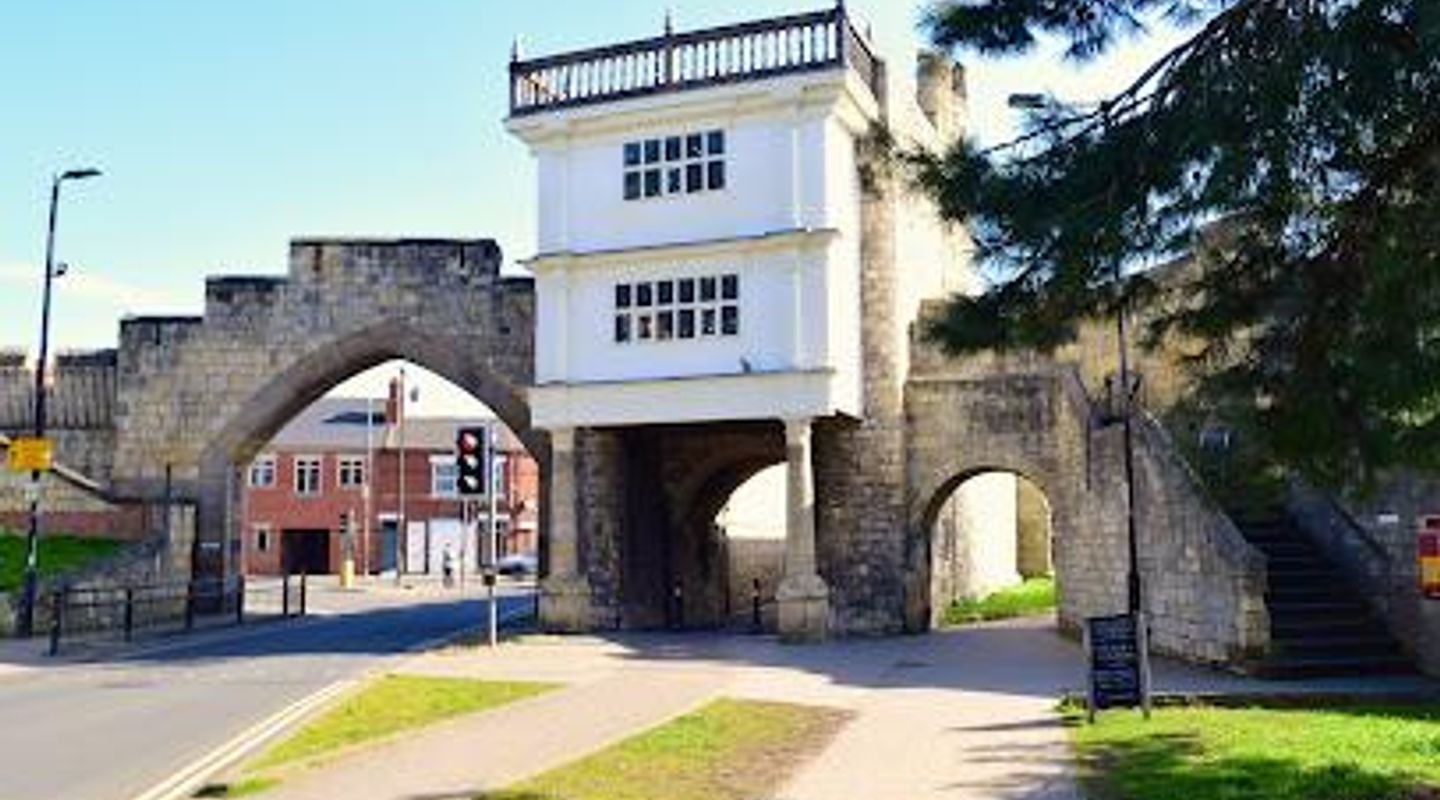
At the eastern terminus of the street stands Walmgate Bar, one of York's most distinctive medieval monuments and the only English town gate to retain its original barbican. The structure's origins trace to the 12th century with a stone archway, to which a 14th-century barbican was added—a defensive outwork unique among English gateways. The 15th-century oak doors and functional portcullis are historically accurate reproductions, while an Elizabethan house extends over the gateway, supported by stone Tuscan columns, adding domestic history to the gate's martial past. The bar witnessed pivotal moments in York's history: it was set ablaze by rebels in 1489 during tax riots and withstood cannon bombardment during the 1644 siege of York. This layering of architectural styles—from medieval military engineering to Renaissance domestic comfort—encapsulates the gate's evolution from pure fortress to integrated urban structure.
Evendo Review Centre
 Google
Guest reviews
Best time to go
Quietest: Jan, Feb & Mar · before 6am or at 10pm
Busy times are Evendo estimates for a typical year, to help you plan. Actual crowds vary with events, school holidays and the weather.
Explore Walmgate on the map
A handpicked selection of must-see spots near Walmgate, mapped for you.
Get your free copy of our complete guide to Walmgate, delivered straight to you.
Everything on this page, from opening hours and how to get there to Eve’s tips and the best time to go, in one PDF you can read offline, print or share.
Already have an account? Sign in
Your Walmgate guide is ready.
We'll send it to · Not you? Sign out

Getting your guide ready…
We are putting together a fresh copy of the Walmgate guide. This can take up to a minute.
This can take a few moments. If your browser asks, choose Allow so the download can start. You'll find the guide in your Downloads folder.
Nothing happened? Download it again
Sorry, the guide is taking longer than usual. Please try again in a minute, or get it by email instead.
Unlock the best of Walmgate
Skip-the-line tickets, guided tours with entry, and walking tours of the area, booked in a few clicks.

Other nearby places you may find interesting
The closest places of the same kind, if this one is not quite what you had in mind.
-
-
-
-
-


Swipe for more places
More to explore near Walmgate

 Best experiences near Walmgate
 Best hotels near Walmgate
 Best landmarks near Walmgate
 Best attractions near Walmgate
 Best shops near Walmgate
 Best restaurants near Walmgate
 Best bars near Walmgate
Do you manage this location?
Take control to get all the benefits, like improved information, better appearance, and stronger visibility across AI-powered discovery.
Explore more

Explore more of Leeds
Discover Leeds: A dynamic city where history meets innovation, offering cultural treasures, stunning architecture, and a gateway to the scenic Yorkshire Dales.
Explore Leeds
Explore more of United Kingdom
Discover the United Kingdom: A blend of rich history, stunning landscapes, and vibrant cities, offering a unique travel experience for every visitor.
Explore United Kingdom
