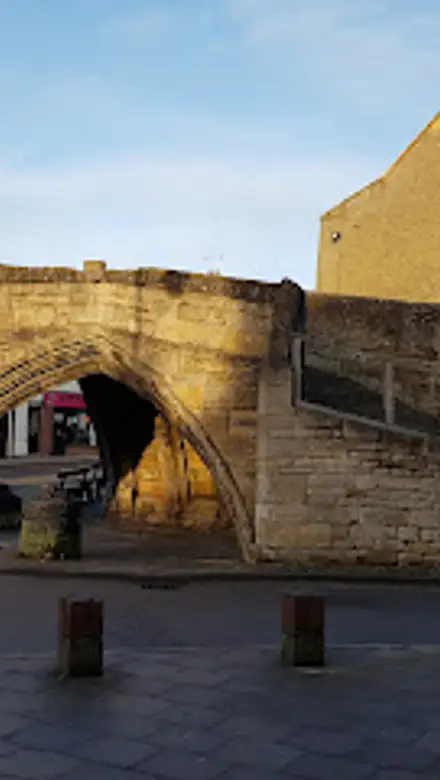
Trinity Bridge Travel Guide
Free Guide: A unique 14th-century three-way stone bridge in the heart of Crowland, once spanning two rivers, now a striking medieval monument in the town centre.


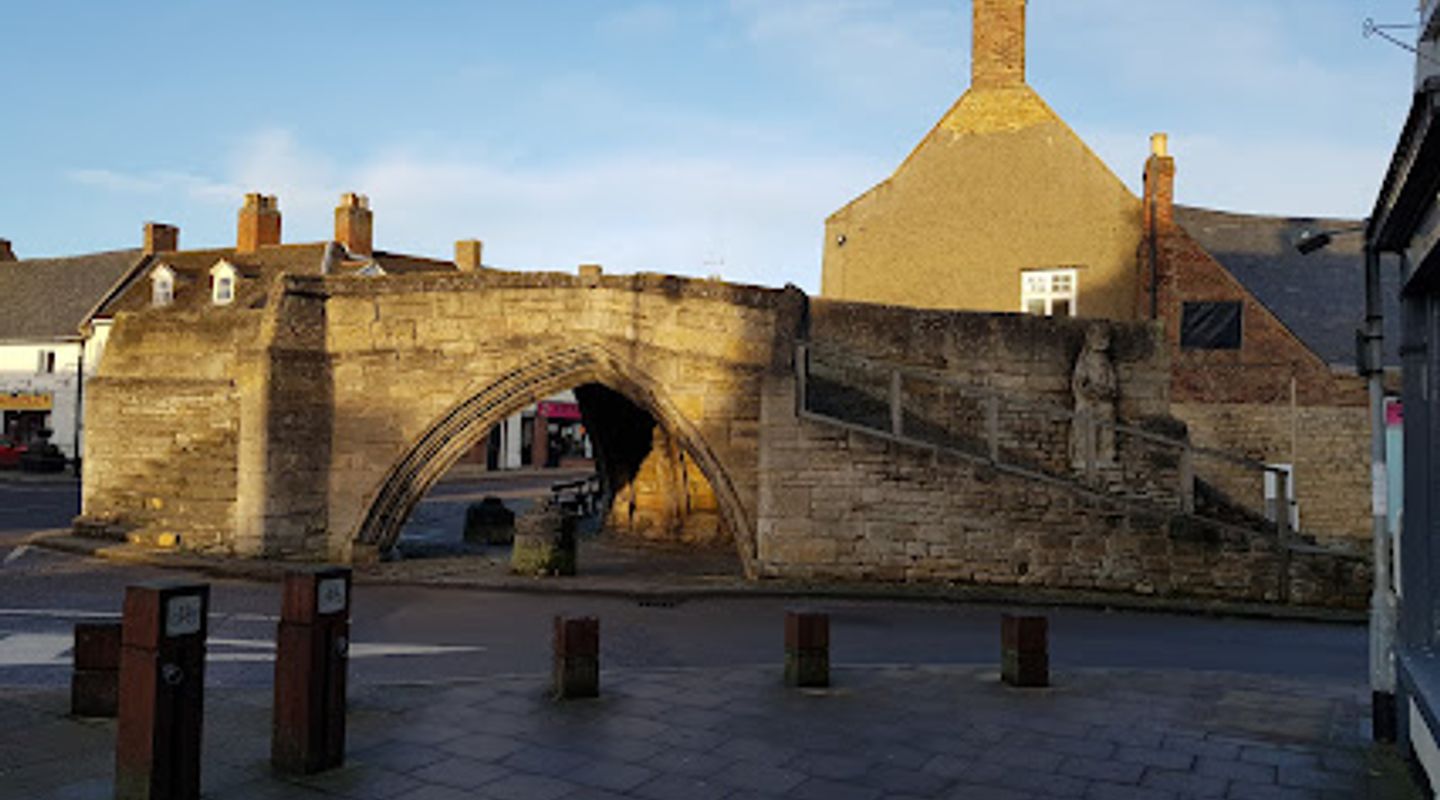
A brief summary of Trinity Bridge
A unique 14th-century three-way stone bridge in the heart of Crowland, once spanning two rivers, now a striking medieval monument in the town centre.
Trinity Bridge in Crowland is a unique 14th-century three-way stone arch bridge, once spanning the River Welland and a tributary at their confluence. Built between 1360 and 1390 from Barnack stone, it now stands in the town centre as a Grade I listed scheduled monument. Though the rivers were rerouted in the 17th century, the bridge remains a remarkable medieval engineering feat and a striking landmark. Its three steep stairways meet at a central platform, once used by preachers and pilgrims approaching Crowland Abbey. No admission fee; ideal for a short, atmospheric visit.
On-site amenities
 Restrooms
 Drink options
 Food options
 Seating areas
 Trash bins
 Information boards
Opening hours
- Every dayOpen 24 hours
Opening hours as listed on the venue’s Google Business Profile. Hours can change for services and special events, so check with the venue before you go.
- Address
- Crowland, Peterborough PE6 0EN
Getting there
Bus
Car
Walking
Bicycle
Discover more about Trinity Bridge
A Bridge to Nowhere, Built for Two Rivers
Trinity Bridge in Crowland is one of Britain’s most unusual medieval structures: a three-way stone arch bridge that once spanned the confluence of the River Welland and its tributary, Cat’s Water. Constructed between 1360 and 1390, it replaced an earlier wooden crossing and was designed as an economical solution to connect three arms of the medieval road network across two watercourses. The bridge’s three elegant Gothic arches meet at a central platform, forming a Y-shaped crossing that eliminated the need for three separate bridges. Built from Barnack limestone, a fine building stone quarried about 10 miles away and transported by barge along the Welland, the bridge reflects the importance of Crowland as a fenland market town and religious centre.
From River Crossing to Town Centre Monument
The landscape around Crowland has changed dramatically since the Middle Ages. In the 17th century, large-scale drainage of the Fens and the rerouting of the River Welland left Trinity Bridge high and dry, no longer spanning any water. Today, it stands in the middle of Crowland’s High Street, a striking stone island in the heart of the town. The original gentle ramps have long since been replaced by steep stone steps on each arm, making the climb to the central platform a tangible connection to centuries of foot traffic. Though it no longer serves its original function, the bridge remains a powerful symbol of Crowland’s medieval past and its role as a crossing point in a once watery, island-like fenland environment.
Architecture and Symbolism
Trinity Bridge is a Grade I listed building and a scheduled ancient monument, recognised for its rarity and historical significance. Its three arches are often interpreted as a representation of the Holy Trinity, giving the bridge its name. The structure is built of finely dressed Barnack stone, with later repairs in Ancaster limestone visible in the upper sections. At the apex once stood a large cross, and the platform may have been used by preaching monks and as a focal point for pilgrims approaching Crowland Abbey. The bridge’s form – a single, complex structure serving three directions – speaks to both practical engineering and a desire to create a visually impressive and spiritually resonant landmark in the town centre.
Life Around the Bridge
Crowland itself was a thriving fenland market town, granted a charter by King Stephen in 1142 and later allowed a fair and market by Henry VI. The presence of the great Benedictine abbey made it a destination for pilgrims, and Trinity Bridge would have been a key access point for visitors and traders. The suppression of the monastery in the 16th century and the subsequent drainage of the Fens diminished Crowland’s importance, but the bridge endures as a focal point of the town. Today, it stands amid the quiet streets of Crowland, surrounded by historic buildings and the remains of the abbey, with occasional outdoor religious services still held on its platform, maintaining a thread of continuity with its medieval past.
Visiting Trinity Bridge
Trinity Bridge is freely accessible at all times, making it an easy and atmospheric stop in the heart of Crowland. The climb up the steep steps offers a moment to appreciate the scale and craftsmanship of this medieval structure, as well as views across the town. Informative plaques explain its history and construction, helping visitors imagine the rivers that once flowed beneath it. The bridge is best combined with a visit to the nearby ruins of Crowland Abbey and a stroll through the historic town centre. It’s a place that rewards a slow, thoughtful visit, where the layers of history – from the 8th-century abbey to the 17th-century drainage works – are written into the very fabric of the town.
Evendo Review Centre
 Google
Guest reviews
Best time to go
Quietest: Jan, Feb & Dec · before 3am
Busy times are Evendo estimates for a typical year, to help you plan. Actual crowds vary with events, school holidays and the weather.
Explore Trinity Bridge on the map
A handpicked selection of must-see spots near Trinity Bridge, mapped for you.
Get your free copy of our complete guide to Trinity Bridge, delivered straight to you.
Everything on this page, from opening hours and how to get there to Eve’s tips and the best time to go, in one PDF you can read offline, print or share.
Already have an account? Sign in
Your Trinity Bridge guide is ready.
We'll send it to · Not you? Sign out

Getting your guide ready…
We are putting together a fresh copy of the Trinity Bridge guide. This can take up to a minute.
This can take a few moments. If your browser asks, choose Allow so the download can start. You'll find the guide in your Downloads folder.
Nothing happened? Download it again
Sorry, the guide is taking longer than usual. Please try again in a minute, or get it by email instead.
Other nearby places you may find interesting
The closest places of the same kind, if this one is not quite what you had in mind.
-
The Jubilee Clock Tower A striking Victorian landmark in Skegness, the Jubilee Clock Tower commemorates Queen Victoria’s Diamond Jubilee and anchors the town’s historic seaside charm.
-
Gainsborough Old Hall A 15th-century timber-framed manor where Tudor royalty dined and religious reformers found refuge before sailing to America.
-
Tupholme Abbey Medieval monastery transformed: where Premonstratensian canons once prayed, Tudor mansions rose and farmland endured.
-
Lincoln Museum Explore the life and legacy of Abraham Lincoln through immersive exhibits, rare artifacts, and interactive storytelling in Springfield, Illinois.
-
Pottergate Arch Step through Pottergate Arch, Lincoln’s medieval gateway guarding the sacred Cathedral Close since the 13th century.
Swipe for more places
More to explore near Trinity Bridge

 Best experiences near Trinity Bridge
 Best hotels near Trinity Bridge
 Best landmarks near Trinity Bridge
 Best attractions near Trinity Bridge
 Best shops near Trinity Bridge
 Best restaurants near Trinity Bridge
 Best bars near Trinity Bridge
Do you manage this location?
Take control to get all the benefits, like improved information, better appearance, and stronger visibility across AI-powered discovery.
Explore more
Explore more of Lincolnshire
Discover Lincolnshire: Historic cathedrals, scenic countryside, charming villages, and coastal delights in England's hidden gem.
Explore Lincolnshire
Explore more of United Kingdom
Discover the United Kingdom: A blend of rich history, stunning landscapes, and vibrant cities, offering a unique travel experience for every visitor.
Explore United Kingdom