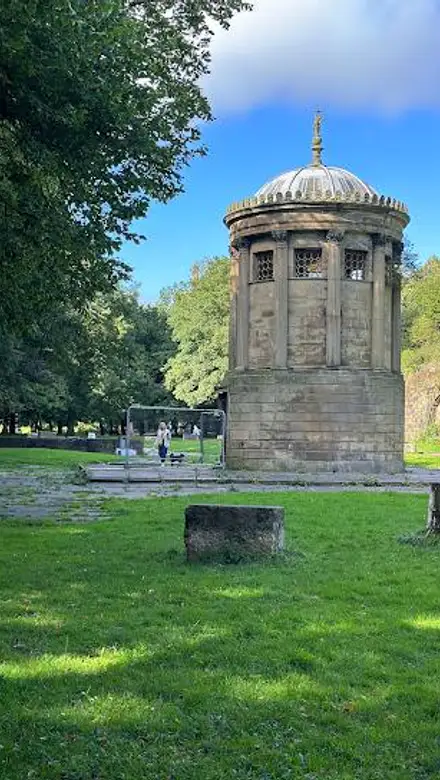
Huskisson Memorial, Liverpool Travel Guide
Free Guide: Discover Liverpool’s Huskisson Memorial, a poignant mausoleum honoring the first railway fatality and a symbol of industrial history.


A brief summary of Huskisson Memorial
Discover Liverpool’s Huskisson Memorial, a poignant mausoleum honoring the first railway fatality and a symbol of industrial history.
The Huskisson Memorial in Liverpool is a solemn mausoleum dedicated to William Huskisson, the first notable railway fatality in history. Located at Cathedral Gate near Upper Duke Street, this classical monument commemorates Huskisson’s tragic death during the opening of the Liverpool-Manchester railway in 1830. It stands as a poignant reminder of the dawn of the railway age and Liverpool’s rich industrial heritage.
On-site amenities
 Seating areas
 Information boards
Opening hours
- Every day7 am–10 pm
Opening hours as listed on the venue’s Google Business Profile. Hours can change for services and special events, so check with the venue before you go.
- Address
- Cathedral Gate, Upper Duke St, Hope St, Upper Parliament St, St James Rd, Liverpool L1 7AZ
- Website
Getting there
Train
Bus
Walking
Discover more about Huskisson Memorial
The Tragic Legacy of William Huskisson
William Huskisson was a prominent British statesman and Member of Parliament for Liverpool who became the first widely recognized casualty of a railway accident. On September 15, 1830, during the opening of the Liverpool-Manchester railway—the world’s first purpose-built passenger line—Huskisson was fatally injured by the locomotive known as the Rocket. Despite his prominence and political achievements, Huskisson is chiefly remembered for this tragic event, which marked a pivotal moment in transport history.
Architectural Significance and Location
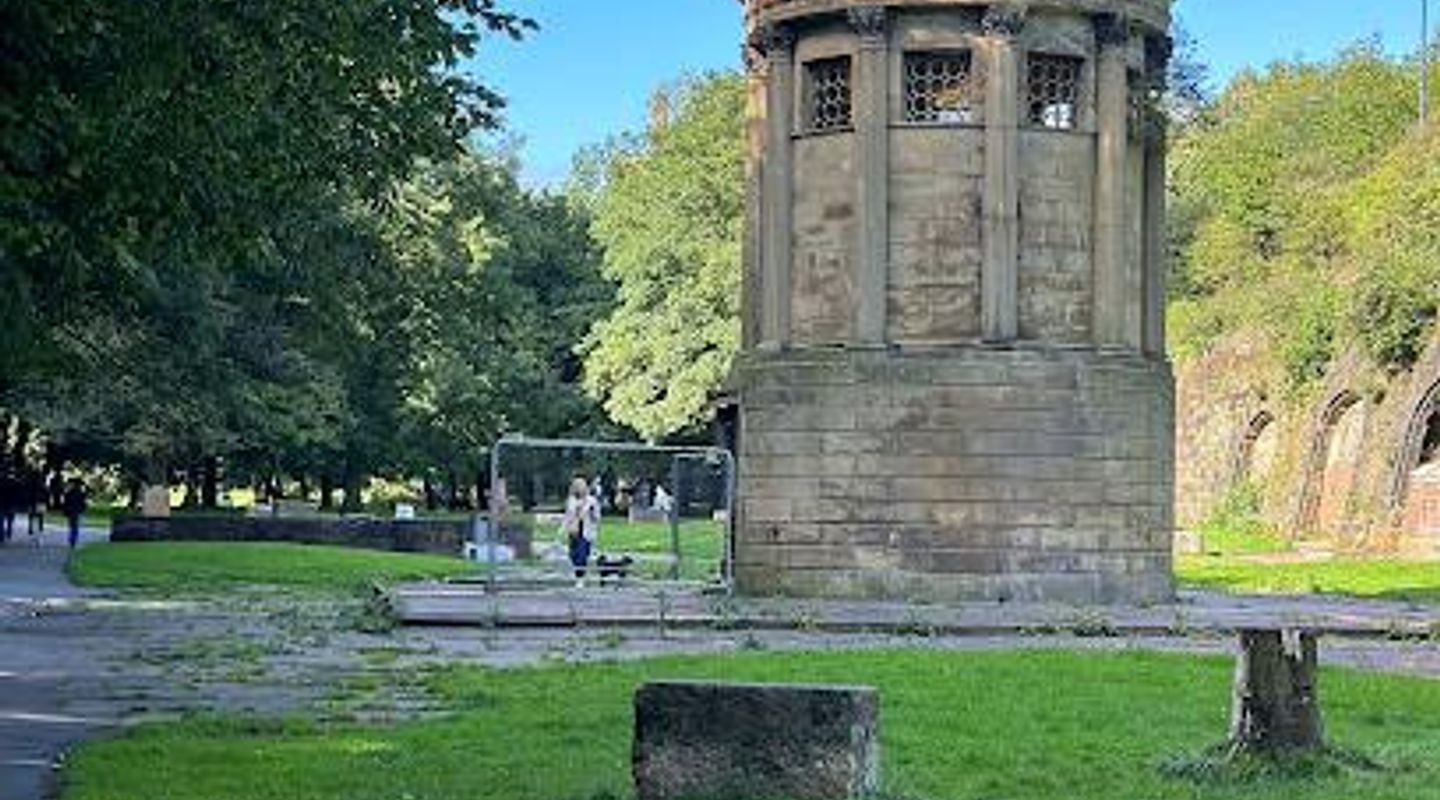
The Huskisson Memorial, completed in 1831, is a classical mausoleum-style monument situated at Cathedral Gate, Upper Duke Street in Liverpool. Its design echoes aristocratic grand tours of Italy, contrasting with the industrial revolution it commemorates. The memorial’s white stone structure is modest yet dignified, nestled amidst the urban fabric near Liverpool’s historic railway sites, serving as a quiet landmark amid the city’s bustling streets.
Historical Context and Symbolism
Huskisson’s death occurred during an era of rapid technological and social change. The Liverpool-Manchester railway symbolized progress and industrial might, yet Huskisson’s accident underscored the risks of this new age. His memorial not only honors his memory but also reflects the complex legacy of early railways—innovation shadowed by human cost. Huskisson’s political career, including his opposition to immediate abolition of slavery, adds layers to his historical narrative, making the memorial a site of reflection on both progress and controversy.
Surrounding Heritage and Related Sites
The memorial is located near several other important Liverpool landmarks, including the Liverpool Cathedral and St James Mount and Gardens. These sites together create a rich historical landscape that reflects Liverpool’s cultural and industrial past. Visitors to the Huskisson Memorial can also explore nearby cemeteries and heritage centers that deepen understanding of the city’s Victorian-era transformations.
Visitor Experience and Atmosphere
Visiting the Huskisson Memorial offers a tranquil and contemplative experience. The monument’s serene setting invites reflection on the dawn of the railway era and the human stories intertwined with technological advancement. Despite being overshadowed by larger city attractions, the memorial holds a unique place in Liverpool’s history, providing insight into the personal and societal impacts of the industrial revolution.
Preservation and Modern Relevance
Though the memorial is modest in scale, it remains an important cultural artifact. It is maintained as a historical landmark and is accessible to the public during daylight hours. The site also participates in broader conversations about how societies remember figures with complex legacies, contributing to ongoing discussions about heritage and memory in urban spaces.
Evendo Review Centre
 Google
Guest reviews
Best time to go
Quietest: Jan, Feb & Dec · before 7am or at 10pm
Busy times are Evendo estimates for a typical year, to help you plan. Actual crowds vary with events, school holidays and the weather.
Explore Huskisson Memorial on the map
A handpicked selection of must-see spots near Huskisson Memorial, mapped for you.
Get your free copy of our complete guide to Huskisson Memorial, delivered straight to you.
Everything on this page, from opening hours and how to get there to Eve’s tips and the best time to go, in one PDF you can read offline, print or share.
Already have an account? Sign in
Your Huskisson Memorial guide is ready.
We'll send it to · Not you? Sign out

Getting your guide ready…
We are putting together a fresh copy of the Huskisson Memorial guide. This can take up to a minute.
This can take a few moments. If your browser asks, choose Allow so the download can start. You'll find the guide in your Downloads folder.
Nothing happened? Download it again
Sorry, the guide is taking longer than usual. Please try again in a minute, or get it by email instead.
Unlock the best of Huskisson Memorial
Skip-the-line tickets, guided tours with entry, and walking tours of the area, booked in a few clicks.

Other nearby places you may find interesting
The closest places of the same kind, if this one is not quite what you had in mind.
-
-
-
-
-


Swipe for more places
More to explore near Huskisson Memorial

 Best experiences near Huskisson Memorial
 Best hotels near Huskisson Memorial
 Best landmarks near Huskisson Memorial
 Best attractions near Huskisson Memorial
 Best shops near Huskisson Memorial
 Best restaurants near Huskisson Memorial
 Best bars near Huskisson Memorial
Do you manage this location?
Take control to get all the benefits, like improved information, better appearance, and stronger visibility across AI-powered discovery.
Explore more

Explore more of Liverpool
Discover Liverpool: A city where maritime heritage meets modern culture, music legends, and sporting glory. An unforgettable destination in the heart of northwest England.
Explore Liverpool
Explore more of United Kingdom
Discover the United Kingdom: A blend of rich history, stunning landscapes, and vibrant cities, offering a unique travel experience for every visitor.
Explore United Kingdom