

Murrays' Mill, Manchester Travel Guide
Free Guide: Explore Murrays' Mills, Manchester’s pioneering steam-powered cotton mill complex and a cornerstone of the Industrial Revolution’s legacy.


A brief summary of Murrays' Mill
Explore Murrays' Mills, Manchester’s pioneering steam-powered cotton mill complex and a cornerstone of the Industrial Revolution’s legacy.
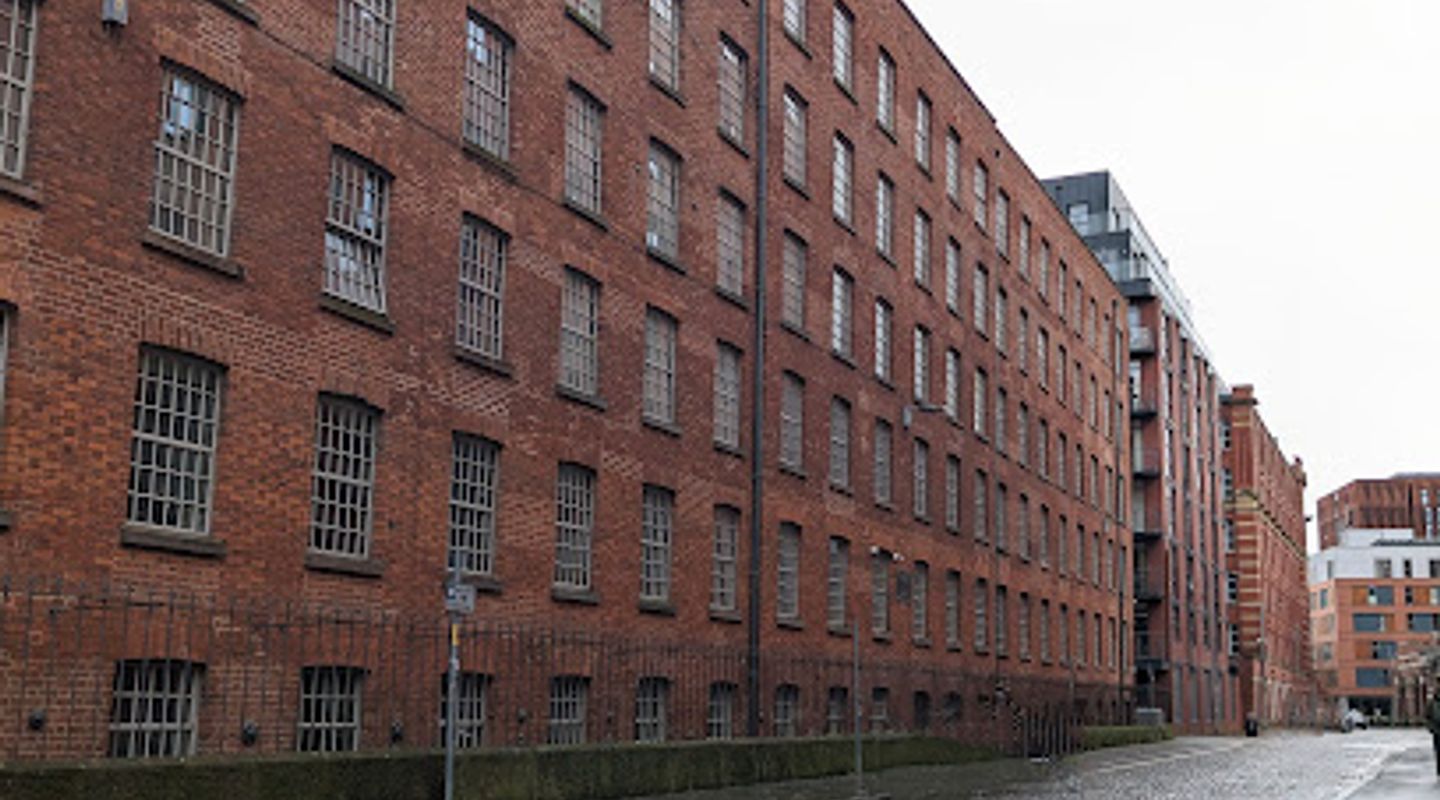
Murrays' Mills in Ancoats, Manchester, is the world's oldest surviving urban steam-powered cotton spinning factory, built between 1797 and 1804 by brothers Adam and George Murray. Once the largest mill complex globally, it employed over 1,300 workers and played a pivotal role in the Industrial Revolution. Today, the historic mill buildings have been sensitively restored and converted into residential apartments, preserving their industrial heritage and architectural grandeur.
On-site amenities
 Restrooms
 Drink options
 Food options
 Seating areas
 Information boards
- Address
- 44 Jersey St, Ancoats, Manchester M4 6LR
- Website
Getting there
Public Transport
Bus
Car
Discover more about Murrays' Mill
Origins of an Industrial Powerhouse
Murrays' Mills traces its roots to the visionary Scottish brothers Adam and George Murray, who migrated to Lancashire in the 1780s. Apprenticed in machine-making, they harnessed emerging steam technology to revolutionize cotton spinning. The first building, Old Mill, completed by 1798, stands as the oldest surviving steam-powered cotton spinning mill in the world. Constructed from approximately 400,000 handmade bricks, likely made from local clay, Old Mill set a new architectural and industrial benchmark with its unprecedented eight-storey height.
Expansion and Industrial Significance
Between 1797 and 1804, the Murray brothers expanded their enterprise into a vast complex consisting of six main buildings arranged around a central courtyard and canal basin, linking to the Rochdale Canal. By 1806, Murrays' Mills was the largest cotton spinning complex globally, boasting 84,000 mule spindles and employing around 1,300 workers. The site became the heart of Ancoats, the world’s first industrial suburb, and a symbol of Manchester’s rise as the cradle of the Industrial Revolution.
Architectural and Technological Evolution
The mill buildings exhibit a blend of austere functional design and ornamental details, such as the symmetrical arched doorways and windows on the Murray Street and Bengal Street blocks. Over the 19th century, the complex adapted to technological advances, including the installation of gas lighting in 1819. The buildings’ fabric reveals layers of industrial evolution, from handmade bricks to industrialized materials. Despite challenges like fires and the decline of the cotton industry in the 20th century, the mills retained their structural and historical significance.
Decline and Revival
The mid-20th century saw the mills fall into disuse and decay, with some buildings damaged by fire and others abandoned. Recognized for their national historic importance, the mills underwent a major restoration led by the Ancoats Buildings Preservation Trust and supported by heritage funds. Sensitive conservation work addressed structural weaknesses while preserving original features like exposed brickwork, pipework, and the iconic wrought iron gates at the main entrance.
Modern Rebirth as Residential Heritage
Today, Murrays' Mills has been transformed into a vibrant residential community with over 120 apartments. The redevelopment respects the mills’ industrial past, using reclaimed and bespoke bricks to match original masonry and incorporating modern interventions that echo the historic architectural language. The site offers a unique glimpse into Manchester’s industrial heritage while providing contemporary living spaces within a landmark of global significance.
Legacy of Innovation and Community
Murrays' Mills stands as a testament to the ingenuity and resilience of the Industrial Revolution era. It embodies the story of technological progress, urban growth, and social change that shaped Manchester and the wider world. The preserved complex invites reflection on the lives of the thousands who worked here and the profound impact of industrialization on modern society.
Evendo Review Centre
 Google
Guest reviews
Best time to go
Quietest: Jan, Feb & Dec · before 6am or at 10pm
Busy times are Evendo estimates for a typical year, to help you plan. Actual crowds vary with events, school holidays and the weather.
Explore Murrays' Mill on the map
A handpicked selection of must-see spots near Murrays' Mill, mapped for you.
Get your free copy of our complete guide to Murrays' Mill, delivered straight to you.
Everything on this page, from opening hours and how to get there to Eve’s tips and the best time to go, in one PDF you can read offline, print or share.
Already have an account? Sign in
Your Murrays' Mill guide is ready.
We'll send it to · Not you? Sign out

Getting your guide ready…
We are putting together a fresh copy of the Murrays' Mill guide. This can take up to a minute.
This can take a few moments. If your browser asks, choose Allow so the download can start. You'll find the guide in your Downloads folder.
Nothing happened? Download it again
Sorry, the guide is taking longer than usual. Please try again in a minute, or get it by email instead.
Other nearby places you may find interesting
The closest places of the same kind, if this one is not quite what you had in mind.
-
-
-


Swipe for more places
More to explore near Murrays' Mill

 Best experiences near Murrays' Mill
 Best hotels near Murrays' Mill
 Best landmarks near Murrays' Mill
 Best attractions near Murrays' Mill
 Best shops near Murrays' Mill
 Best restaurants near Murrays' Mill
 Best bars near Murrays' Mill
Do you manage this location?
Take control to get all the benefits, like improved information, better appearance, and stronger visibility across AI-powered discovery.
Explore more

Explore more of Ancoats
Discover Ancoats in Manchester: A blend of historic industrial charm, vibrant culinary hotspots, and modern cultural experiences, perfect for every traveler.
Explore Ancoats
Explore more of Manchester
Discover Manchester, the dynamic city where industrial heritage meets modern culture, offering a unique blend of history, sports, music, and gastronomy in Northern England.
Explore Manchester
