Manchester Cenotaph, Manchester Travel Guide
A stirring Portland stone memorial in Manchester’s heart, honoring sacrifice with timeless dignity and profound symbolism.
The Manchester Cenotaph, located in St Peter's Square, is a poignant war memorial designed by Sir Edwin Lutyens and unveiled in 1924. It honors those who lost their lives in World War I, later commemorating other conflicts as well. The monument features a Portland stone pylon topped with a recumbent soldier and flanked by twin obelisks, symbolizing sacrifice and valor. It stands as a place of reflection and remembrance in the heart of Manchester, accessible year-round without entry fees.
A brief summary to Manchester Cenotaph
- Manchester, Manchester, GB
- Click to display
- Duration: 0.25 to 1 hours
- Free
-
 Outdoor
- Mobile reception: 4 out of 5

Know before you go
Hi, I'm Eve. Here are a few practical things to know before exploring Manchester Cenotaph.
- Visit on weekdays for a quieter, more reflective experience away from larger crowds.
- Respect the solemn nature of the site, especially during remembrance events.
- Combine your visit with nearby attractions such as Manchester Town Hall and the Central Library.
- Bring a camera for capturing the monument’s intricate carvings and its urban setting.
Do you manage this location?
Take control to get all the benefits, like improved information, better appearance, and stronger visibility across AI-powered discovery. Learn more about listing your business on Evendo
Activate your presenceOther nearby places you may find interesting
The closest places of the same kind, if this one is not quite what you had in mind.



Explore Manchester Cenotaph on the Map
A handpicked selection of must-see spots near Manchester Cenotaph, mapped for you.
Unlock the Best of Manchester Cenotaph
Buy tickets
-
No tickets available
Book tours with entry

Book tours without entry
-
No tours available
Getting There
-
Tram
Take the Manchester Metrolink tram to St Peter’s Square stop, located within 200 meters of the Cenotaph. Trams run frequently throughout the day, with tickets costing approximately £2.50 to £4.00 depending on zones. The stop is accessible and suitable for all travelers.
-
Bus
Several bus routes serve the city center with stops near St Peter’s Square, including numbers 42, 43, and 86. Travel times vary by starting point but typically range from 15 to 30 minutes from central Manchester locations. Standard single fares are around £2.50.
-
Walking
If staying nearby, the Cenotaph is easily reached on foot from central Manchester landmarks such as Manchester Town Hall or Albert Square within 10 to 15 minutes. The terrain is flat and suitable for wheelchair users.
For the on-the-go comforts that matter to you
-
 Seating Areas
-
 Information Boards
-
 Trash Bins
Discover more about Manchester Cenotaph
An Architectural Symbol of Remembrance
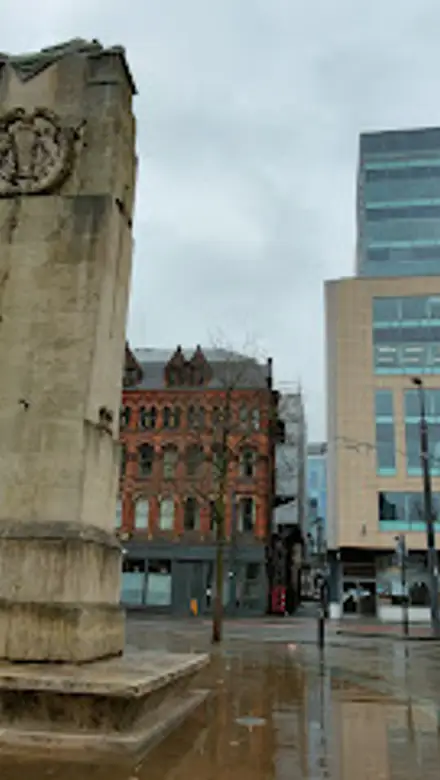
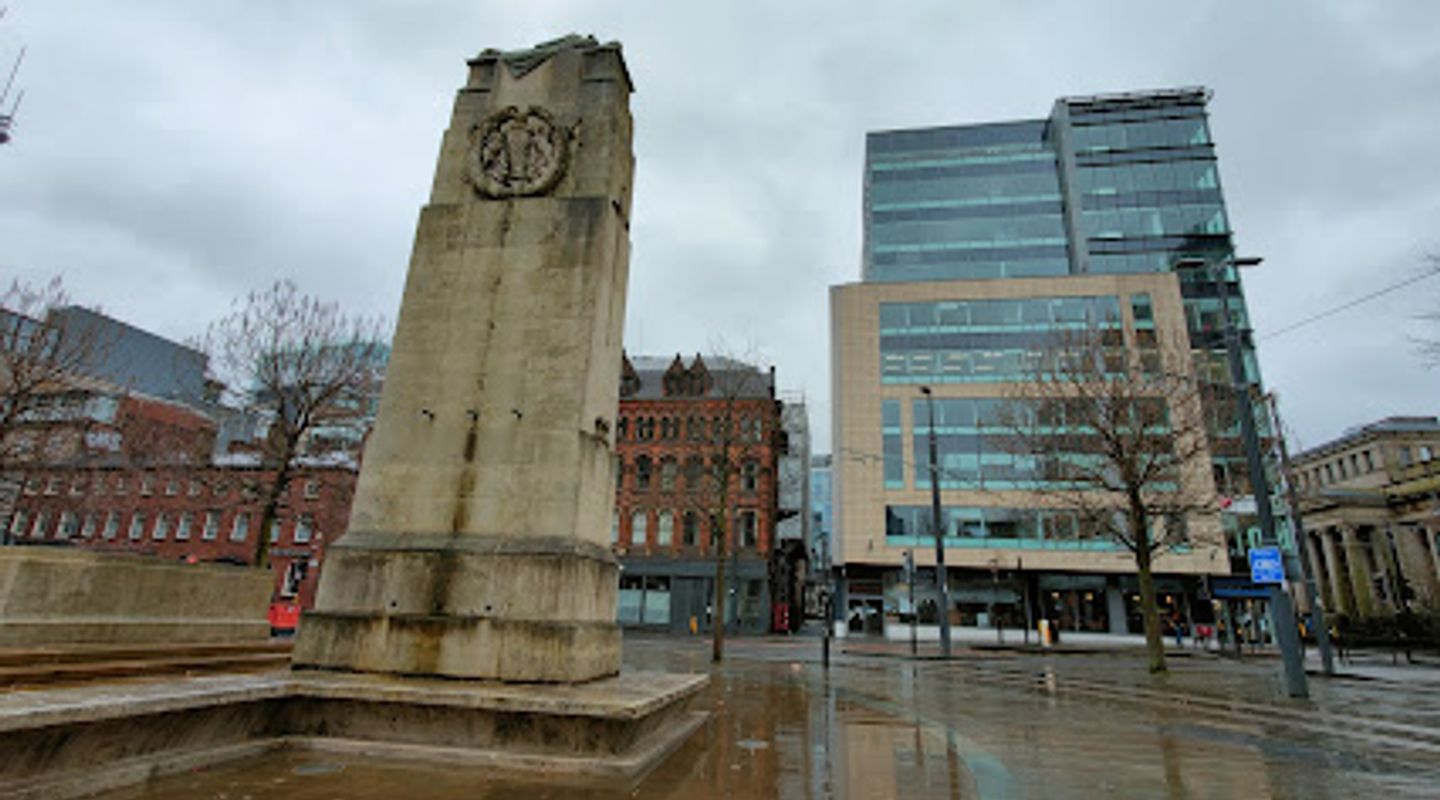
The Manchester Cenotaph is a distinguished war memorial situated in St Peter's Square, Manchester. Designed by Sir Edwin Lutyens, one of Britain's foremost architects renowned for his war memorials, it was unveiled on 12 July 1924. The monument is crafted from durable Portland stone and features a central pylon rising to 32 feet, topped by a carved figure of a fallen soldier draped in a greatcoat. This figure represents the 'Unknown Warrior,' symbolizing all soldiers who died anonymously in World War I. The design incorporates relief carvings of the imperial crown and Manchester’s coat of arms, linking the memorial deeply to the city’s identity.Historical Context and Significance
Manchester was relatively late in commissioning its First World War memorial, with the city council forming a war memorial committee only in 1922. Despite some initial controversy over the location, St Peter's Square was chosen for its prominence and historical significance, as it was once the site of St Peter’s Church and the 1819 Peterloo Massacre. The memorial not only honors the fallen soldiers from Manchester but also serves as a solemn warning about the costs of war. It was unveiled by Edward Stanley, 17th Earl of Derby, with a ceremony attended by military representatives, clergy, and bereaved families.Design Elements and Symbolism
The cenotaph’s design is a close variant of Lutyens’ famous Whitehall Cenotaph in London, featuring a central pylon flanked by twin obelisks and a Stone of Remembrance in front. The soldier figure atop the pylon is deliberately anonymous, representing 'every mother’s son.' The base includes three steps leading to the main structure, and the obelisks are adorned with carved foliated swags and inscriptions of the war dates 1914–1919. The Stone of Remembrance bears the inscription “Their name liveth for evermore,” a phrase commonly found in Imperial War Graves Commission cemeteries.Location and Surroundings
The cenotaph is positioned to be visible from multiple key city viewpoints, including Mosley Street, Peter Street, and Oxford Road. It is adjacent to Manchester Town Hall and near the Metrolink tram network, which has influenced its location over time. In 2014, the memorial was dismantled and reconstructed at the northeast corner of St Peter’s Square to accommodate tram expansion. The surrounding area includes grass turf, paved platforms, and seating, creating a contemplative space amidst the urban environment.Commemorative Events and Visitor Experience
The Manchester Cenotaph is the focal point for annual remembrance ceremonies such as Remembrance Sunday and Armistice Day, where veterans, military personnel, dignitaries, and the public gather to honor those who sacrificed their lives. Visitors can access the memorial any time of year without charge, offering a quiet place for reflection and appreciation of the city’s wartime history. Nearby benches provide spots to sit and absorb the solemn atmosphere, while the memorial’s artistry and symbolism invite contemplation on themes of sacrifice, courage, and peace.Preservation and Cultural Importance
Recognized as a Grade II* listed structure, the Manchester Cenotaph is part of a national collection of Lutyens’ war memorials. It stands as a testament to the city’s respect for its fallen and the enduring impact of the Great War on Manchester’s collective memory. Despite urban development pressures, efforts have been made to preserve the memorial’s dignity and prominence, ensuring it remains a vital landmark for future generations.












Your all‑in‑one travel companion app
Explore expert travel guides, compare and book tours, experiences, hotels, and more—all from the palm of your hand. Download now for seamless trip planning wherever your wanderlust takes you.


Explore More of Manchester
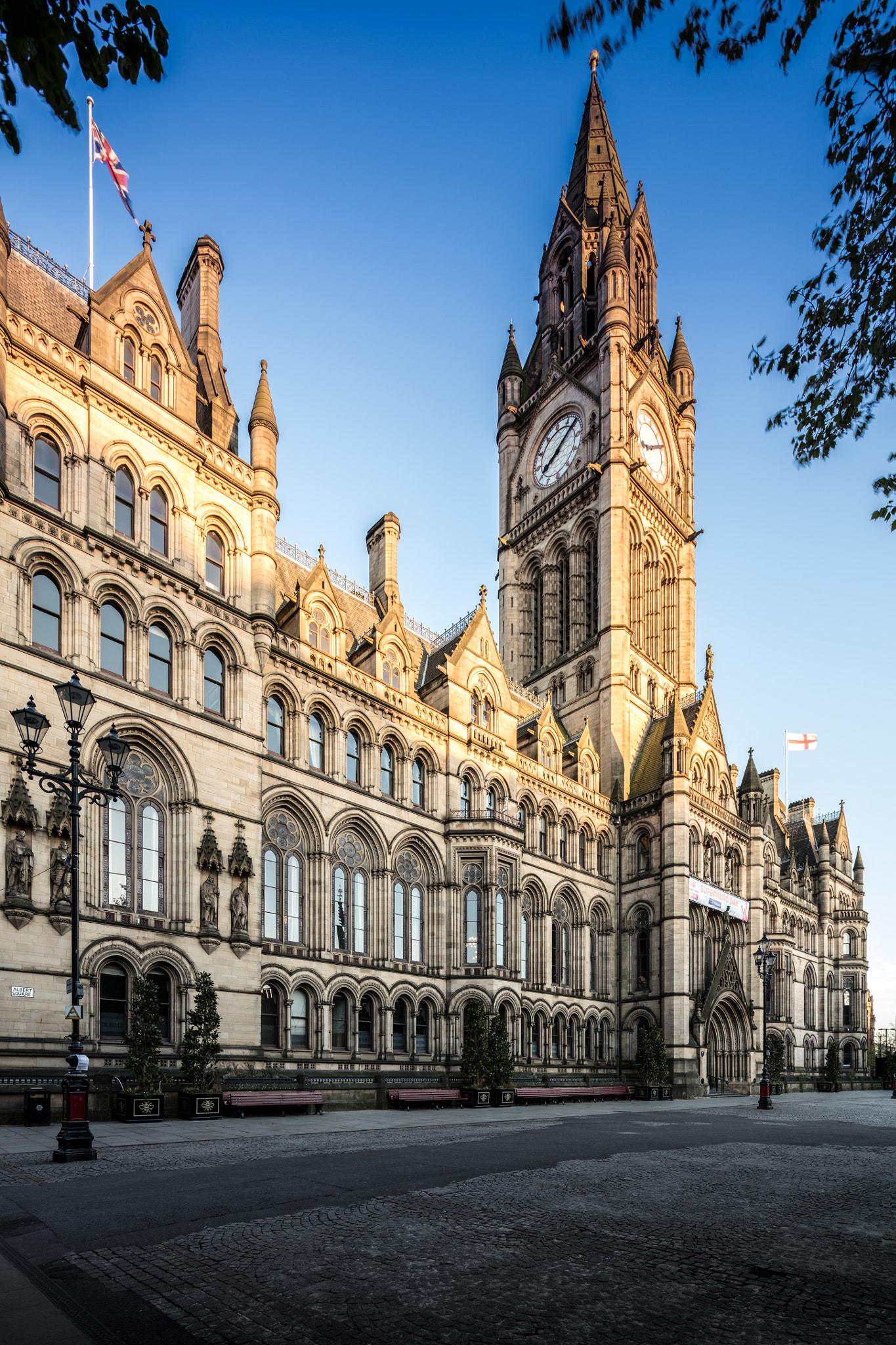
Looking beyond Manchester Cenotaph? Discover Manchester for broader travel guides, local hot-spots, and regional highlights.
Explore Manchester