Mulberry Passage, Manchester Travel Guide
Free Guide: Discover Mulberry Passage, a hidden Manchester alleyway celebrating John Dalton’s atomic theory through captivating art and historic charm.



A brief summary of Mulberry Passage
Discover Mulberry Passage, a hidden Manchester alleyway celebrating John Dalton’s atomic theory through captivating art and historic charm.
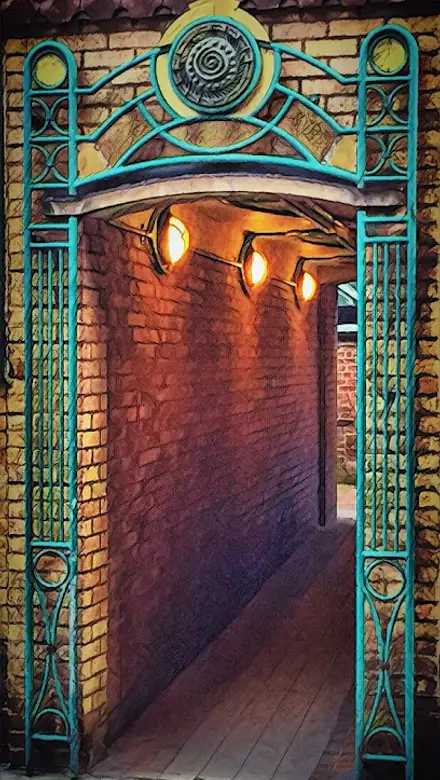
Mulberry Passage is a narrow historic alleyway in Manchester’s city centre, renowned for its artistic homage to John Dalton, the pioneering 19th-century scientist. Also known as Dalton’s Entry or Five Parts Alley, this passageway features intricate metalwork and artworks inspired by Dalton’s atomic theory and scientific legacy. Nestled near St Mary’s Roman Catholic Church, it offers a unique glimpse into Manchester’s rich industrial and scientific heritage.
On-site amenities
 Information boards
 Seating areas
- Address
- Unnamed Road, Manchester M2 6LN
Getting there
Public Transport
Bus
Taxi or Rideshare
Discover more about Mulberry Passage
A Passage Steeped in Scientific Legacy
Mulberry Passage, tucked away in Manchester’s city centre, is more than just a narrow lane; it is a tribute to John Dalton, a pioneering chemist, physicist, and meteorologist of the 19th century. Dalton’s groundbreaking atomic theory, which laid the foundation for modern chemistry, is commemorated here through artistic installations and the passage’s alternative names—Dalton’s Entry and Five Parts Alley. The latter references the five core principles of Dalton’s atomic theory, which revolutionized scientific understanding of matter and chemical reactions.
Artistic Details and Symbolism
The passage is adorned with intricate metalwork that cleverly incorporates chemical apparatus motifs, reflecting Dalton’s scientific contributions. Visitors can spot symbolic elements such as stylized umbrellas and circular motifs reminiscent of atomic structures, blending art deco aesthetics with scientific symbolism. The vibrant turquoise blue rails contrast beautifully with the surrounding brickwork, creating a visually engaging environment that invites curiosity and reflection on the power of knowledge and creativity.
Context Within Manchester’s Urban Fabric
Mulberry Passage lies near St Mary’s Roman Catholic Church and runs parallel to other historic lanes like Dalton’s Entry and the now-closed Boardman’s Entry. These interconnected alleyways form a small network of hidden paths rich in history and local lore. The passage’s location near significant landmarks and its subtle artistic nods to Manchester’s industrial and scientific past make it a unique urban gem, often overlooked yet deeply evocative.
John Dalton’s Enduring Influence
Dalton’s impact extends beyond atomic theory; he was also a pioneer in colorblindness research, a condition he personally experienced. The passage’s alternative name, Five Parts Alley, also alludes to his broader scientific interests, including weather forecasting. In 2016, Manchester celebrated the 250th anniversary of Dalton’s birth with a blue plaque and artistic tributes, underscoring his role in elevating the city’s global scientific reputation.
Experiencing the Passage Today
Walking through Mulberry Passage offers an intimate experience of Manchester’s layered history. The narrow lane, with its artistic details and quiet atmosphere, contrasts with the bustling city streets nearby. It invites visitors to pause and appreciate the fusion of science, art, and urban heritage. Nearby, St Mary’s Church, known as the “Hidden Gem,” adds to the contemplative ambiance with its stunning Victorian interior and artworks.
Connecting History, Art, and Curiosity
Mulberry Passage exemplifies how curiosity and creativity intertwine, transforming a simple passageway into a canvas celebrating scientific discovery and local identity. The intricate designs encourage visitors to explore the connections between art and science, history and modernity, inviting ongoing discovery in Manchester’s historic core.
Evendo Review Centre
 Google
Guest reviews
Best time to go
Quietest: Jan, Feb & Dec · before 6am or from 11pm
Busy times are Evendo estimates for a typical year, to help you plan. Actual crowds vary with events, school holidays and the weather.
Explore Mulberry Passage on the map
A handpicked selection of must-see spots near Mulberry Passage, mapped for you.
Get your free copy of our complete guide to Mulberry Passage, delivered straight to you.
Everything on this page, from opening hours and how to get there to Eve’s tips and the best time to go, in one PDF you can read offline, print or share.
Already have an account? Sign in
Your Mulberry Passage guide is ready.
We'll send it to · Not you? Sign out

Getting your guide ready…
We are putting together a fresh copy of the Mulberry Passage guide. This can take up to a minute.
This can take a few moments. If your browser asks, choose Allow so the download can start. You'll find the guide in your Downloads folder.
Nothing happened? Download it again
Sorry, the guide is taking longer than usual. Please try again in a minute, or get it by email instead.
Other nearby places you may find interesting
The closest places of the same kind, if this one is not quite what you had in mind.
-
-
-
-
-


Swipe for more places
More to explore near Mulberry Passage

 Best experiences near Mulberry Passage
 Best hotels near Mulberry Passage
 Best landmarks near Mulberry Passage
 Best attractions near Mulberry Passage
 Best shops near Mulberry Passage
 Best restaurants near Mulberry Passage
 Best bars near Mulberry Passage
Do you manage this location?
Take control to get all the benefits, like improved information, better appearance, and stronger visibility across AI-powered discovery.
Explore more

Explore more of Manchester
Discover Manchester, the dynamic city where industrial heritage meets modern culture, offering a unique blend of history, sports, music, and gastronomy in Northern England.
Explore Manchester
Explore more of United Kingdom
Discover the United Kingdom: A blend of rich history, stunning landscapes, and vibrant cities, offering a unique travel experience for every visitor.
Explore United Kingdom