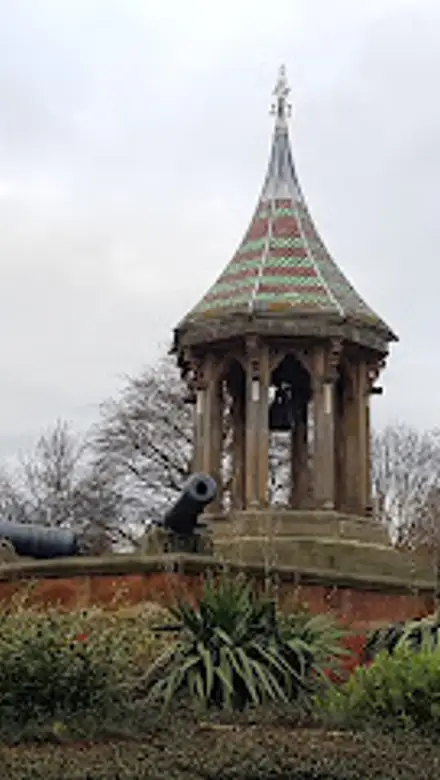
Chinese Bell Tower, Nottingham Travel Guide
Free Guide: Grade II listed Victorian pagoda displaying Crimean cannons inside Nottingham’s first public park.


A brief summary of Chinese Bell Tower
Grade II listed Victorian pagoda displaying Crimean cannons inside Nottingham’s first public park.
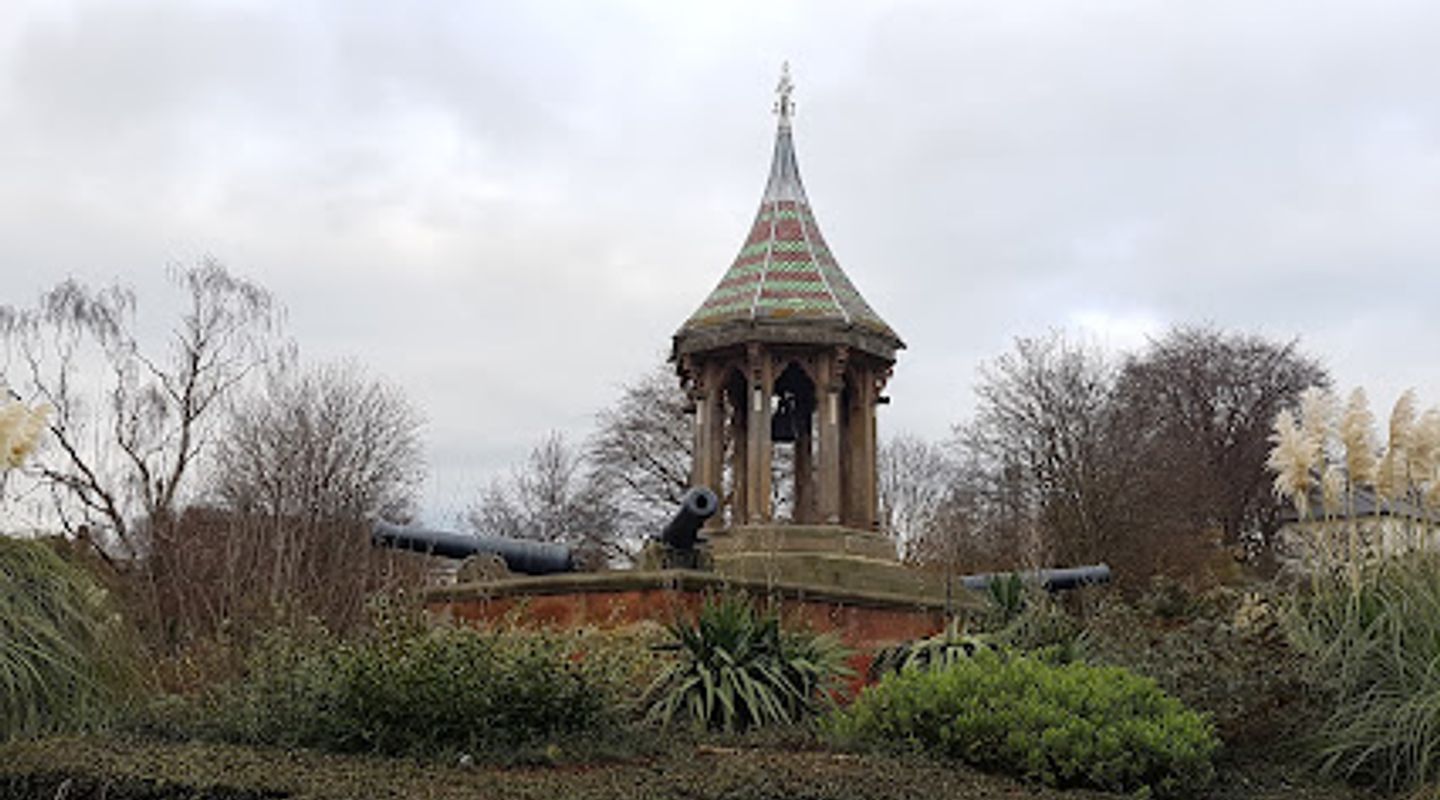
The Chinese Bell Tower stands as a Grade II listed Victorian war memorial inside Nottingham Arboretum. Its octagonal pagoda-style cupola rises above a sandstone platform ringed by four cannons captured during the Crimean War. Built in 1862 to commemorate the 59th Regiment of Foot, the structure combines British military trophies with chinoiserie architecture. Visitors reach it via paths through the park’s Bell Garden, where mature trees and flower beds frame the spire and weathered inscriptions. The monument offers a short, distinctive stop that reveals an unexpected chapter of imperial history within an urban public park.
On-site amenities
 Seating areas
 Sheltered areas
Opening hours
- Every dayOpen 24 hours
Opening hours as listed on the venue’s Google Business Profile. Hours can change for services and special events, so check with the venue before you go.
- Address
- 14 Mansfield Grove Nottingham
- Website
Getting there
Walk
Public Transport
Taxi
Discover more about Chinese Bell Tower
Victorian chinoiserie in an English park
The Chinese Bell Tower is an octagonal cupola with a swept spire, supported on columns and set on a raised pink-sandstone platform. Four cannons rest at the corners. Designed by borough engineer Marriott Ogle Tarbotton and completed in 1862, the structure was conceived as a memorial to the 59th (2nd Nottinghamshire) Regiment of Foot and its service in the Crimean War and the Second Opium War.Two of the cannons were taken at Sevastopol; the others are later replacements. A temple bell looted near Canton was originally hung inside the cupola. The bell was removed in the 1950s and is now held by a regimental museum in Preston. A replica hung here until it was stolen in February 2025. The listed structure and cannons remain.
Setting within the Bell Garden
The tower occupies a raised area on the south side of Nottingham Arboretum, east of the rose garden and above the main east–west path. A clipped conifer hedge encloses the platform, while lawns and small conifers surround it. Inscriptions in English, Chinese and Russian appear on the base and frieze, though some have weathered. The garden is quieter than the lake and café end of the park, offering a calm vantage point among trees.
History of the memorial
Nottingham Arboretum opened in 1852 as the city’s first public park. The tower was added a decade later to display the captured cannons and the Canton bell. Contemporary letters already questioned the bell’s presence. The pagoda was partly rebuilt after the original bell’s removal. It received Grade II listing in 1972; the surrounding park is Grade II* registered.
Visiting the monument
Walkers reach the Bell Garden from any of the park’s four pedestrian entrances. The approach from the southern path involves a moderate climb. The monument is viewed from the surrounding lawn and platform edge; there is no interior space open to visitors. Typical time spent here is 10–20 minutes as part of a longer park circuit that may include the bandstand, aviaries and lake.The site is free. No booking or ticket is required. The park is gated and closes at dusk; winter closing times can be as early as 16:30. Public transport by tram along Waverley Street places visitors within a short walk of the southern entrance.
Evendo Review Centre
 Google
Guest reviews
Best time to go
Quietest: Jan, Feb & Dec · before 8am or from 7pm
Busy times are Evendo estimates for a typical year, to help you plan. Actual crowds vary with events, school holidays and the weather.
Explore Chinese Bell Tower on the map
A handpicked selection of must-see spots near Chinese Bell Tower, mapped for you.
Get your free copy of our complete guide to Chinese Bell Tower, delivered straight to you.
Everything on this page, from opening hours and how to get there to Eve’s tips and the best time to go, in one PDF you can read offline, print or share.
Already have an account? Sign in
Your Chinese Bell Tower guide is ready.
We'll send it to · Not you? Sign out

Getting your guide ready…
We are putting together a fresh copy of the Chinese Bell Tower guide. This can take up to a minute.
This can take a few moments. If your browser asks, choose Allow so the download can start. You'll find the guide in your Downloads folder.
Nothing happened? Download it again
Sorry, the guide is taking longer than usual. Please try again in a minute, or get it by email instead.
Other nearby places you may find interesting
The closest places of the same kind, if this one is not quite what you had in mind.
-
-
-
-
-


Swipe for more places
More to explore near Chinese Bell Tower

 Best experiences near Chinese Bell Tower
 Best hotels near Chinese Bell Tower
 Best landmarks near Chinese Bell Tower
 Best attractions near Chinese Bell Tower
 Best shops near Chinese Bell Tower
 Best restaurants near Chinese Bell Tower
 Best bars near Chinese Bell Tower
Do you manage this location?
Take control to get all the benefits, like improved information, better appearance, and stronger visibility across AI-powered discovery.
Explore more

Explore more of Nottingham
Explore Nottingham, a dynamic city where history meets modernity, with its legendary tales, cultural vibrancy, and stunning natural landscapes.
Explore Nottingham
Explore more of United Kingdom
Discover the United Kingdom: A blend of rich history, stunning landscapes, and vibrant cities, offering a unique travel experience for every visitor.
Explore United Kingdom