Yesnaby Travel Guide
Free Guide: Dramatic sandstone cliffs, ancient fossils, and the iconic two-legged sea stack create a captivating coastal experience on Orkney’s wild west shore.


A brief summary of Yesnaby
Dramatic sandstone cliffs, ancient fossils, and the iconic two-legged sea stack create a captivating coastal experience on Orkney’s wild west shore.
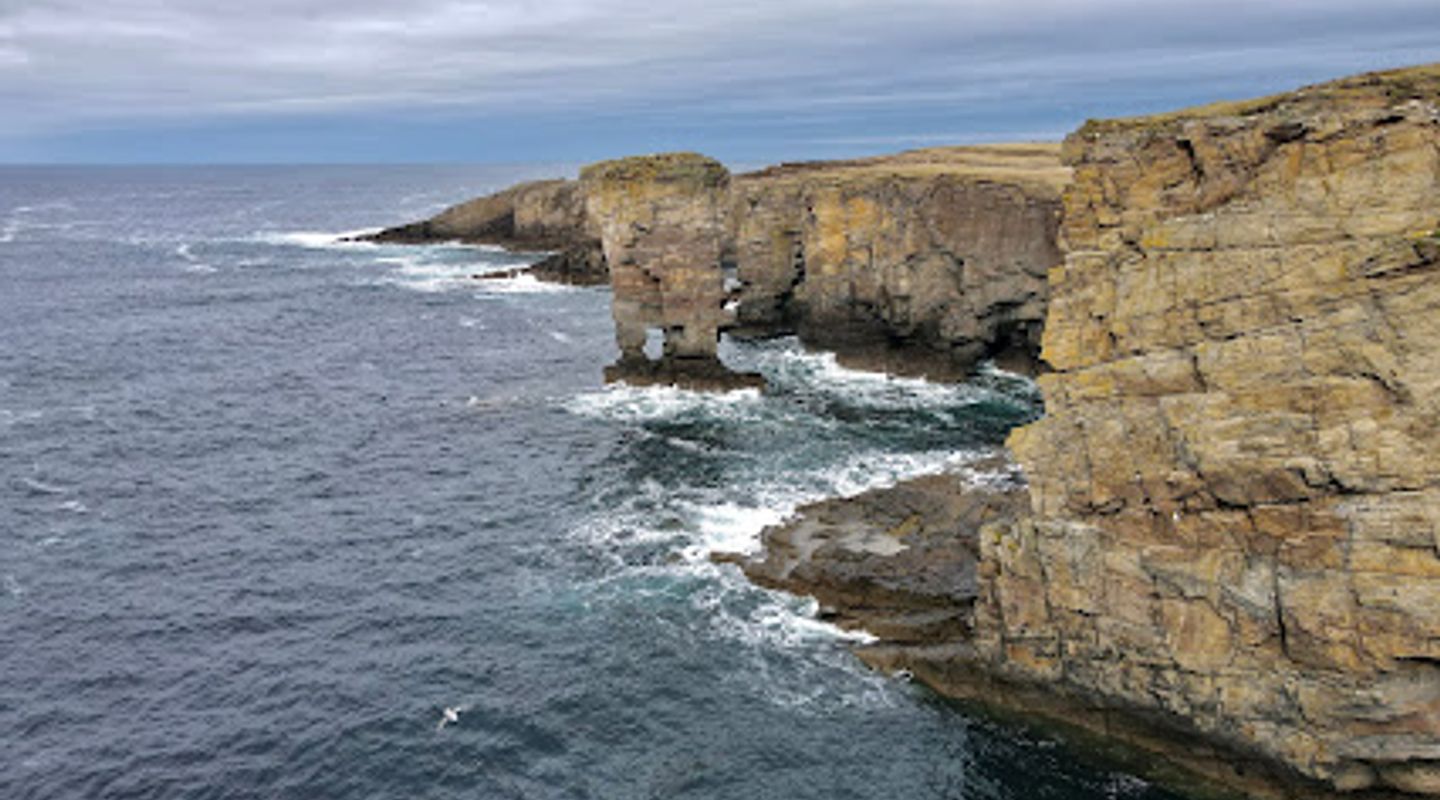
Yesnaby is a striking coastal area on Orkney Mainland’s west coast, famed for its rugged Old Red Sandstone cliffs, the iconic two-legged sea stack known as Yesnaby Castle, and rich geological and cultural history. It offers breathtaking views, fascinating fossil formations, and remnants of WWII defenses, making it a captivating destination for hikers, photographers, and nature lovers alike.
On-site amenities
 Restrooms
 Seating areas
 Information boards
Opening hours
- Every dayOpen 24 hours
Opening hours as listed on the venue’s Google Business Profile. Hours can change for services and special events, so check with the venue before you go.
- Address
- Yesnaby Rd, Stromness KW16 3LP
- Website
Getting there
Car
Bus
Walking
Discover more about Yesnaby
Geological Wonders Carved by Time
Yesnaby’s cliffs are formed from Lower Devonian Old Red Sandstone, a geological formation dating back around 400 million years. This sandstone, unique to the region and known as the Yesnaby Sandstone Group, is topped by Lower Stromness Flagstones where fossilized stromatolites—ancient microbial mats—can be found. These fossils, locally called Horse Tooth Stones, reveal a prehistoric seabed environment. The cliffs display evidence of volcanic activity and sedimentary features such as sand rippling and cracking, offering a window into Earth’s deep past.
Yesnaby Castle: The Two-Legged Sea Stack
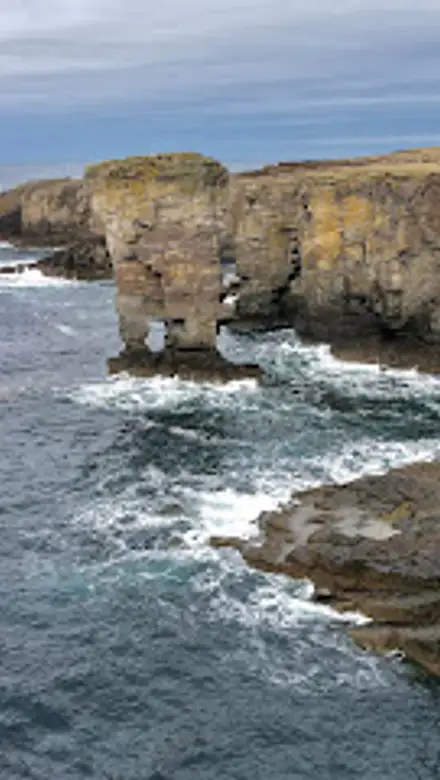
Dominating the coastline is Yesnaby Castle, a 35-meter tall sea stack with a distinctive shape, standing on two slender legs. This natural monument, sometimes described as a smaller counterpart to the Old Man of Hoy, is a magnet for climbers and photographers. Its precarious form, sculpted by relentless sea storms, is both dramatic and fragile, reminding visitors of nature’s power and impermanence. The stack is accessible via a short walk from the nearby car park, which is situated among remnants of WWII coastal defense structures.
Layers of History and Folklore
Yesnaby’s landscape is steeped in human history and legend. The area was a strategic coastal defense site during both World Wars, with surviving brick buildings from an anti-aircraft battery still visible. Folklore speaks of the “Yesnaby Healer,” a woman reputed to stop bleeding at a distance through sheer willpower. Nearby archaeological sites like the Broch of Borwick and the Neolithic village of Skara Brae connect visitors to ancient Orkney cultures, enriching the sense of place with stories spanning millennia.
Visitor Experience and Natural Ambience
Visitors to Yesnaby can enjoy expansive, wild coastal walks with panoramic views of the sea and cliffs. The landscape is a blend of spongey grass atop layered sandstone, sharp geos, and rocky inlets. The fresh sea air carries scents of salt and earth, while the soundscape includes crashing waves and seabird calls. This setting creates a uniquely Orcadian atmosphere—wild, tranquil, and timeless. It’s a favored spot for photographers, nature lovers, and those seeking a peaceful connection with rugged coastal beauty.
Conservation and Accessibility
Yesnaby is part of Orkney’s treasured natural heritage, with efforts to preserve its geological and ecological integrity. The area is accessible year-round, though weather can be brisk and changeable. The walking terrain is mostly gentle but uneven, requiring sturdy footwear. Facilities are limited to a basic car park and informational signage near the site. Visitors are encouraged to respect the environment and historic remains, ensuring this dramatic landscape endures for future generations.
Capturing the Spirit of Orkney’s West Coast
Yesnaby embodies the wild spirit of Orkney’s western shores—a place where ancient earth, sea, and human history converge. From the fossil-rich cliffs to the iconic sea stack and wartime relics, it offers a layered experience that is both visually stunning and intellectually enriching. Whether bathed in sunlight or storm-swept, Yesnaby leaves a lasting impression as a natural and cultural landmark of Scotland’s northern isles.
Evendo Review Centre
 Google
Guest reviews
Best time to go
Quietest: Jan, Feb & Dec · before 3am
Busy times are Evendo estimates for a typical year, to help you plan. Actual crowds vary with events, school holidays and the weather.
Explore Yesnaby on the map
A handpicked selection of must-see spots near Yesnaby, mapped for you.
Get your free copy of our complete guide to Yesnaby, delivered straight to you.
Everything on this page, from opening hours and how to get there to Eve’s tips and the best time to go, in one PDF you can read offline, print or share.
Already have an account? Sign in
Your Yesnaby guide is ready.
We'll send it to · Not you? Sign out

Getting your guide ready…
We are putting together a fresh copy of the Yesnaby guide. This can take up to a minute.
This can take a few moments. If your browser asks, choose Allow so the download can start. You'll find the guide in your Downloads folder.
Nothing happened? Download it again
Sorry, the guide is taking longer than usual. Please try again in a minute, or get it by email instead.
Unlock the best of Yesnaby
Skip-the-line tickets, guided tours with entry, and walking tours of the area, booked in a few clicks.


Other nearby places you may find interesting
The closest places of the same kind, if this one is not quite what you had in mind.
-
-
-
-
-


Swipe for more places
More to explore near Yesnaby

 Best experiences near Yesnaby
 Best hotels near Yesnaby
 Best landmarks near Yesnaby
 Best attractions near Yesnaby
 Best shops near Yesnaby
 Best restaurants near Yesnaby
 Best bars near Yesnaby
Do you manage this location?
Take control to get all the benefits, like improved information, better appearance, and stronger visibility across AI-powered discovery.
Explore more

Explore more of Orkney
Discover Orkney: A magical blend of ancient history, stunning landscapes, and vibrant local culture in Scotland's enchanting archipelago.
Explore Orkney
Explore more of United Kingdom
Discover the United Kingdom: A blend of rich history, stunning landscapes, and vibrant cities, offering a unique travel experience for every visitor.
Explore United Kingdom