Elegug Stacks, Pembrokeshire Travel Guide
Explore the striking limestone pillars of Elegug Stacks, a vital seabird sanctuary and geological wonder on Pembrokeshire’s rugged coast.
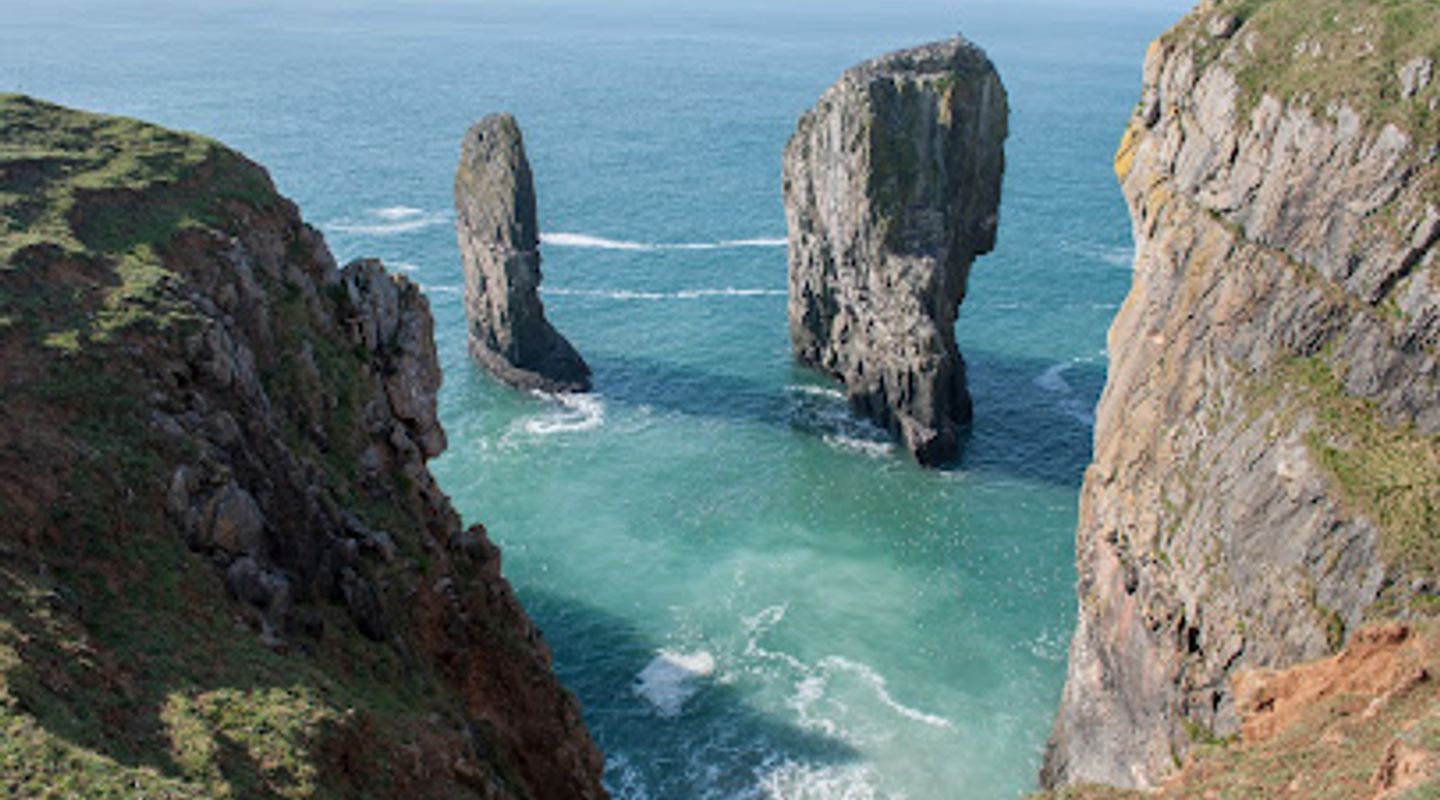
Elegug Stacks, also known as Stack Rocks, are two towering limestone pillars rising 25 meters from the sea off Pembrokeshire’s southwest coast in Wales. These isolated stacks, once part of the mainland cliffs, have become a vital nesting site for thousands of seabirds including guillemots and razorbills. Set within a military firing range, access is restricted but rewards visitors with spectacular coastal views, rich wildlife, and rugged natural beauty.
A brief summary to Elegug Stacks
- Elegug Stacks, Pembroke, GB
- Click to display
- Duration: 1 to 3 hours
- Free
-
 Outdoor
- Mobile reception: 4 out of 5

Know before you go
Hi, I'm Eve. Here are a few practical things to know before exploring Elegug Stacks.
- Check the Castlemartin military firing range schedule before visiting, as access roads close during live exercises.
- Visit from May to early July to witness thousands of guillemots and razorbills nesting on the stacks.
- Use the free car park near the Green Bridge of Wales as your base for walking to the stacks.
- Wear sturdy footwear and be prepared for uneven coastal paths and potentially windy conditions.
- Combine your visit with nearby attractions like St Govan’s Chapel and the Green Bridge of Wales for a fuller experience.
Do you manage this location?
Take control to get all the benefits, like improved information, better appearance, and stronger visibility across AI-powered discovery. Learn more about listing your business on Evendo
Activate your presenceOther nearby places you may find interesting
The closest places of the same kind, if this one is not quite what you had in mind.


Explore Elegug Stacks on the Map
A handpicked selection of must-see spots near Elegug Stacks, mapped for you.
Getting There
-
Car
Drive to the free public car park near the Green Bridge of Wales, approximately 15-25 minutes from Pembroke town center. Note the access road passes through the Castlemartin military firing range and may be closed during live firing exercises. Checking the range status before travel is essential. Parking is free, but facilities are limited.
-
Bus
Take the Coastal Cruiser bus service 387 to Bosherston, which runs seasonally with limited frequency. From Bosherston, a well-marked 3-mile (approx. 1.5-hour) walk along the Pembrokeshire Coast Path leads to Elegug Stacks. The path is reasonably level but includes some uneven terrain.
-
Walking
For walkers already in the area, the coastal path from St Govan’s Chapel to Elegug Stacks is about 3 miles one way, taking roughly 1.5 hours. The trail is well defined but can be slippery on stone steps near the chapel. Suitable footwear and caution are advised.
For the on-the-go comforts that matter to you
-
 Restrooms
-
 Picnic Areas
-
 Trash Bins
-
 Information Boards
Discover more about Elegug Stacks
Geological Marvels Carved by Time
Elegug Stacks are two imposing limestone pillars standing about 25 meters tall, located just off the Pembrokeshire coast in southwest Wales. Originally connected to the mainland cliffs, these stacks were formed through thousands of years of coastal erosion that carved away the softer rock, leaving these dramatic isolated columns. The stacks are part of a coastline renowned for its limestone cliffs, arches, caves, and blowholes, illustrating the powerful forces of nature shaping the landscape.A Sanctuary for Seabirds and Wildlife
The stacks serve as an important breeding ground for seabirds, particularly guillemots (from which the Welsh name "Elegug" derives) and razorbills. During the peak nesting season from May to early July, thousands of birds cram the ledges and tops of the stacks, filling the air with their calls. Nearby cliffs host fulmars, kittiwakes, and various gull species. Inland, the plateau supports diverse wildlife including reptiles, small mammals, and rare butterflies like the dark green fritillary, all thriving in this relatively undisturbed habitat.Access and Military Restrictions
Elegug Stacks lie within the Castlemartin military firing range, which has limited public access due to live training exercises. Visitors must check the firing schedule before visiting, as the access road passes through the range and is closed during military activity. When open, a large free car park near the Green Bridge of Wales provides a starting point for walks to the stacks. The coastal path is well-defined and reasonably level, offering a scenic 1.5-hour one-way walk that also passes other landmarks like St Govan’s Chapel.Surrounding Coastal Attractions and Scenic Walks
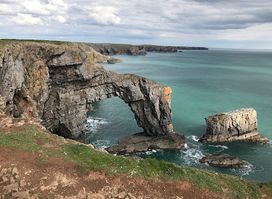
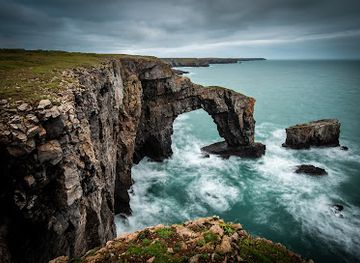
The stacks are part of the Pembrokeshire Coast National Park, an area celebrated for its unspoiled natural beauty. Nearby features include the Green Bridge of Wales—a spectacular 24-meter high natural limestone arch—and the Cauldron, a dramatic coastal blowhole. The coastal path offers breathtaking panoramas of the sea and cliffs, making it ideal for wildlife watching, photography, and enjoying fresh sea air. The area’s rugged charm is complemented by nearby beaches, ancient chapels, and peaceful picnic spots.Visitor Experience and Practical Tips
Visitors to Elegug Stacks can expect a tranquil yet awe-inspiring experience, combining geology, wildlife, and coastal scenery. The best time to visit for birdwatching is late spring to early summer when seabirds are nesting. Facilities near the car park include picnic areas, but there are no direct amenities at the stacks themselves. The site’s remote and natural setting means visitors should be prepared for variable weather and bring suitable footwear for uneven terrain. Checking military firing times is essential to avoid access closures.Conservation and Natural Heritage Importance
Elegug Stacks and the surrounding coastline are designated as a Site of Special Scientific Interest (SSSI), Special Protection Area (SPA), and Special Area of Conservation (SAC) due to their geological formations and rich biodiversity. The limited human disturbance, partly due to military use, has helped preserve this unique habitat. Conservation efforts focus on protecting the nesting seabird populations and maintaining the integrity of the limestone cliffs and coastal ecosystems.












Your all‑in‑one travel companion app
Explore expert travel guides, compare and book tours, experiences, hotels, and more—all from the palm of your hand. Download now for seamless trip planning wherever your wanderlust takes you.


Explore More of Pembrokeshire

Looking beyond Elegug Stacks? Discover Pembrokeshire for broader travel guides, local hot-spots, and regional highlights.
Explore Pembrokeshire