

Strumble Head, Pembrokeshire Travel Guide
Iconic 1908 lighthouse on a rugged islet with dramatic coastal views, rich history, and abundant wildlife on Pembrokeshire’s wild northwest coast.
Strumble Head is a striking peninsula near Goodwick, Pembrokeshire, featuring the iconic 1908 Strumble Head Lighthouse perched on a small islet. Known for its dramatic coastal views, rich maritime history, and abundant wildlife including seals and cetaceans, it offers scenic walking trails along the Pembrokeshire Coast Path. The lighthouse, automated since 1980, remains a vital beacon marking a historically treacherous stretch of sea between Wales and Ireland.
A brief summary to Strumble Head
- Goodwick, GB
- Duration: 1 to 3 hours
- Free
-
 Outdoor
- Mobile reception: 4 out of 5

Know before you go
Hi, I'm Eve. Here are a few practical things to know before exploring Strumble Head.
- Arrive early to secure limited parking, especially during peak seasons.
- Wear sturdy footwear suitable for uneven and sometimes windy coastal paths.
- Bring binoculars for better wildlife viewing, especially seals and seabirds.
- Note that the lighthouse and islet are not open to public access.
- Check tide times if planning coastal walks that involve access near the water.
Do you manage this location?
Take control to get all the benefits, like improved information, better appearance, and stronger visibility across AI-powered discovery. Learn more about listing your business on Evendo
Activate your presenceOther nearby places you may find interesting
The closest places of the same kind, if this one is not quite what you had in mind.
Explore Strumble Head on the Map
A handpicked selection of must-see spots near Strumble Head, mapped for you.
Getting There
-
Car
Driving from Fishguard to Strumble Head takes approximately 15–20 minutes via narrow coastal roads. Parking is limited and free but fills quickly during peak times. Exercise caution on single-track lanes.
-
Bus
Local bus services connect Fishguard and Goodwick with stops near Strumble Head. Travel time ranges from 20 to 30 minutes. Service frequency is limited on weekends and public holidays.
-
Walking
For hikers, the Pembrokeshire Coast Path offers scenic routes from Fishguard or Goodwick to Strumble Head. Walks typically take 1.5 to 3 hours depending on the route and weather, with uneven terrain and some steep sections.
For the on-the-go comforts that matter to you
-
 Restrooms
-
 Seating Areas
-
 Trash Bins
-
 Information Boards
Discover more about Strumble Head
A Beacon of Maritime Heritage
Strumble Head Lighthouse stands on Ynys Meicel, also called St. Michael's Island, a small rocky islet off the northwest corner of the Pencaer area near Goodwick. Built in 1908 by Trinity House, the lighthouse was constructed to warn vessels navigating the perilous waters between Ireland and Wales. It replaced a light-vessel and has been a crucial aid to maritime safety, marking a stretch of coast notorious for shipwrecks in the 19th century. The stone cylindrical tower rises 17 meters and retains its original Fresnel lens, which once rotated on a mercury bath to reduce friction. The lighthouse was electrified in 1965 and automated in 1980, now remotely managed from Harwich, Essex.Striking Coastal Landscape and Wildlife
The peninsula offers breathtaking views of the Irish Sea and the Pembrokeshire coastline. The narrow channel separating Ynys Meicel from the mainland churns with waves, especially in stormy weather, adding to the dramatic scenery. The area is renowned for wildlife spotting, particularly seals resting on the rocks below the lighthouse and cetaceans like dolphins and porpoises in the surrounding waters. Birdwatchers also find the cliffs and rocky outcrops a haven for diverse seabirds. The rugged coastal paths provide excellent vantage points for photography and nature observation.Walking Trails and Historical Echoes
Strumble Head is part of the Pembrokeshire Coast Path, a celebrated long-distance trail that threads through varied coastal landscapes. Nearby Carregwastad Point is historically significant as the landing site of the last invasion of mainland Britain in 1797, when French troops briefly set foot here. This event is commemorated in the Last Invasion Tapestry displayed in Fishguard. The peninsula’s walking routes invite exploration of its natural beauty alongside echoes of its storied past.Challenges of Isolation and Engineering Ingenuity
Building and maintaining the lighthouse presented logistical challenges due to the islet’s isolation and steep terrain. Supplies and materials were transported via a jackstay cable system from the mainland. The footbridge connecting the lighthouse to the shore not only provided access but also carried a pipeline supplying fuel to the tower. Although the lighthouse is not open to public access, remnants of this infrastructure remain visible, illustrating the ingenuity required to sustain this vital beacon.Visitor Experience and Practical Considerations
Visitors come to Strumble Head for its spectacular coastal vistas, wildlife encounters, and the chance to experience a remote and rugged seascape. While the lighthouse itself is closed to the public, the surrounding area offers ample opportunities for hiking, photography, and seal watching. Parking is limited, and the coastal roads can be narrow and winding, so early arrival and careful driving are advisable. Facilities are basic, emphasizing the natural and unspoiled character of the location.Continuing Legacy in Navigation and Conservation
Strumble Head remains an active navigational aid, its powerful light visible for miles across the sea. The site is also valued for its environmental significance, contributing to local conservation efforts. As part of Pembrokeshire’s coastal heritage, it embodies the enduring relationship between human ingenuity and the natural maritime environment.












Your all‑in‑one travel companion app
Explore expert travel guides, compare and book tours, experiences, hotels, and more—all from the palm of your hand. Download now for seamless trip planning wherever your wanderlust takes you.


Explore More of Pembrokeshire
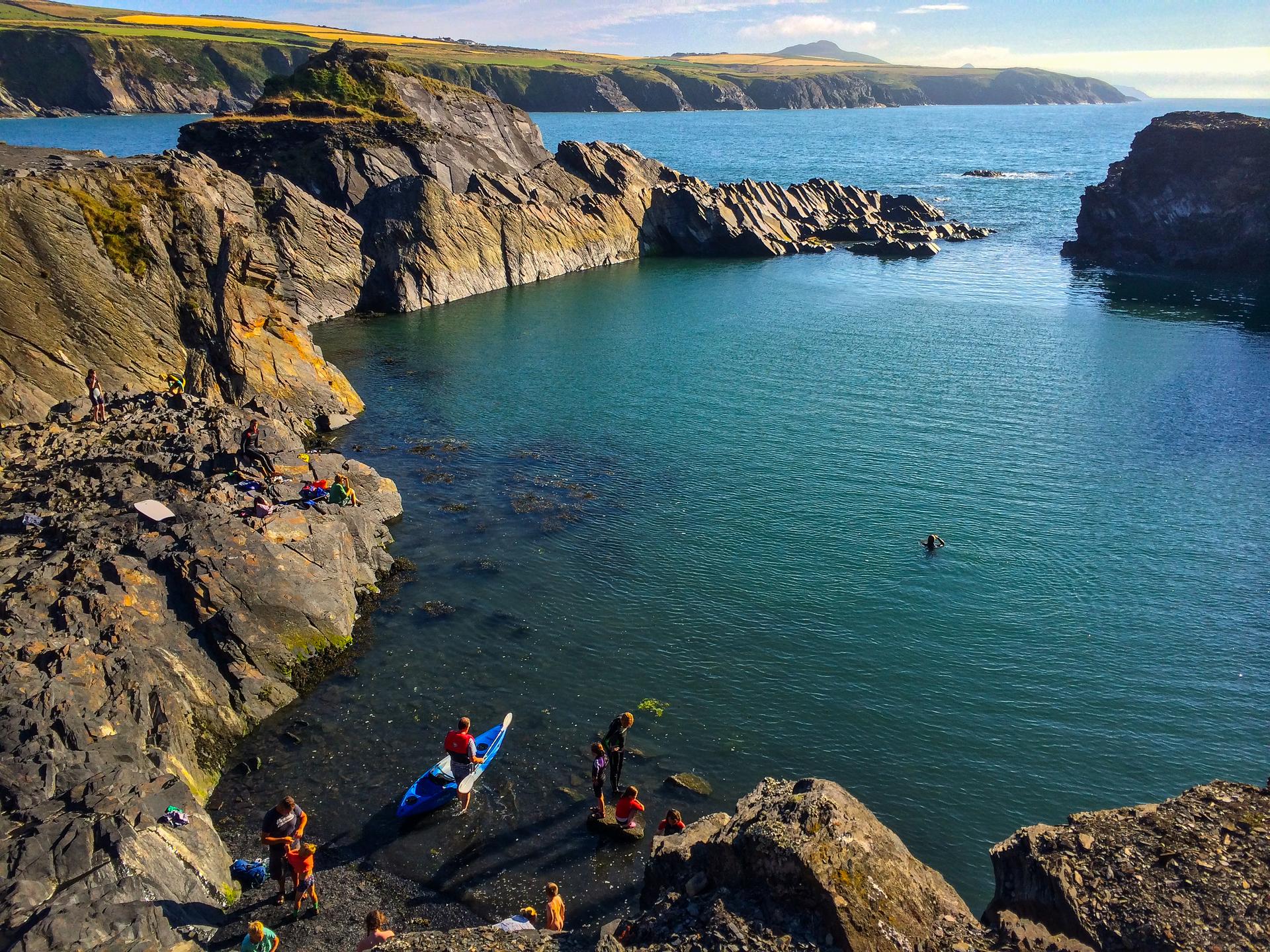
Looking beyond Strumble Head? Discover Pembrokeshire for broader travel guides, local hot-spots, and regional highlights.
Explore Pembrokeshire
Explore the natural beauty and rich culture of Pembrokeshire with Wild About Pembrokeshire, your gateway to unforgettable adventures in nature.
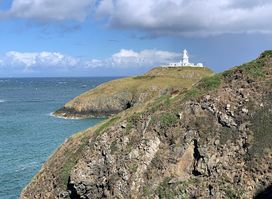
A striking 1908 lighthouse on a rocky islet, offering dramatic coastal views, seal watching and a powerful sense of maritime history on the Pembrokeshire Coast Path.
