James Watt Statue, Renfrewshire Travel Guide
Celebrate the legacy of James Watt, the Scottish inventor whose steam engine innovations powered the Industrial Revolution, in Glasgow’s historic George Square.
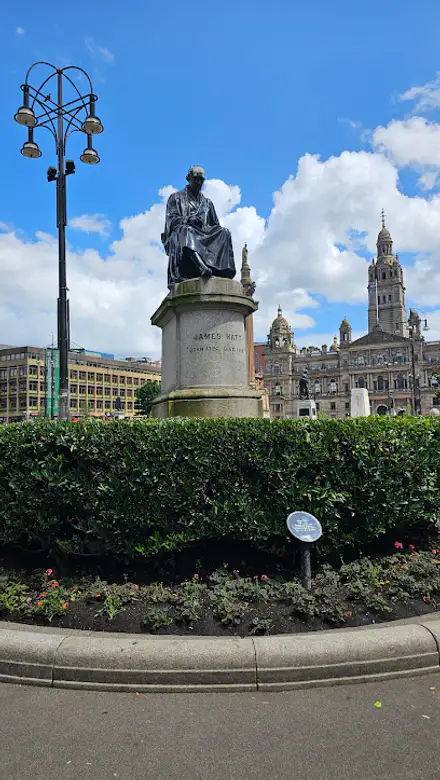
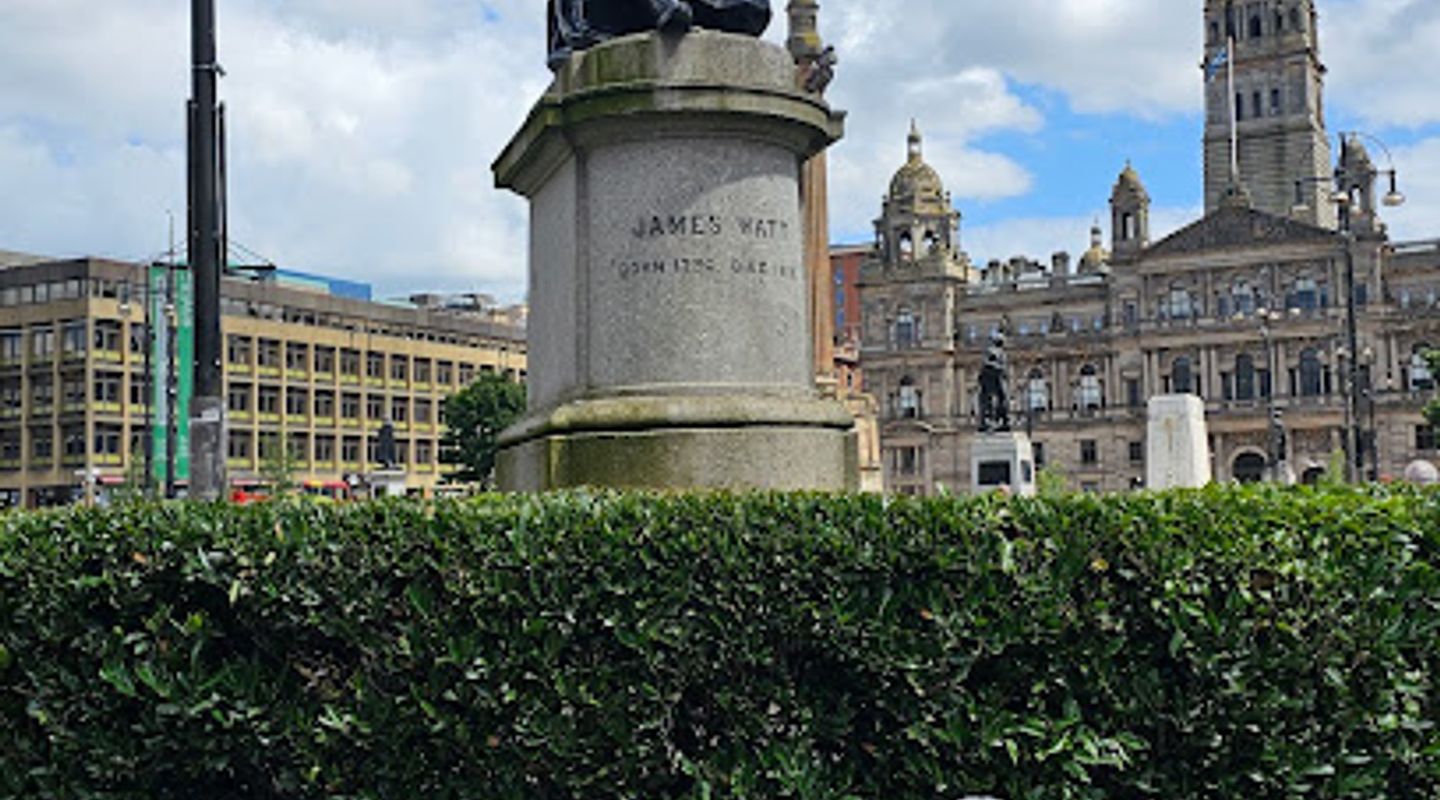
The James Watt Statue, erected in 1832 in Glasgow's George Square, honors the Scottish inventor whose improvements to the steam engine powered the Industrial Revolution. This bronze sculpture, designed by Francis Leggatt Chantrey, depicts Watt seated with dividers and a map, symbolizing his engineering genius. Set amid other historic figures, it celebrates Glasgow’s rich industrial heritage and scientific legacy in a vibrant public space.
A brief summary to James Watt Statue
- George Square, Glasgow, GB
- Duration: 0.25 to 1 hours
- Free
-
 Outdoor
- Mobile reception: 5 out of 5

Know before you go
Hi, I'm Eve. Here are a few practical things to know before exploring James Watt Statue.
- Visit during daylight hours to fully appreciate the detailed bronze sculpture and surrounding architecture.
- Combine your visit with a walk around George Square to see other important statues and landmarks.
- Bring a camera for excellent photo opportunities with the statue and Glasgow’s cityscape as a backdrop.
- Learn about Watt’s impact on the Industrial Revolution to deepen your appreciation of the monument.
Do you manage this location?
Take control to get all the benefits, like improved information, better appearance, and stronger visibility across AI-powered discovery. Learn more about listing your business on Evendo
Activate your presenceOther nearby places you may find interesting
The closest places of the same kind, if this one is not quite what you had in mind.

Explore James Watt Statue on the Map
A handpicked selection of must-see spots near James Watt Statue, mapped for you.
Unlock the Best of James Watt Statue
Buy tickets
-
No tickets available
Book tours with entry
-
No tours available
Book tours without entry

Getting There
-
Train
From Glasgow Queen Street Station, it is a 5 to 10-minute walk to George Square. The station is well-served by regional and national trains. No additional cost beyond train fare.
-
Subway
Buchanan Street Subway Station is approximately a 5-minute walk to George Square. The subway runs every 6-10 minutes, with tickets costing around £1.50 to £3.00 depending on zones.
-
Bus
Multiple bus routes serve stops near George Square from across Glasgow and surrounding areas. Travel times vary from 10 to 30 minutes depending on origin. Single fares typically range from £1.80 to £3.50.
-
Walking
George Square is centrally located and easily accessible on foot from most points in Glasgow city center. Walking times range from 10 to 30 minutes on mostly flat, paved terrain.
For the on-the-go comforts that matter to you
-
 Restrooms
-
 Drink Options
-
 Food Options
-
 Seating Areas
-
 Information Boards
Discover more about James Watt Statue
A Monument to a Pioneer of the Industrial Revolution
The James Watt Statue stands prominently in George Square, Glasgow’s central civic space, commemorating one of Scotland’s most influential inventors. Erected in 1832 and sculpted by Francis Leggatt Chantrey, the statue portrays Watt seated on an elliptical granite pedestal, holding dividers and a map—tools symbolic of his engineering prowess. Watt’s major contribution, the separate condenser for the steam engine, revolutionized energy use, making steam power faster, safer, and more economical. This innovation was a cornerstone of the Industrial Revolution, shifting power sources from water to steam and fueling industrial growth worldwide.George Square: Glasgow’s Historic Heart
George Square, named after King George III, is the bustling heart of Glasgow and home to numerous statues celebrating Scottish luminaries. The James Watt Statue is one of the few monuments to remain in its original position since its unveiling. Surrounded by grand Victorian architecture and other notable figures such as Sir Walter Scott and Robert Burns, the statue anchors the square’s narrative of Scotland’s cultural and scientific achievements. The square itself is a lively public space, hosting events and serving as a gateway to exploring Glasgow’s rich heritage.Artistry and Symbolism in Bronze
Crafted in the early 19th century, the bronze statue exemplifies neoclassical artistry with a dignified and contemplative portrayal of Watt. The sculptor’s choice to depict Watt seated, rather than standing, emphasizes thoughtfulness and intellect. The inclusion of dividers and a map references Watt’s work in precision engineering and innovation. The statue’s granite base adds to its monumental presence, situating Watt as a foundational figure in Glasgow’s—and the world’s—industrial history.Legacy and Cultural Significance
James Watt’s legacy extends beyond the statue. The SI unit of power, the watt, is named in his honor, reflecting his lasting impact on science and engineering. His work not only transformed industry but also contributed to Glasgow’s identity as a center of innovation. The statue serves as a daily reminder of the city’s role in shaping modern technology and progress. While Watt’s contributions are celebrated, recent historical research also acknowledges the complex context of his era, including connections to the broader economic systems of the time.Visitor Experience and Surroundings
Accessible at all hours, the statue invites visitors to pause and reflect on the ingenuity that helped shape the modern world. Daylight hours offer the best opportunity to appreciate the fine details of the bronze work and the surrounding architectural grandeur. George Square’s vibrant atmosphere, with nearby cafés and shops, complements a visit to the statue. It also acts as a starting point for exploring Glasgow’s city center and its many cultural landmarks.Preservation and Continuing Relevance
The James Watt Statue has stood for nearly two centuries as a testament to innovation and progress. Maintained as part of Glasgow’s public heritage, it continues to inspire engineers, historians, and visitors alike. It embodies the spirit of the Scottish Enlightenment and the transformative power of scientific discovery, making it a significant cultural and historical landmark in the city.












Your all‑in‑one travel companion app
Explore expert travel guides, compare and book tours, experiences, hotels, and more—all from the palm of your hand. Download now for seamless trip planning wherever your wanderlust takes you.


Explore More of Renfrewshire
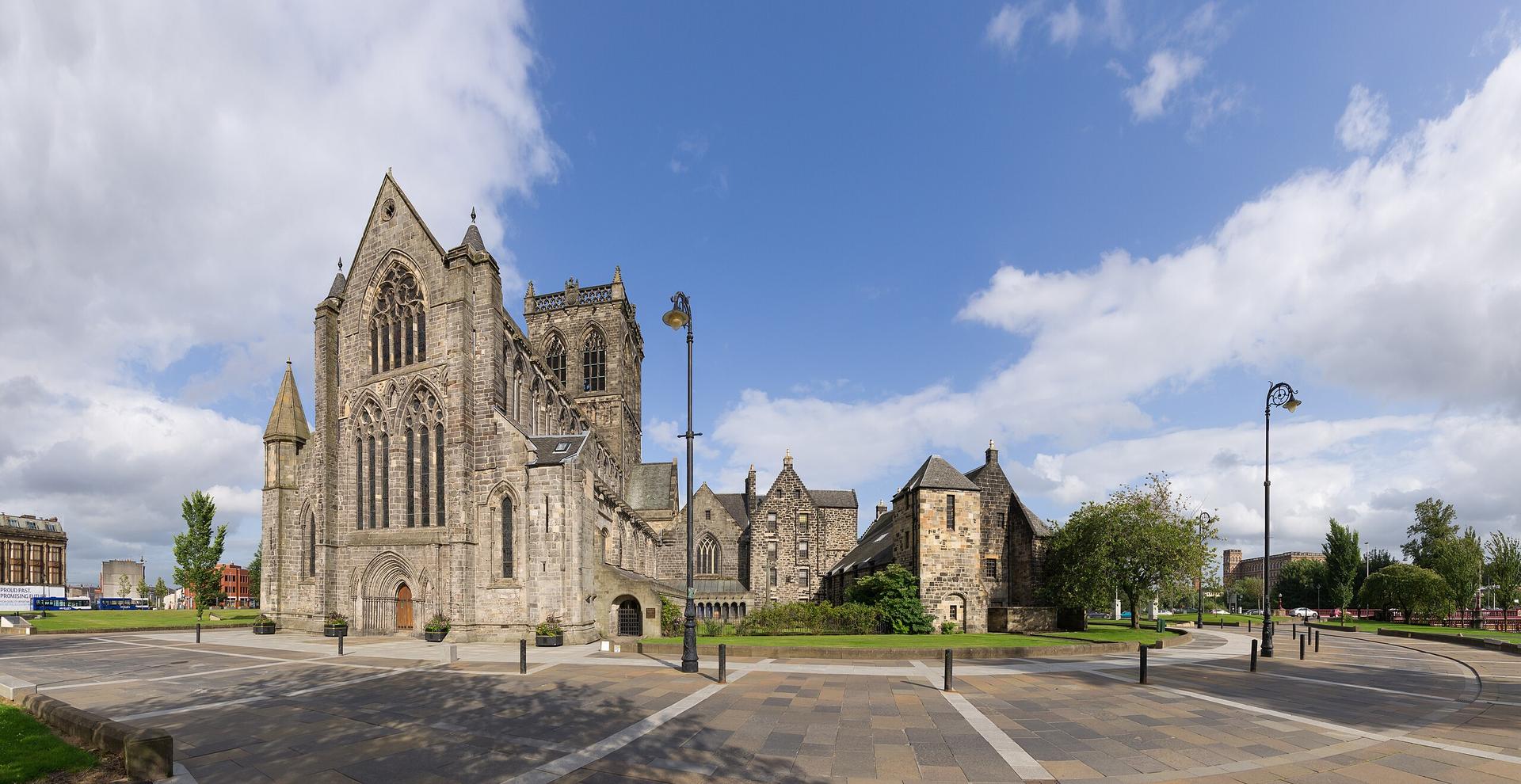
Looking beyond James Watt Statue? Discover Renfrewshire for broader travel guides, local hot-spots, and regional highlights.
Explore Renfrewshire
Discover Glasgow’s vibrant culture and historic landmarks at your own pace with this flexible hop-on hop-off bus tour featuring live guides and multilingual audio.

A historic Victorian venue in Glasgow’s city centre offering elegant event spaces and a charitable mission in the heart of George Square.