Newark Castle Travel Guide
Free Guide: Explore Newark Castle’s rich Renaissance architecture and riverside views, a hidden gem on the banks of the River Clyde in Port Glasgow.


A brief summary of Newark Castle
Explore Newark Castle’s rich Renaissance architecture and riverside views, a hidden gem on the banks of the River Clyde in Port Glasgow.
Newark Castle is a well-preserved 15th-century tower house and Renaissance mansion located on the south shore of the River Clyde in Port Glasgow, Scotland. Originally built by George Maxwell in 1478 and expanded by Sir Patrick Maxwell in 1597, the castle offers visitors a rich glimpse into Scottish history, stunning river views, and an intriguing story of noble families and local development. Managed by Historic Environment Scotland, it features vaulted basements, spiral stairs, and panoramic rooftop views.
On-site amenities
 Restrooms
 Seating areas
 Picnic areas
 Information boards
 Visitor centre
Opening hours
- MonClosed
- Tue10 am–4:30 pm
- Wed10 am–4:30 pm
- Thu10 am–4:30 pm
- Fri10 am–4:30 pm
- Sat10 am–4:30 pm
- SunClosed
Opening hours as listed on the venue’s Google Business Profile. Hours can change for services and special events, so check with the venue before you go.
- Address
- Castle Rd, Port Glasgow PA14 5NH
- Phone
- Website
Getting there
Train and Walk
Car
Bus
Discover more about Newark Castle
Foundations of Power Along the Clyde
Newark Castle stands on the south shore of the River Clyde estuary in Port Glasgow, a site chosen for its strategic importance in medieval Scotland. The castle was originally built in 1478 by George Maxwell after inheriting the Barony of Finlaystone. The initial structure was a fortified tower house enclosed within defensive walls, designed to assert Maxwell authority and protect the lands. This tower, rising four stories with enlarged windows and a vaulted basement, remains the core of the castle today.
Transformation into a Renaissance Mansion
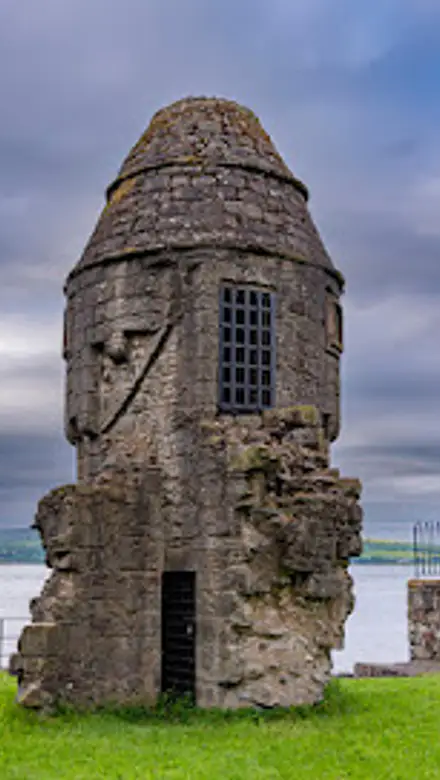
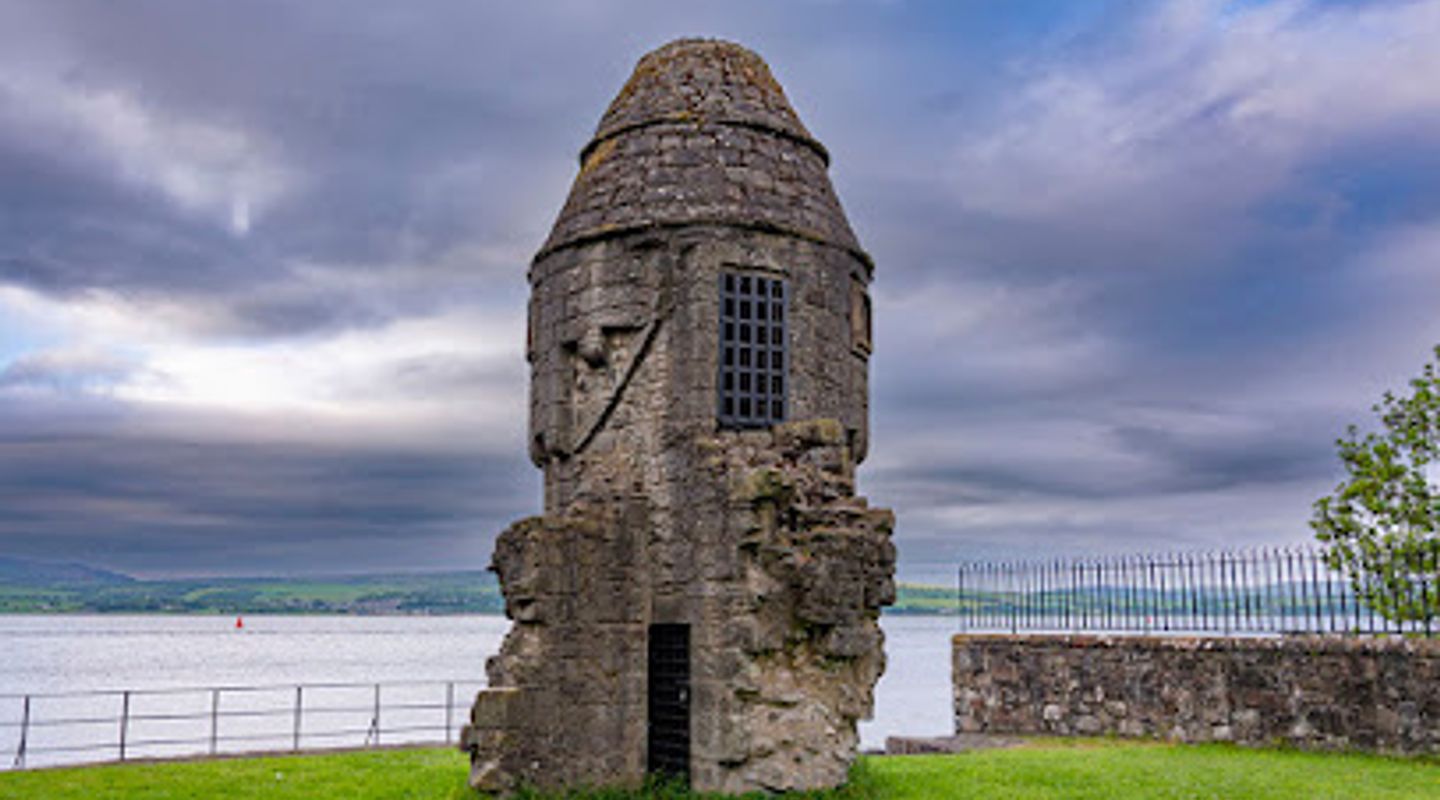
In the late 16th century, Sir Patrick Maxwell inherited Newark and undertook significant expansions, adding a three-storey Renaissance mansion that linked the original tower to a large gatehouse. Dated 1597, this north range introduced elegant Renaissance architectural details, such as bartizans, gunloops, and a distinctive semi-circular stair tower with a conical roof. The original defensive barmkin walls were mostly removed, except for a corner tower converted into a dovecot, reflecting a shift from military fortification to stately residence.
Stories of the Maxwells and Local Legacy
The Maxwells were a powerful and sometimes turbulent family. Sir Patrick Maxwell, known for violent feuds and domestic cruelty, expanded the castle and left a complex legacy. In 1668, the Maxwell family sold surrounding lands to Glasgow authorities, enabling the creation of Port Glasgow, a vital port for the city’s maritime trade. This sale marked the beginning of the castle’s transition from a noble residence to a historical monument as the area industrialized.
Industrial Encroachment and Rediscovery
For centuries, Newark Castle was obscured by the sprawling shipyards of the Clyde, surrounded by industrial activity that limited its visibility and accessibility. The castle was abandoned as a residence in the early 18th century and passed through various owners. It was used for diverse purposes, including housing wild animals in its cellars, before coming into state care in 1909. The removal of nearby shipyards in the 1980s opened up the landscape, revealing the castle’s scenic riverfront setting once again.
Visitor Experience and Architectural Highlights
Today, Newark Castle is managed by Historic Environment Scotland and offers visitors a fascinating exploration of its many rooms, spiral staircases, and vaulted spaces. Informational displays throughout the castle bring its history to life, while the rooftop provides breathtaking panoramic views of Port Glasgow and the River Clyde. Accessibility is good on the ground floor, with some upper floors reachable by stairs. The castle grounds also feature picnic areas with splendid river vistas, making it a peaceful retreat steeped in history.
Preserving a Scottish Treasure
Newark Castle exemplifies the evolution of Scottish noble residences from medieval fortresses to Renaissance mansions. Its preservation allows a unique insight into the architectural and social history of the region. The castle’s reopening to the public after decades of industrial overshadowing symbolizes the resilience of Scotland’s heritage and the ongoing commitment to protecting and celebrating historic environments.
Evendo Review Centre
 Google
Guest reviews
Best time to go
Quietest: Jan, Feb & Dec · before 6am or at 8pm
Busy times are Evendo estimates for a typical year, to help you plan. Actual crowds vary with events, school holidays and the weather.
Explore Newark Castle on the map
A handpicked selection of must-see spots near Newark Castle, mapped for you.
Get your free copy of our complete guide to Newark Castle, delivered straight to you.
Everything on this page, from opening hours and how to get there to Eve’s tips and the best time to go, in one PDF you can read offline, print or share.
Already have an account? Sign in
Your Newark Castle guide is ready.
We'll send it to · Not you? Sign out

Getting your guide ready…
We are putting together a fresh copy of the Newark Castle guide. This can take up to a minute.
This can take a few moments. If your browser asks, choose Allow so the download can start. You'll find the guide in your Downloads folder.
Nothing happened? Download it again
Sorry, the guide is taking longer than usual. Please try again in a minute, or get it by email instead.
Unlock the best of Newark Castle
Skip-the-line tickets, guided tours with entry, and walking tours of the area, booked in a few clicks.

Other nearby places you may find interesting
The closest places of the same kind, if this one is not quite what you had in mind.
-
-
-
-
-


Swipe for more places
More to explore near Newark Castle

 Best experiences near Newark Castle
 Best hotels near Newark Castle
 Best landmarks near Newark Castle
 Best attractions near Newark Castle
 Best shops near Newark Castle
 Best restaurants near Newark Castle
 Best bars near Newark Castle
Do you manage this location?
Take control to get all the benefits, like improved information, better appearance, and stronger visibility across AI-powered discovery.
Explore more

Explore more of Renfrewshire
Discover Renfrewshire: Scotland's blend of history, culture, and natural beauty, from ancient abbeys to scenic parks.
Explore Renfrewshire
Explore more of United Kingdom
Discover the United Kingdom: A blend of rich history, stunning landscapes, and vibrant cities, offering a unique travel experience for every visitor.
Explore United Kingdom