Nine Ladies Stone Circle, Sheffield Travel Guide
Free Guide: An ancient stone circle steeped in Bronze Age mystery and modern spiritual reverence, commanding the windswept moorlands of the Peak District.


A brief summary of Nine Ladies Stone Circle
An ancient stone circle steeped in Bronze Age mystery and modern spiritual reverence, commanding the windswept moorlands of the Peak District.
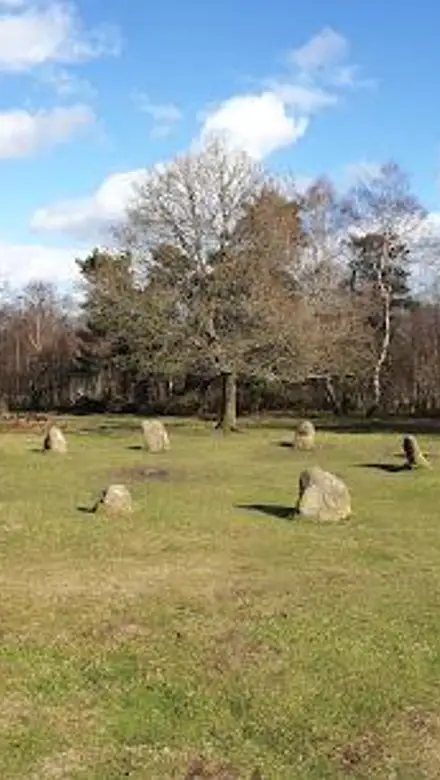
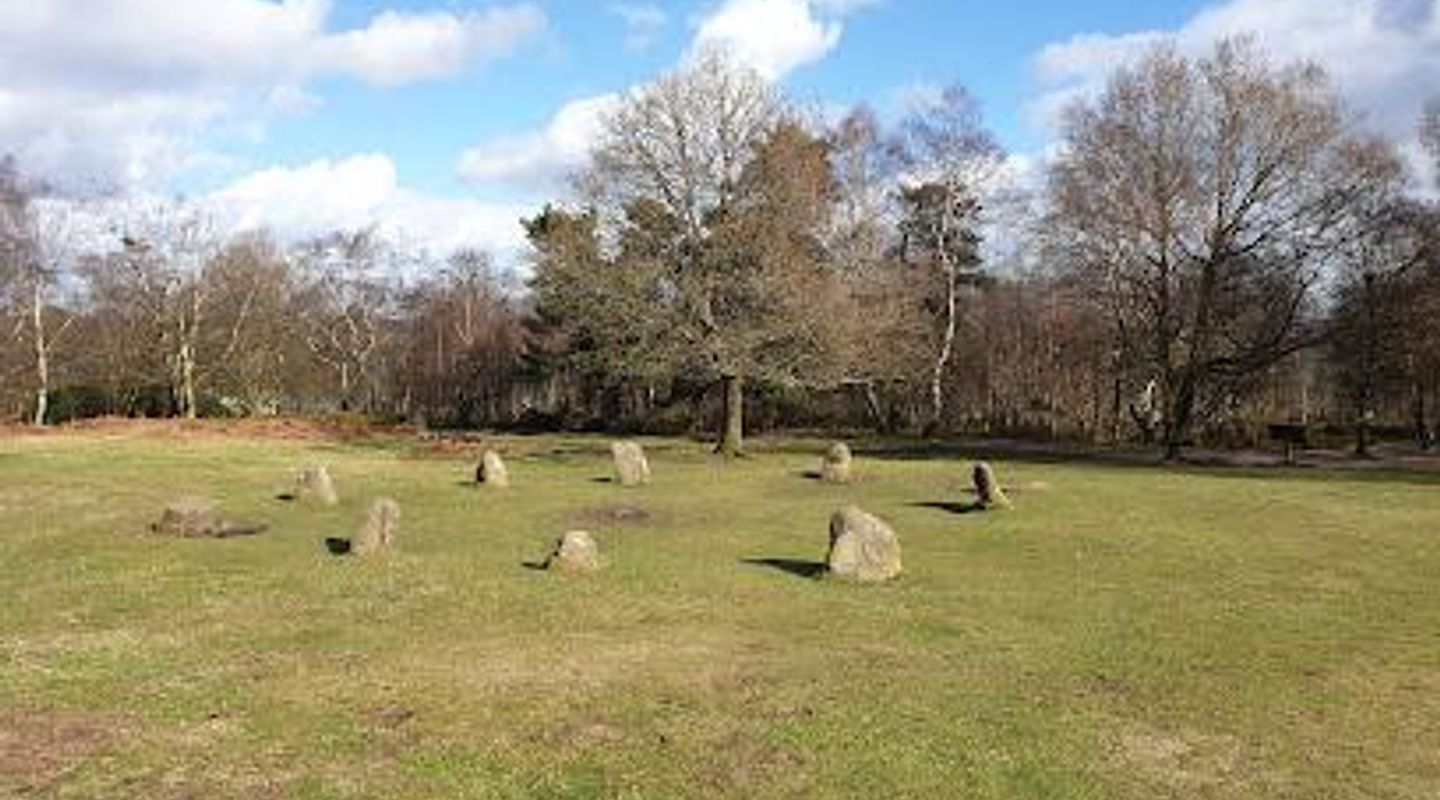
An evocative Bronze Age stone circle perched on Stanton Moor in the Peak District, comprising ten standing stones arranged in a rough ring. Dating back approximately 4,000 years, the Nine Ladies is steeped in folklore and archaeological significance, with over 70 ancient burial mounds and four stone circles dotting the moorland. The site remains a focal point for modern pagan and Druid ceremonies, particularly during solstices, while offering visitors spectacular views across the Derbyshire landscape and easy access to a landscape rich in prehistoric heritage.
On-site amenities
 Information boards
 Parking
Opening hours
- Every dayOpen 24 hours
Opening hours as listed on the venue’s Google Business Profile. Hours can change for services and special events, so check with the venue before you go.
- Address
- Lees Rd, Stanton in Peak, Matlock DE4 2LS
- Phone
- Website
Getting there
Car
Walking
Public Transport
Cycling
Discover more about Nine Ladies Stone Circle
A Bronze Age Monument Shrouded in Legend
The Nine Ladies Stone Circle stands on the elevated moorland of Stanton Moor, near Bakewell in the Peak District, comprising ten standing stones arranged in a rough ring measuring approximately 11.5 by 10.5 metres. The circle was first formally recorded in 1782 by antiquarian Hayman Rooke, though its origins stretch back 3,000 to 4,000 years to the Bronze Age. Despite its name, the circle contains ten stones—nine forming the main ring and a tenth, known as the King Stone, positioned some 40 metres to the west-southwest. The tenth stone within the circle itself was discovered in 1977, having fallen and lain flat for centuries.The folklore surrounding the Nine Ladies has endured for generations. According to local legend, nine women were turned to stone as divine punishment for dancing on the Sabbath, while the King Stone represents the fiddler who played for them. This tale has become so embedded in the site's identity that it appears in Charles Dickens' The Pickwick Papers, referenced through graffiti carved on the King Stone itself, including the name 'Bill Stumps'.
An Archaeological Landscape of Extraordinary Richness
Stanton Moor is designated as a Scheduled Ancient Monument due to its exceptional archaeological importance. The entire moorland contains more than 70 stone cairns and barrows, with excavations over the past century revealing that many served as burial places for Bronze Age communities. Beyond the Nine Ladies, the moor hosts at least three other stone circles, including Doll Tor, a smaller circle comprising six standing stones that has been extensively excavated and restored. The landscape represents what archaeologist Aubrey Burl described as 'a prehistoric necropolis of cairns, ring-cairns, standing stones and stone circles'—a testament to the moor's significance as a ceremonial and burial ground for ancient peoples.The stones themselves are set on the inner edge of a slight bank, and evidence suggests the circle may have contained a small cairn or 'cist' at its centre. Little definitive evidence exists regarding the circle's precise function, though archaeologists propose multiple possibilities: a place for ceremony or burial, a territorial marker, a symbolic link between earth and sky or the living and the dead, or a gathering place for seasonal events. Such monuments likely served evolving purposes throughout their long histories.
Spiritual Significance Through the Ages
For many modern Pagans, Wiccans, Druids, and Heathens, the Nine Ladies holds profound spiritual significance. The site is regarded as sacred, with Stanton Moor itself viewed as a sacred landscape. Practitioners believe the stone circle serves as a place to engage with spirits, deities, and ancestors, with some considering it to lie on a ley line or spirit-track. The site draws particular attention during solstices, when visitors and practitioners gather to mark astronomical and spiritual turning points. This contemporary spiritual use echoes the likely ceremonial functions of the Bronze Age builders, creating a continuity of sacred practice spanning millennia.
Landscape and Geology
Stanton Moor rises to between 297 and 298 metres above sea level, offering commanding views across the Peak District. The moor is a gritstone outcrop of geological interest, formed as a syncline and composed of Ashover gritstone. This elevated position, combined with its heathland character, creates a distinctive landscape that has attracted both ancient peoples and modern visitors. The moor's gritstone has historically been quarried, with old dormant quarries still visible across the terrain. The surrounding moorland provides a sense of isolation and timelessness, enhancing the Nine Ladies' atmospheric power.
Historical Records and Modern Threats
The Nine Ladies has been documented since the late 18th century, when Hayman Rooke recorded its existence and mistakenly identified it as a 'Druid temple'—a common interpretation among antiquarians of that era. By the 1870s, protective stone walls had been erected around both the circle and the King Stone, though these fell into disrepair and were demolished in 1985. In recent decades, the site has faced environmental pressures, including noise from nearby quarrying operations and erosion caused by visitor footfall, particularly around the Nine Ladies itself. A significant threat emerged in 1999 when a quarrying company proposed reopening two abandoned quarries to extract 2.18 million tonnes of sandstone over 42 years—a proposal that sparked the Nine Ladies Anti-Quarry Campaign to protect this irreplaceable heritage site.
Evendo Review Centre
 Google
Guest reviews
Best time to go
Quietest: Jan, Feb & Dec · before 6am or at 9pm
Busy times are Evendo estimates for a typical year, to help you plan. Actual crowds vary with events, school holidays and the weather.
Explore Nine Ladies Stone Circle on the map
A handpicked selection of must-see spots near Nine Ladies Stone Circle, mapped for you.
Get your free copy of our complete guide to Nine Ladies Stone Circle, delivered straight to you.
Everything on this page, from opening hours and how to get there to Eve’s tips and the best time to go, in one PDF you can read offline, print or share.
Already have an account? Sign in
Your Nine Ladies Stone Circle guide is ready.
We'll send it to · Not you? Sign out

Getting your guide ready…
We are putting together a fresh copy of the Nine Ladies Stone Circle guide. This can take up to a minute.
This can take a few moments. If your browser asks, choose Allow so the download can start. You'll find the guide in your Downloads folder.
Nothing happened? Download it again
Sorry, the guide is taking longer than usual. Please try again in a minute, or get it by email instead.
Unlock the best of Nine Ladies Stone Circle
Skip-the-line tickets, guided tours with entry, and walking tours of the area, booked in a few clicks.


Other nearby places you may find interesting
The closest places of the same kind, if this one is not quite what you had in mind.
-
King Edward VII Statue A majestic 1913 bronze statue in Sheffield’s Fitzalan Square honoring King Edward VII with rich symbolic reliefs and historic civic pride.
-
Sheffield Town Twinning, Commonwealth Bench A peaceful landmark in Sheffield celebrating international friendship and the city’s enduring Commonwealth ties.
-
Millennium Square Sheffield's vibrant public plaza where culture, community, and celebration converge in the heart of the city centre.
-
Sheffield Cathedral Sheffield’s oldest building in daily use, blending a thousand years of history with modern light, music, and community in the heart of the city.
-
Crucible Stack A surviving 19th-century brick chimney from Sheffield’s crucible steelworks, standing as a powerful symbol of the city’s industrial heritage and steelmaking legacy.
Swipe for more places
More to explore near Nine Ladies Stone Circle
-
 Best experiences near Nine Ladies Stone Circle
-
 Best hotels near Nine Ladies Stone Circle
-
 Best landmarks near Nine Ladies Stone Circle
-
 Best attractions near Nine Ladies Stone Circle
-
 Best shops near Nine Ladies Stone Circle
-
 Best restaurants near Nine Ladies Stone Circle
-
 Best bars near Nine Ladies Stone Circle







Do you manage this location?
Take control to get all the benefits, like improved information, better appearance, and stronger visibility across AI-powered discovery.
Explore more

Explore more of Sheffield
Discover Sheffield: A dynamic city where industrial heritage meets abundant green spaces, thriving culture, and culinary delights in the heart of the UK.
Explore Sheffield
Explore more of United Kingdom
Discover the United Kingdom: A blend of rich history, stunning landscapes, and vibrant cities, offering a unique travel experience for every visitor.
Explore United Kingdom