Beheading Stone., Stirling Travel Guide
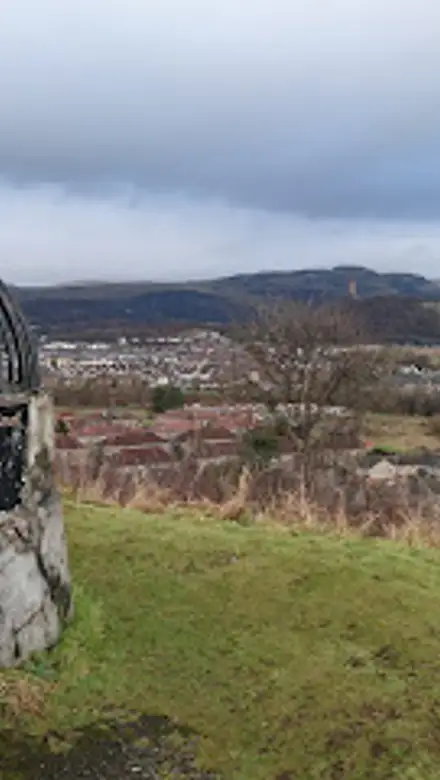
Free Guide: A grim medieval execution block on Mote Hill, where traitors once lost their heads, now protected by a metal cage with sweeping views over Stirling and the Forth.


A brief summary of Beheading Stone.
A grim medieval execution block on Mote Hill, where traitors once lost their heads, now protected by a metal cage with sweeping views over Stirling and the Forth.
Perched on Mote Hill in Stirling, the Beheading Stone is a grim relic of medieval justice, once used as an execution block for high‑profile traitors. Now protected by a metal cage and mounted on a concrete pillar, it bears visible axe marks and stands as a somber monument to Scotland’s turbulent past. Nearby cannons and an information board add context, while the hill offers sweeping views over Stirling Bridge, the River Forth, and the Wallace Monument. Accessible via footpaths from the castle or town, it’s a short but evocative stop for history enthusiasts.
On-site amenities
 Information boards
 Seating areas
 Trash bins
Opening hours
- Every dayOpen 24 hours
Opening hours as listed on the venue’s Google Business Profile. Hours can change for services and special events, so check with the venue before you go.
- Address
- Stirling FK8 1AA
Getting there
On foot from Stirling Castle
On foot from Stirling town centre
By local bus
By car
Discover more about Beheading Stone.
A Stone of Blood and Power
High on Mote Hill, overlooking the River Forth and the site of the Battle of Stirling Bridge, stands a rough block of stone that once served as a medieval execution block. Known as the Beheading Stone, this unassuming slab is said to have been used in the 15th century for the beheading of those condemned for treason, particularly enemies of the crown. Local tradition holds that it was the final resting place for the heads of powerful nobles, including Murdoch, Duke of Albany, and his family, executed in 1425 on the orders of King James I after a bitter power struggle. The stone’s dark reputation is reinforced by visible axe marks and holes where a wooden block was once secured, evidence of its grim function.
From Pictish Fort to Execution Ground
Mote Hill itself has layers of history stretching back to the first millennium AD, when it was the site of a vitrified Pictish fort destroyed by fire. Over the centuries, the hill became a place of royal justice, associated with the nearby Stirling Castle and the town’s medieval administration. The hill was also known as Heiding Hill or Heading Hill, a name that clearly reflects its role in capital punishment. Retributive justice later shifted to the Mercat Cross and Tolbooth in the town, but the Beheading Stone remained as a physical reminder of an era when power was enforced with the axe. In the 19th century, the stone was moved to its current position on the hilltop and encased in a protective iron cage, a gesture of preservation that also underscores its significance as a historical artifact.
What You See Today
Today, the Beheading Stone sits on a white concrete pillar, enclosed in a sturdy metal cage, with a plaque noting that it is protected by the public at the insistence of the Stirling National History & Archaeological Society in 1887. An information board nearby explains its history and the executions believed to have taken place here, while a couple of old cannons add to the military atmosphere of the site. The stone’s surface still shows the scars of repeated axe blows, inviting quiet reflection on the lives that ended here. The setting is open and windswept, with panoramic views across the Forth Valley, the Wallace Monument, and the surrounding hills, making it as much a viewpoint as a historical monument.
Visiting the Site
The Beheading Stone is a short walk from Stirling Castle, reachable via the Back Walk footpath or from Crofthead Road, and is accessible at any time of day. It’s best visited in daylight and in reasonable weather, as the paths can be uneven and slippery when wet. The area is popular with walkers and history buffs, but can attract informal gatherings in the evenings, so caution is advised after dark. There are no formal facilities at the stone itself, but toilets, cafes, and visitor information are available in the nearby town and at Stirling Castle. The site is free to visit and makes a compelling, if sobering, addition to a day exploring Stirling’s rich medieval and military heritage.
Evendo Review Centre
 Google
Guest reviews
Best time to go
Quietest: Jan, Feb & Dec · before 3am
Busy times are Evendo estimates for a typical year, to help you plan. Actual crowds vary with events, school holidays and the weather.
Explore Beheading Stone. on the map
A handpicked selection of must-see spots near Beheading Stone., mapped for you.
Get your free copy of our complete guide to Beheading Stone., delivered straight to you.
Everything on this page, from opening hours and how to get there to Eve’s tips and the best time to go, in one PDF you can read offline, print or share.
Already have an account? Sign in
Your Beheading Stone. guide is ready.
We'll send it to · Not you? Sign out

Getting your guide ready…
We are putting together a fresh copy of the Beheading Stone. guide. This can take up to a minute.
This can take a few moments. If your browser asks, choose Allow so the download can start. You'll find the guide in your Downloads folder.
Nothing happened? Download it again
Sorry, the guide is taking longer than usual. Please try again in a minute, or get it by email instead.
Other nearby places you may find interesting
The closest places of the same kind, if this one is not quite what you had in mind.
-
-
-
-
-


Swipe for more places
More to explore near Beheading Stone.

 Best experiences near Beheading Stone.
 Best hotels near Beheading Stone.
 Best landmarks near Beheading Stone.
 Best attractions near Beheading Stone.
 Best shops near Beheading Stone.
 Best restaurants near Beheading Stone.
 Best bars near Beheading Stone.
Do you manage this location?
Take control to get all the benefits, like improved information, better appearance, and stronger visibility across AI-powered discovery.
Explore more

Explore more of Stirling
Discover Stirling: A city where history comes alive amidst stunning landscapes and cultural richness in the heart of Scotland.
Explore Stirling
Explore more of United Kingdom
Discover the United Kingdom: A blend of rich history, stunning landscapes, and vibrant cities, offering a unique travel experience for every visitor.
Explore United Kingdom