

Robert the Bruce Statue, Stirling Travel Guide
Free Guide: A commanding 19th-century statue of Robert the Bruce at Stirling Castle, symbolizing Scottish independence and royal heritage.


A brief summary of Robert the Bruce Statue
A commanding 19th-century statue of Robert the Bruce at Stirling Castle, symbolizing Scottish independence and royal heritage.
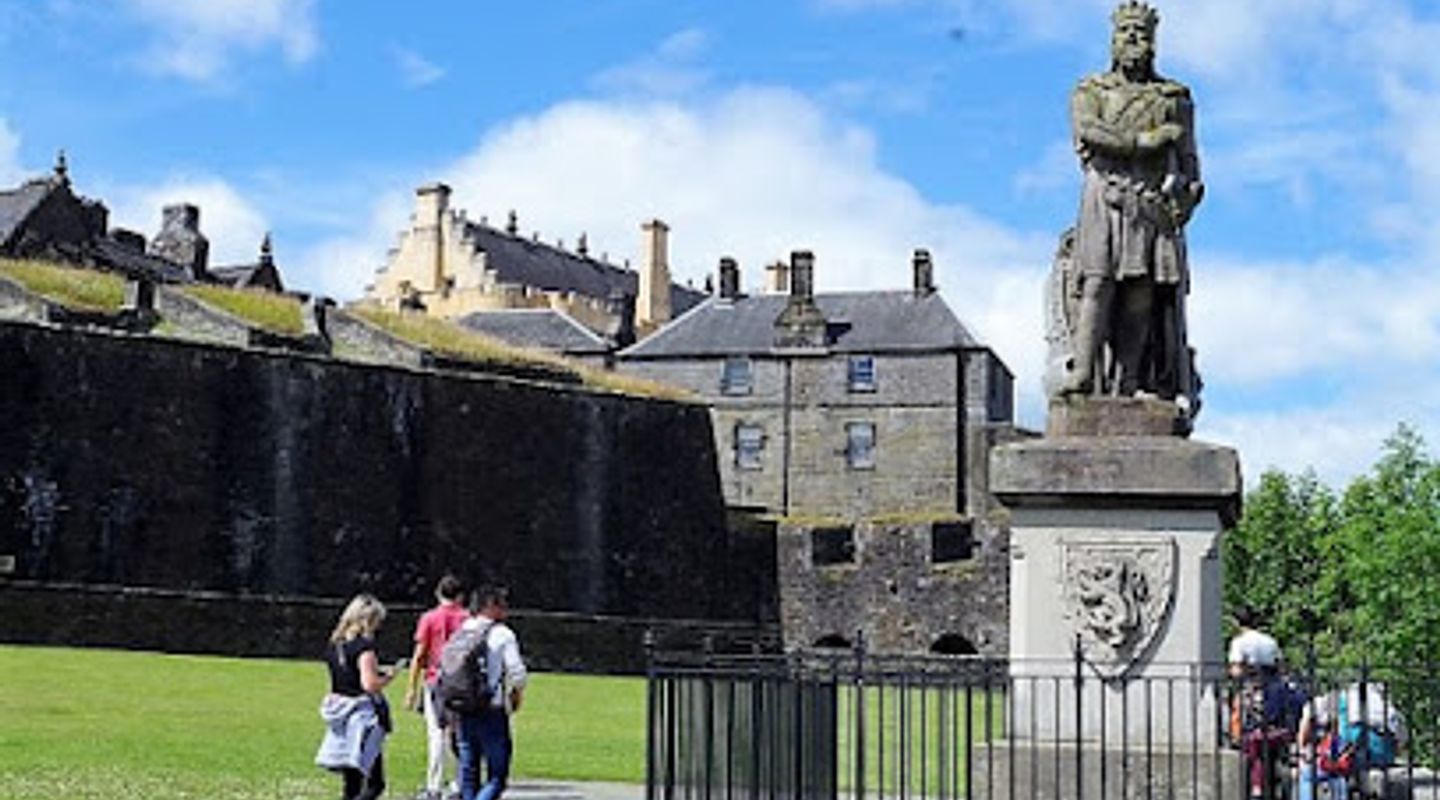
The Robert the Bruce Statue at Stirling Castle is a commanding 19th-century monument honoring one of Scotland's most revered kings. Sculpted by Andrew Currie in 1876, it depicts Bruce clad in chain mail, hand resting on his sword, facing south toward Bannockburn battlefield, symbolizing his pivotal victory securing Scottish independence. This historic landmark stands on Upper Castlehill in Stirling, embodying Scottish heritage and royal symbolism.
On-site amenities
 Restrooms
 Food options
 Drink options
 Seating areas
 Information boards
- Address
- Upper Castlehill, Stirling FK8 1EN
Getting there
Public Transport
Car
Walking
Discover more about Robert the Bruce Statue
A Monument Honoring a Scottish Legend
The Robert the Bruce Statue at Stirling Castle is a striking tribute to the King of Scots who reigned from 1306 to 1329. Created by Scottish sculptor Andrew Currie between 1876 and 1877, the statue reflects the 19th-century resurgence of interest in Scotland’s medieval history and national identity. The figure is carved from stone and portrays Bruce in full chain mail armor, his hand firmly resting on the pommel of his sword, while his shield and axe lie at his feet. The pedestal proudly displays a replica of Bruce’s shield featuring the Lion Rampant, a symbol of Scottish royalty.
Symbolism and Historical Context
Facing south, the statue’s gaze is fixed on the Bannockburn battlefield, where Robert the Bruce won a decisive victory against the English in 1314. This battle was a turning point in the Wars of Scottish Independence, securing Bruce’s legacy as a national hero. The inclusion of metal elements such as the axe head and sword parts adds to the monument's realism, though it remains unclear if these were original or later restorations. The statue serves as a counterpart to the equestrian statue of Bruce at the Bannockburn Visitor Centre, reinforcing his enduring significance across the region.
Artistic and Cultural Significance
Designed by illustrator George Cruikshank and sculpted by Andrew Currie, the statue is an important example of Victorian-era Scottish sculpture. Its imposing presence on the esplanade of Stirling Castle enhances the historic atmosphere of the site, which itself is a key fortress in Scotland’s past. The monument was featured on the Clydesdale Bank’s £20 note in 2020, underscoring its cultural prominence. It stands not only as a work of art but also as a symbol of Scottish resilience, leadership, and national pride.
Robert the Bruce’s Legacy in Scotland
Robert the Bruce’s life was marked by struggle and triumph. After killing rival John Comyn in 1306, he was declared king but initially faced setbacks, including exile and defeat. His comeback involved guerrilla warfare and strategic victories culminating in Bannockburn. His reign solidified Scotland’s independence, culminating in the Declaration of Arbroath in 1320, a letter asserting Scotland’s sovereignty. The statue at Stirling Castle commemorates this enduring legacy, inviting reflection on the turbulent history and the king’s role in shaping Scotland.
Visiting the Statue Today
Located on Upper Castlehill within the grounds of Stirling Castle, the statue is accessible to visitors exploring one of Scotland’s most iconic historic sites. The castle’s elevated position offers panoramic views over Stirling and the surrounding landscape, enhancing the statue’s dramatic effect. Nearby, the Bannockburn Visitor Centre provides complementary context about Bruce’s life and battles. The statue remains a focal point for those interested in Scottish history, art, and national identity.
Enduring Symbol of Scottish Identity
More than a memorial, the Robert the Bruce Statue embodies the spirit of Scotland’s fight for freedom and sovereignty. It connects visitors to a pivotal era in Scottish history and serves as a reminder of the courage and leadership that shaped the nation. Its presence at Stirling Castle, a historic stronghold, enriches the cultural landscape and offers a powerful visual narrative of Scotland’s medieval past.
Evendo Review Centre
 Google
Guest reviews
Best time to go
Quietest: Jan, Feb & Dec · before 7am or from 9pm
Busy times are Evendo estimates for a typical year, to help you plan. Actual crowds vary with events, school holidays and the weather.
Explore Robert the Bruce Statue on the map
A handpicked selection of must-see spots near Robert the Bruce Statue, mapped for you.
Get your free copy of our complete guide to Robert the Bruce Statue, delivered straight to you.
Everything on this page, from opening hours and how to get there to Eve’s tips and the best time to go, in one PDF you can read offline, print or share.
Already have an account? Sign in
Your Robert the Bruce Statue guide is ready.
We'll send it to · Not you? Sign out

Getting your guide ready…
We are putting together a fresh copy of the Robert the Bruce Statue guide. This can take up to a minute.
This can take a few moments. If your browser asks, choose Allow so the download can start. You'll find the guide in your Downloads folder.
Nothing happened? Download it again
Sorry, the guide is taking longer than usual. Please try again in a minute, or get it by email instead.
Unlock the best of Robert the Bruce Statue
Skip-the-line tickets, guided tours with entry, and walking tours of the area, booked in a few clicks.


Other nearby places you may find interesting
The closest places of the same kind, if this one is not quite what you had in mind.
-
-
-
-
-


Swipe for more places
More to explore near Robert the Bruce Statue
-
 Best experiences near Robert the Bruce Statue
-
 Best hotels near Robert the Bruce Statue
-
 Best landmarks near Robert the Bruce Statue
-
 Best attractions near Robert the Bruce Statue
-
 Best shops near Robert the Bruce Statue
-
 Best restaurants near Robert the Bruce Statue
-
 Best bars near Robert the Bruce Statue


Do you manage this location?
Take control to get all the benefits, like improved information, better appearance, and stronger visibility across AI-powered discovery.
Explore more

Explore more of Stirling
Discover Stirling: A city where history comes alive amidst stunning landscapes and cultural richness in the heart of Scotland.
Explore Stirling
Explore more of United Kingdom
Discover the United Kingdom: A blend of rich history, stunning landscapes, and vibrant cities, offering a unique travel experience for every visitor.
Explore United Kingdom
